Every chart
Every chart, one grid
338 charts. Click any chart to enlarge it.
Ch. 1 · Built Fast
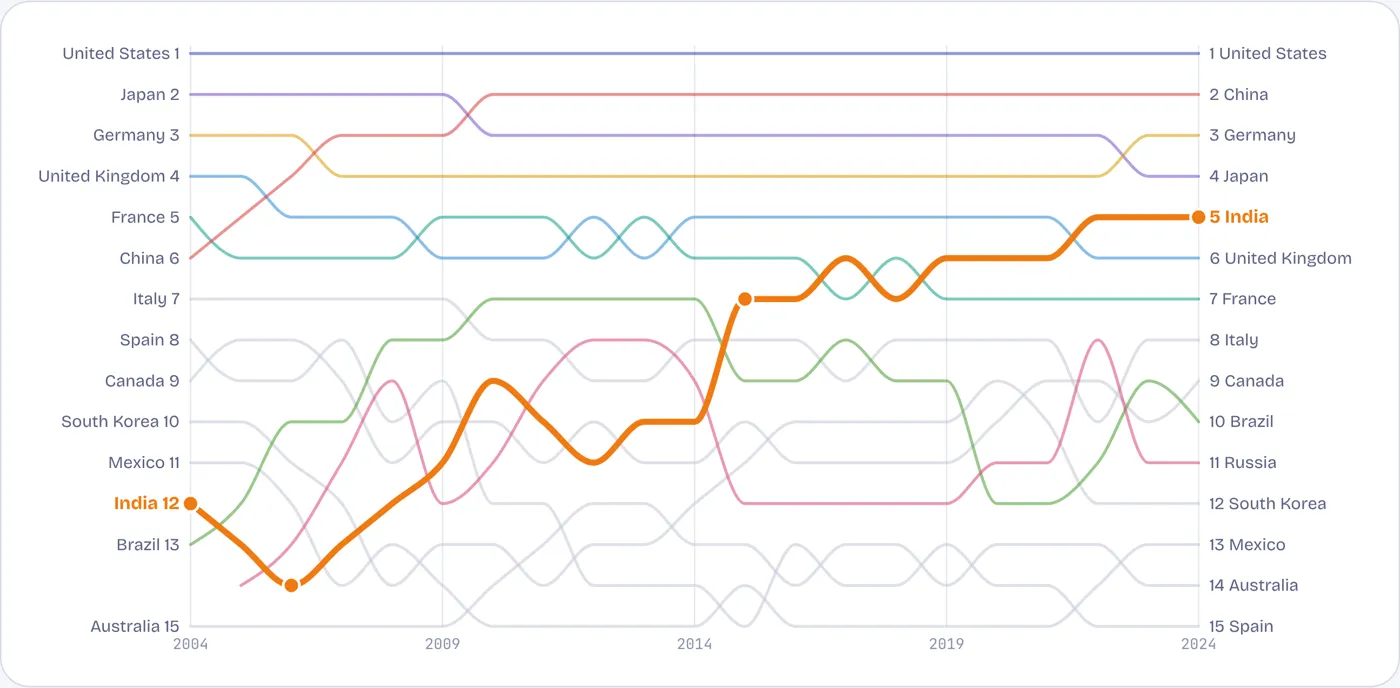
From 12th to 5th, with two stumbles on the way
Ch. 1 · Built Fast
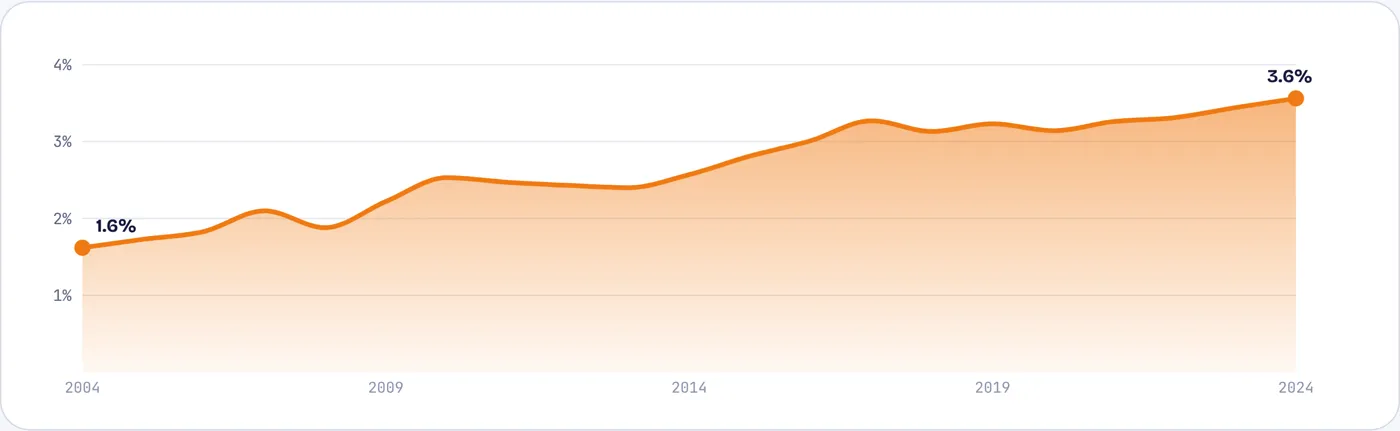
India’s slice of world output more than doubled
Ch. 1 · Built Fast
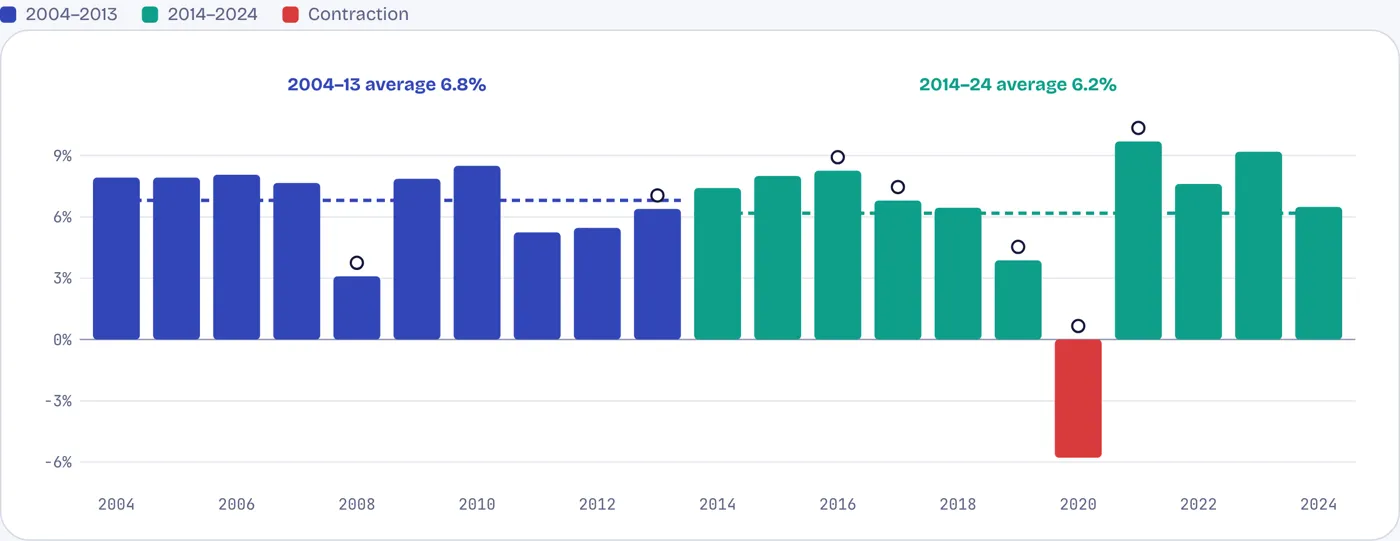
Two decades, two governments, almost the same pace
Ch. 1 · Built Fast
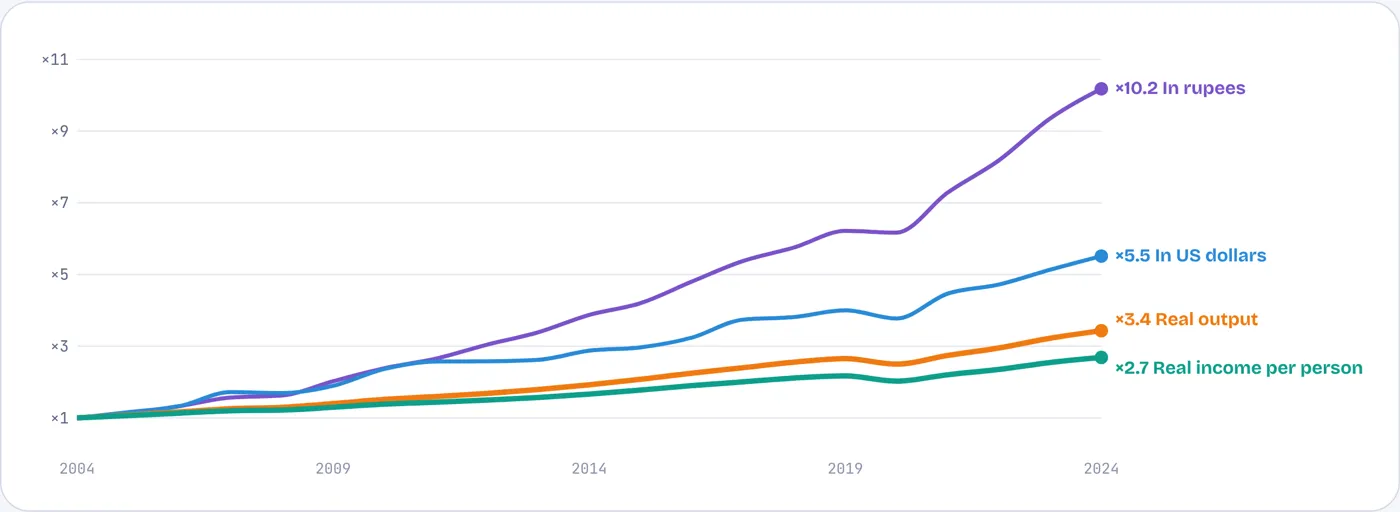
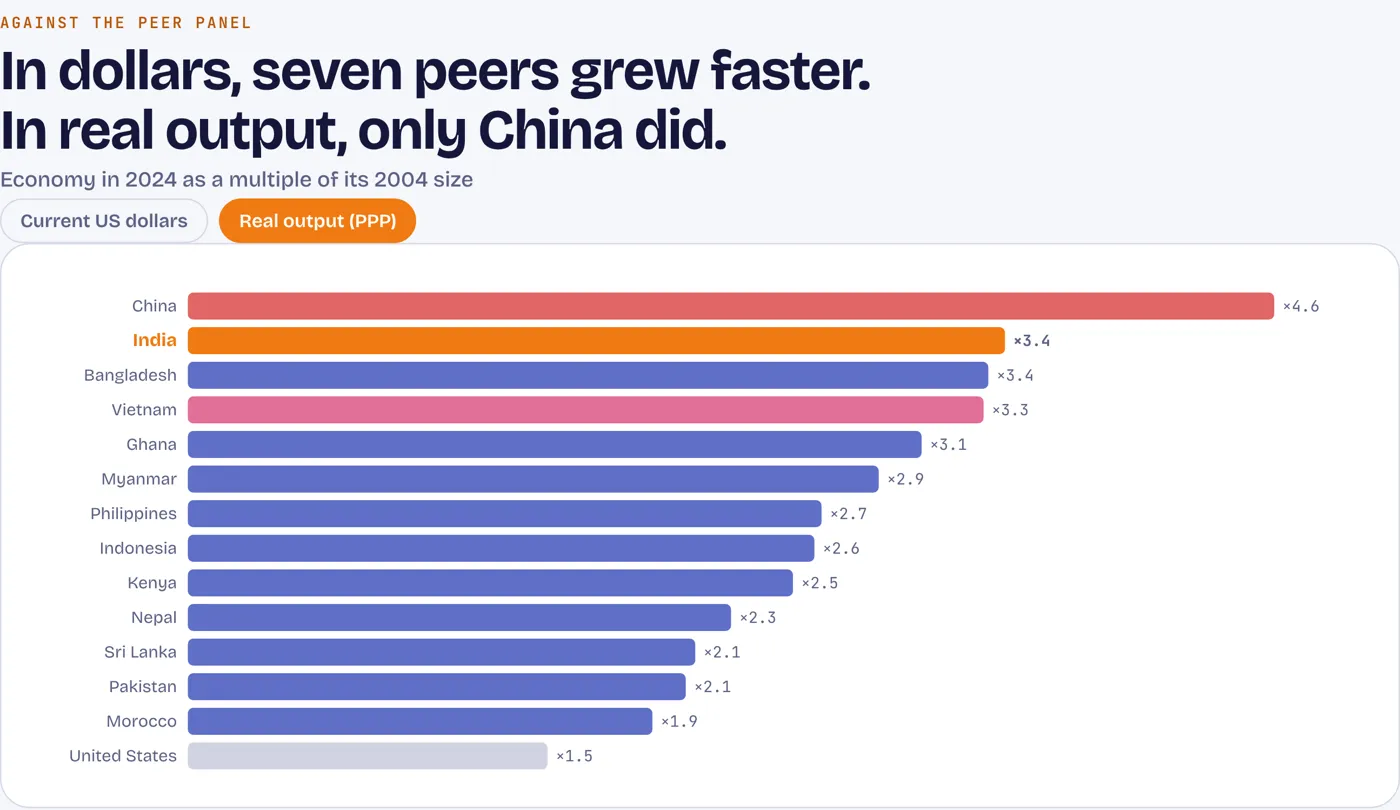
“Five times larger” depends on the ruler
Ch. 1 · Built Fast
Peers
Ch. 1 · Built Fast
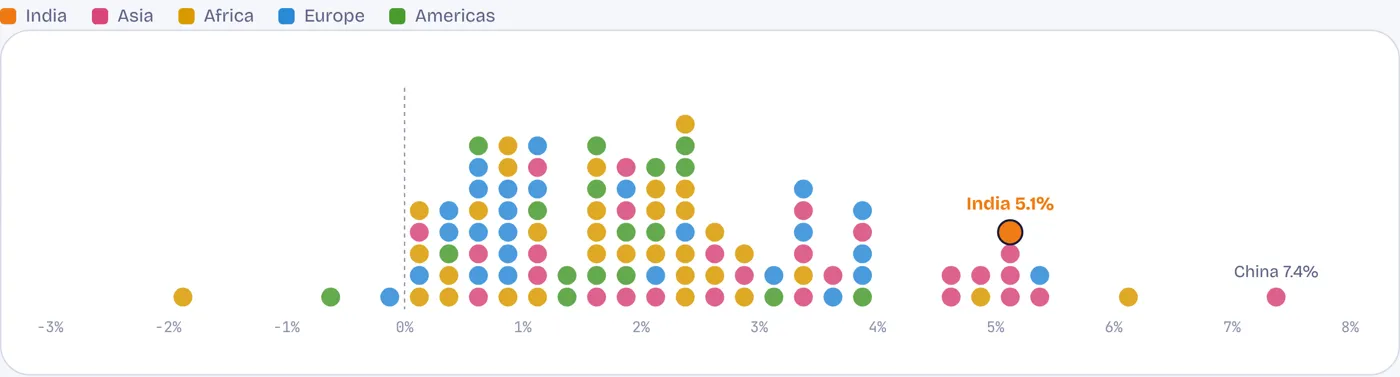
Sixth fastest of 105 countries in income growth per person
Ch. 1 · Built Fast
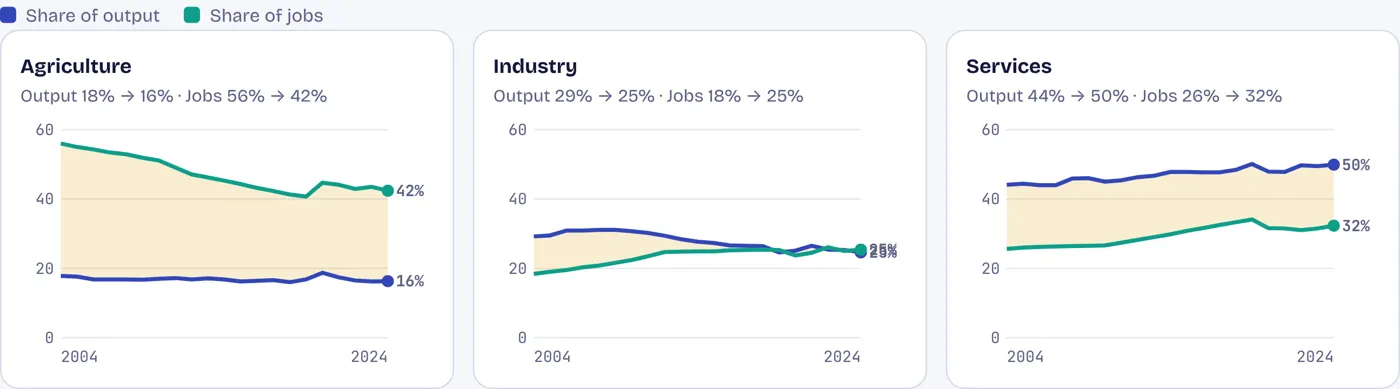
Farms still hold 42% of jobs but make 16% of output
Ch. 1 · Built Fast
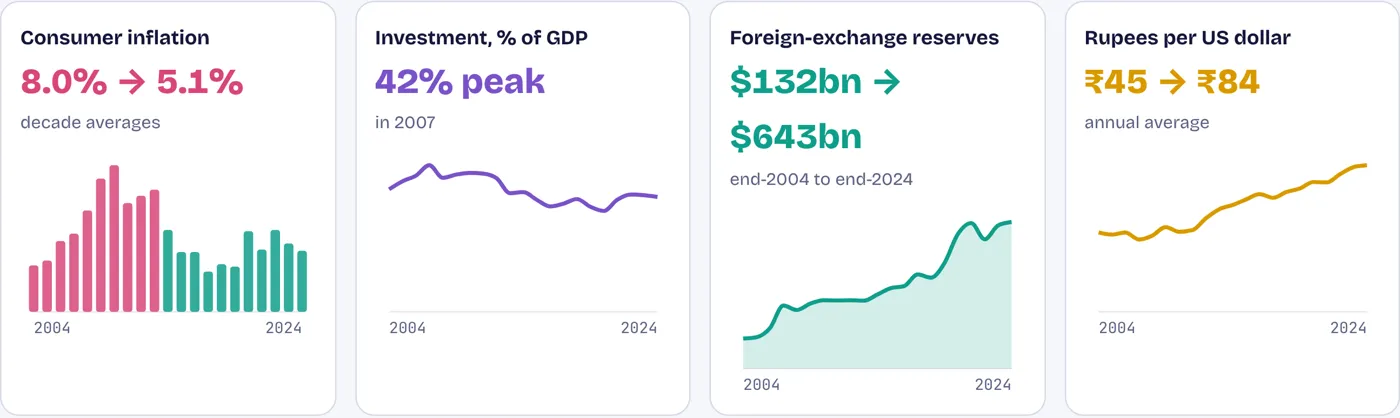
Steadier prices and a deep cushion of reserves
Ch. 1 · Built Fast
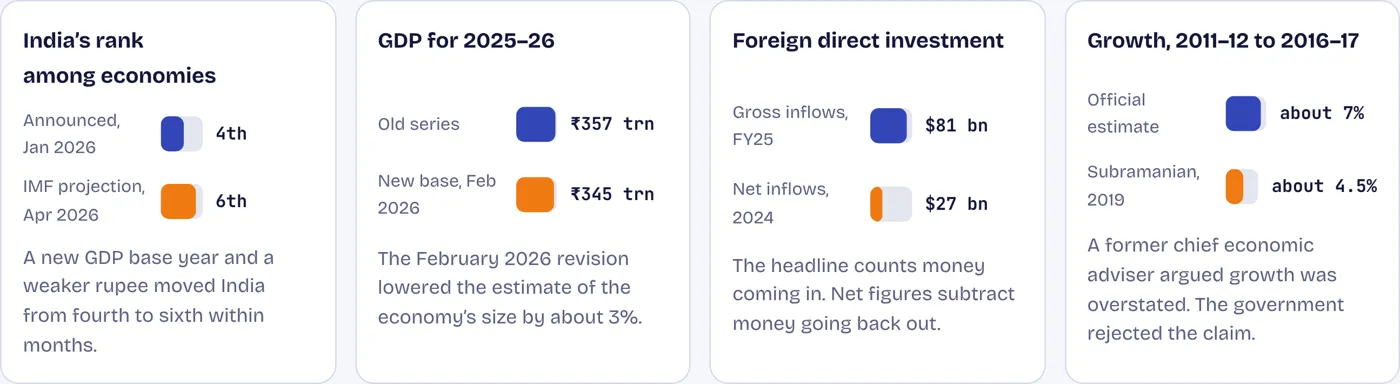
Four numbers that depend on who is counting
Ch. 1 · Built Fast
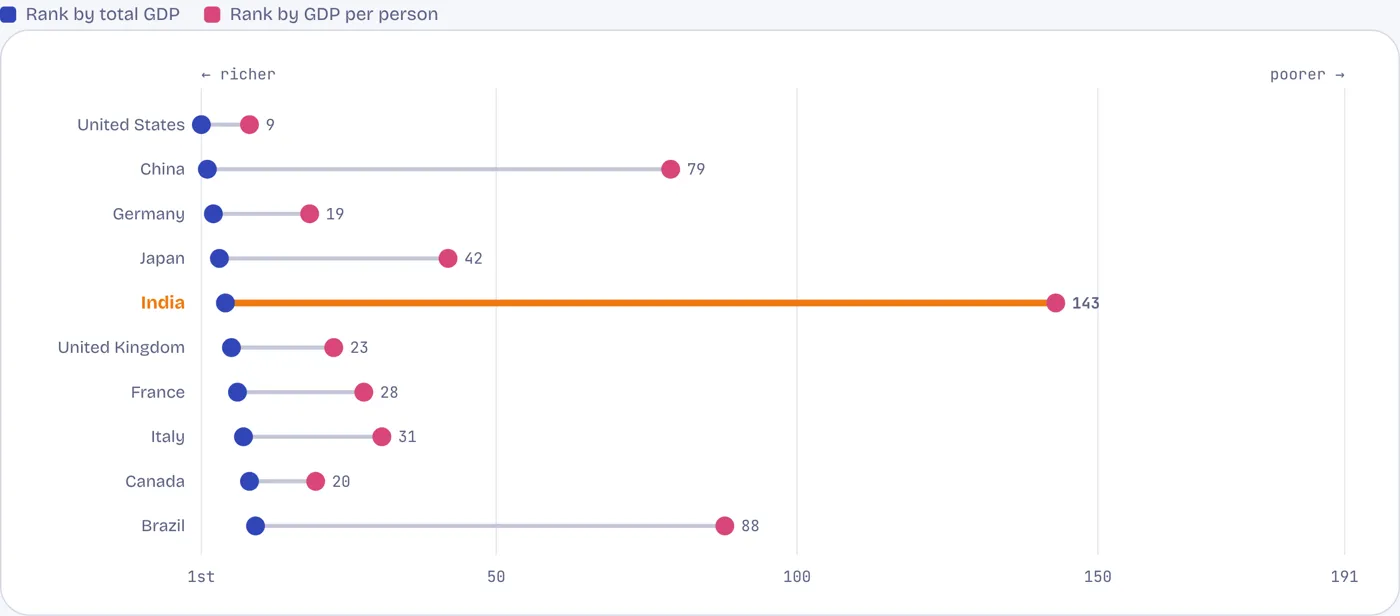
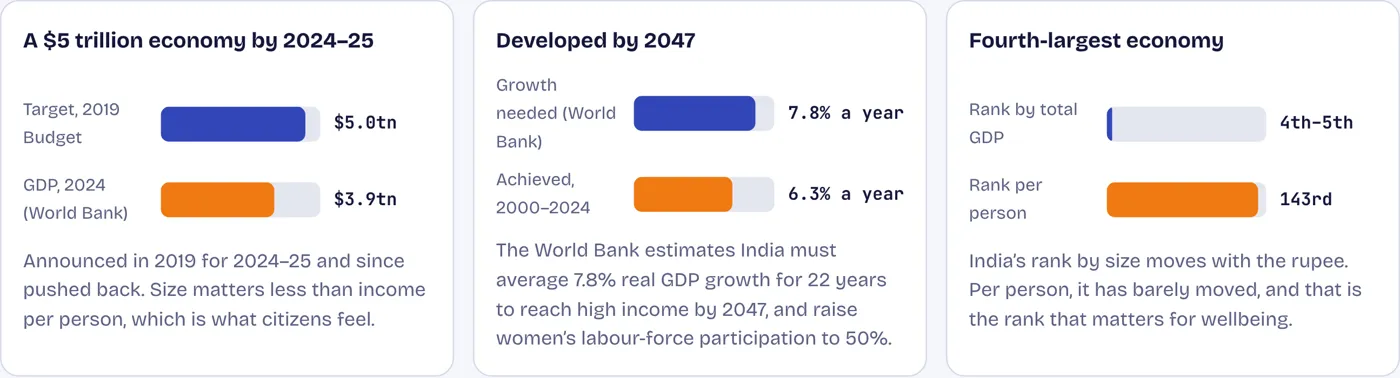
Fifth by the size of its economy, 143rd by the income of its people
Ch. 2 · Built Fast
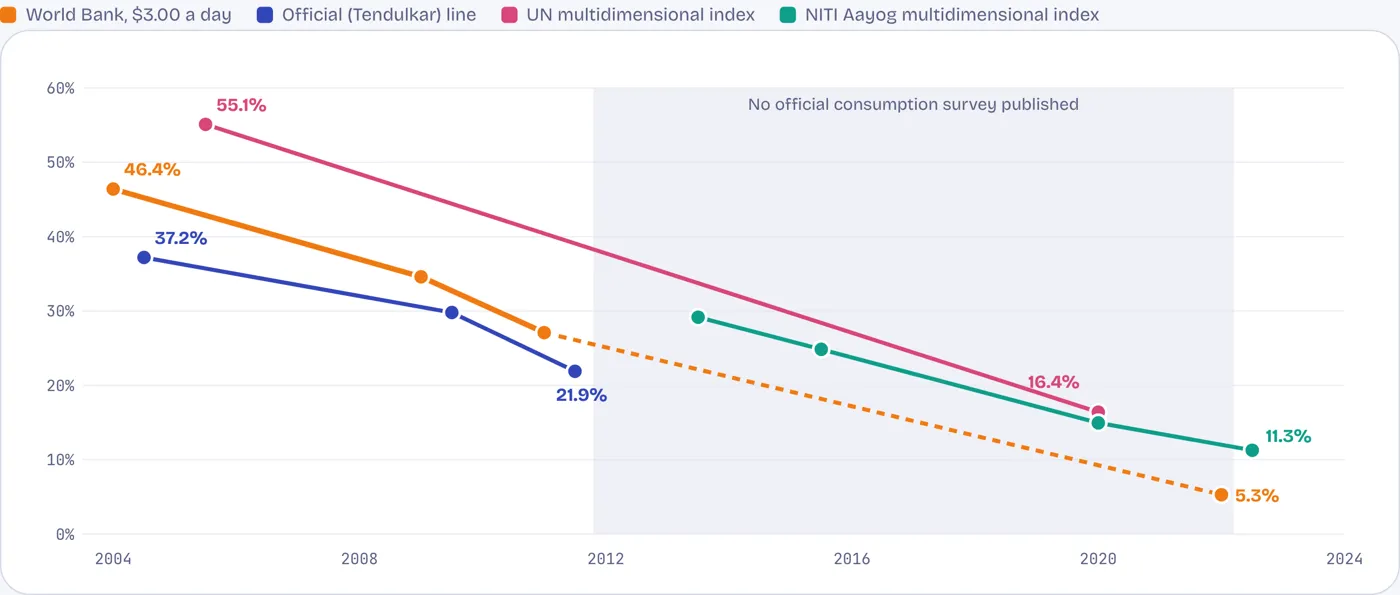
Every measure of poverty points the same way
Ch. 2 · Built Fast
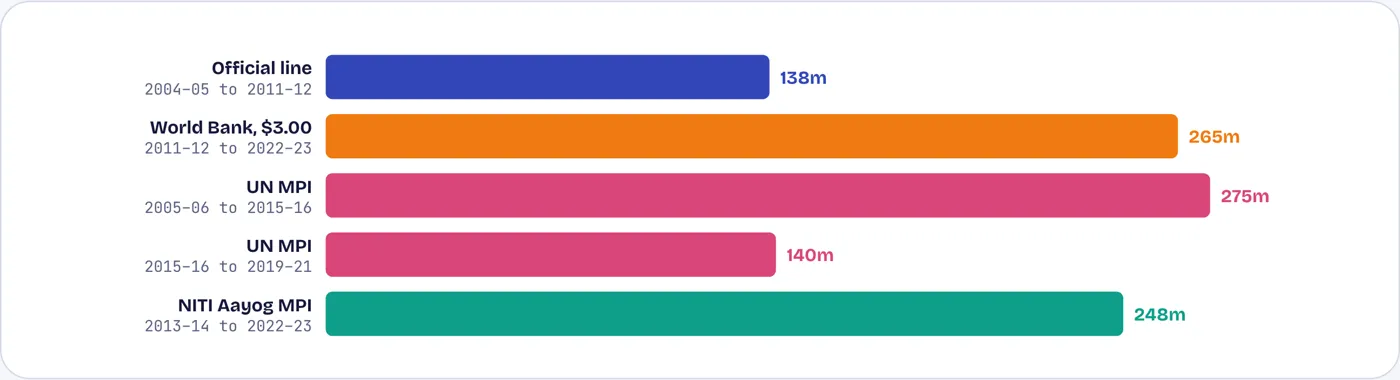
Hundreds of millions left poverty on every count
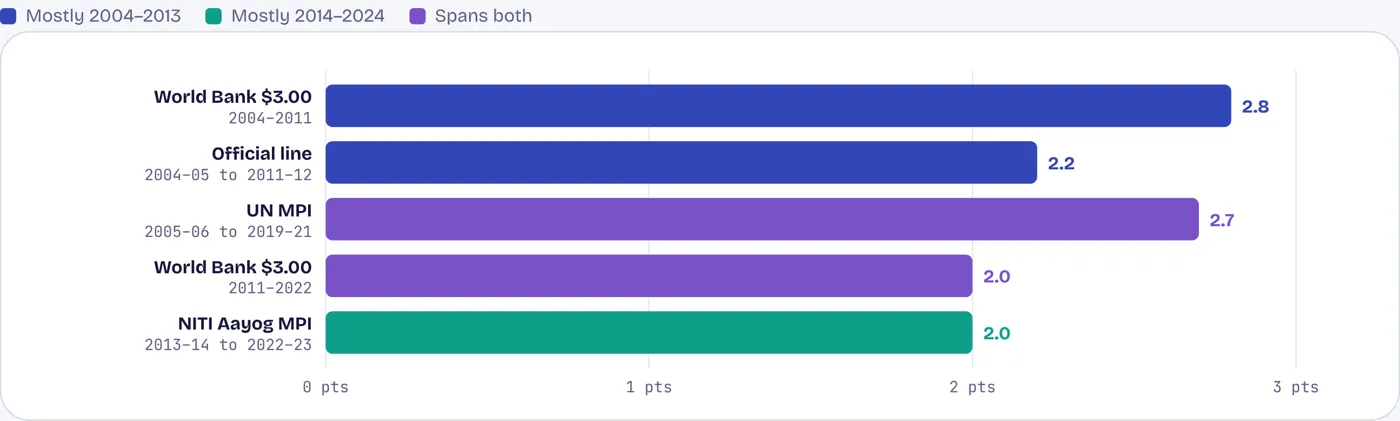
Ch. 2 · Built Fast
Both decades cut poverty fast
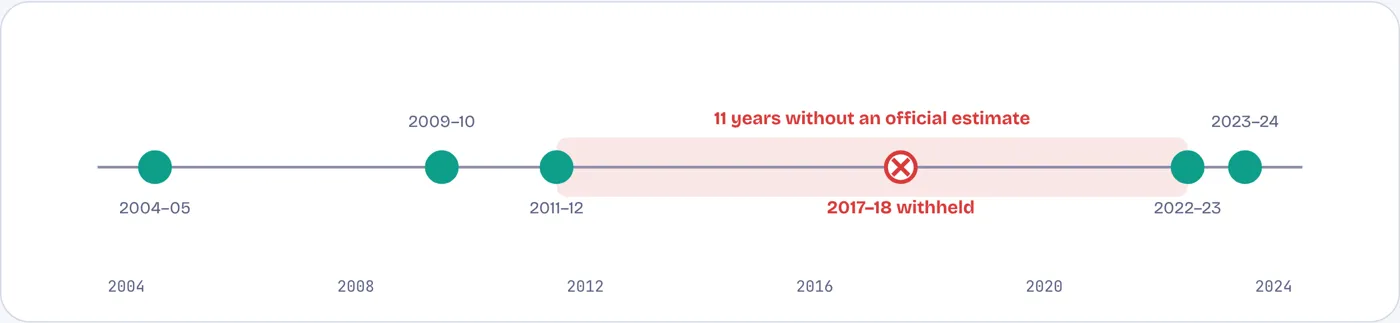
Ch. 2 · Built Fast
Eleven years without an official poverty count
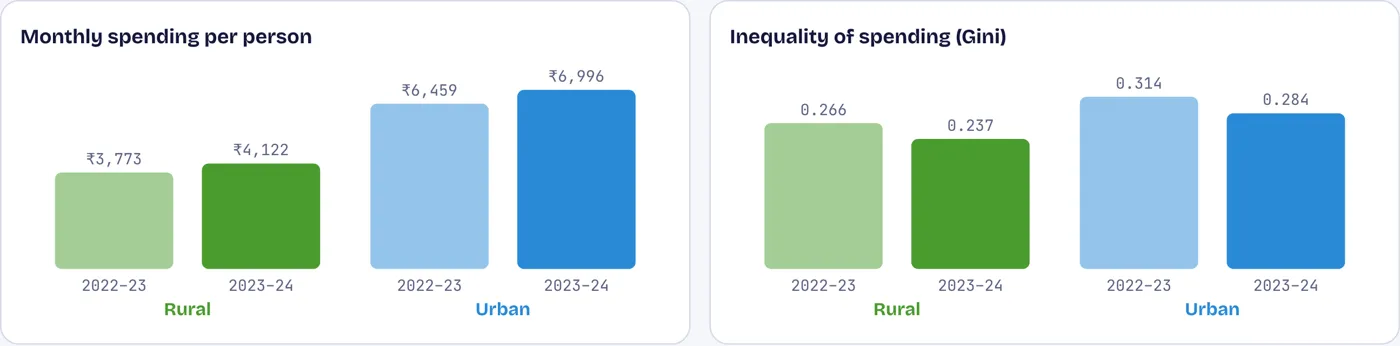
Ch. 2 · Built Fast
A city dweller spends 70% more than a villager
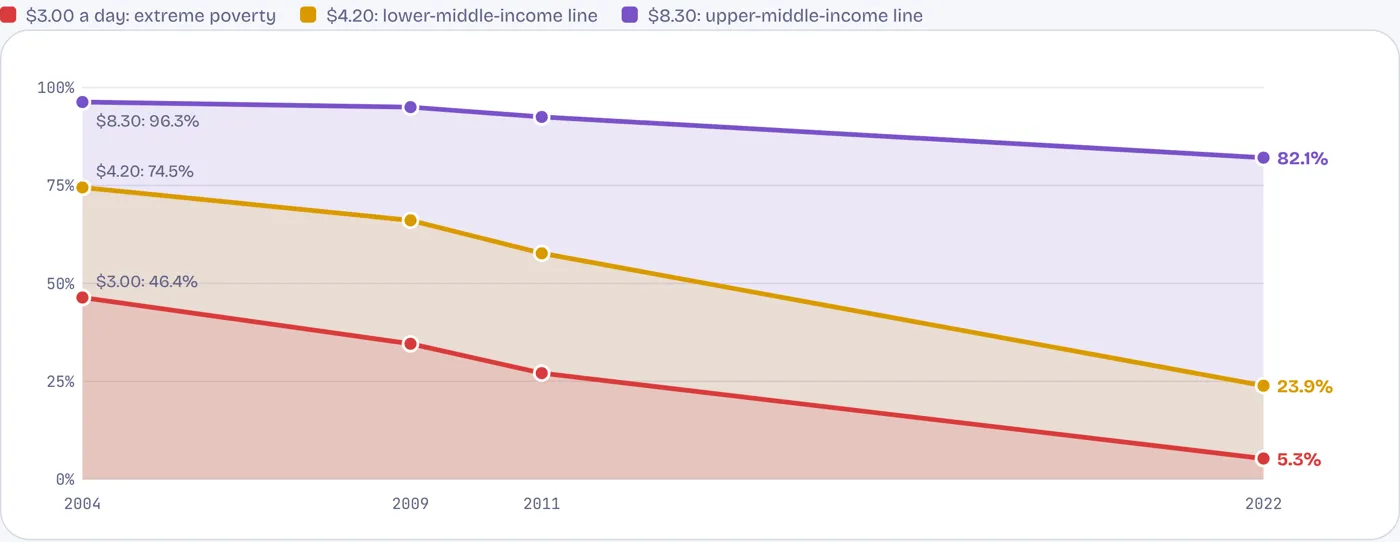
Ch. 2 · Built Fast
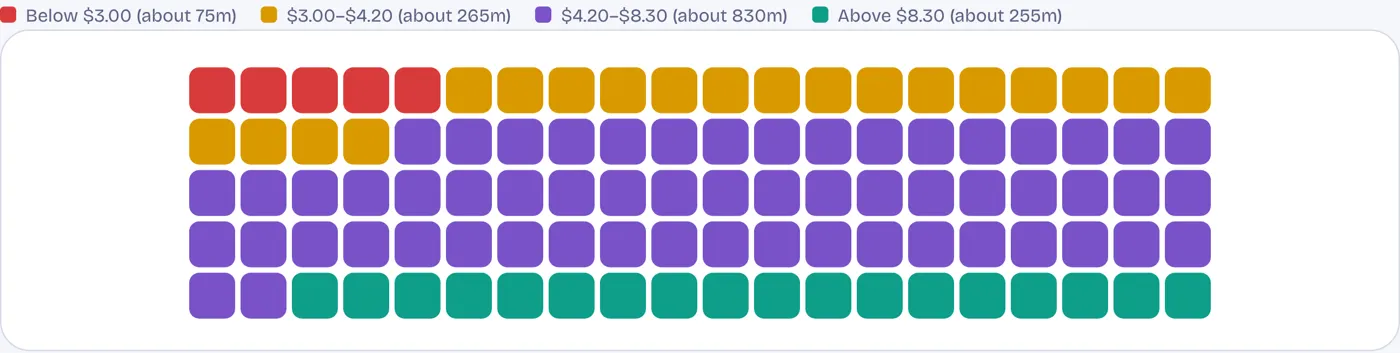
Out of destitution, not yet out of poverty
Ch. 2 · Built Fast
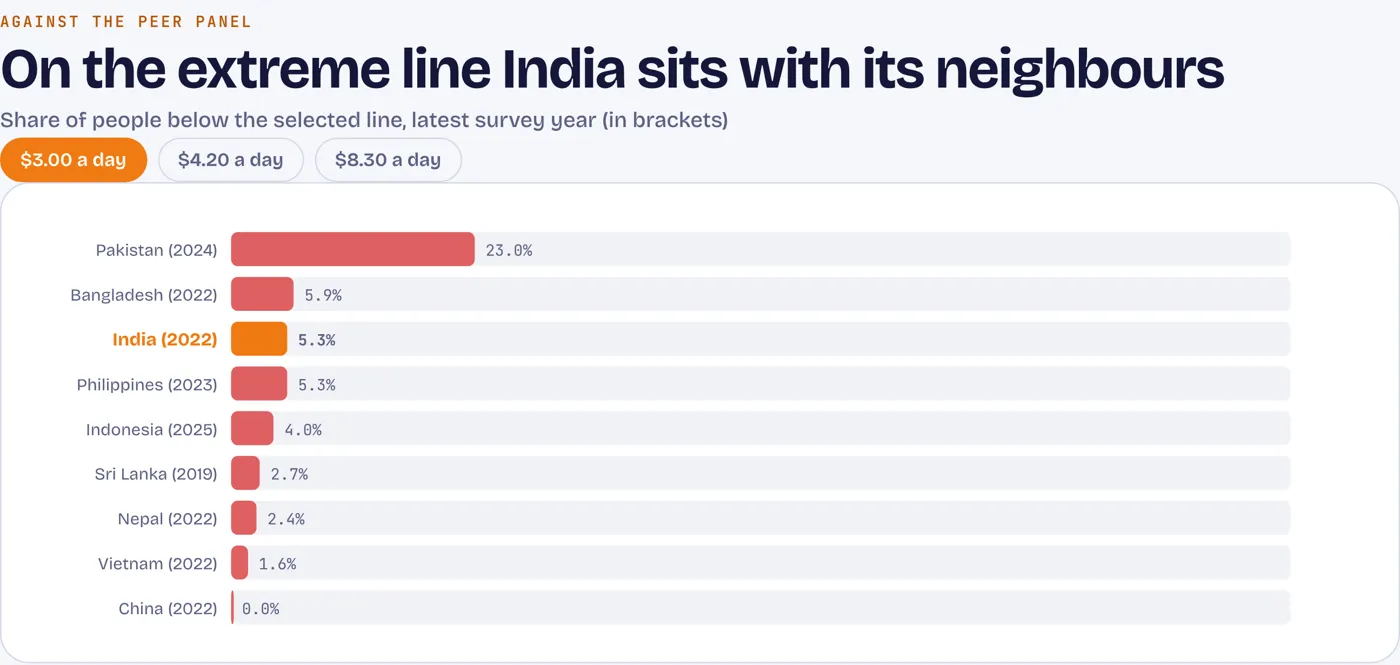
Of every 100 Indians, 82 live below $8.30 a day
Ch. 2 · Built Fast
Figure
Ch. 2 · Built Fast
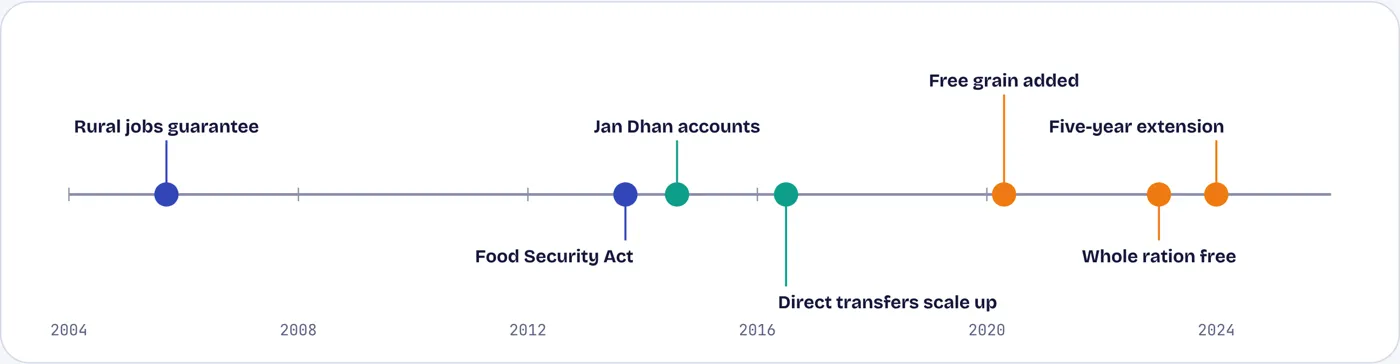
Growth did most of the work; the state put a floor underneath
Ch. 2 · Built Fast
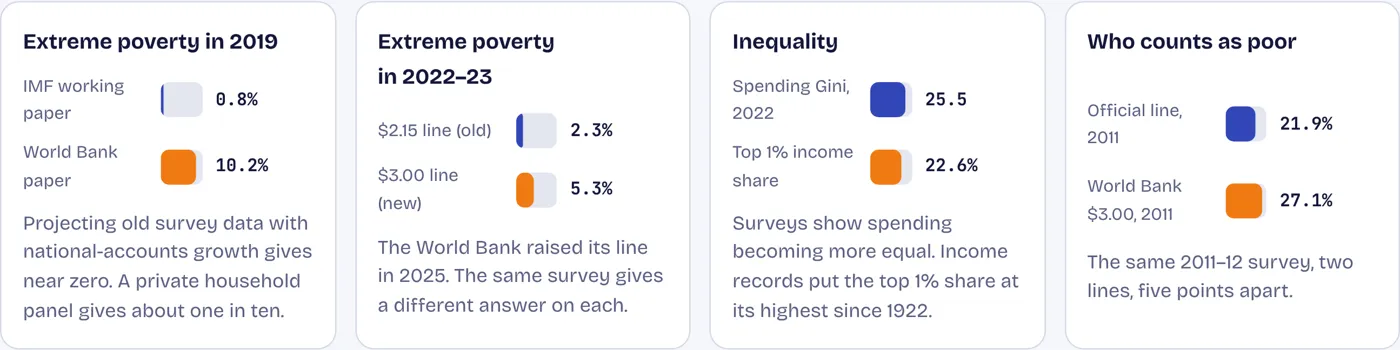
How poor is India now? It depends on the method

Ch. 2 · Built Fast
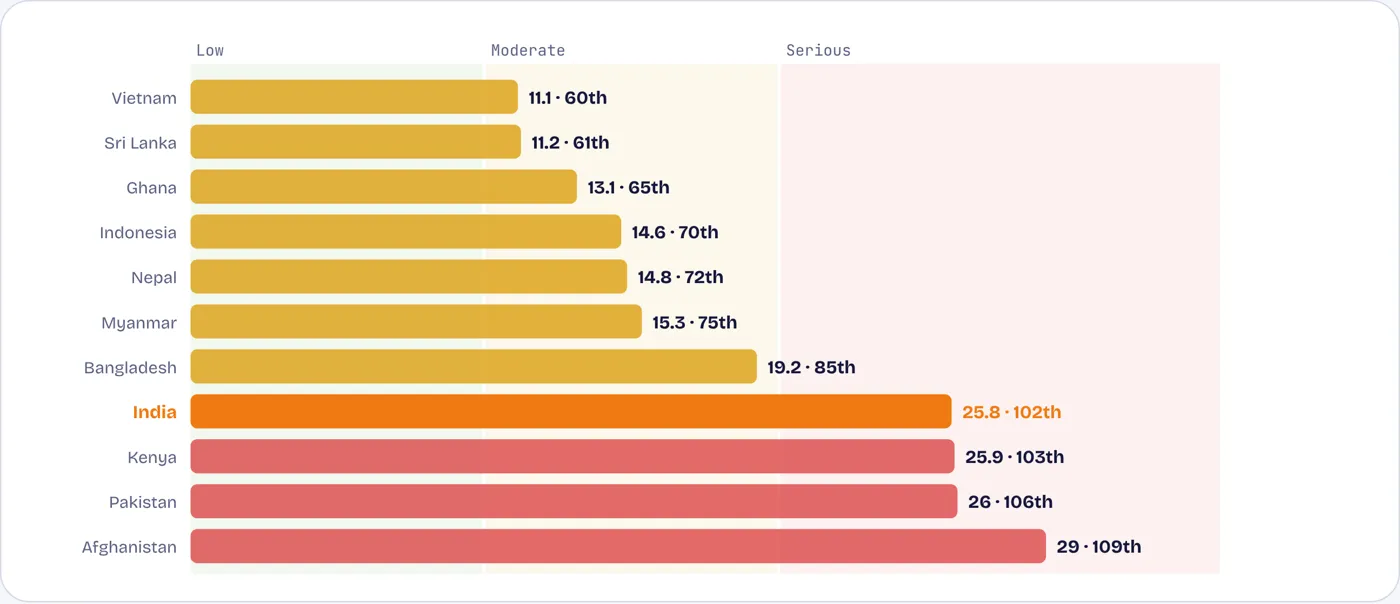
Fewer poor, but 102nd of 123 on hunger
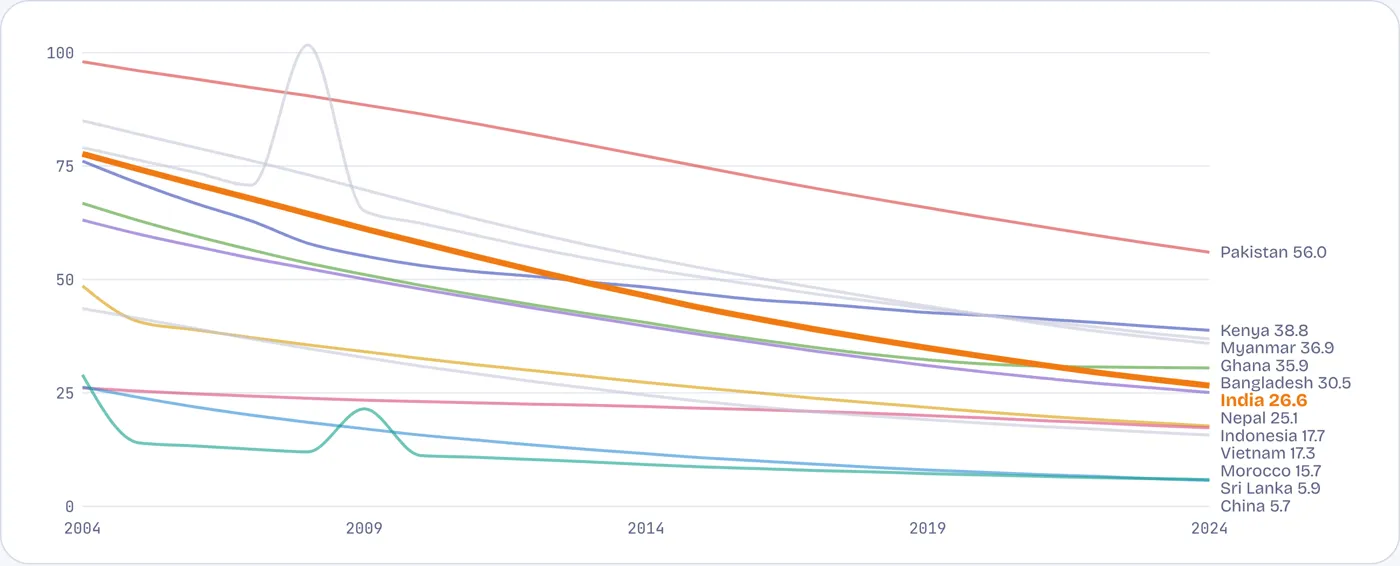
Ch. 3 · Built Fast
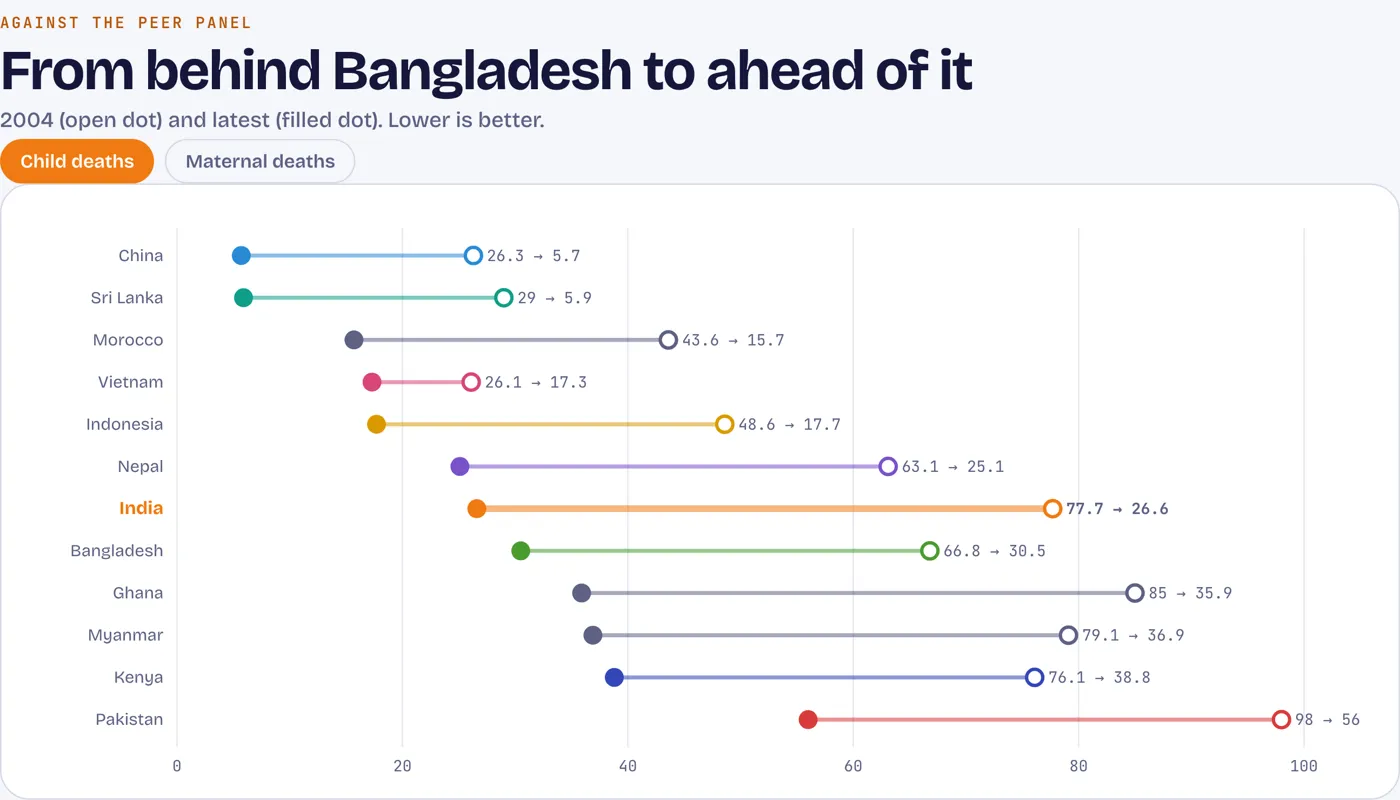
India cut child deaths by two-thirds and passed Bangladesh
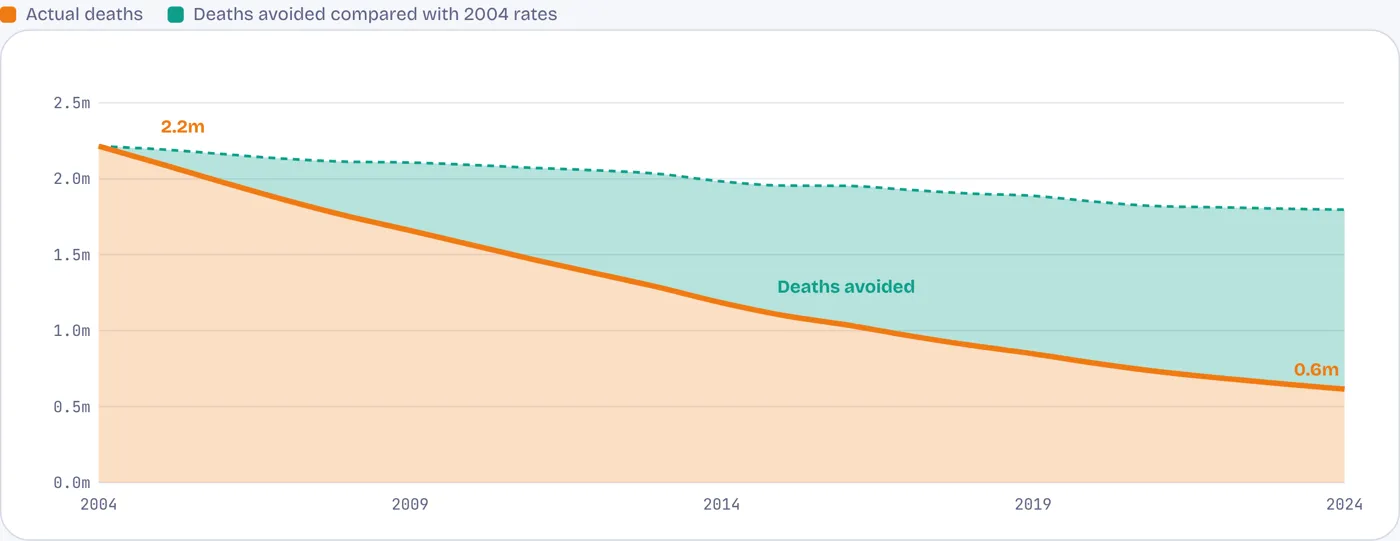
Ch. 3 · Built Fast
About 15 million children alive who would have died at 2004 rates
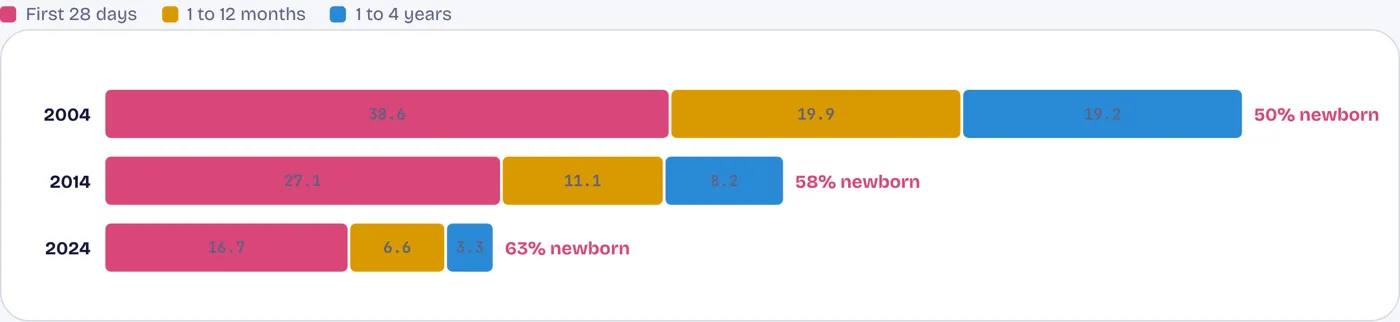
Ch. 3 · Built Fast
Nearly two of every three child deaths now happen in the first month
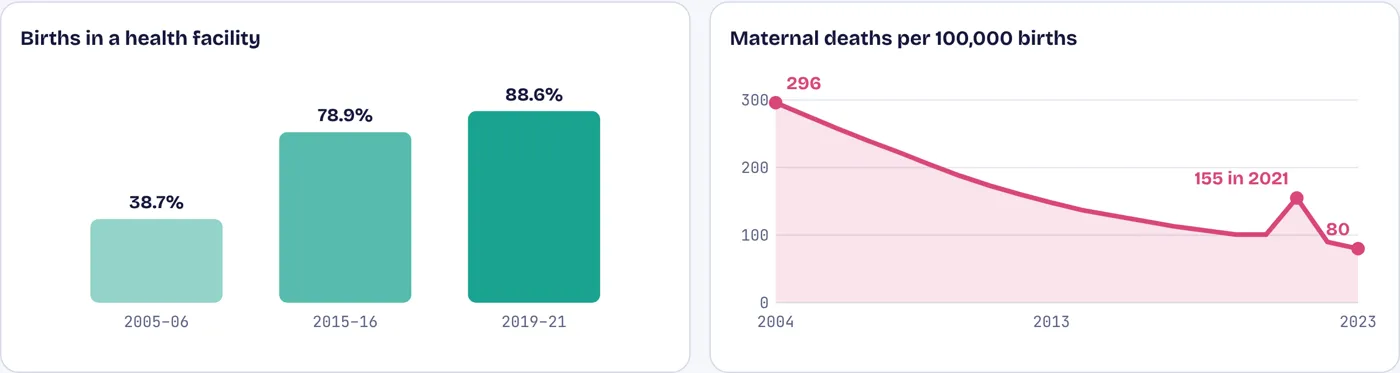
Ch. 3 · Built Fast
Births moved into hospitals and maternal deaths fell by three-quarters
Ch. 3 · Built Fast
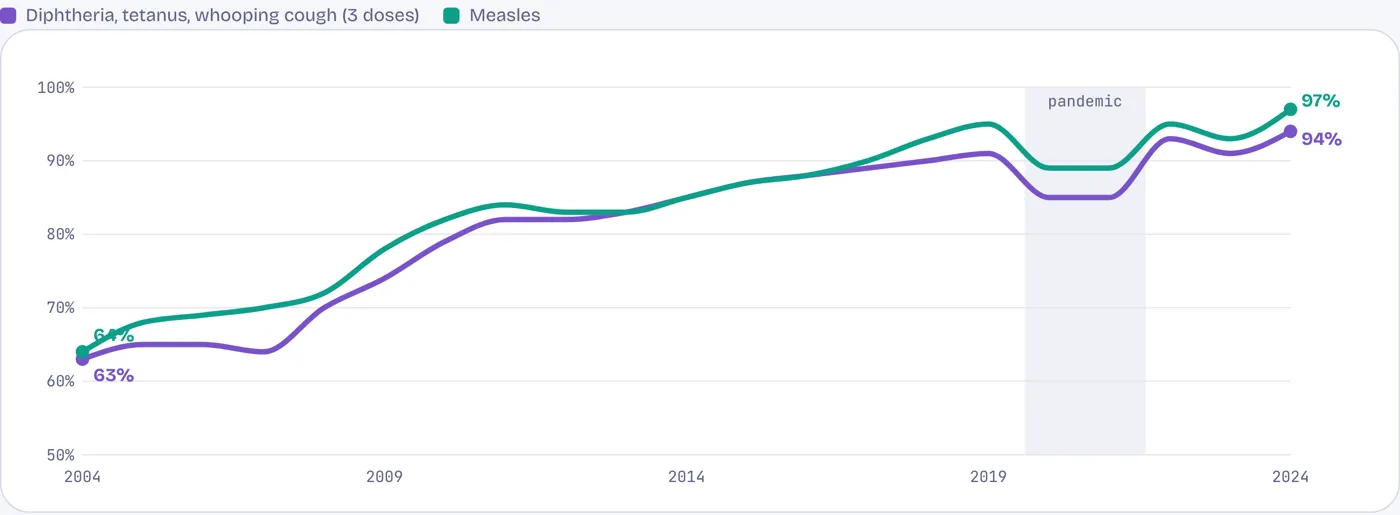
Vaccine coverage rose from under two-thirds to near-universal
Ch. 3 · Built Fast
Figure
Ch. 3 · Built Fast
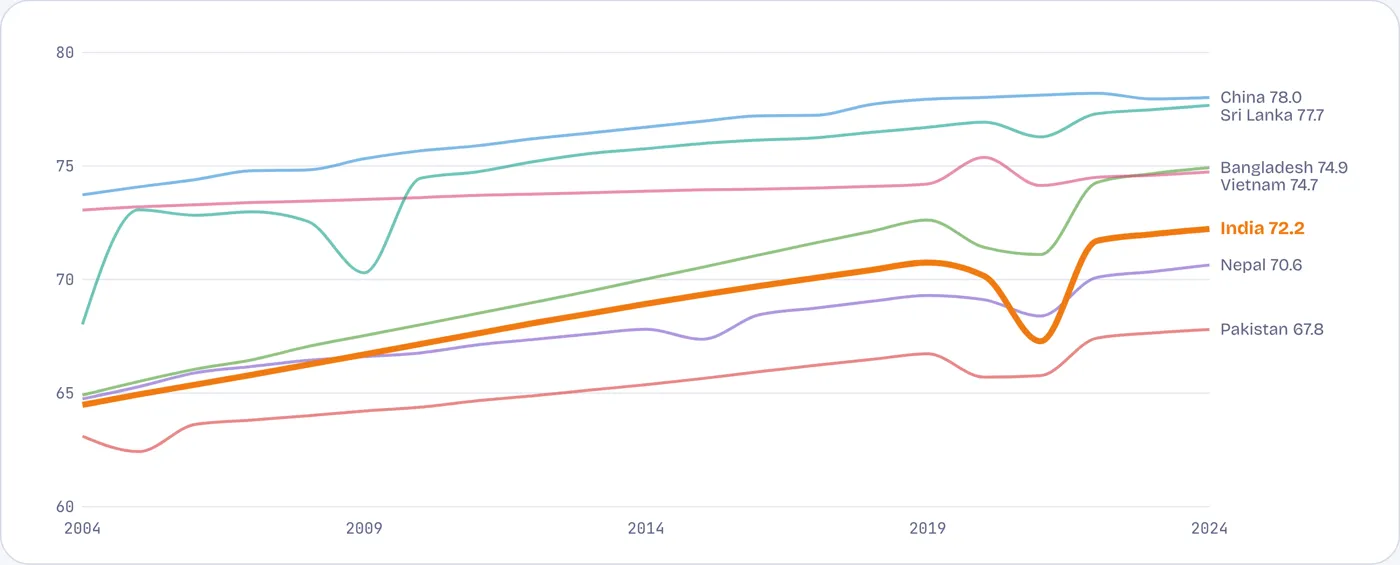
Eight more years of life, but Bangladesh still lives longer
Ch. 3 · Built Fast
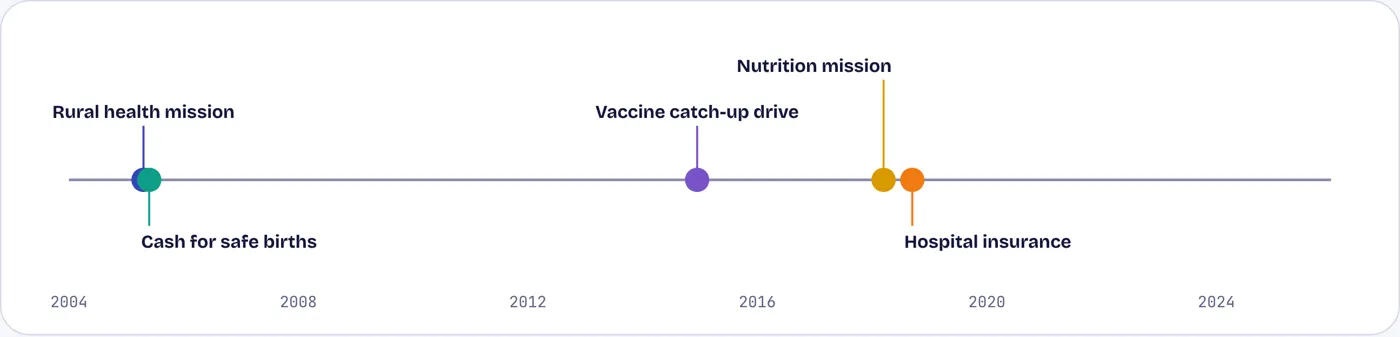
A rural health mission, cash for safe births, a vaccine drive
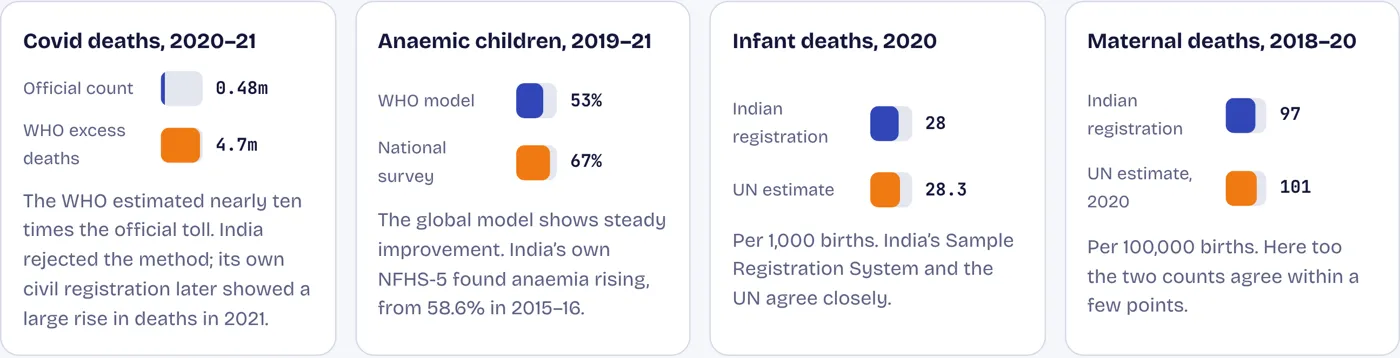
Ch. 3 · Built Fast
Where the counts agree, and where they do not
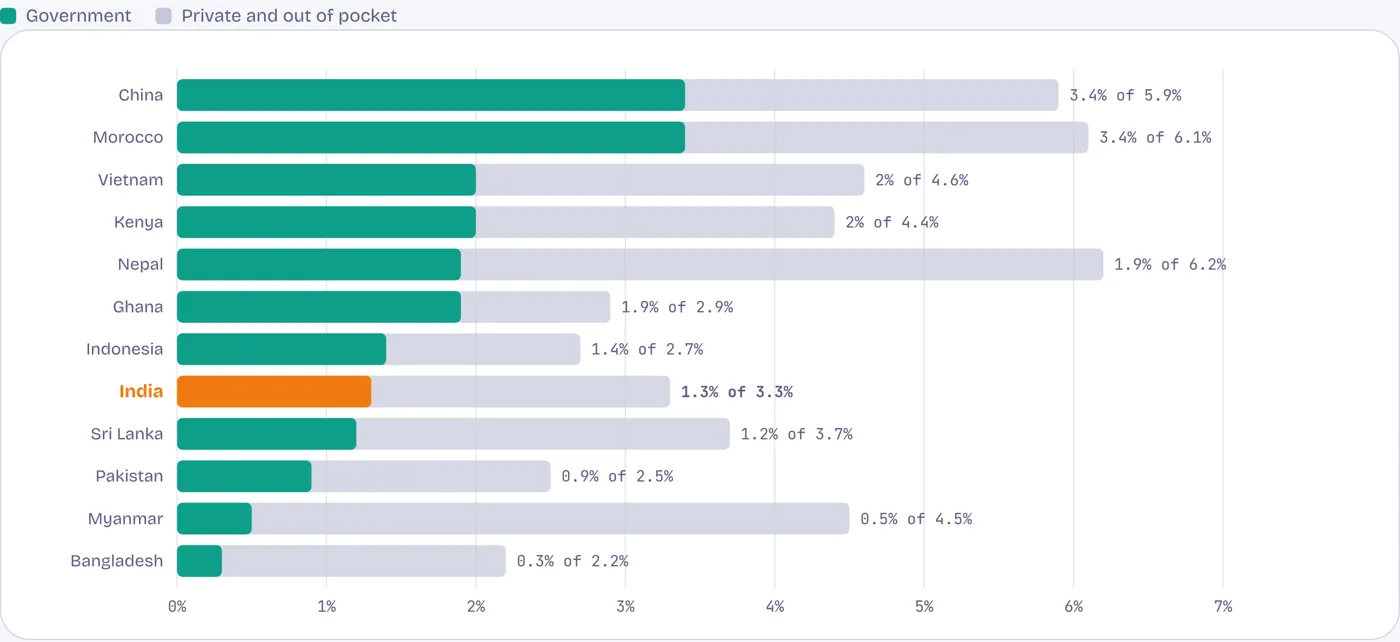
Ch. 3 · Built Fast
Government still spends just 1.3% of GDP on health
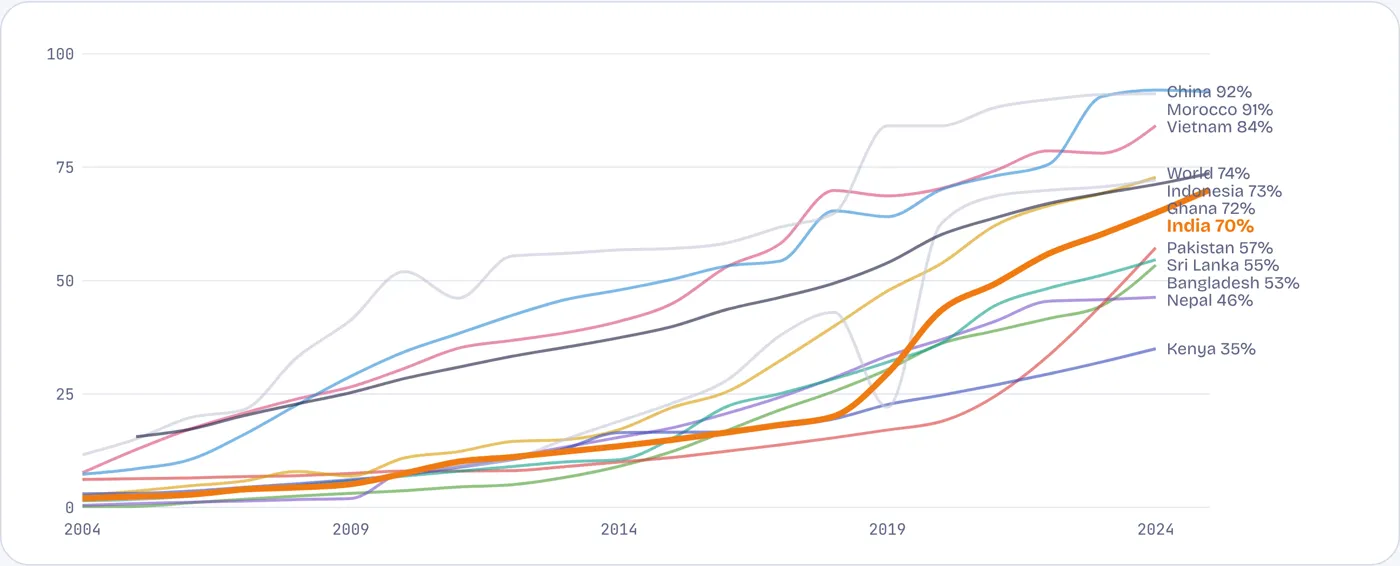
Ch. 4 · Built Fast
From one in fifty online to seven in ten
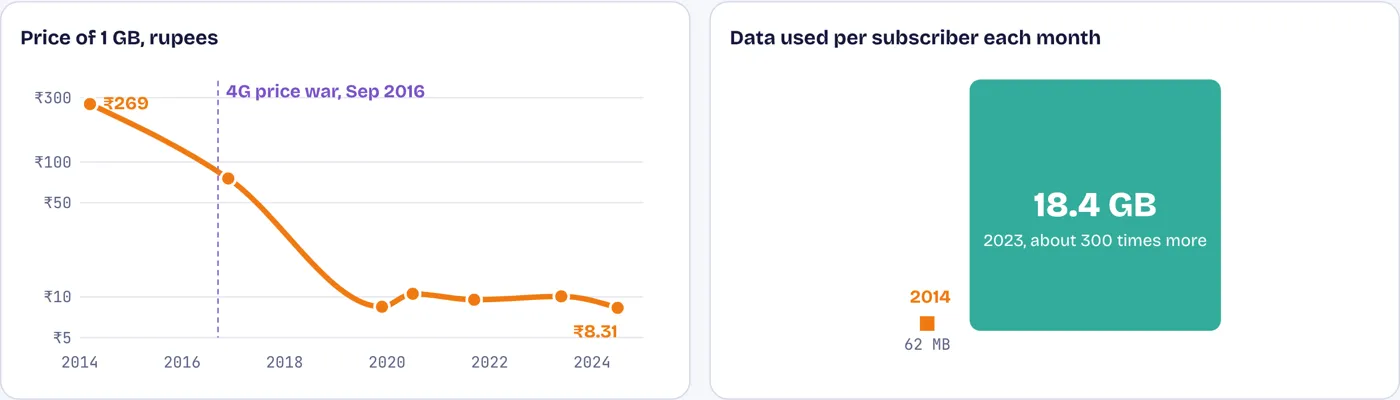
Ch. 4 · Built Fast
Data became 97% cheaper and use rose 300 times
Ch. 4 · Built Fast
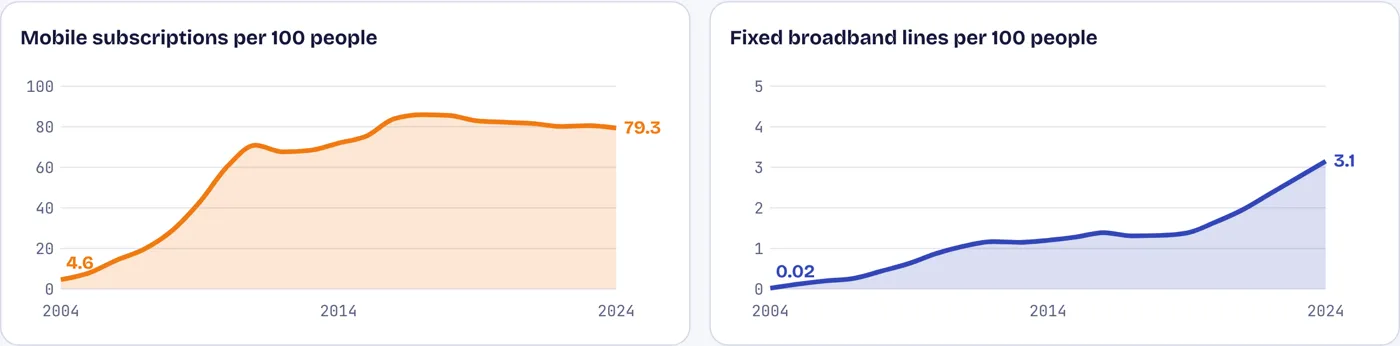
India skipped the fixed line and went straight to the phone
Ch. 4 · Built Fast
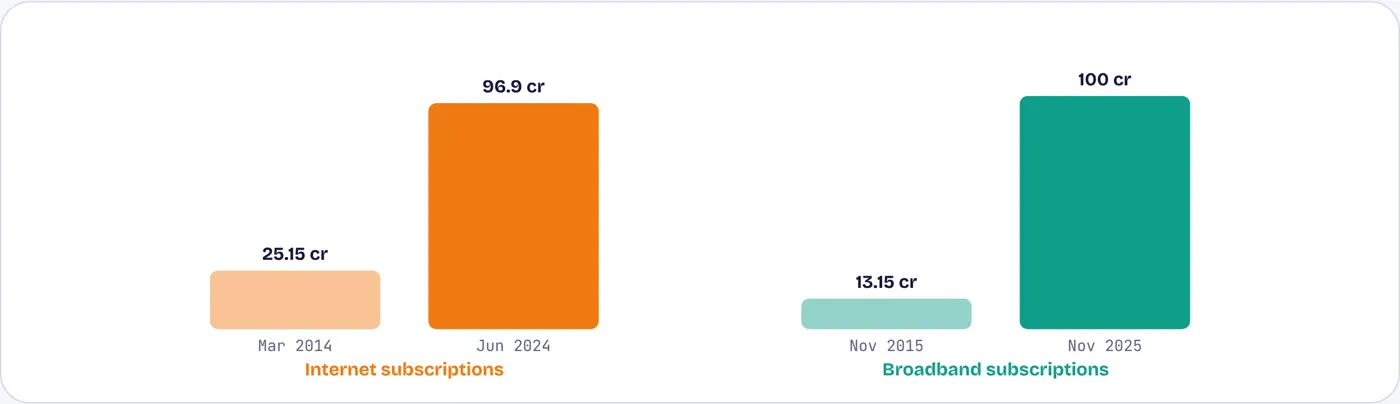
Internet subscriptions nearly quadrupled in ten years
Ch. 4 · Built Fast
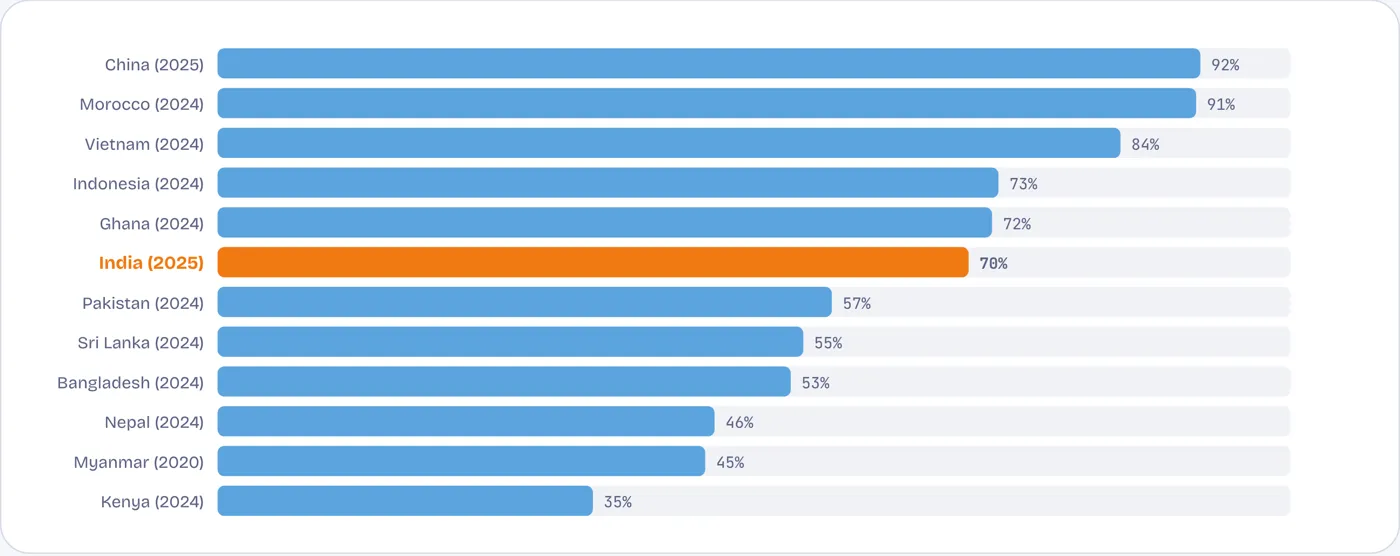
Ahead of South Asia, behind East Asia and Morocco
Ch. 4 · Built Fast
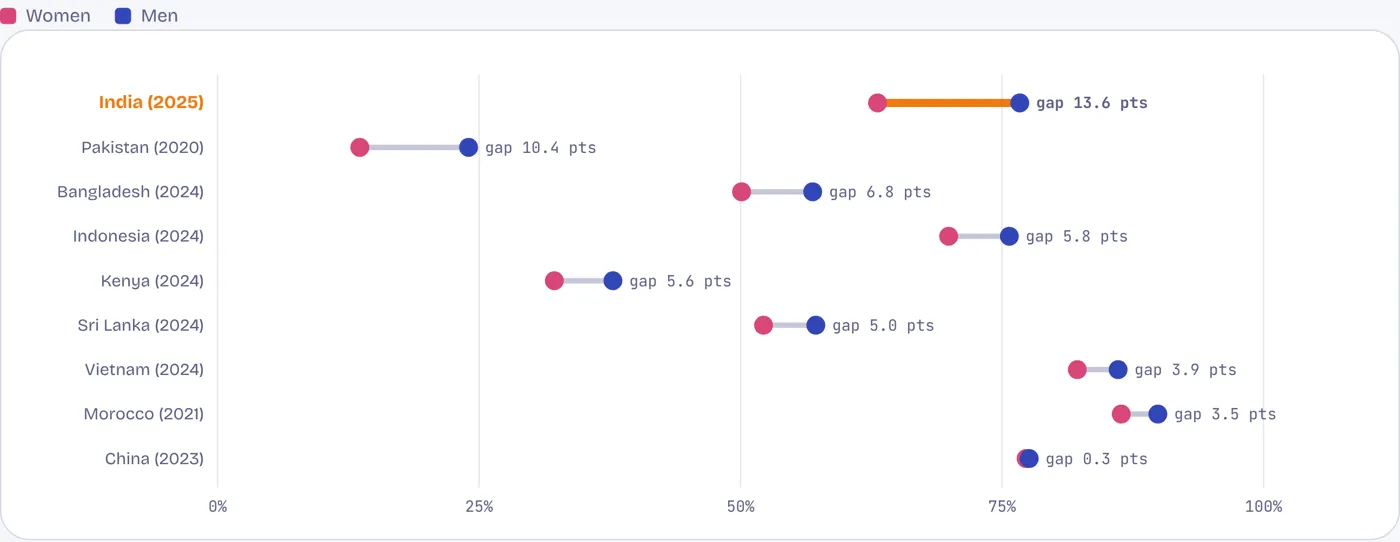
Women are 14 points behind men online, a wider gap than in any East Asian peer
Ch. 4 · Built Fast
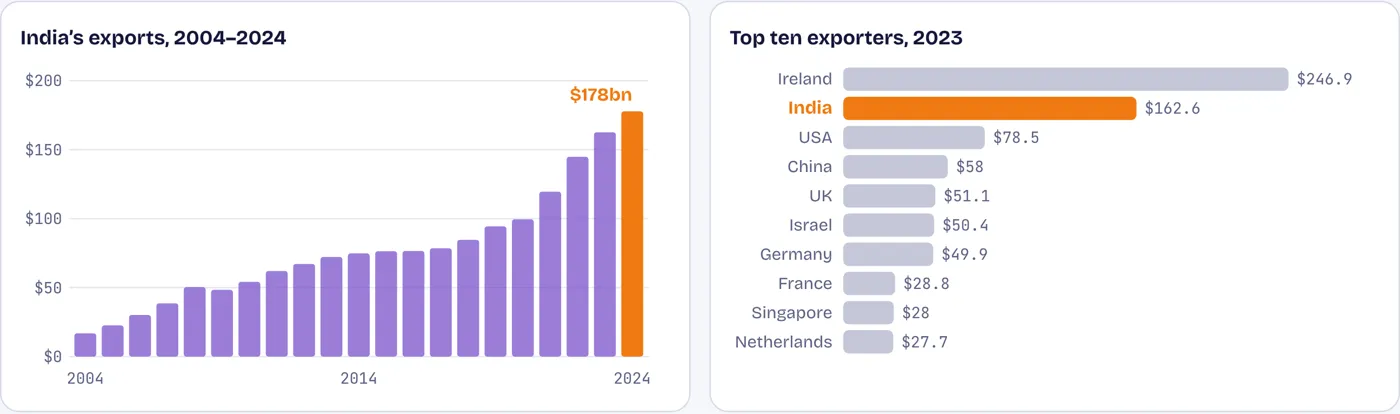
The world’s second-largest exporter of computer services
Ch. 4 · Built Fast
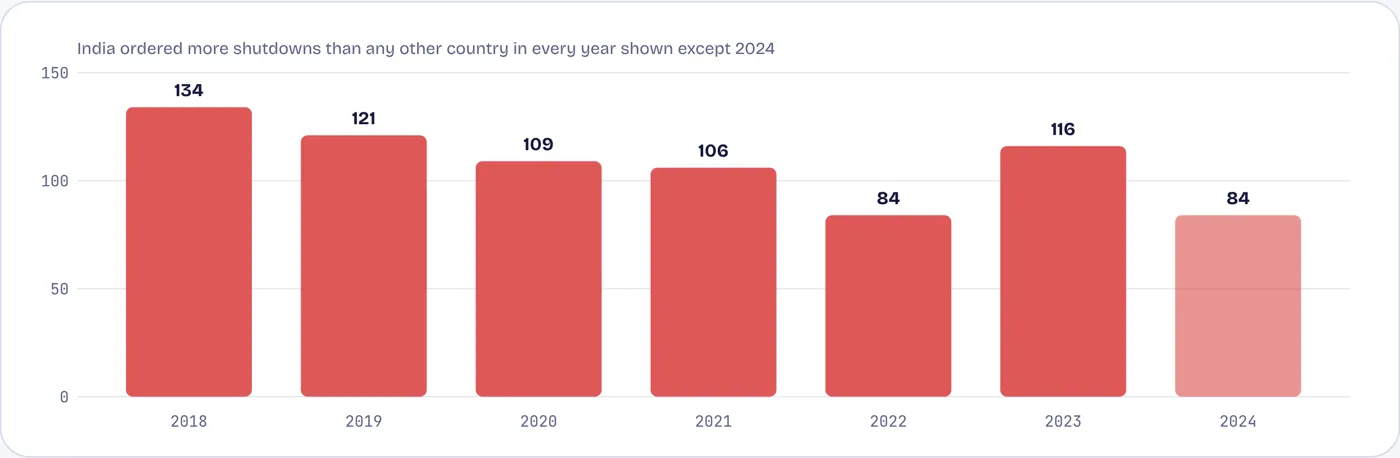
The democracy that shuts down the internet most often
Ch. 4 · Built Fast
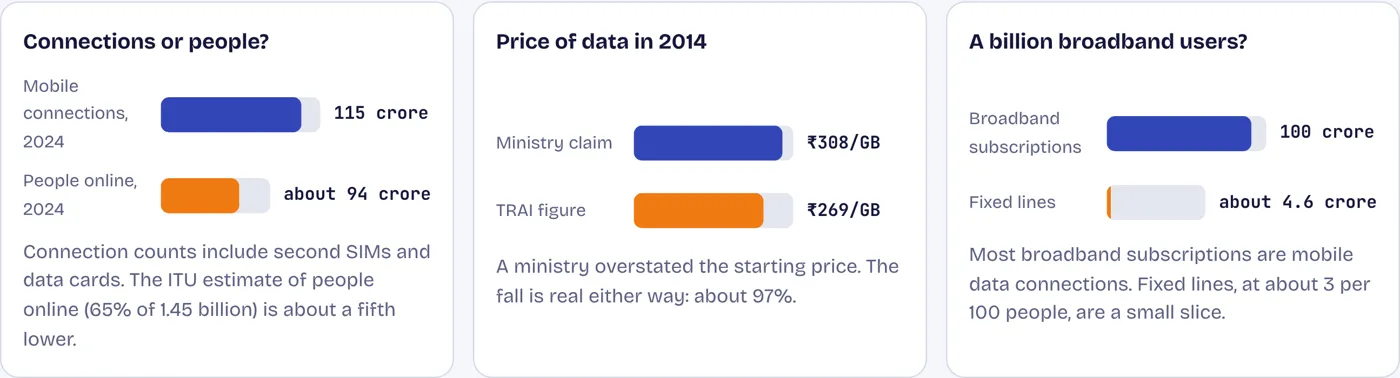
Three numbers that need a second look
Ch. 5 · Built Fast
Reserves grew more than fivefold
Ch. 5 · Built Fast
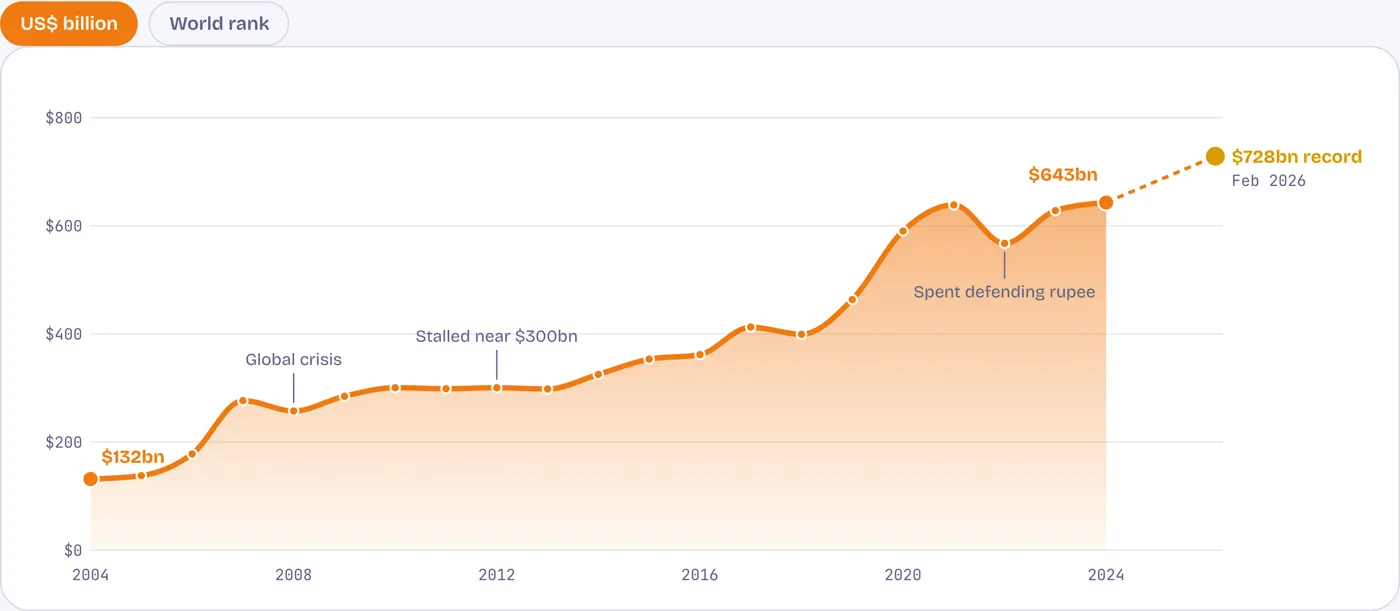
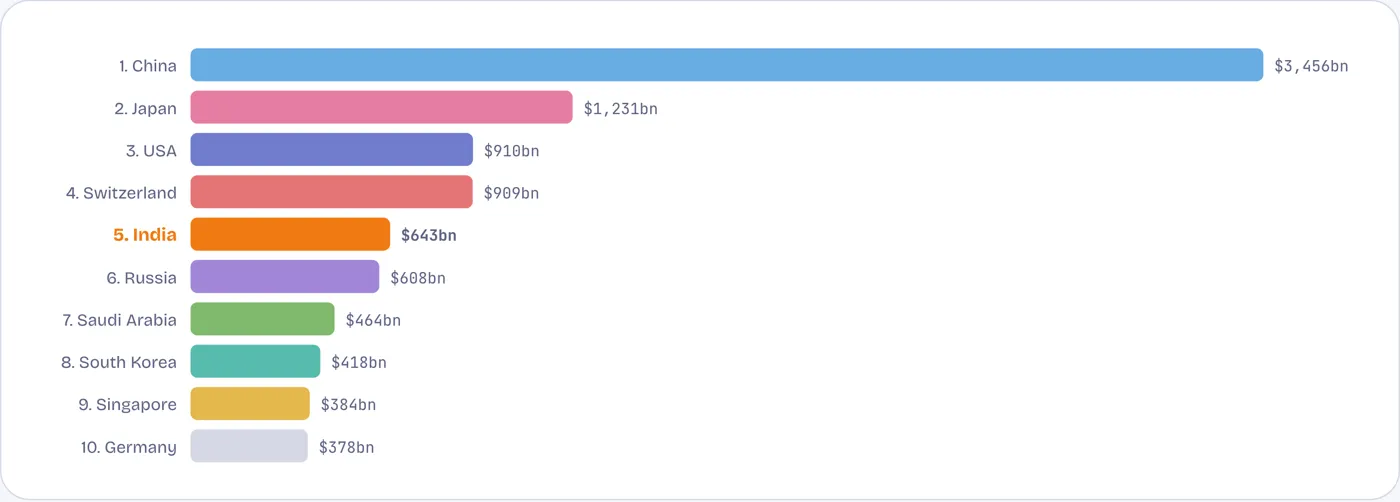
Fifth-largest reserve holder in the world
Ch. 5 · Built Fast
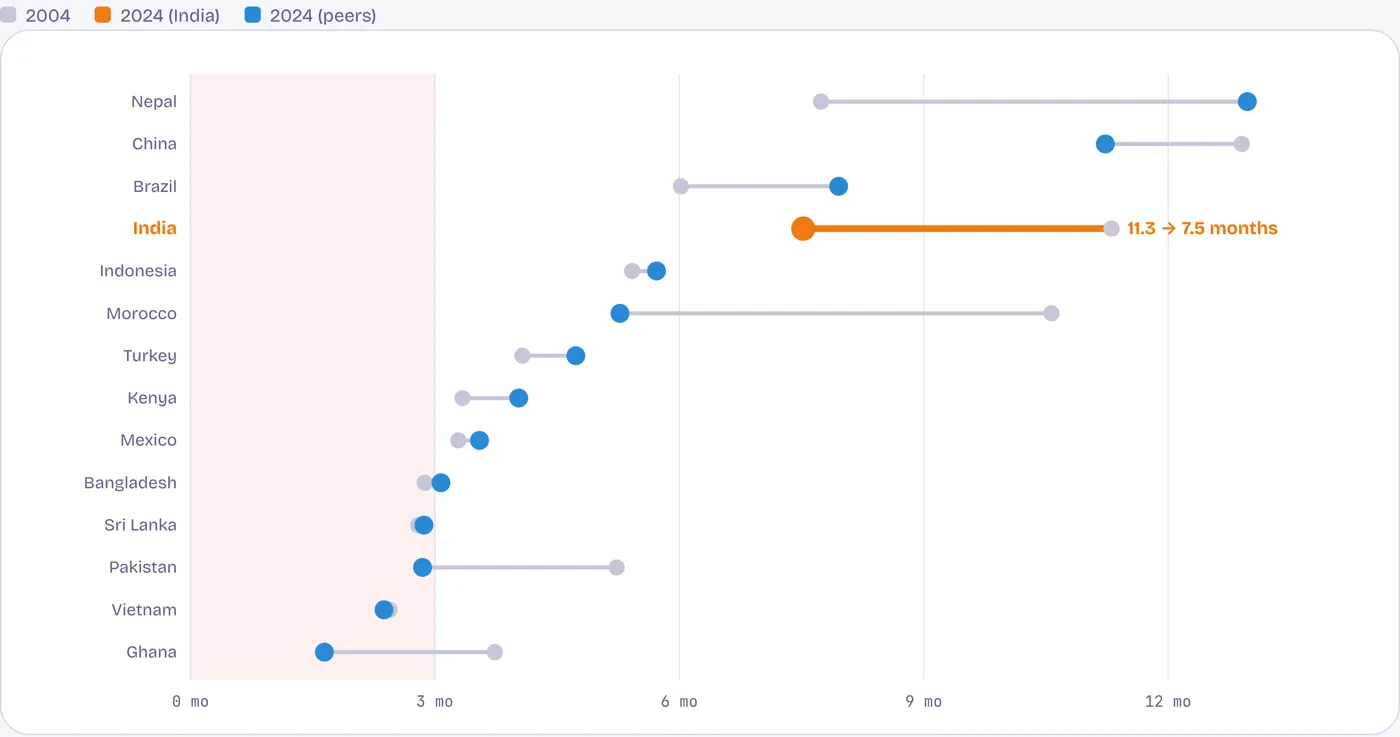
A bigger pile, but fewer months of imports
Ch. 5 · Built Fast
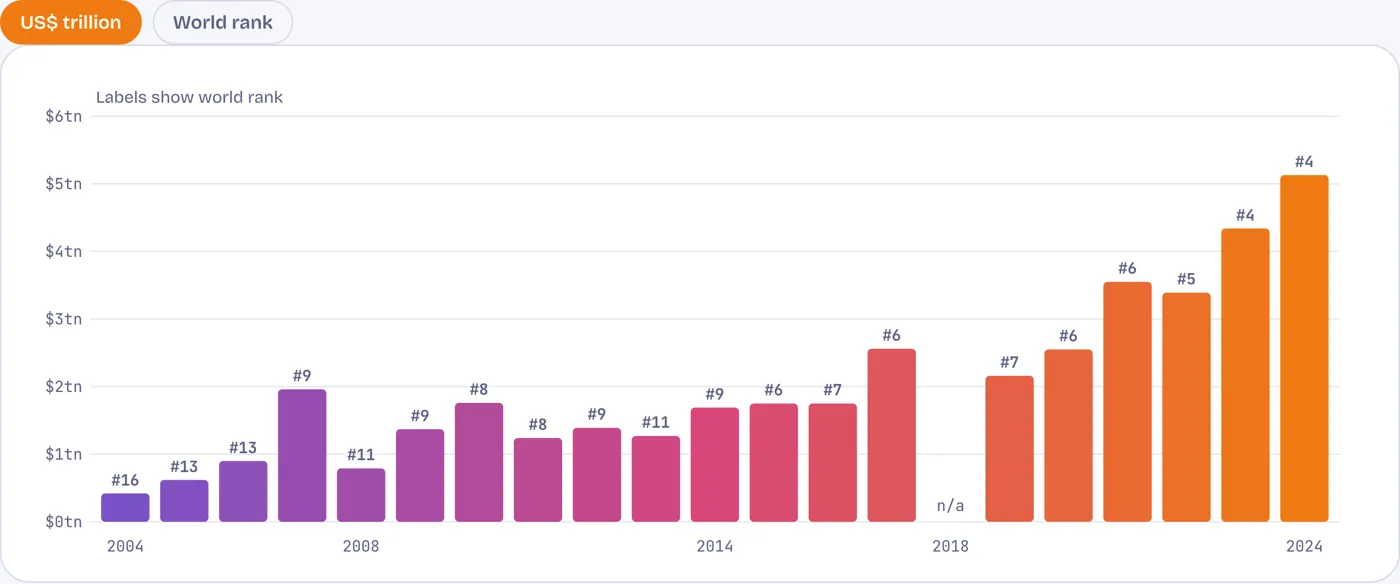
From sixteenth to fourth among the world’s stock markets
Ch. 5 · Built Fast
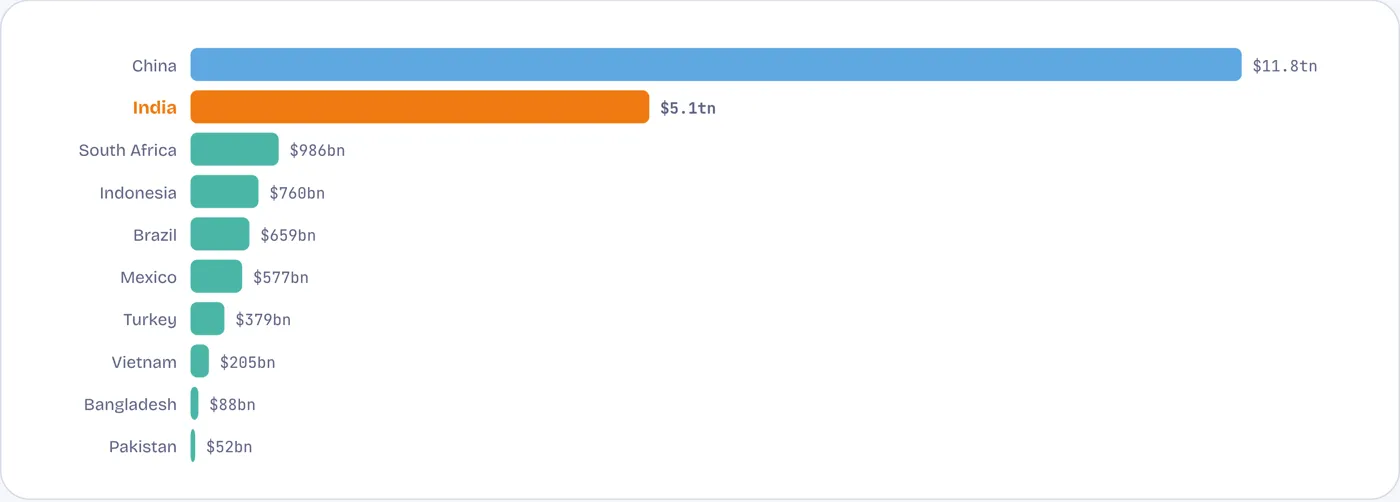
The largest emerging stock market after China
Ch. 5 · Built Fast
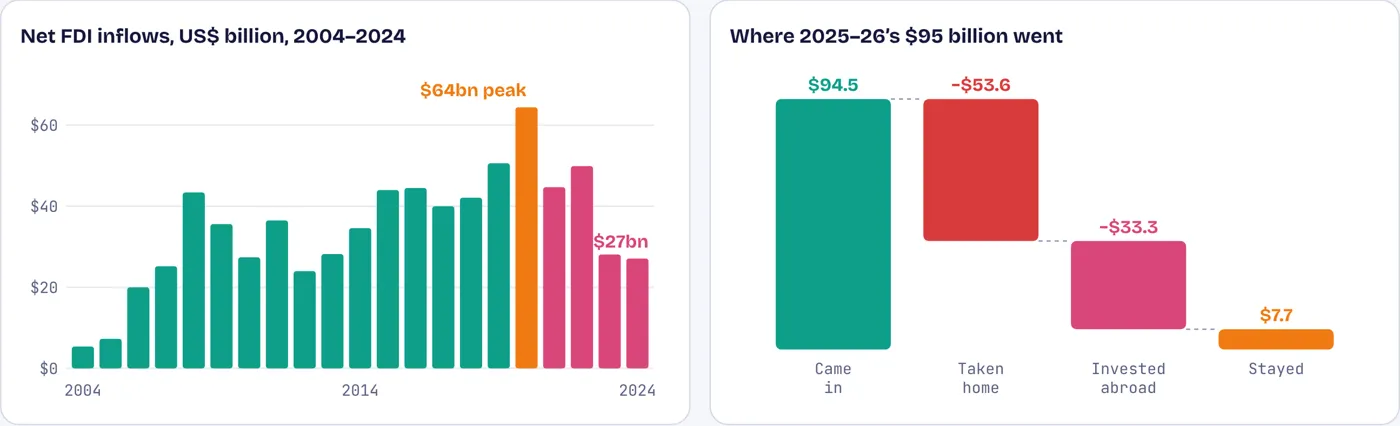
Foreign money arrives in record amounts, and most of it leaves again
Ch. 5 · Built Fast
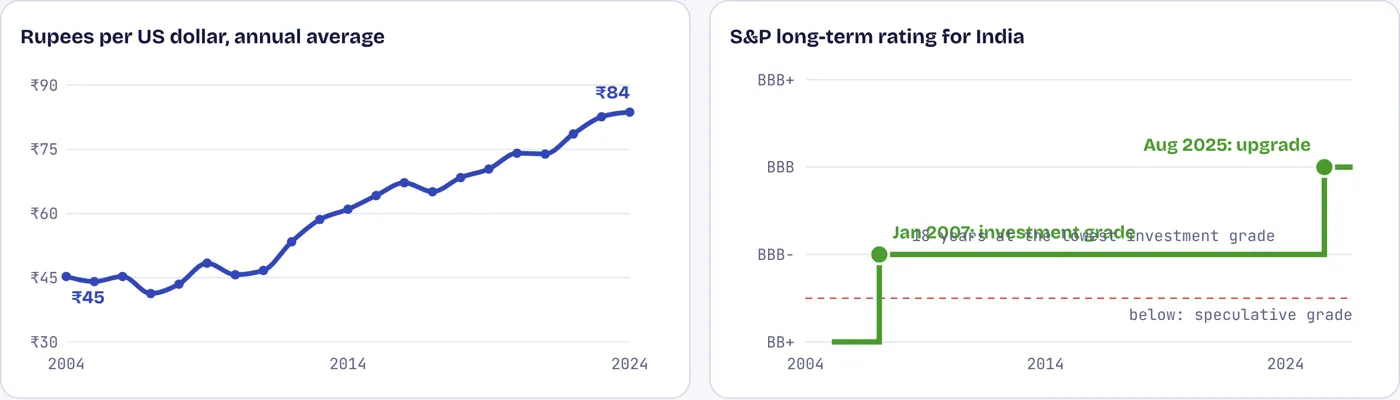
The rupee lost nearly half its dollar value; the credit rating rose for the first time in 18 years
Ch. 5 · Built Fast
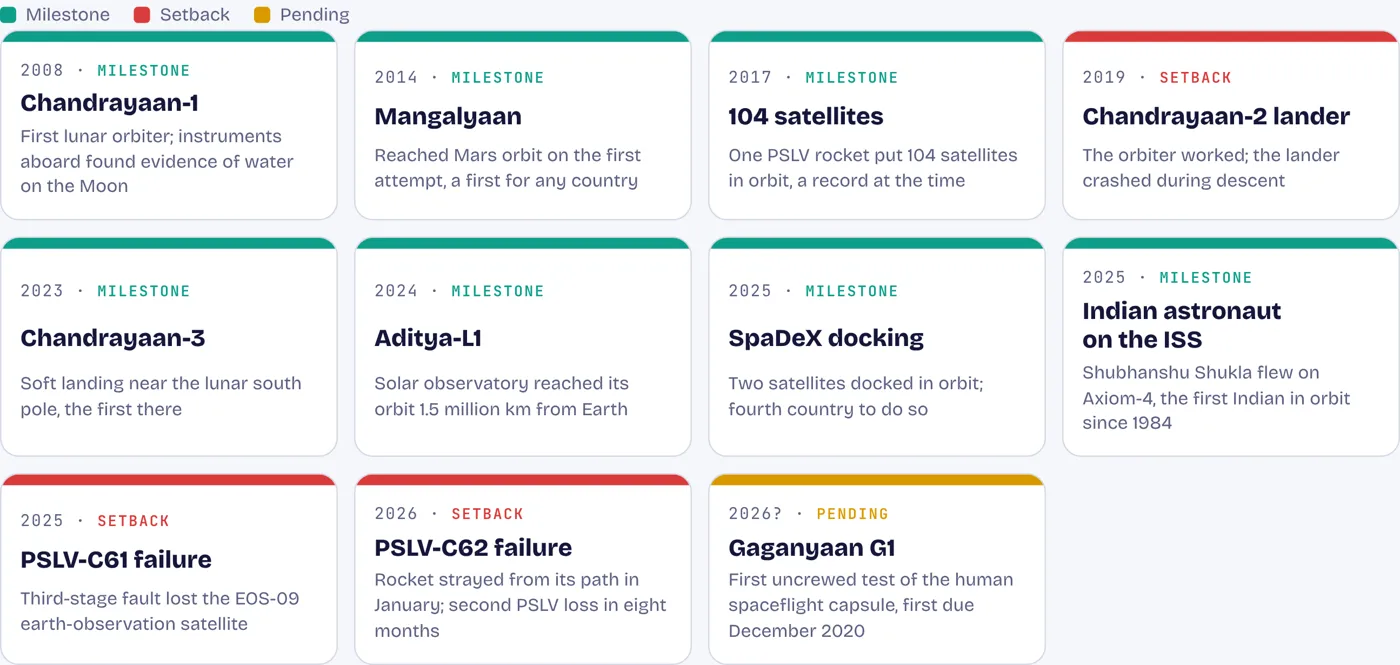
Seven milestones and three setbacks in space
Ch. 5 · Built Fast
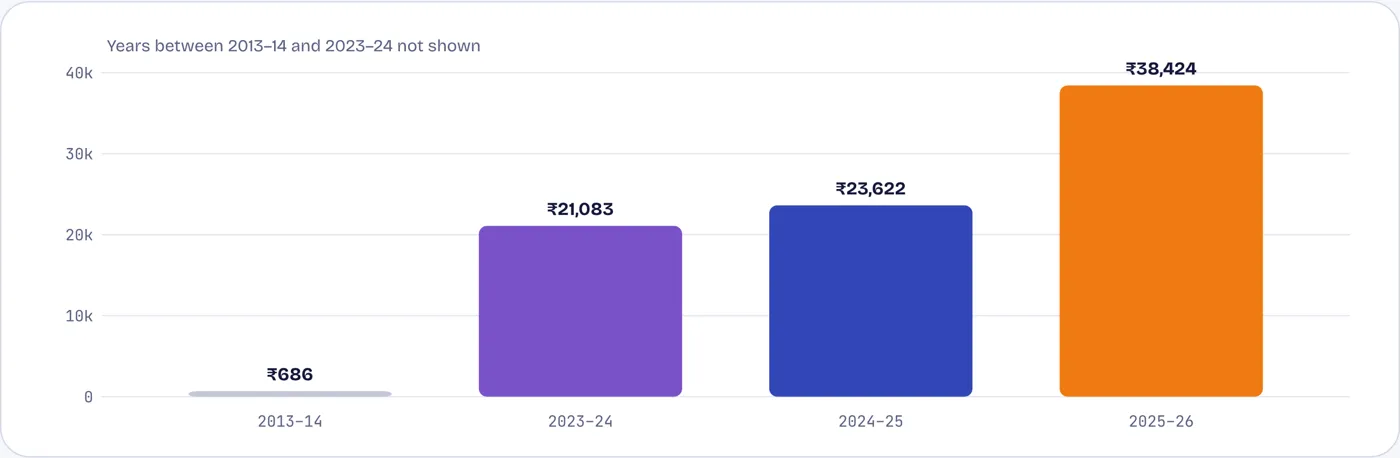
Defence exports grew 56 times in twelve years
Ch. 5 · Built Fast
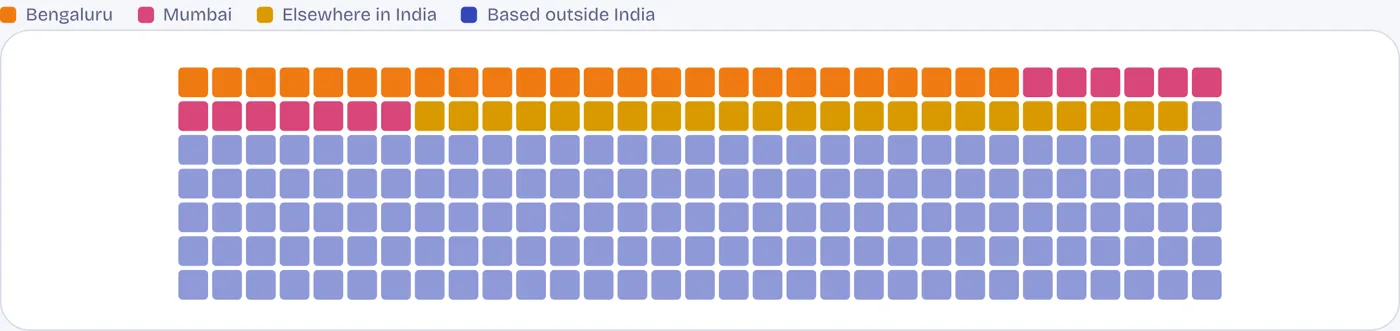
61 unicorns at home, 156 more founded by Indians abroad
Ch. 5 · Built Fast
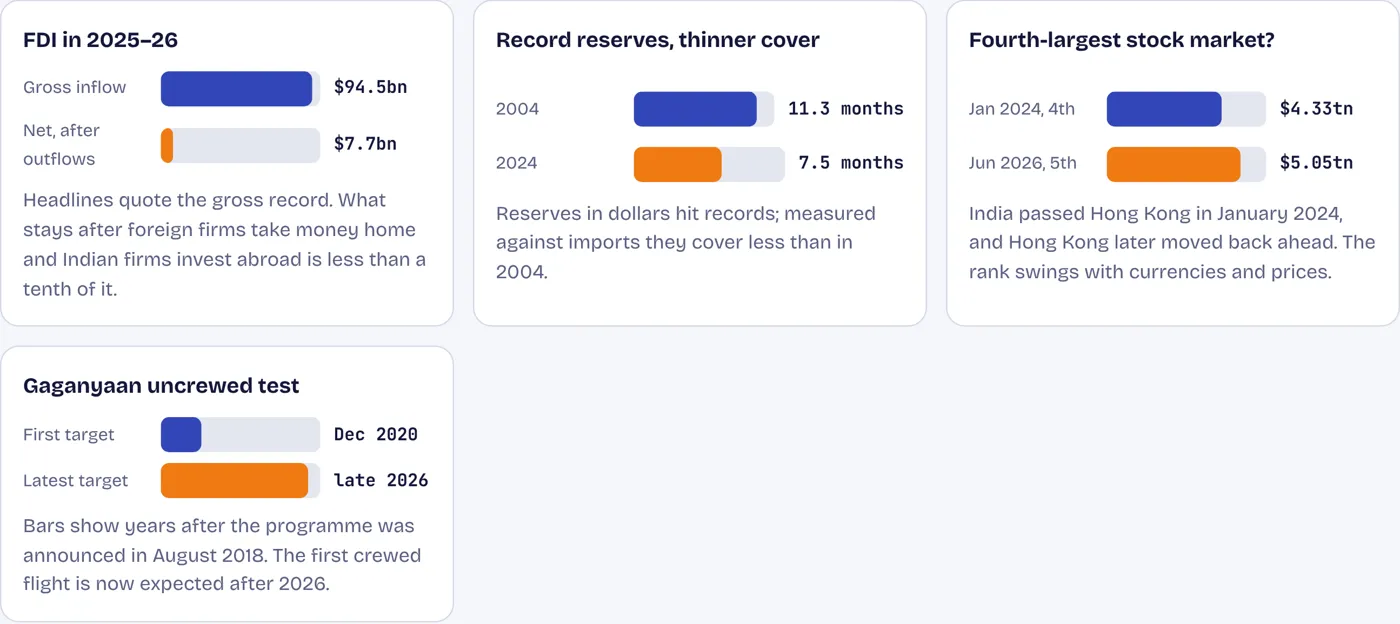
Four numbers that need a second look
Ch. 6 · Built Fast
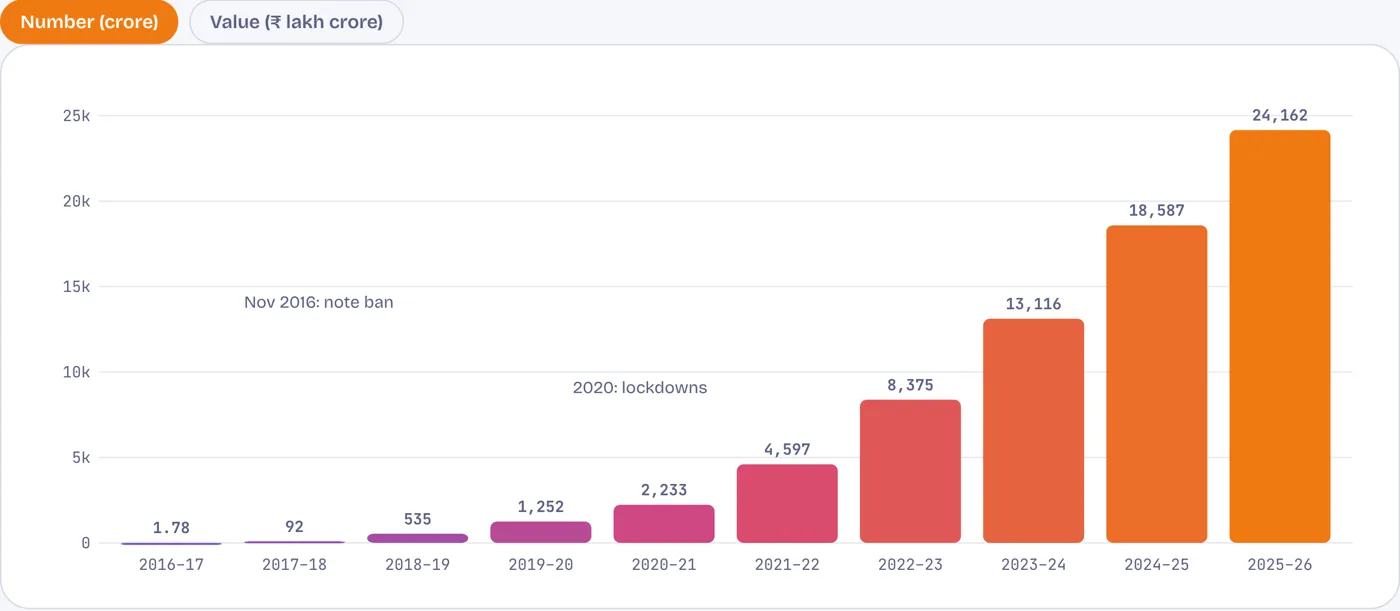
From 1.8 crore payments a year to 2,400 crore a month
Ch. 6 · Built Fast
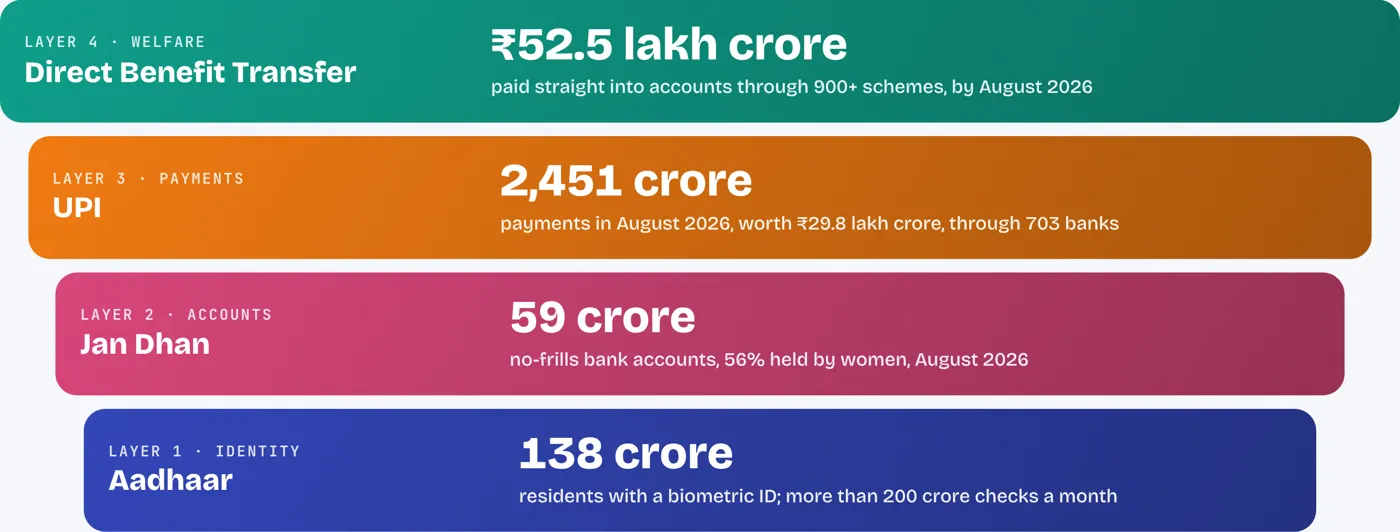
Four layers, each built on the one below
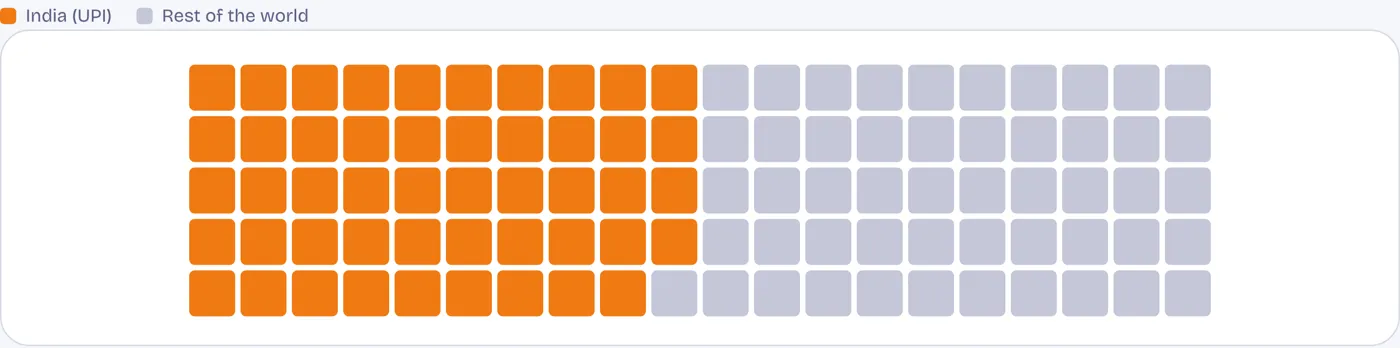
Ch. 6 · Built Fast
India makes about half of the world’s real-time payments
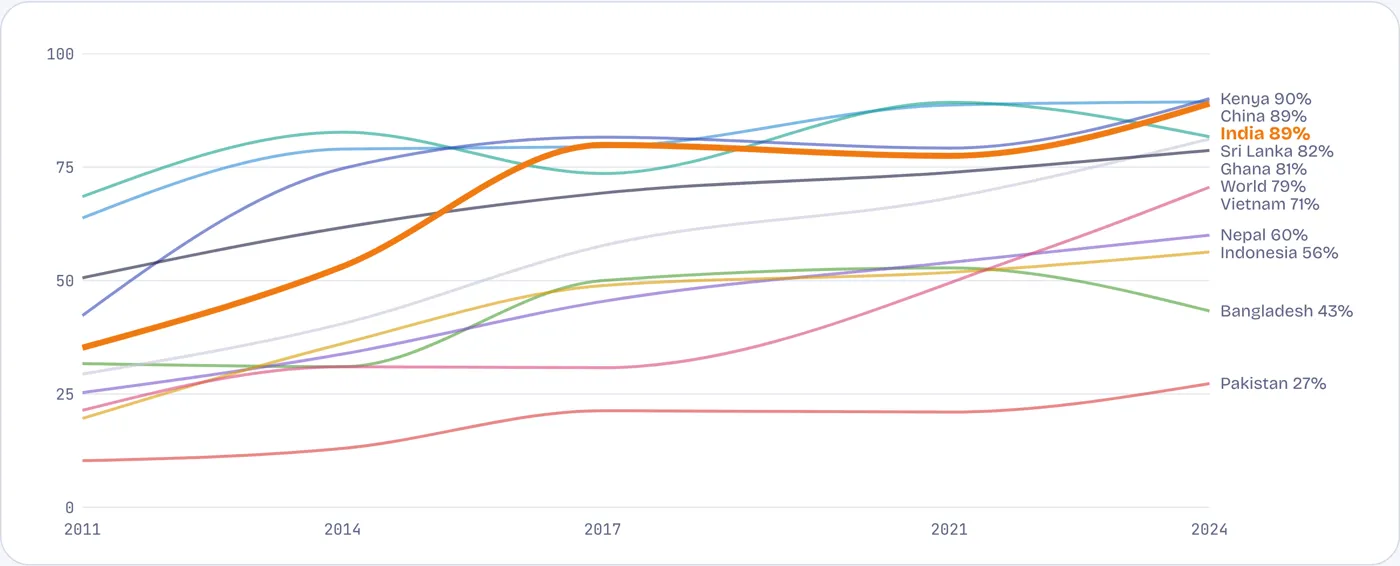
Ch. 6 · Built Fast
Account ownership leapt from below the world average to above it
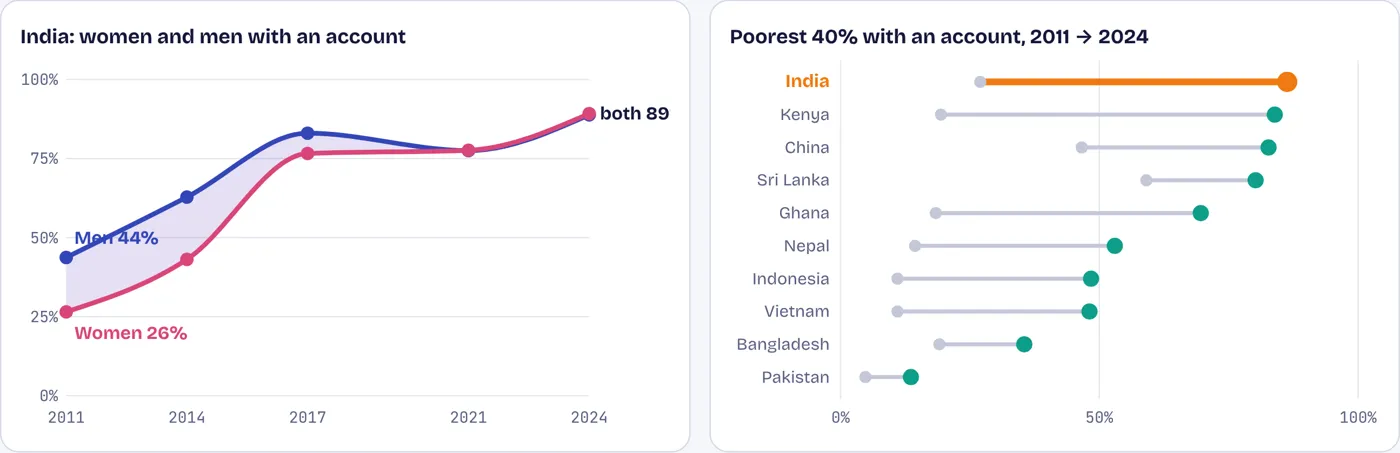
Ch. 6 · Built Fast
The poorest and women were reached too
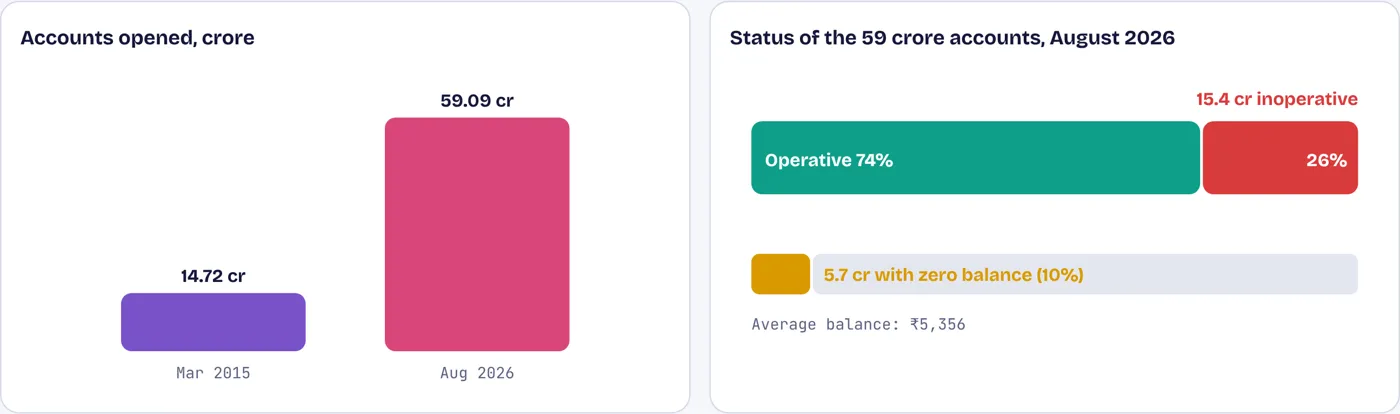
Ch. 6 · Built Fast
59 crore no-frills accounts, one in four lying idle
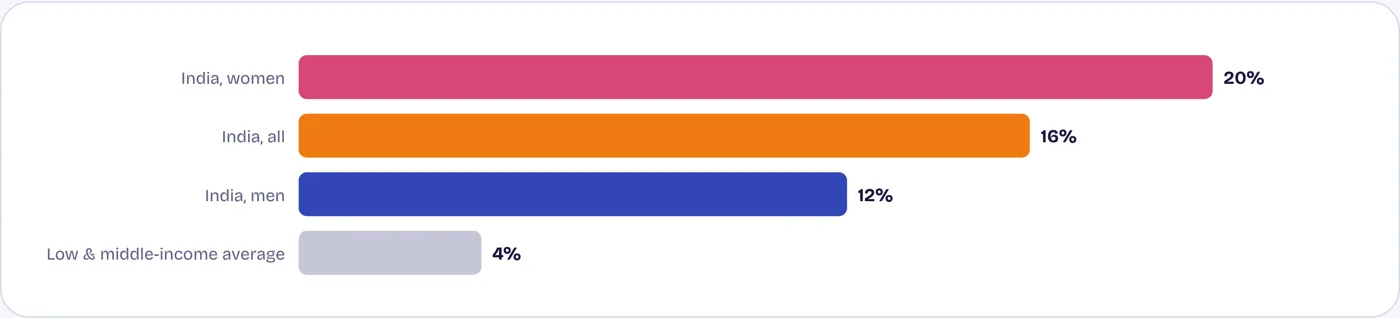
Ch. 6 · Built Fast
Indians are four times as likely as others to leave an account unused
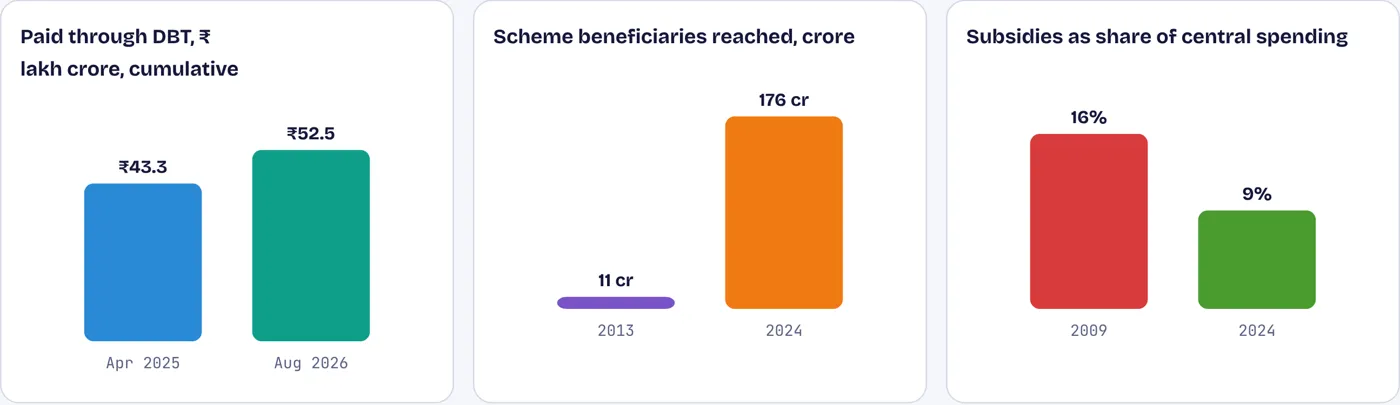
Ch. 6 · Built Fast
₹52 lakh crore paid straight into accounts
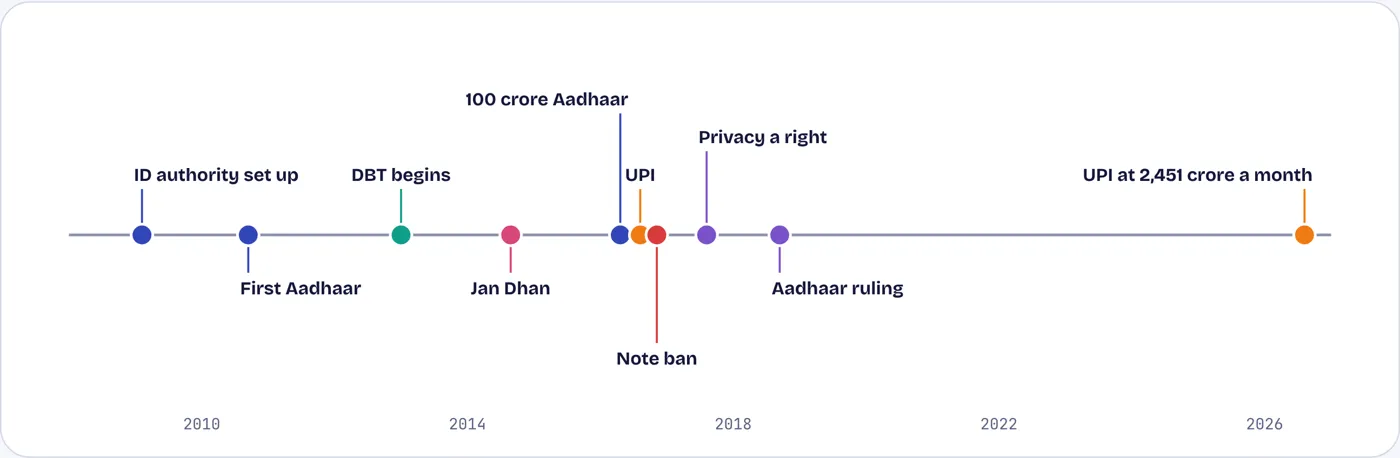
Ch. 6 · Built Fast
Seventeen years from an ID authority to a world payment system
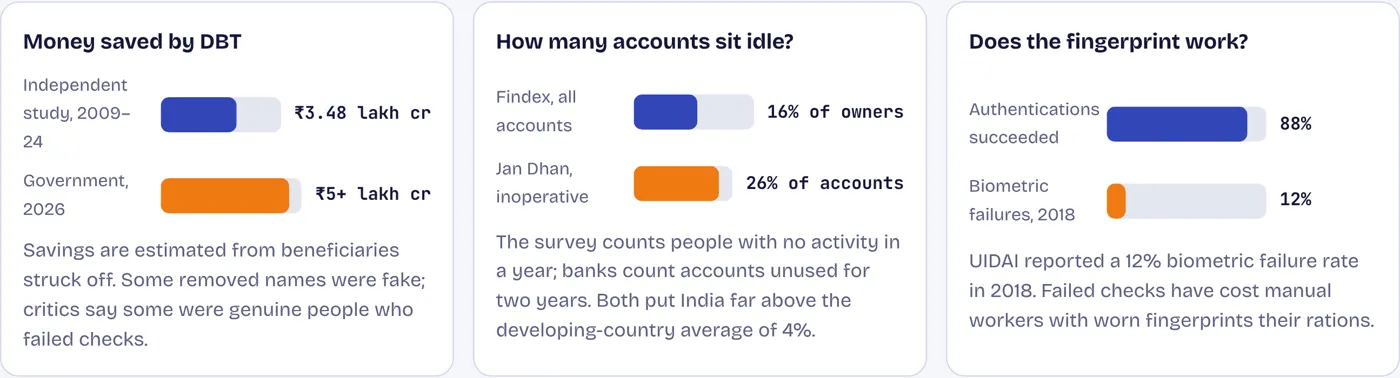
Ch. 6 · Built Fast
Three numbers that need a second look
Ch. 7 · Built Fast
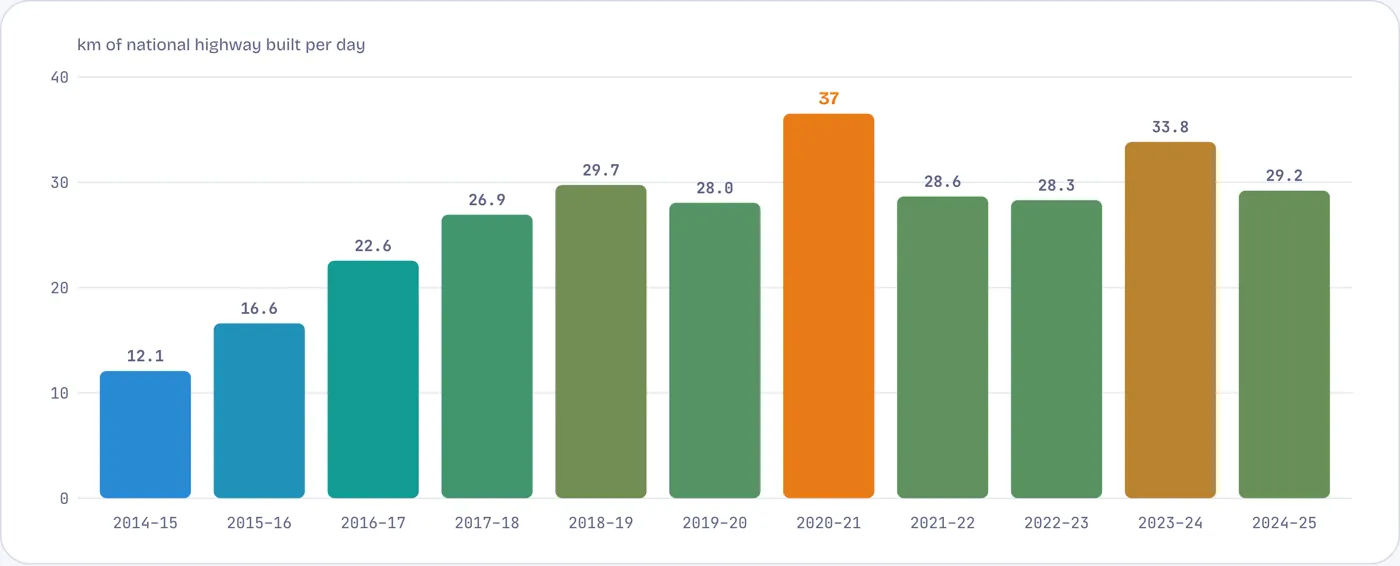
Highway building tripled in pace, then settled near 30 km a day
Ch. 7 · Built Fast
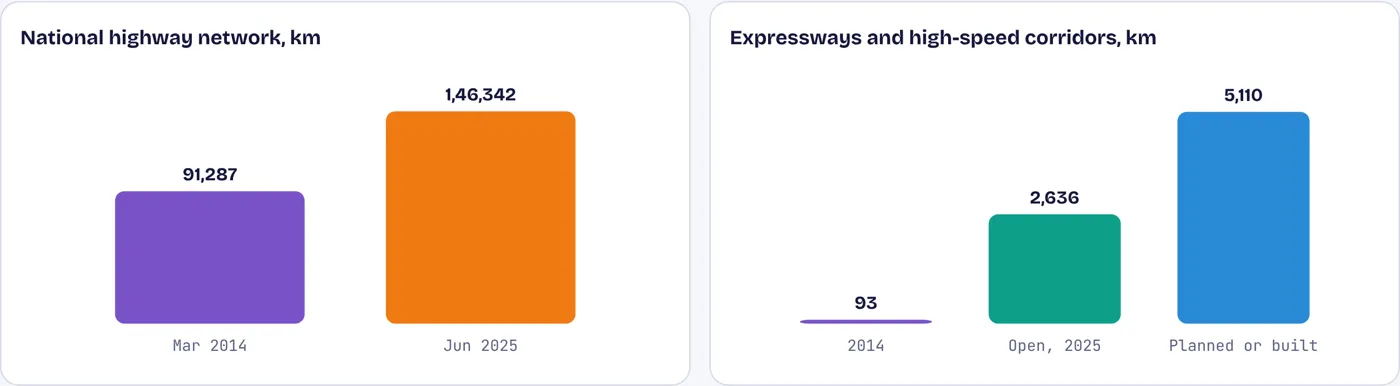
The national highway network grew by 60%, open expressways 28 times
Ch. 7 · Built Fast
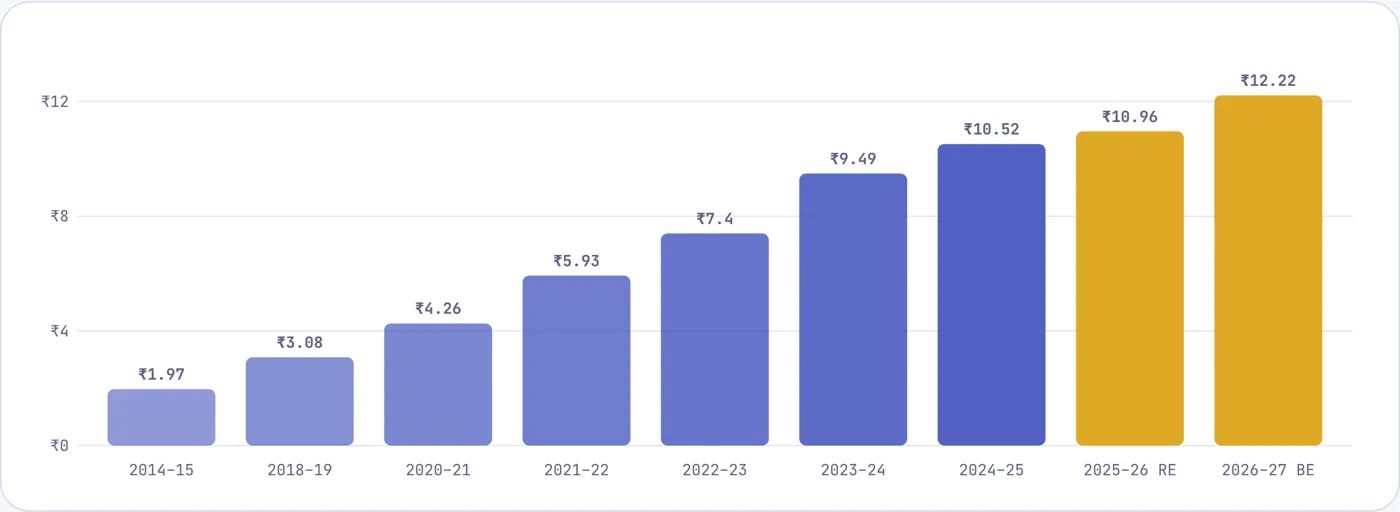
Central capital spending rose sixfold
Ch. 7 · Built Fast
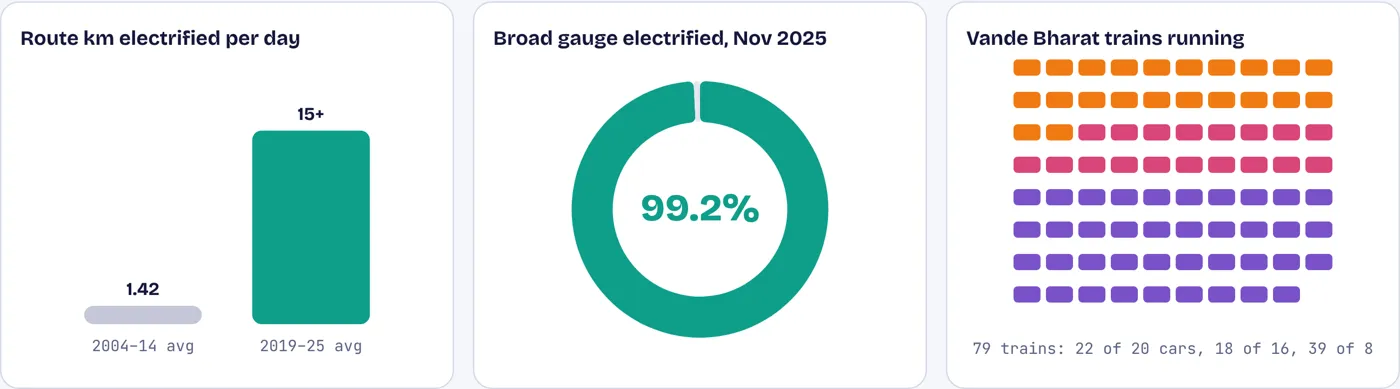
The railway network went almost entirely electric
Ch. 7 · Built Fast
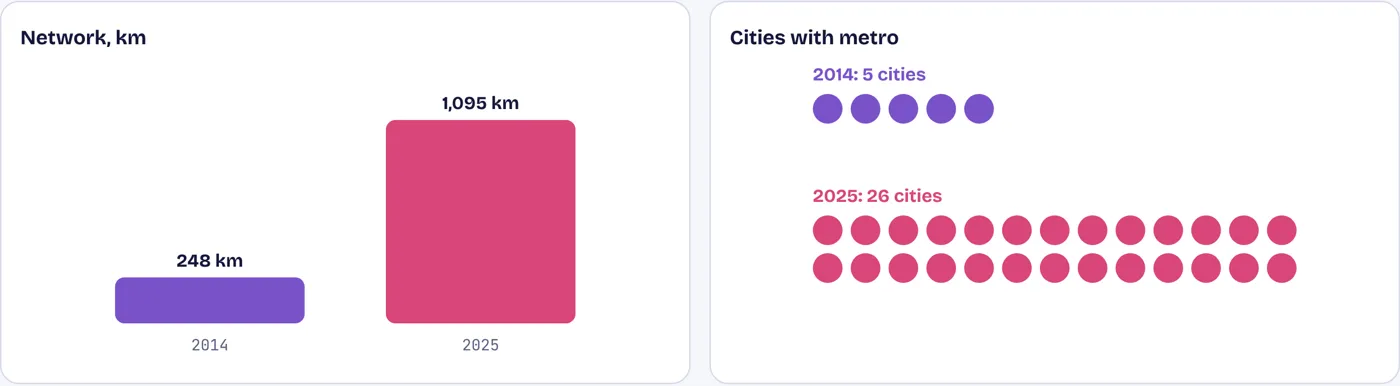
Metro rail in 26 cities instead of 5
Ch. 7 · Built Fast
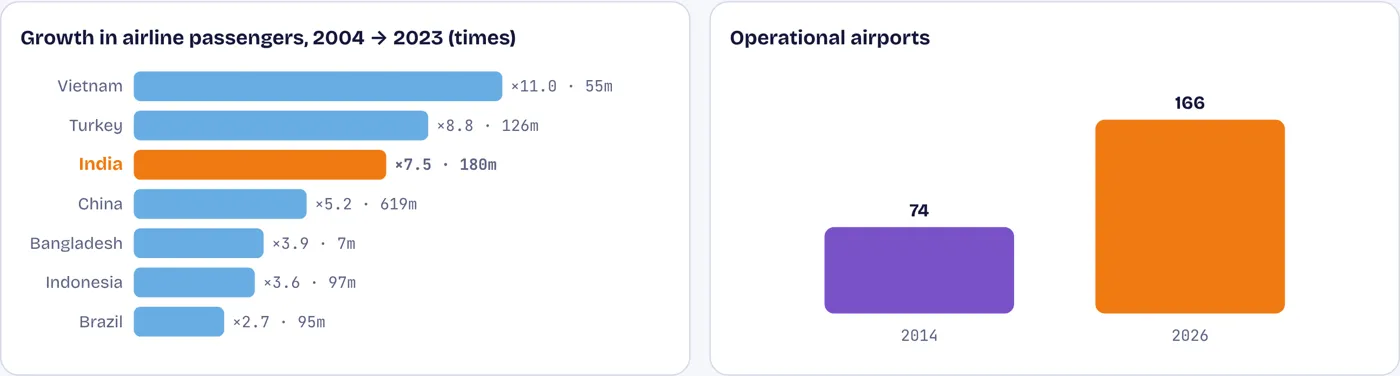
Airports more than doubled; air travel grew seven and a half times
Ch. 7 · Built Fast
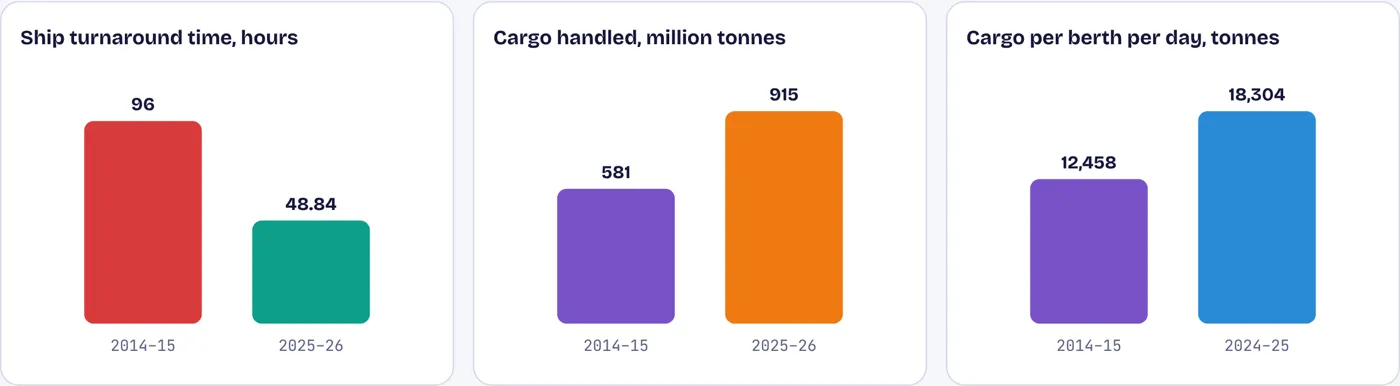
Ships now turn around in two days instead of four
Ch. 7 · Built Fast
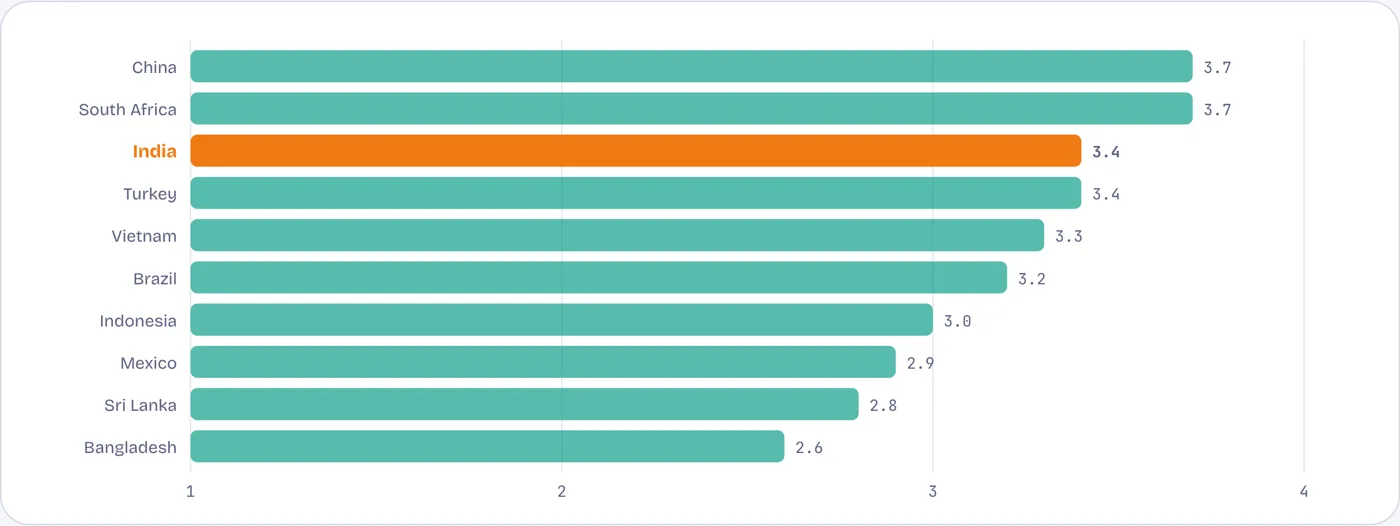
Logistics now rated above Vietnam and Indonesia, behind China
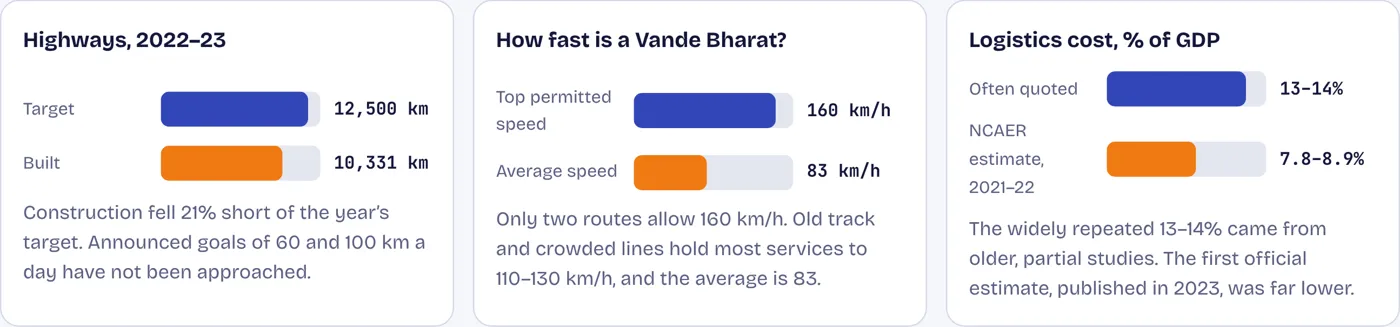
Ch. 7 · Built Fast
Three numbers that need a second look
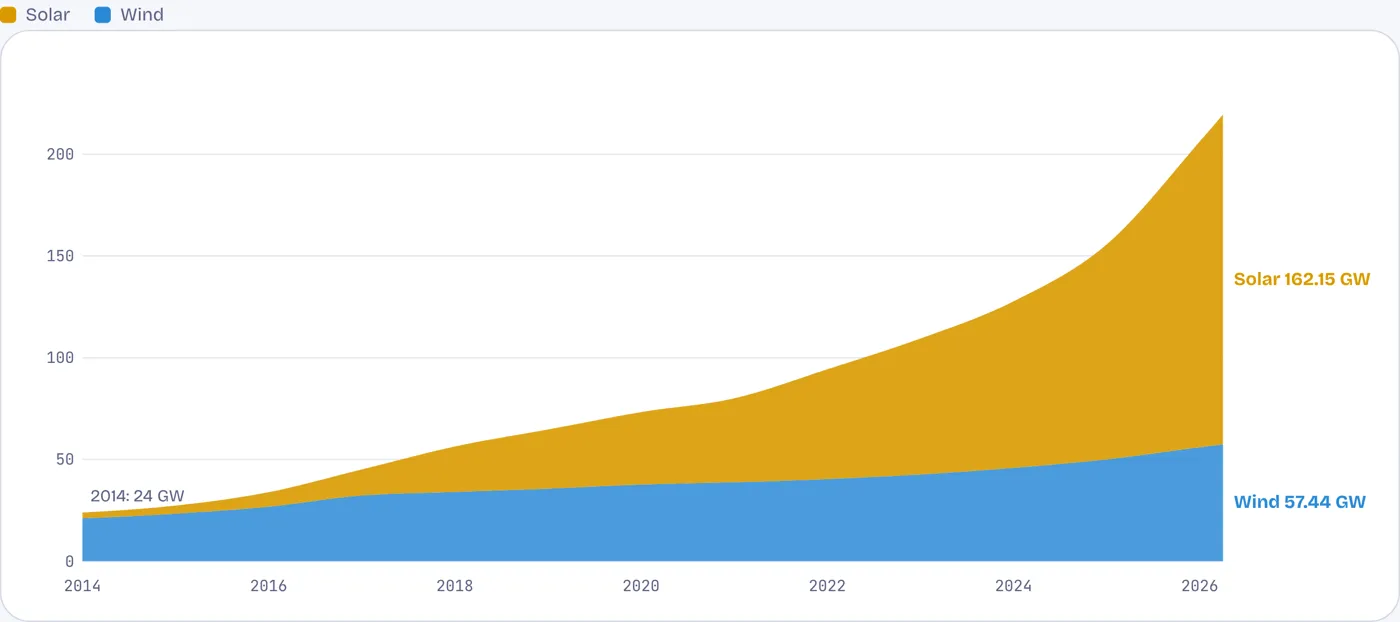
Ch. 8 · Built Fast
Solar went from almost nothing to the largest source of new power
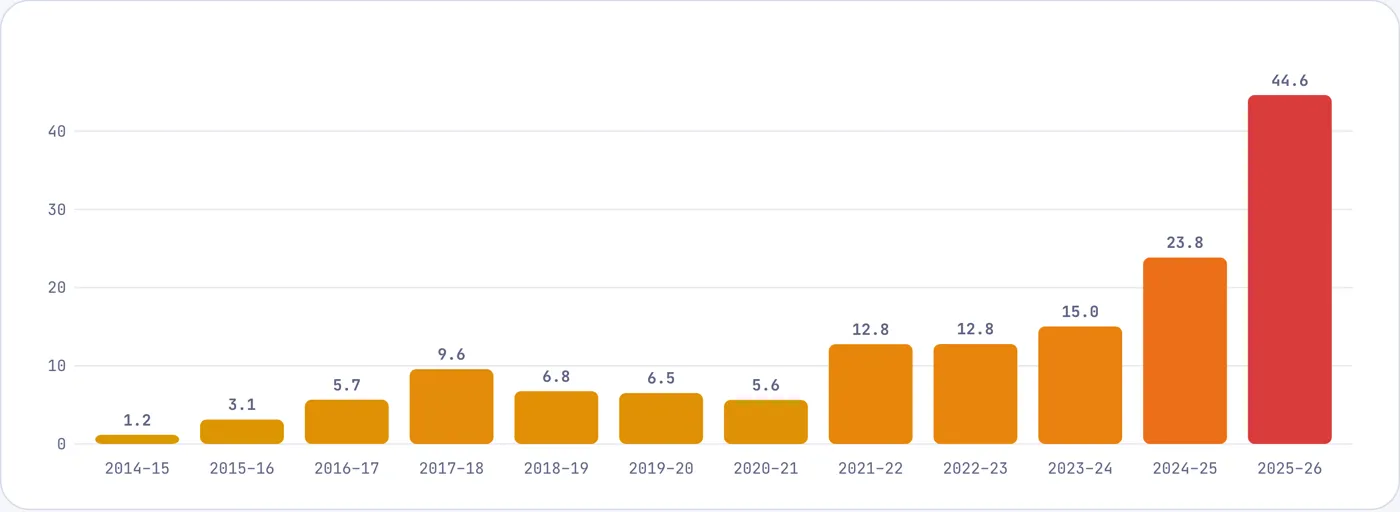
Ch. 8 · Built Fast
A record 45 GW of solar in a single year
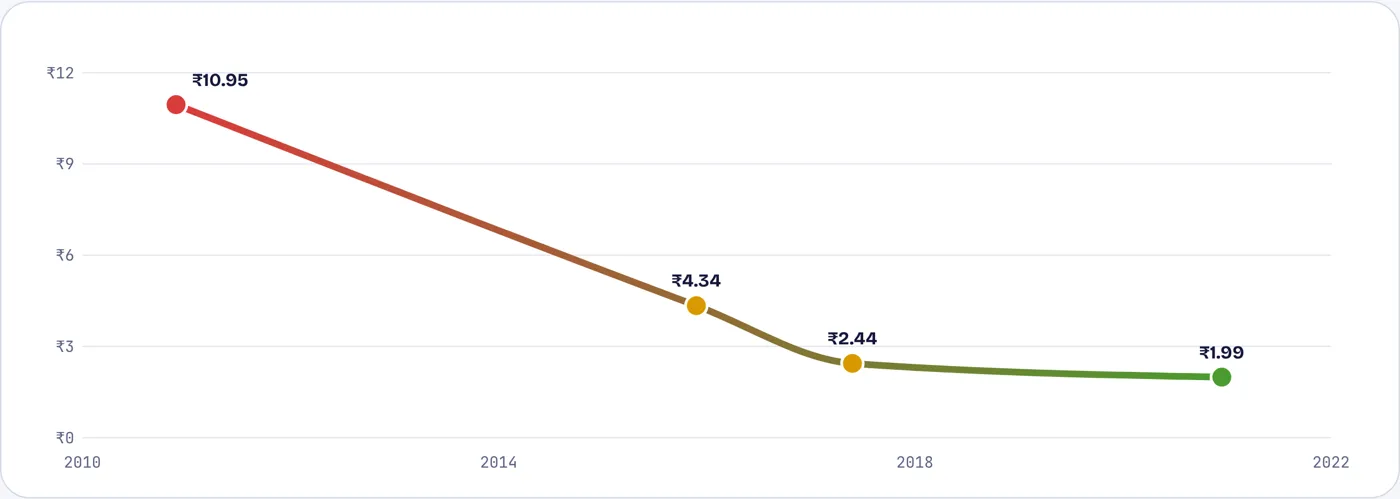
Ch. 8 · Built Fast
Solar power became the cheapest new electricity in India
Ch. 8 · Built Fast
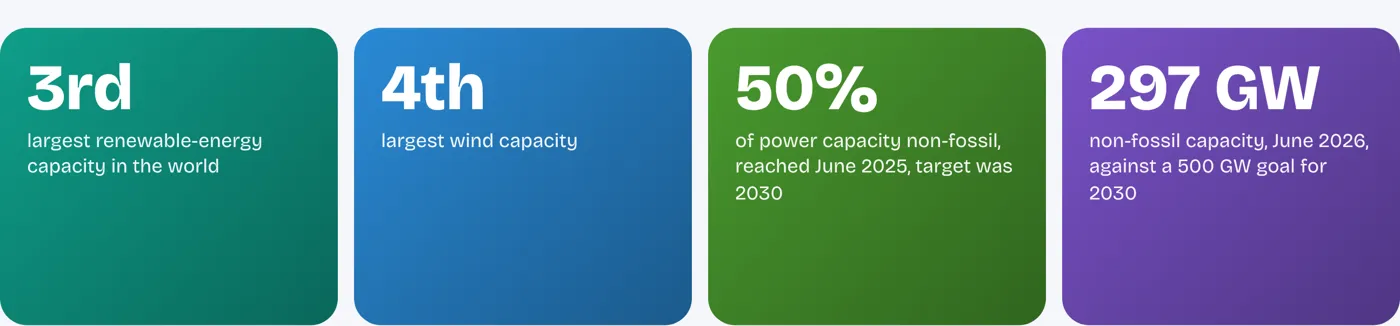
Third in renewables, ahead of time on its climate pledge
Ch. 8 · Built Fast
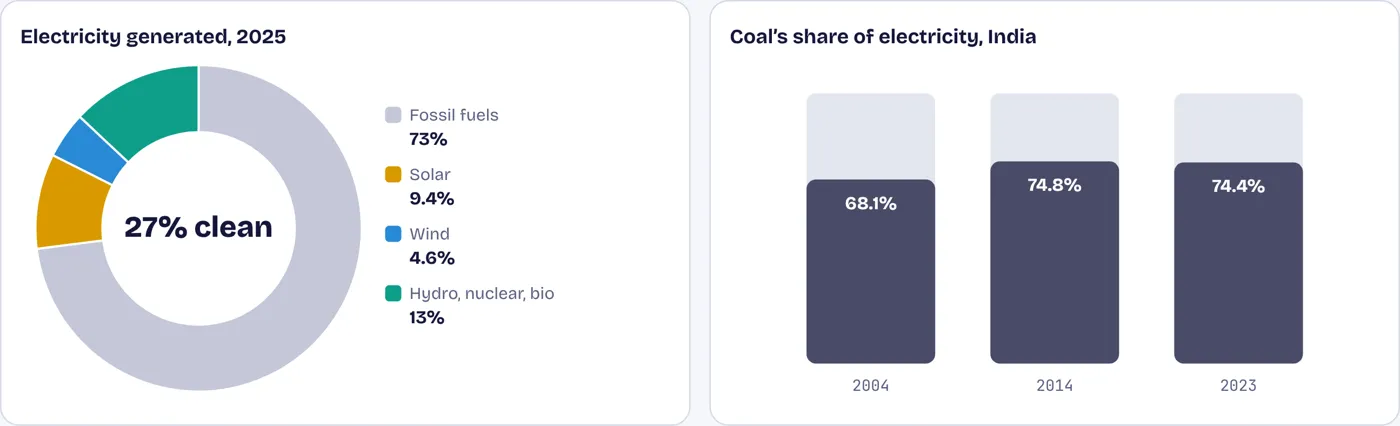
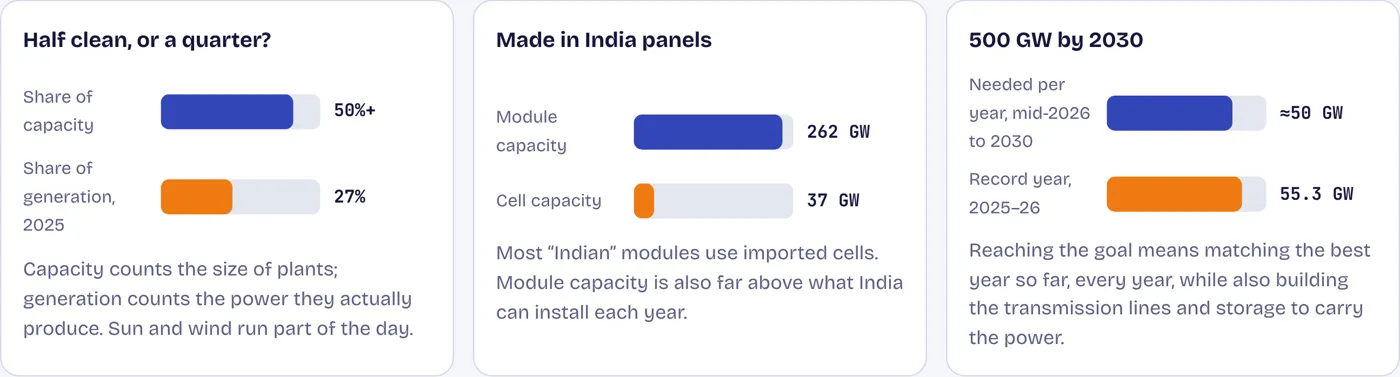
Half the capacity, but just over a quarter of the power
Ch. 8 · Built Fast
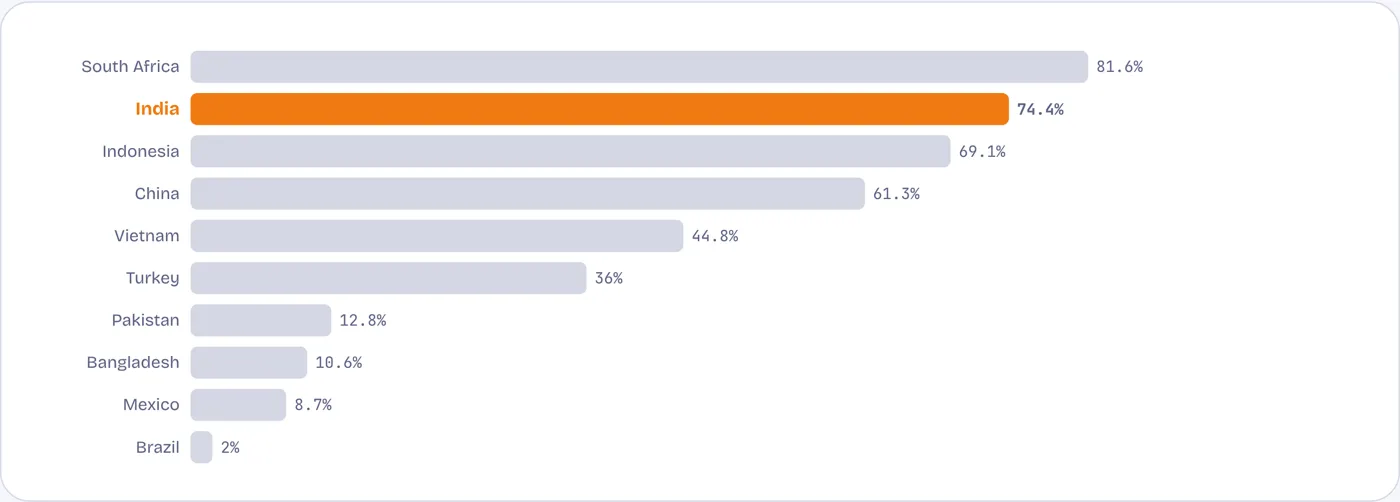
India still leans on coal more than most peers
Ch. 8 · Built Fast
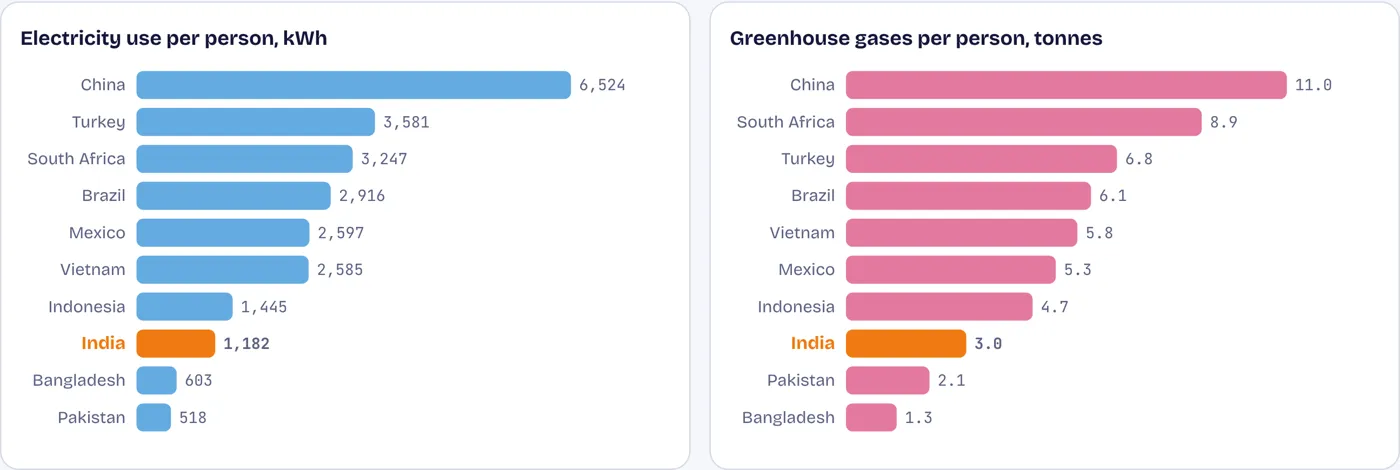
Low use, low emissions per person
Ch. 8 · Built Fast
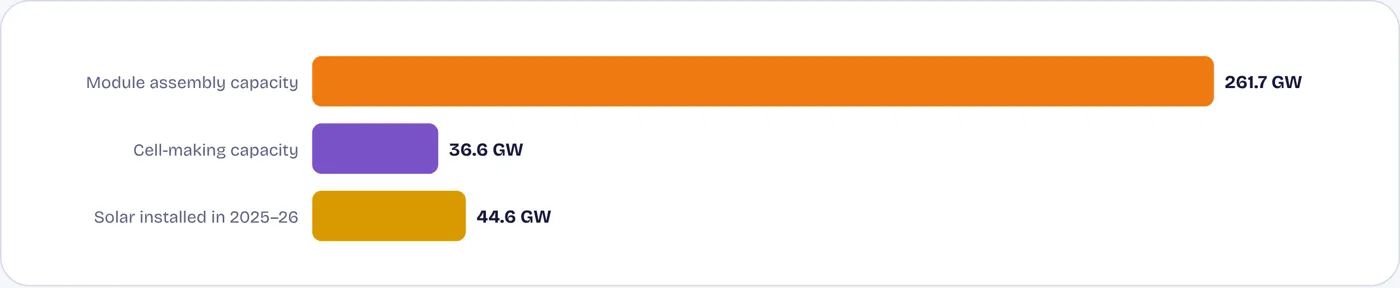
Factories for panels boomed; for cells, much less
Ch. 8 · Built Fast
Three numbers that need a second look
Ch. 9 · Built Fast
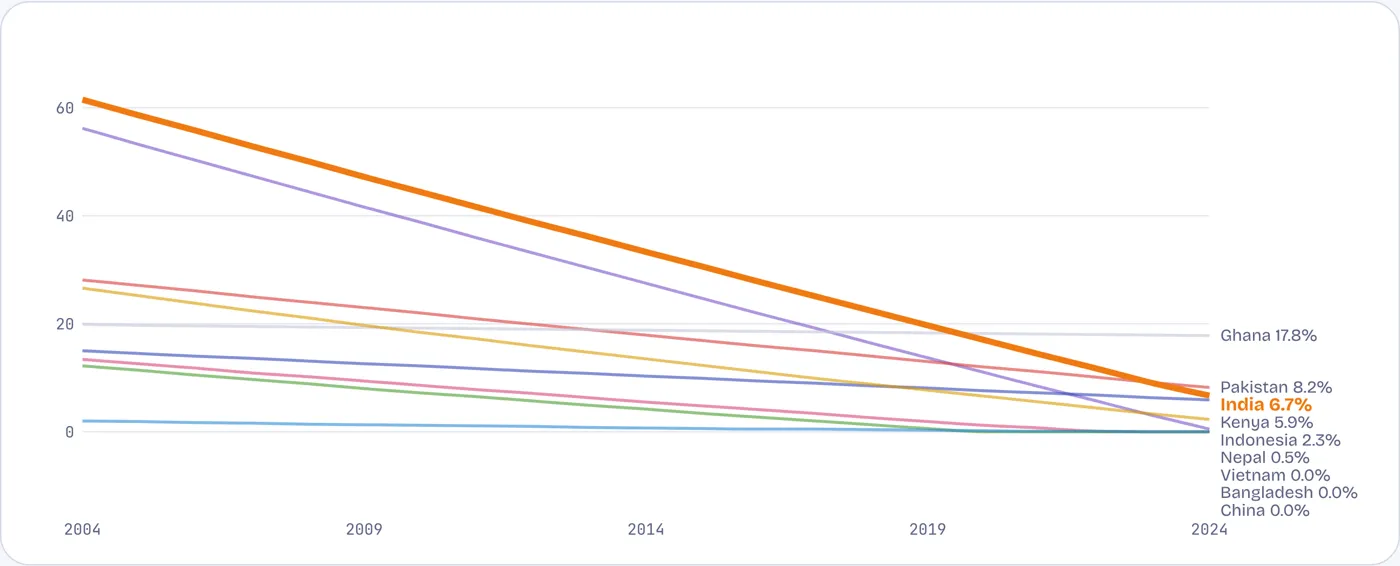
From most of the population to a small minority

Ch. 9 · Built Fast
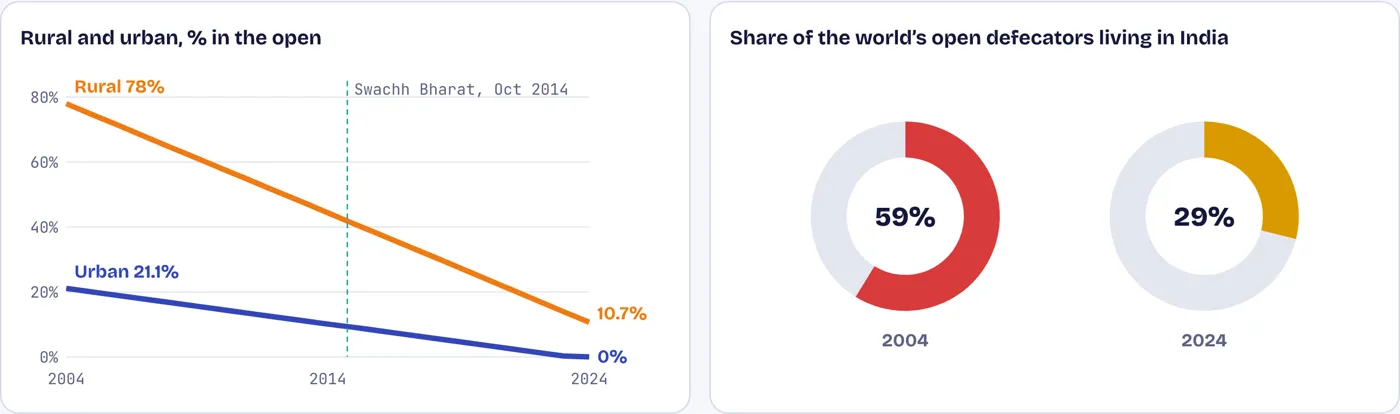
Six hundred million fewer people in the open
Ch. 9 · Built Fast
The change was in the villages
Ch. 9 · Built Fast
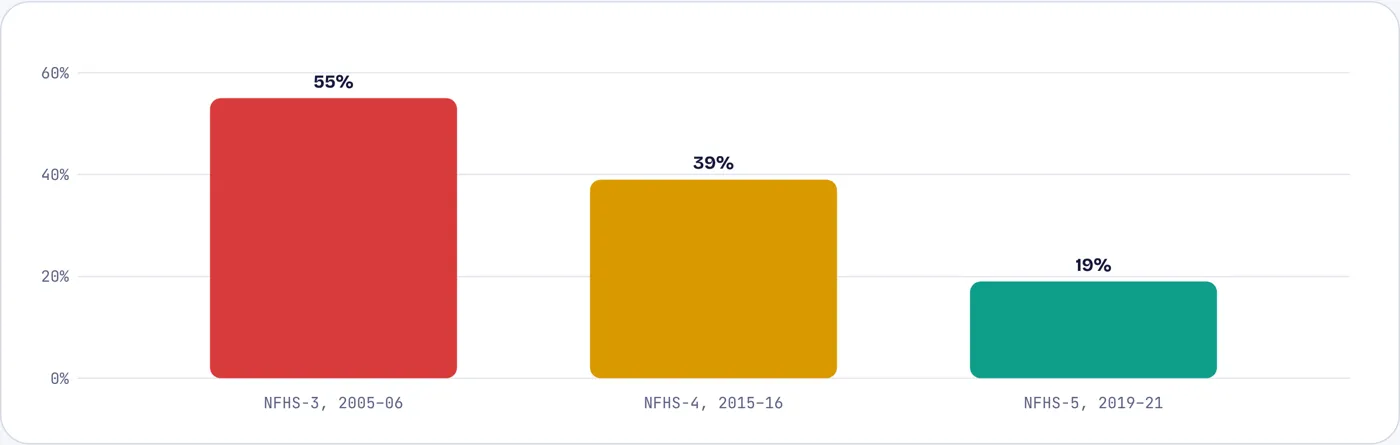
India’s own household surveys show the same fall
Ch. 9 · Built Fast
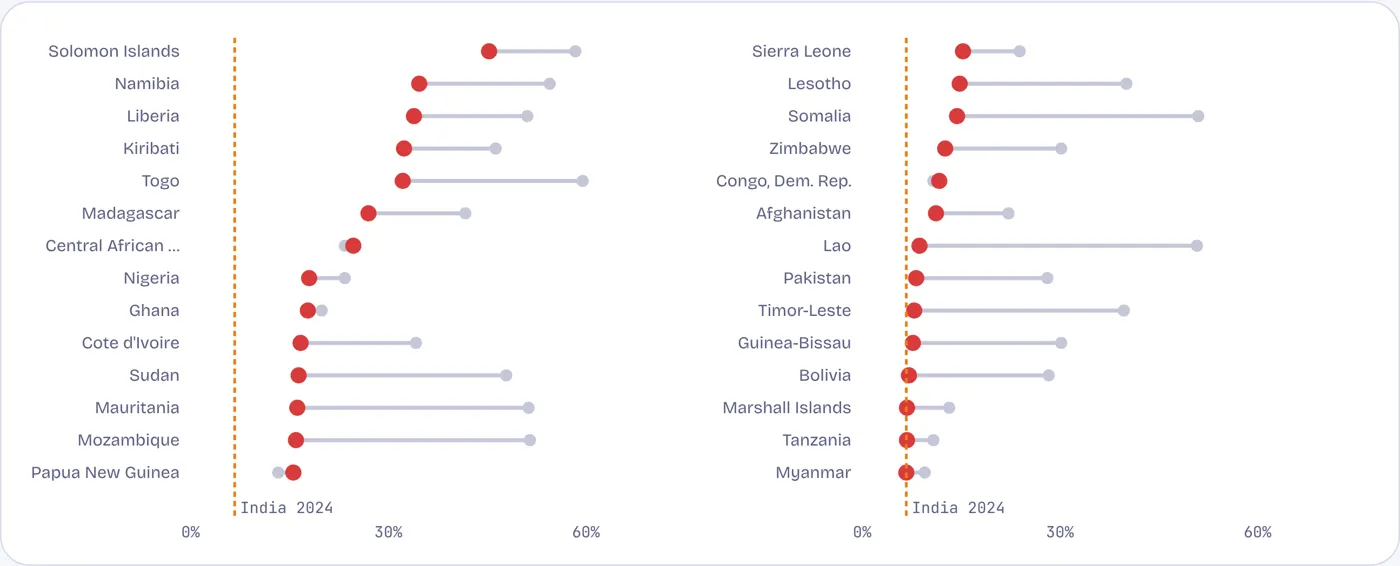
India moved past 28 countries
Ch. 9 · Built Fast
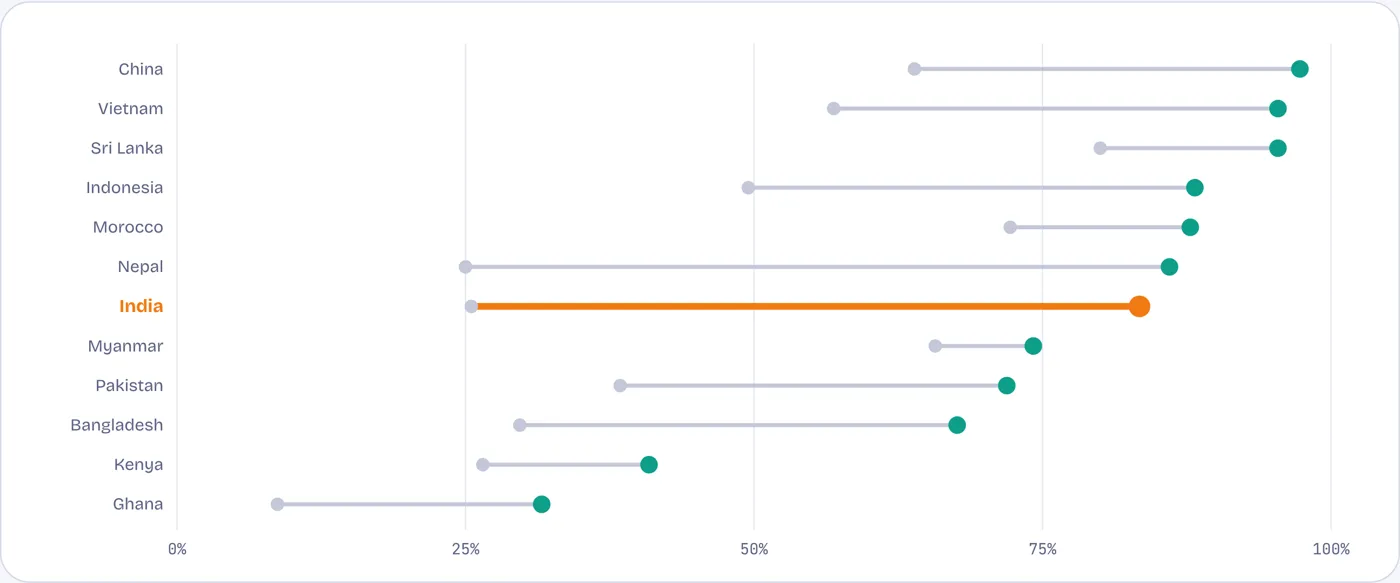
Basic sanitation more than tripled
Ch. 9 · Built Fast
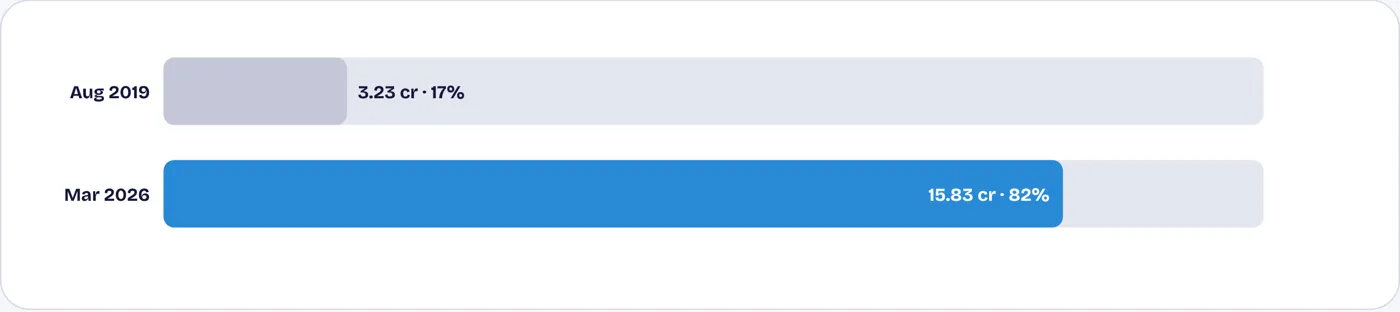
Piped water reached four in five rural homes
Ch. 9 · Built Fast
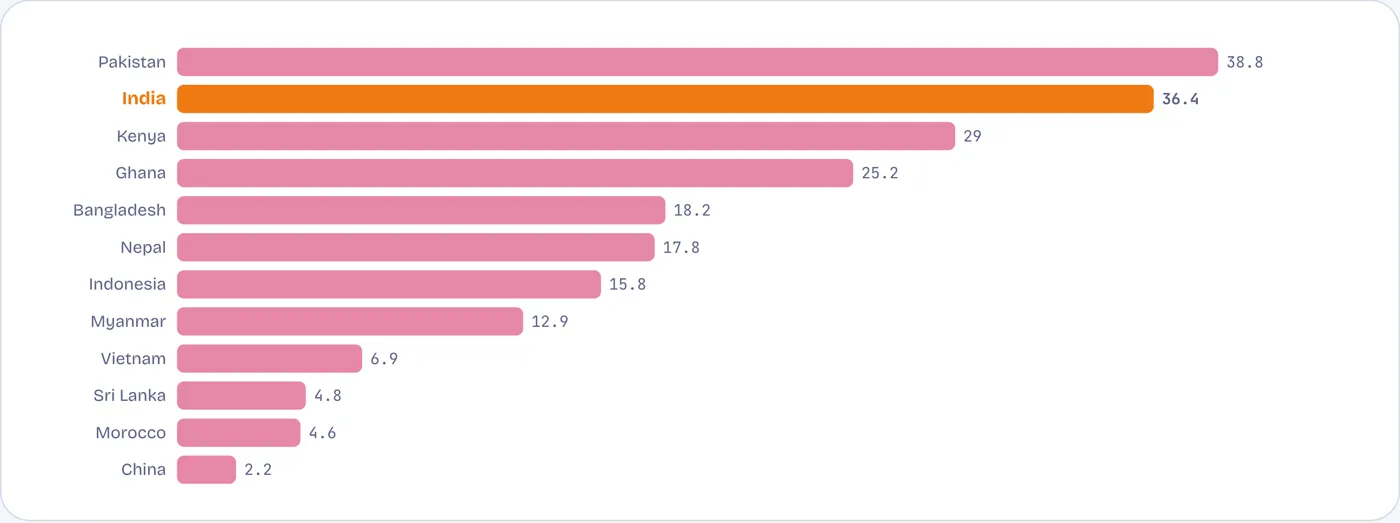
Dirty water and poor sanitation still kill more Indians than most peers
Ch. 9 · Built Fast
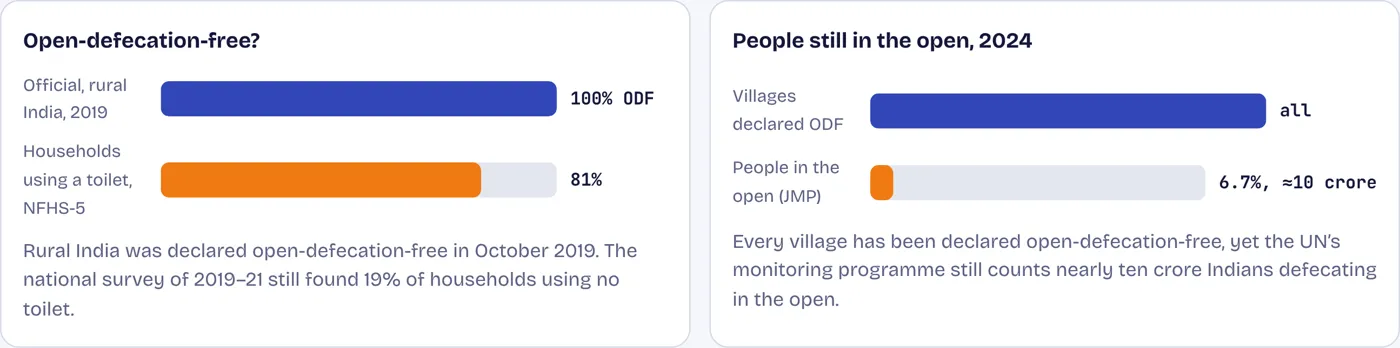
Two numbers that need a second look
Ch. 10 · Built Fast
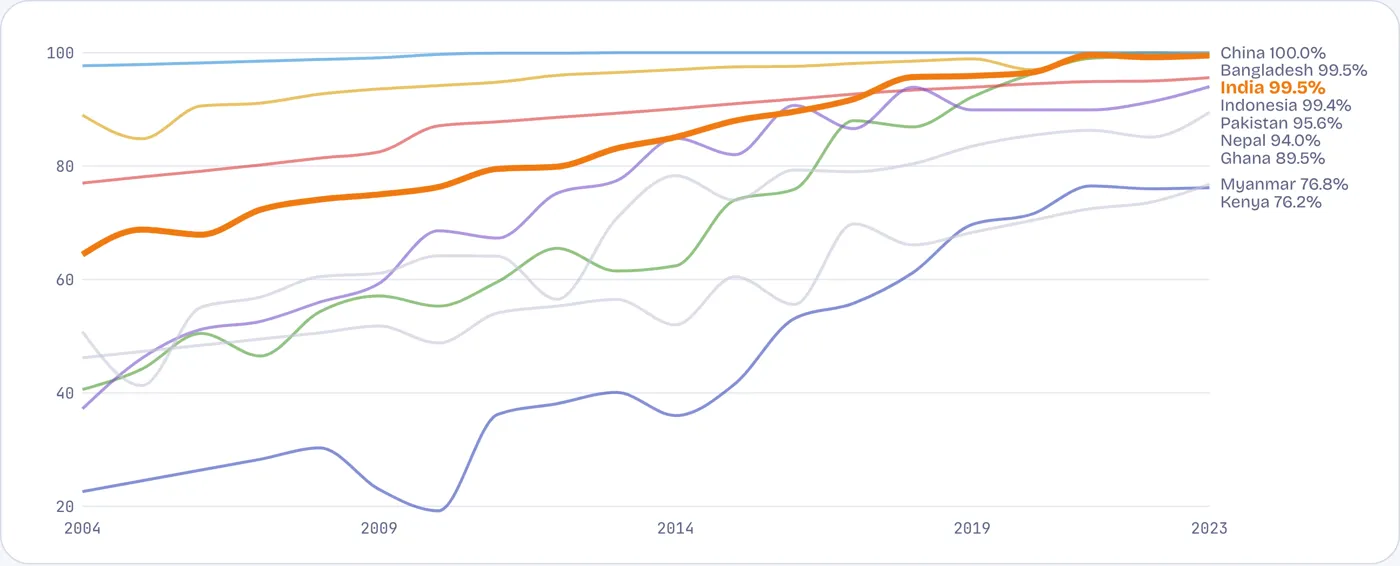
From a third without power to almost none
Ch. 10 · Built Fast
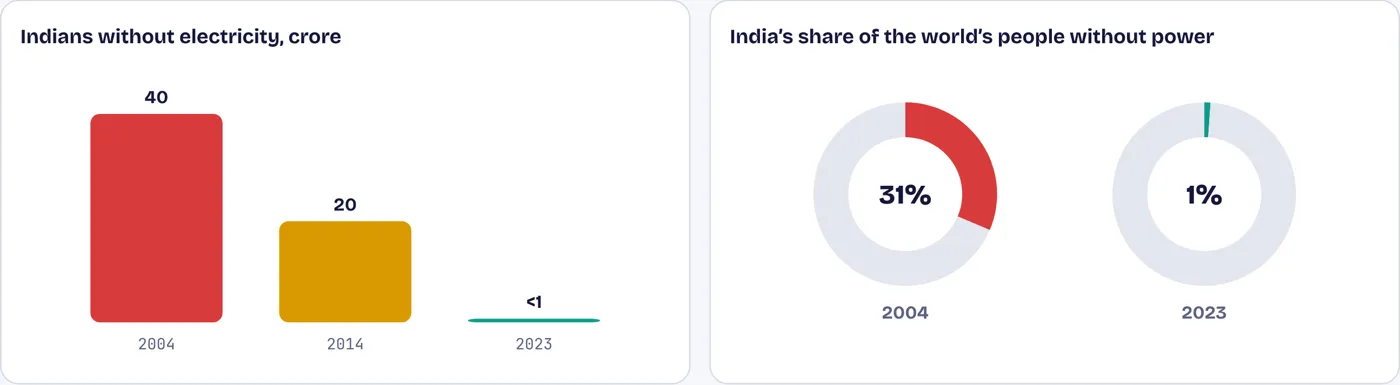
Forty crore people connected
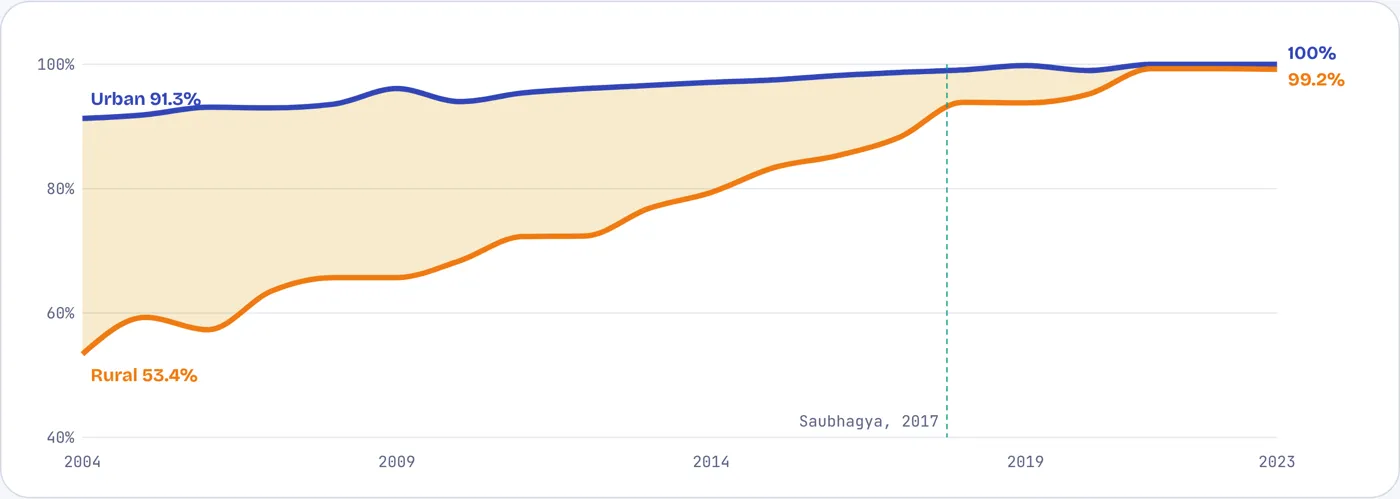
Ch. 10 · Built Fast
Rural India caught up with the towns
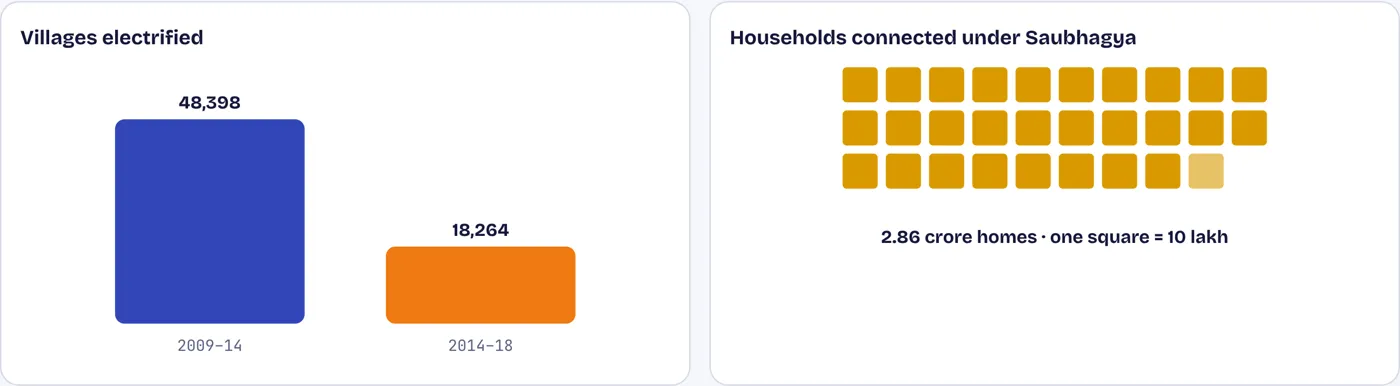
Ch. 10 · Built Fast
Most villages were reached before 2014; most homes after
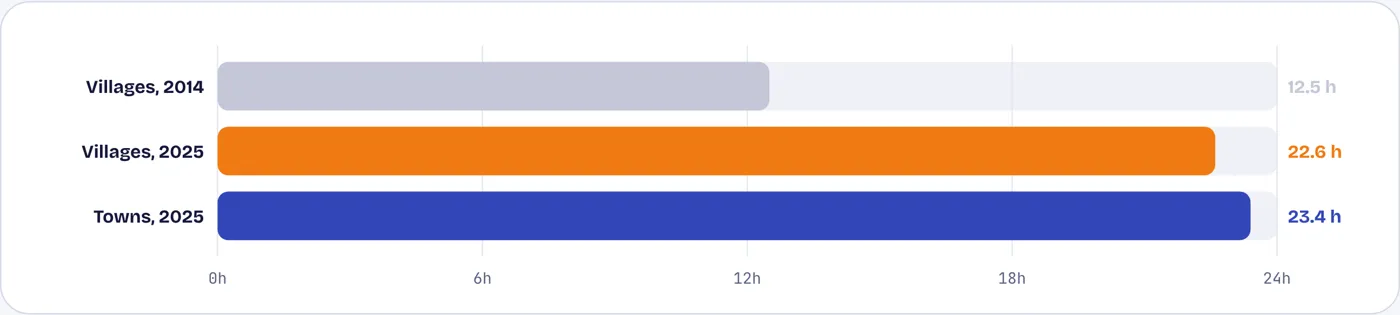
Ch. 10 · Built Fast
Power now stays on most of the day
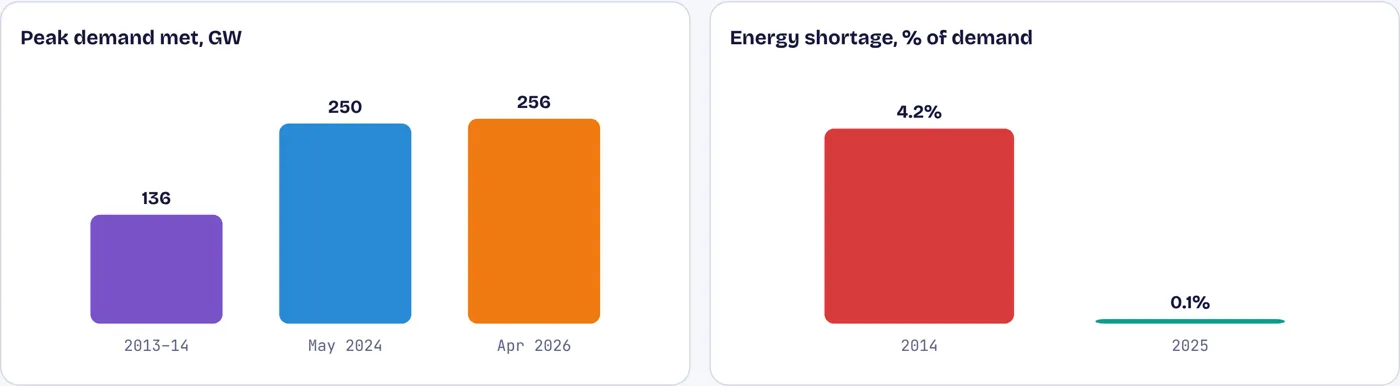
Ch. 10 · Built Fast
Peak demand nearly doubled, and the grid kept up
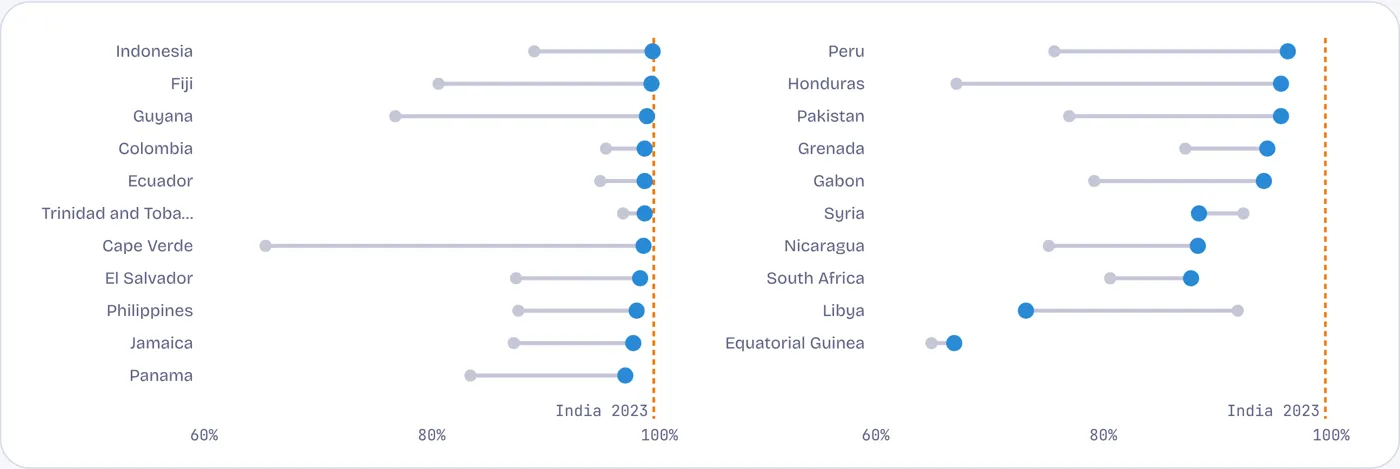
Ch. 10 · Built Fast
India moved past 21 countries
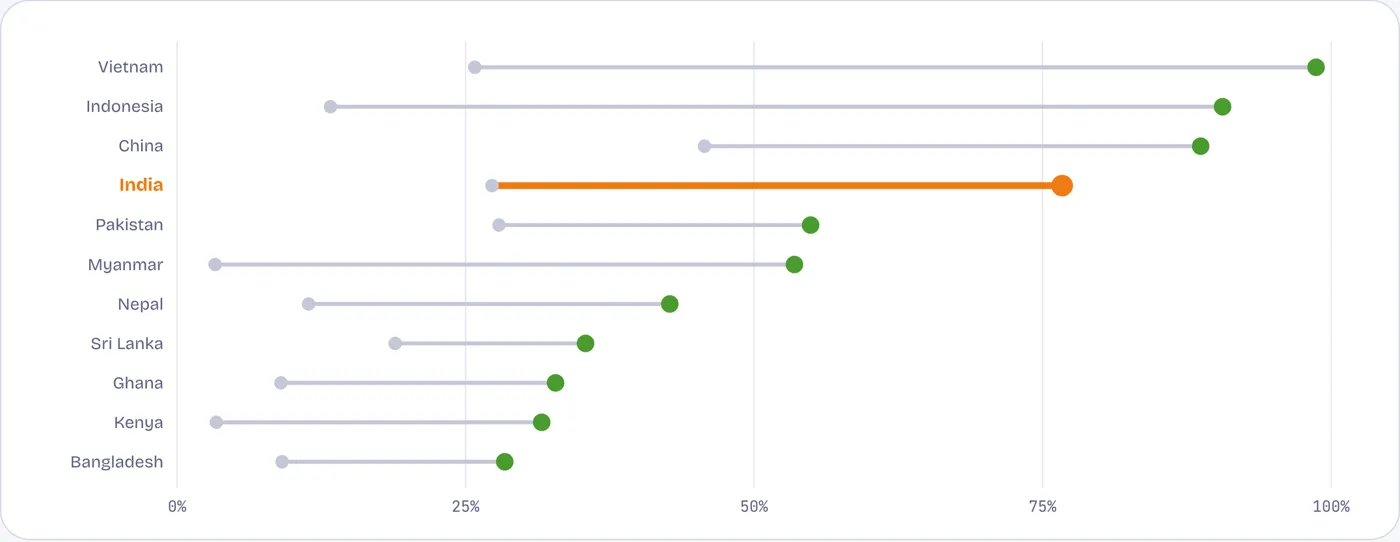
Ch. 10 · Built Fast
Clean cooking spread fast, but a quarter still burn wood or dung
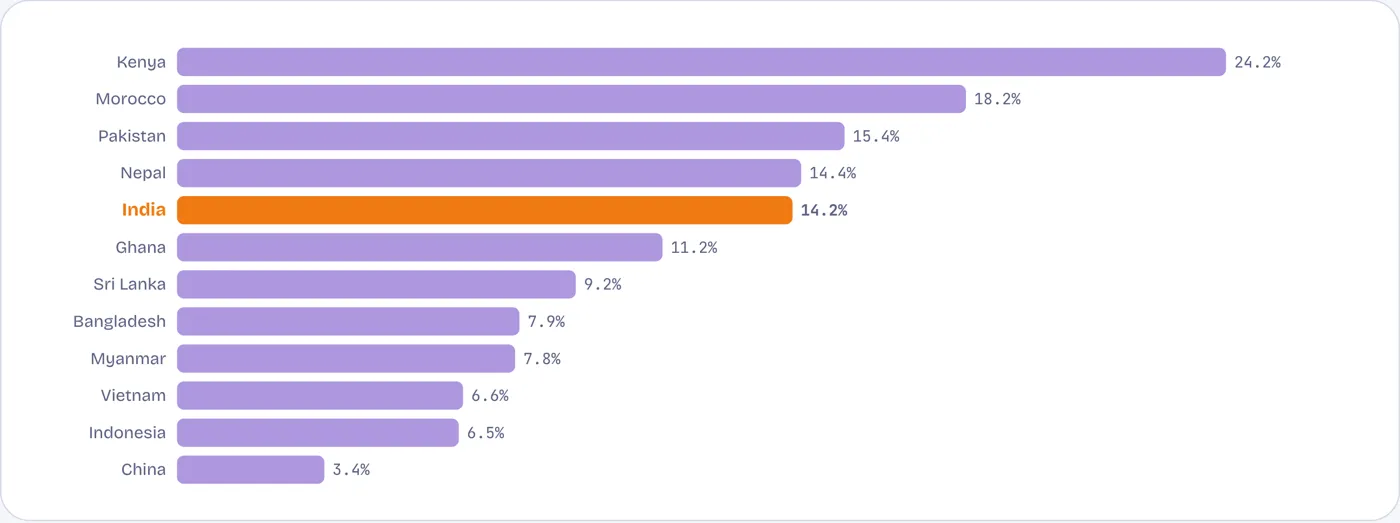
Ch. 10 · Built Fast
The grid still loses a seventh of its power
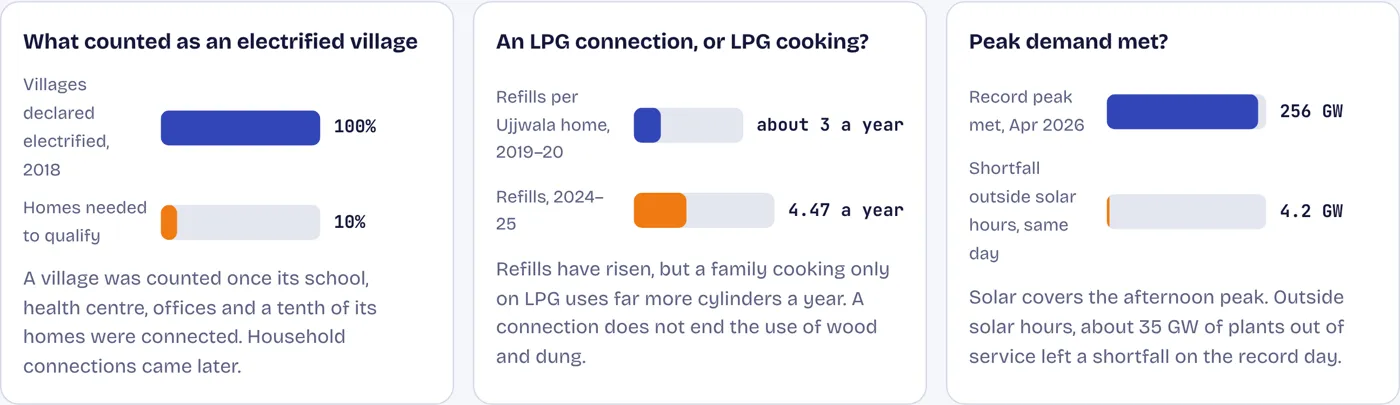
Ch. 10 · Built Fast
Three numbers that need a second look
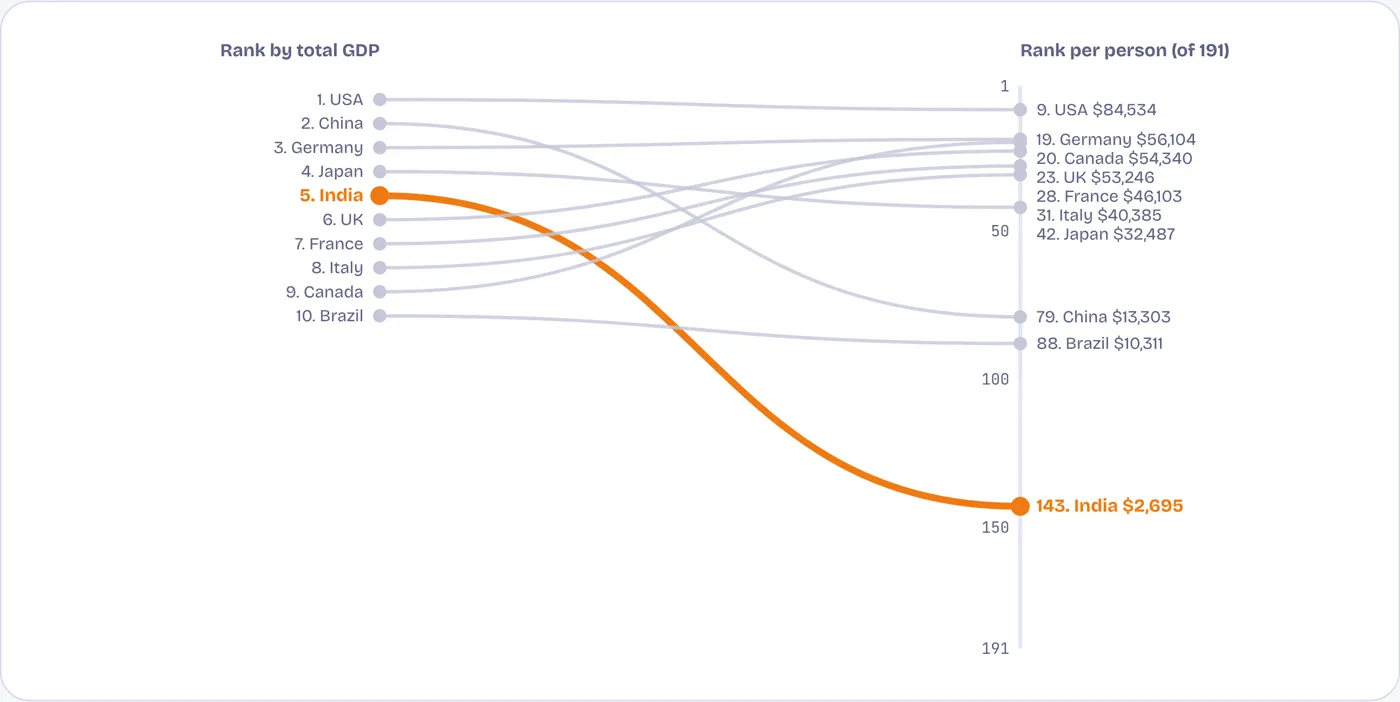
Ch. 11 · Left Behind
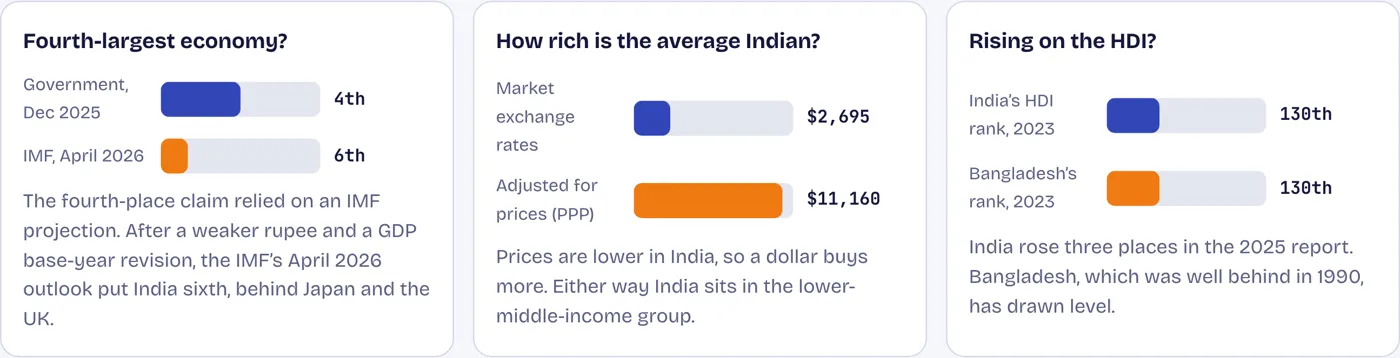
Two rankings, two different countries
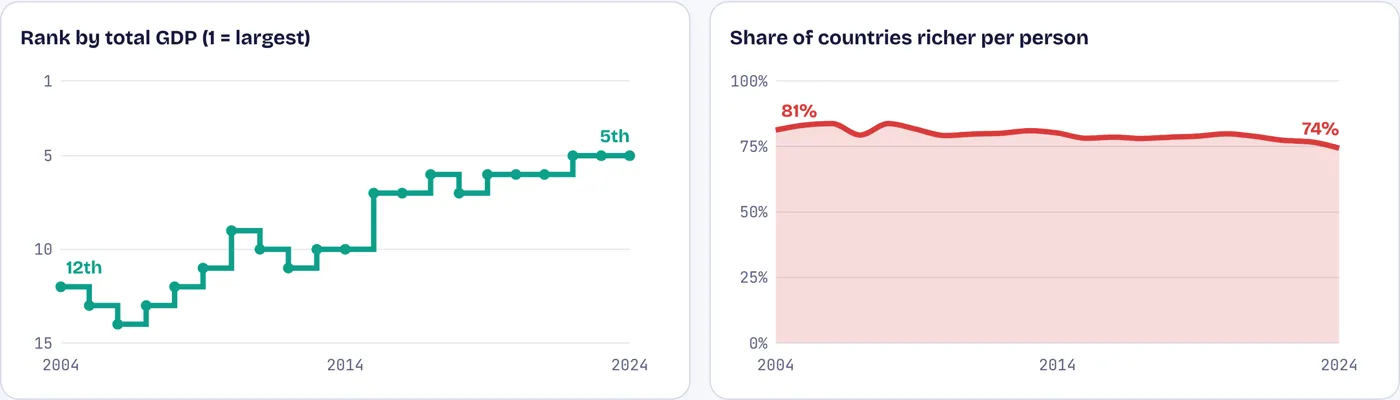
Ch. 11 · Left Behind
The economy climbed seven places; the citizen barely moved
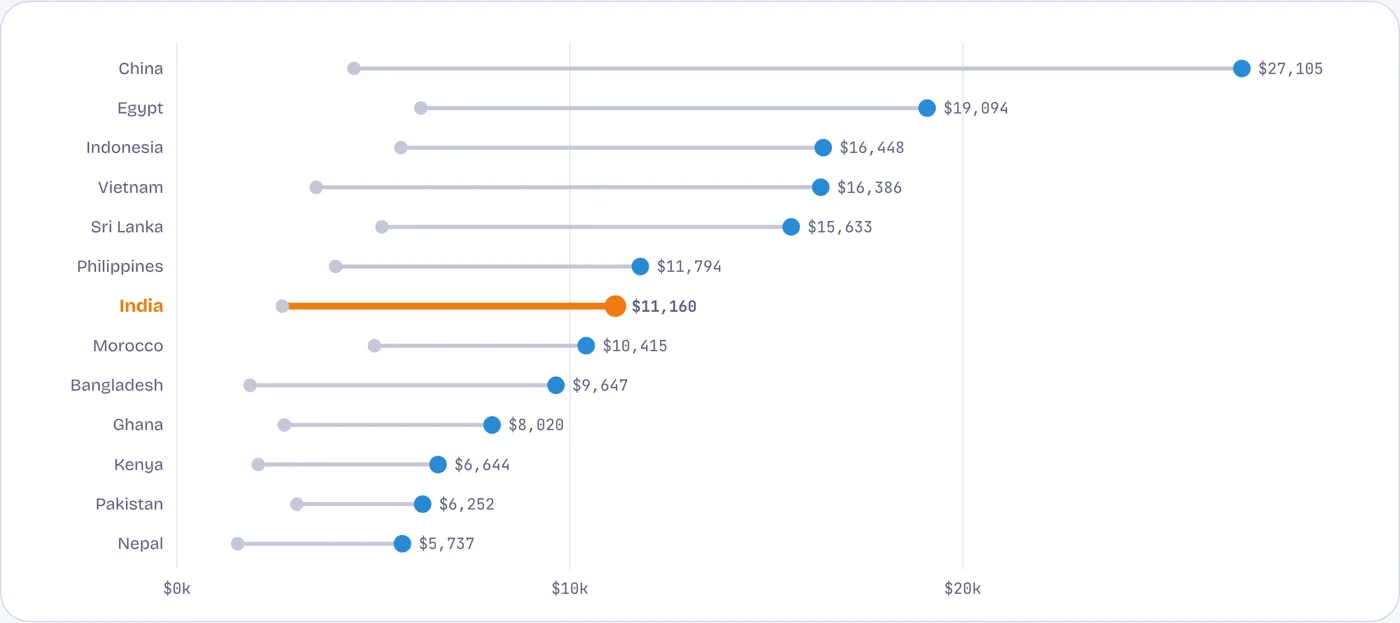
Ch. 11 · Left Behind
Behind Vietnam, Indonesia, Sri Lanka and Egypt in income per person
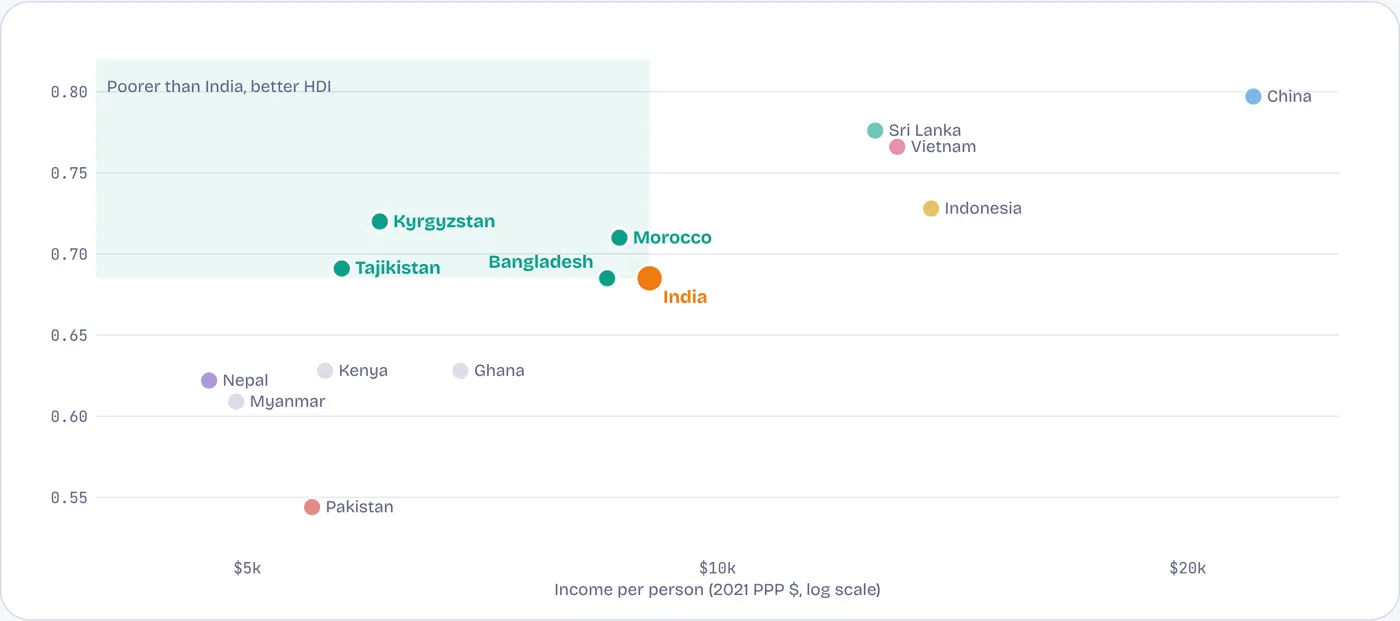
Ch. 11 · Left Behind
Countries poorer than India live better
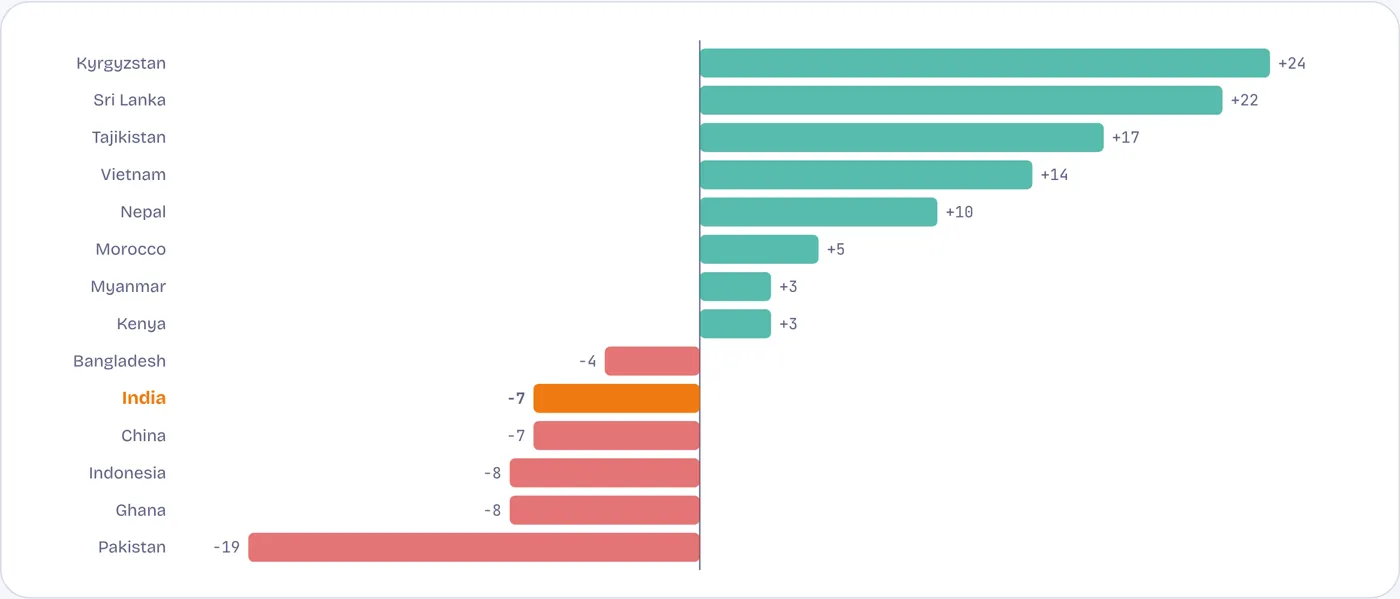
Ch. 11 · Left Behind
India turns income into wellbeing worse than its income predicts
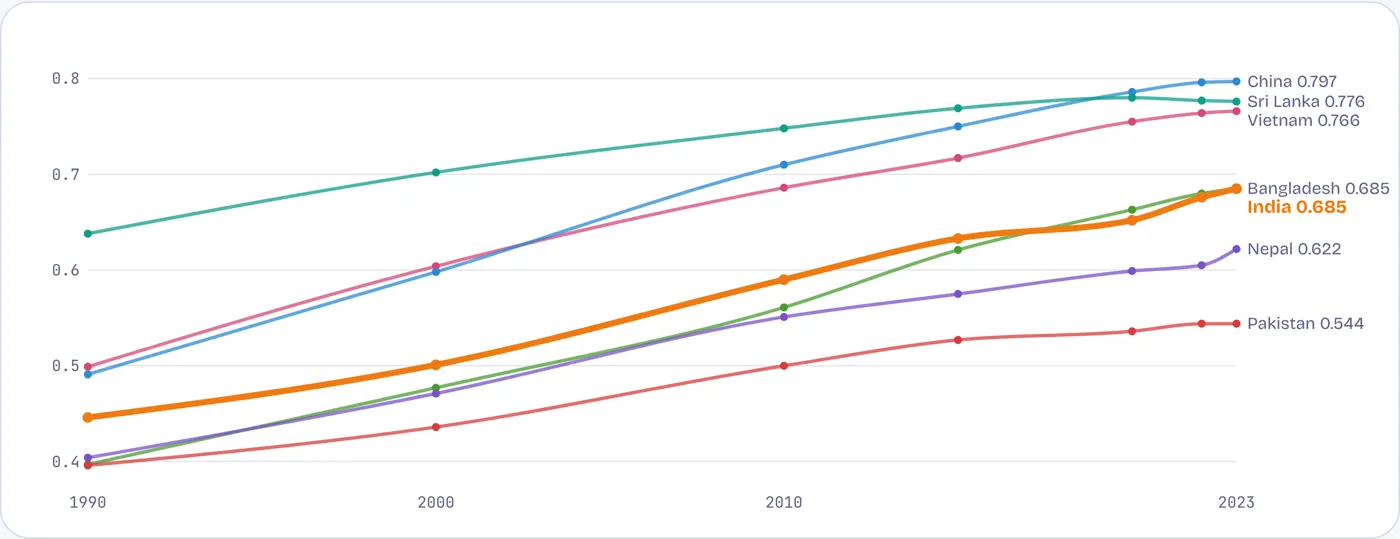
Ch. 11 · Left Behind
Bangladesh started lower and has drawn level
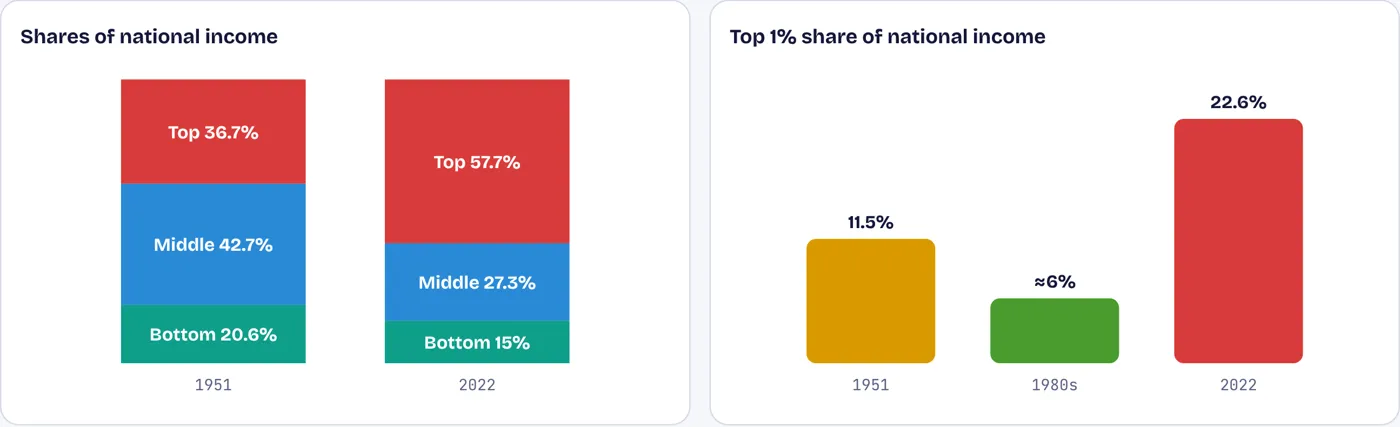
Ch. 11 · Left Behind
The top tenth takes almost three-fifths of national income
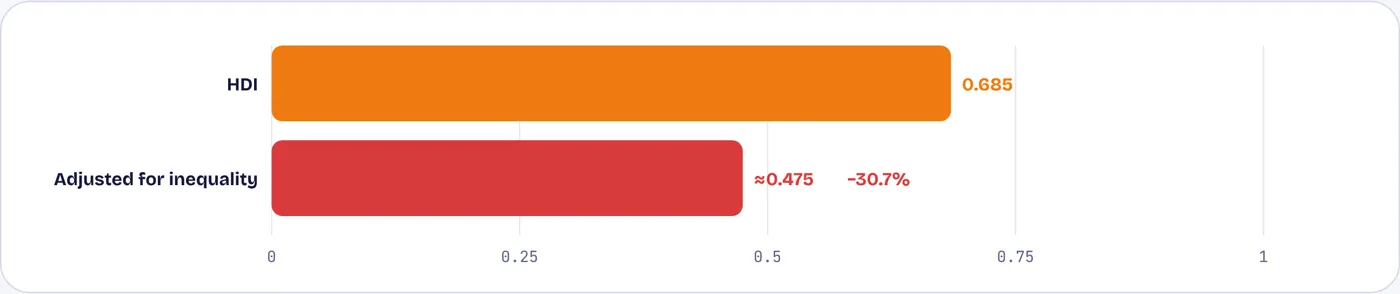
Ch. 11 · Left Behind
Inequality cuts India’s human development by almost a third
Ch. 11 · Left Behind
Three numbers that need a second look
Ch. 12 · Left Behind
Behind every South Asian neighbour except Pakistan and Afghanistan
Ch. 12 · Left Behind
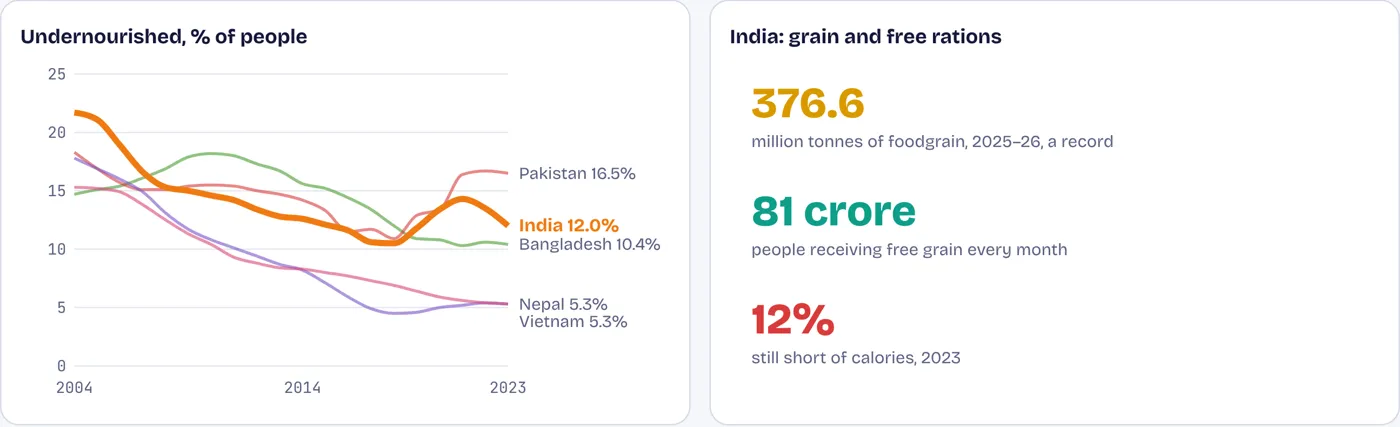
More food, fewer hungry, but children still short
Ch. 12 · Left Behind
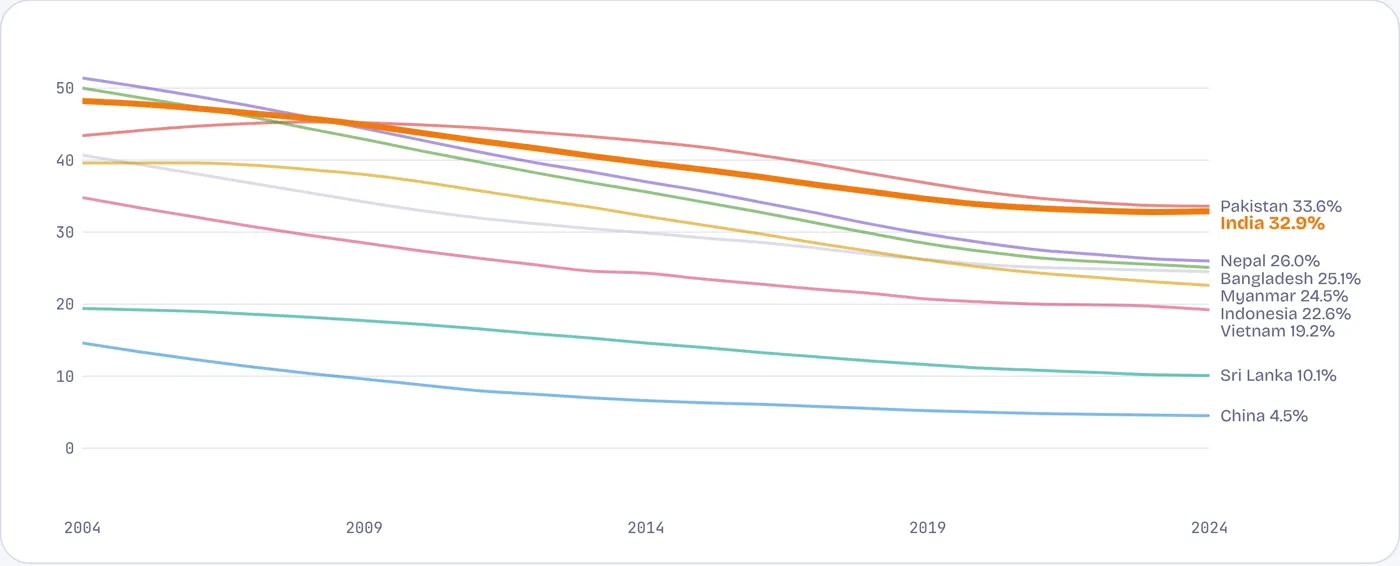
Bangladesh and Nepal started worse and are now better
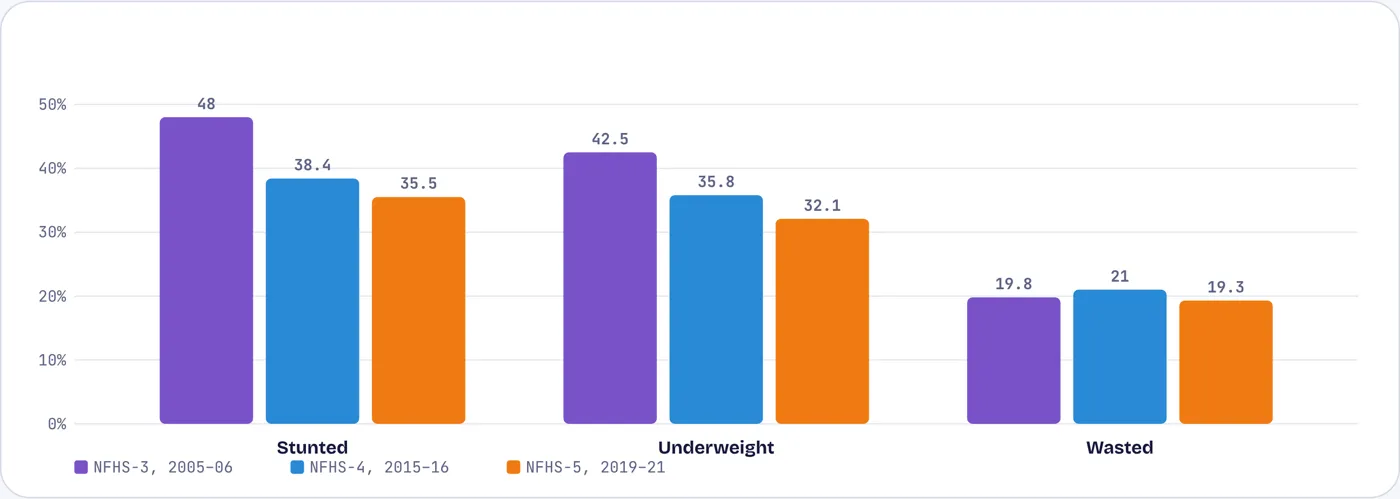
Ch. 12 · Left Behind
Stunting fell; wasting barely moved
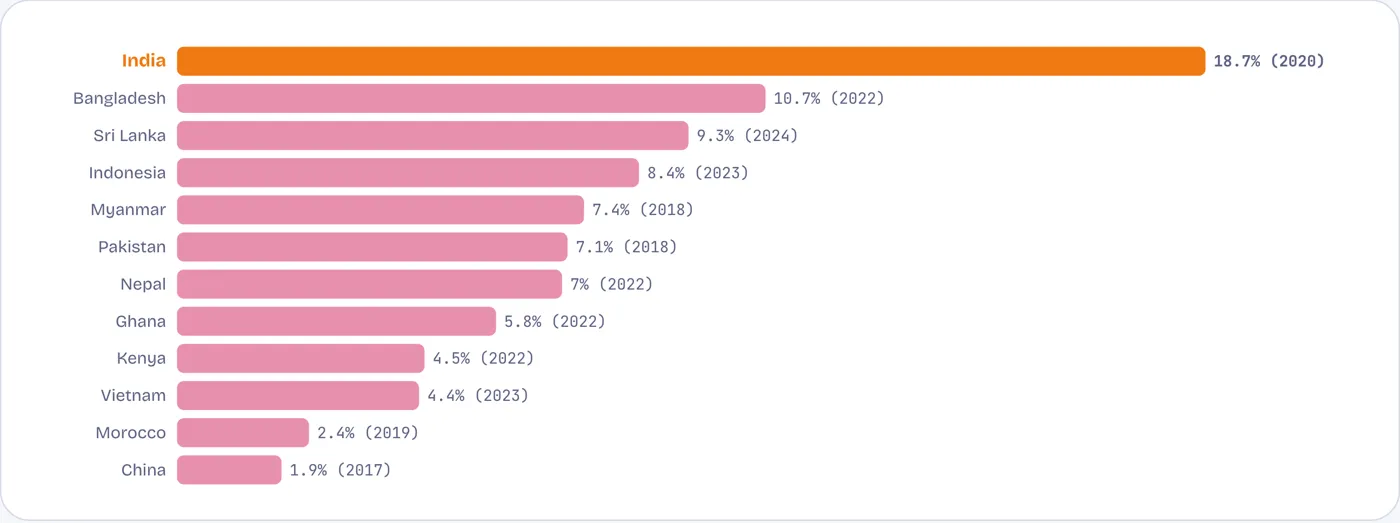
Ch. 12 · Left Behind
The highest child wasting in the peer panel
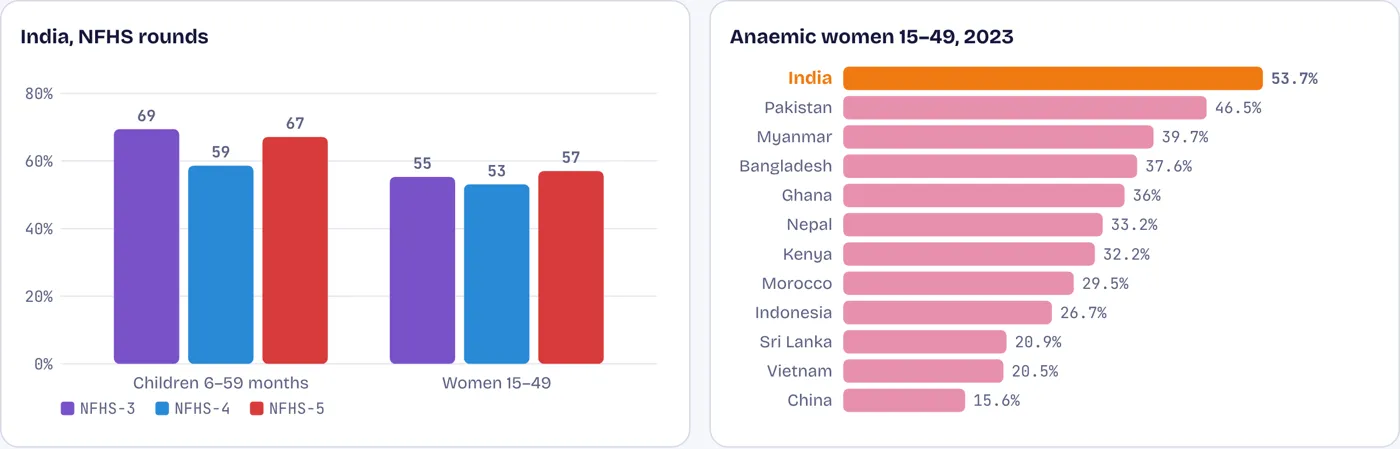
Ch. 12 · Left Behind
Anaemia is rising, not falling
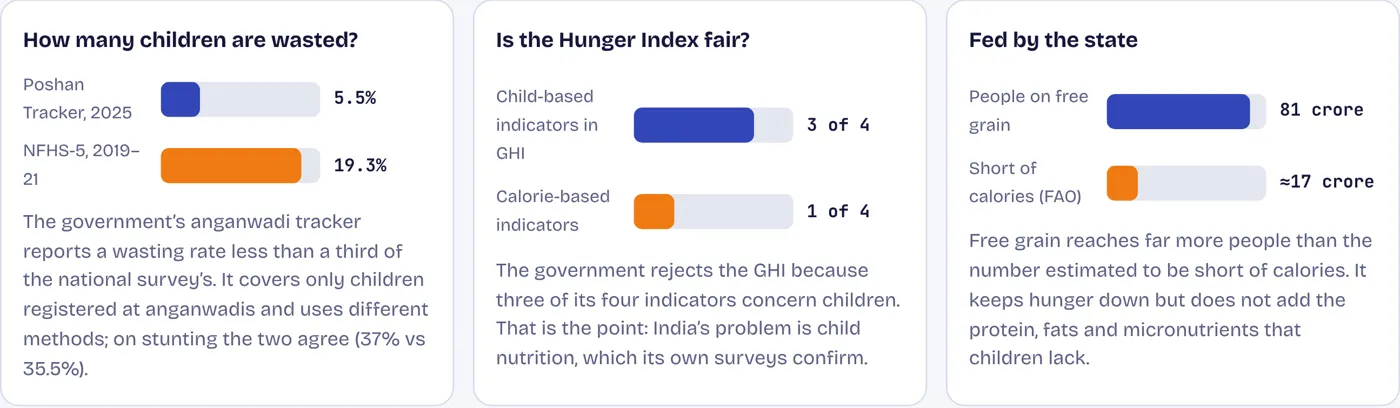
Ch. 12 · Left Behind
Three numbers that need a second look
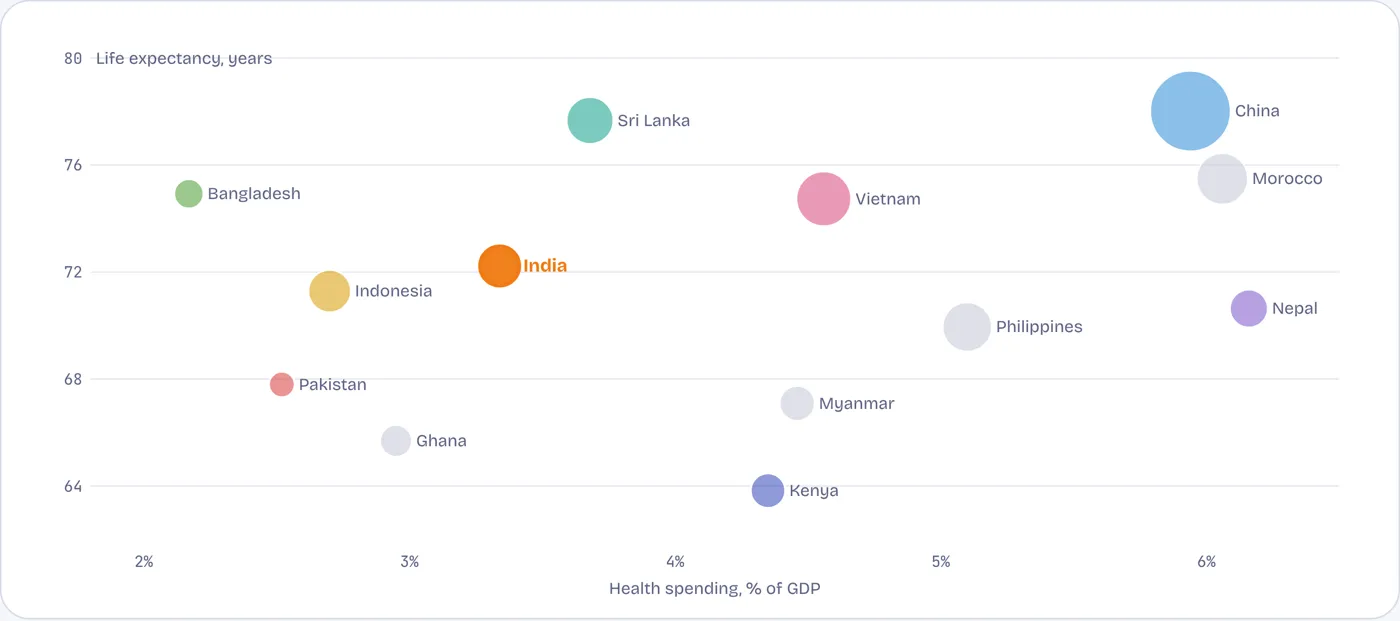
Ch. 13 · Left Behind
Less spent on health than most peers, and shorter lives than several
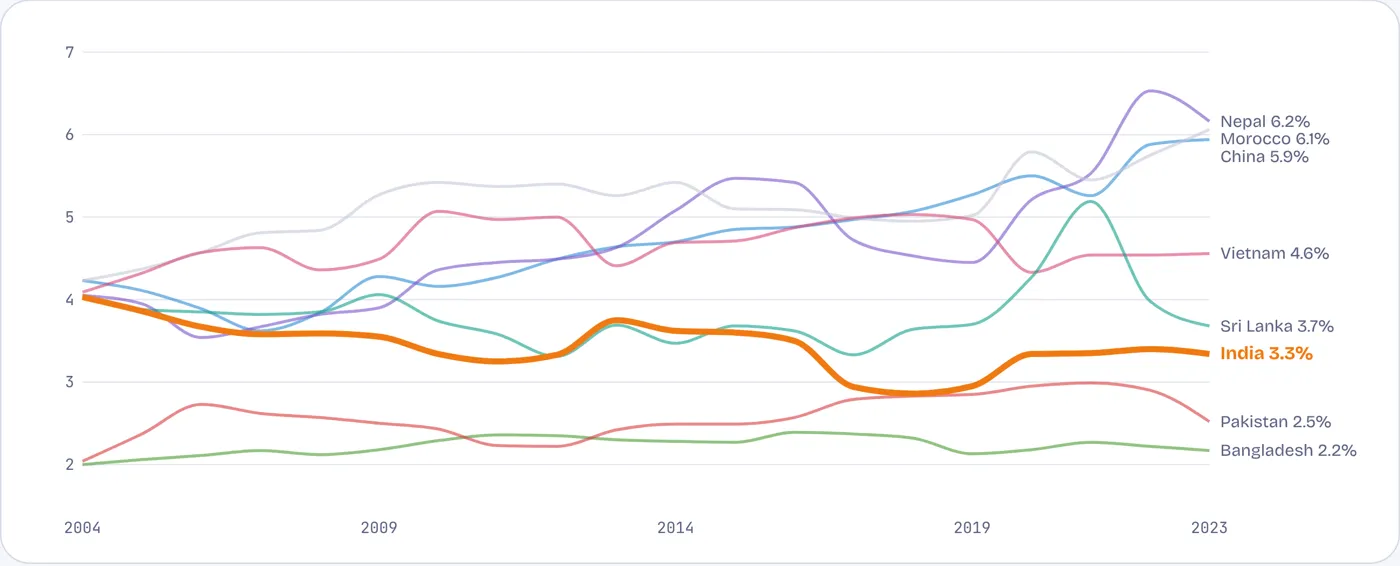
Ch. 13 · Left Behind
India’s health share fell as China’s, Nepal’s and Morocco’s rose
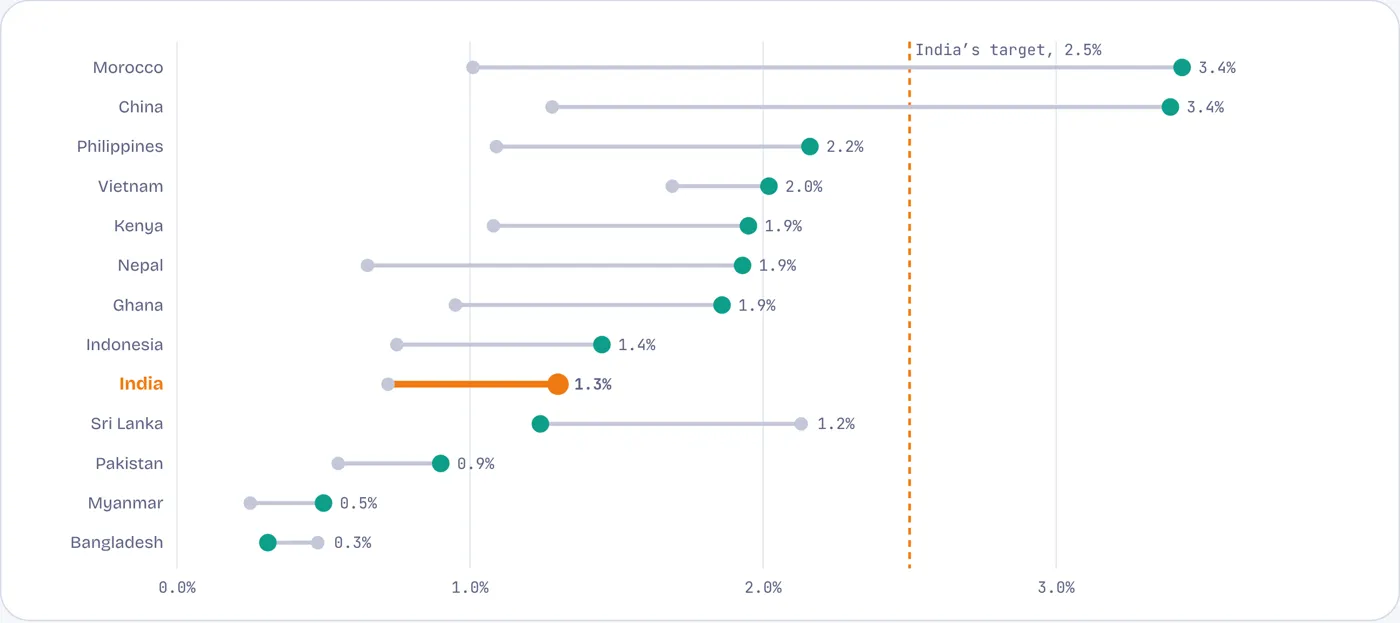
Ch. 13 · Left Behind
The government still spends just 1.3% of GDP on health
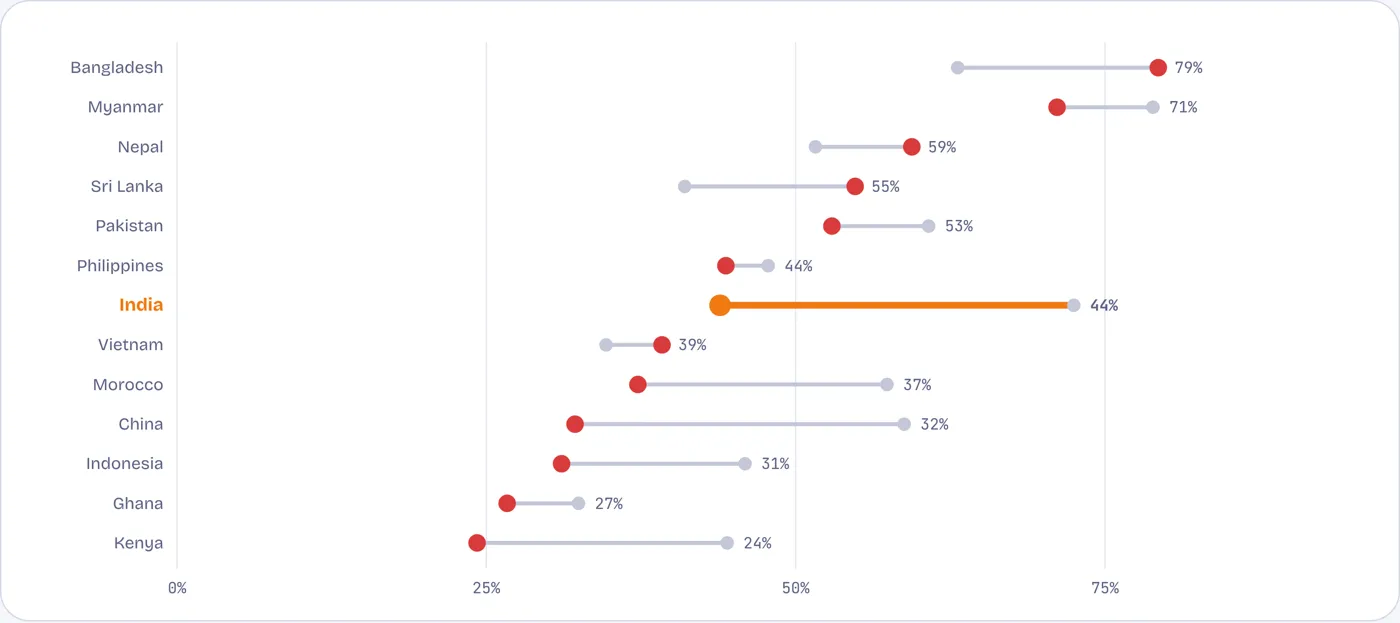
Ch. 13 · Left Behind
Out-of-pocket payments fell, but still cover over two-fifths of the bill
Ch. 13 · Left Behind
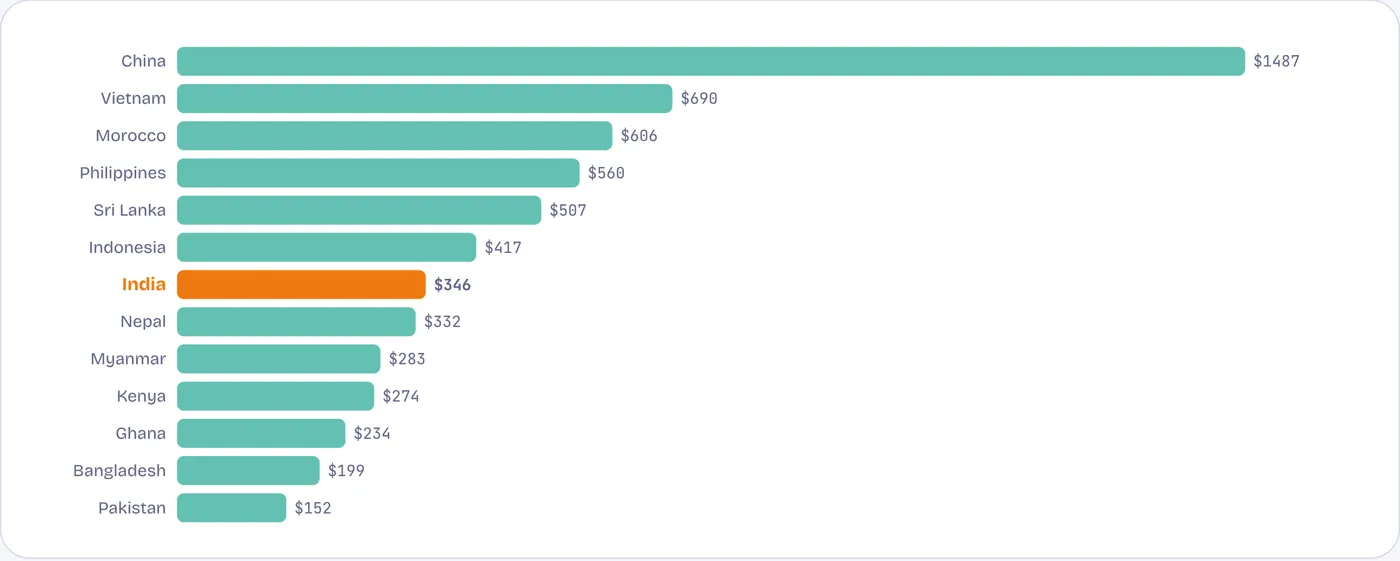
About $350 a year per person on health
Ch. 13 · Left Behind
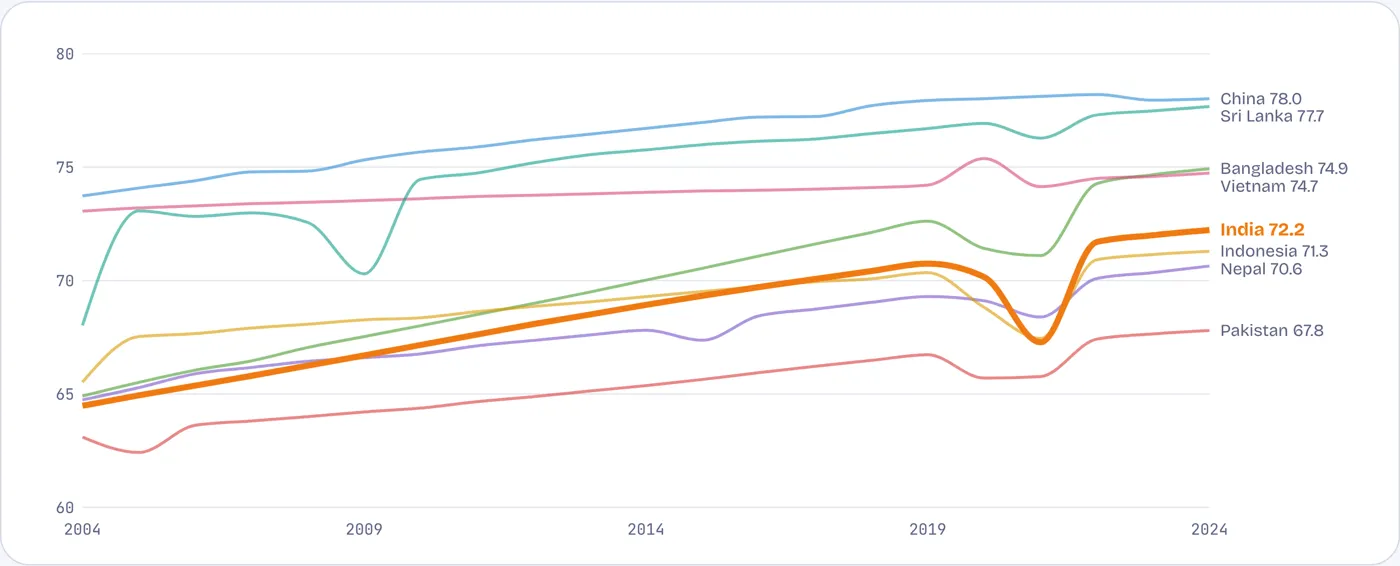
Bangladeshis now live 2.7 years longer than Indians
Ch. 13 · Left Behind
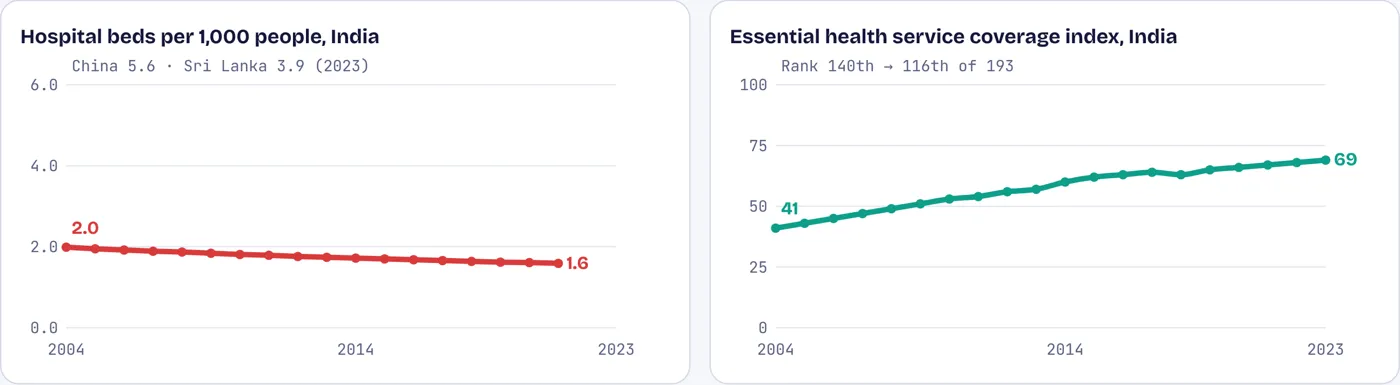
Fewer hospital beds per person than in 2004; wider coverage of basic services
Ch. 13 · Left Behind
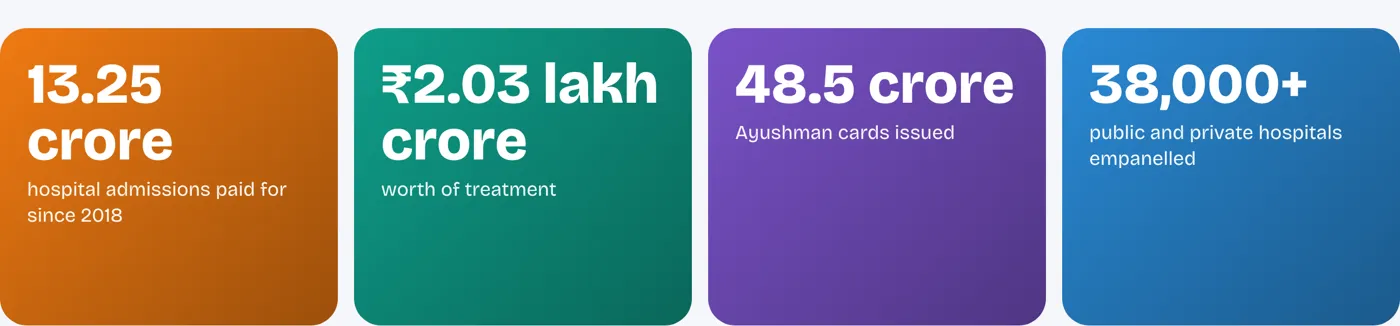
One of the world’s largest public health insurance schemes
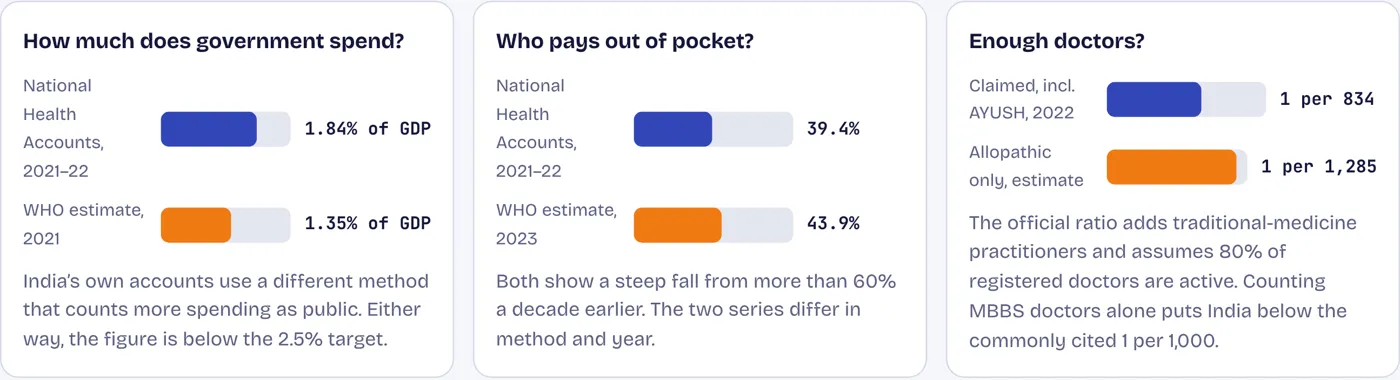
Ch. 13 · Left Behind
Three numbers that need a second look
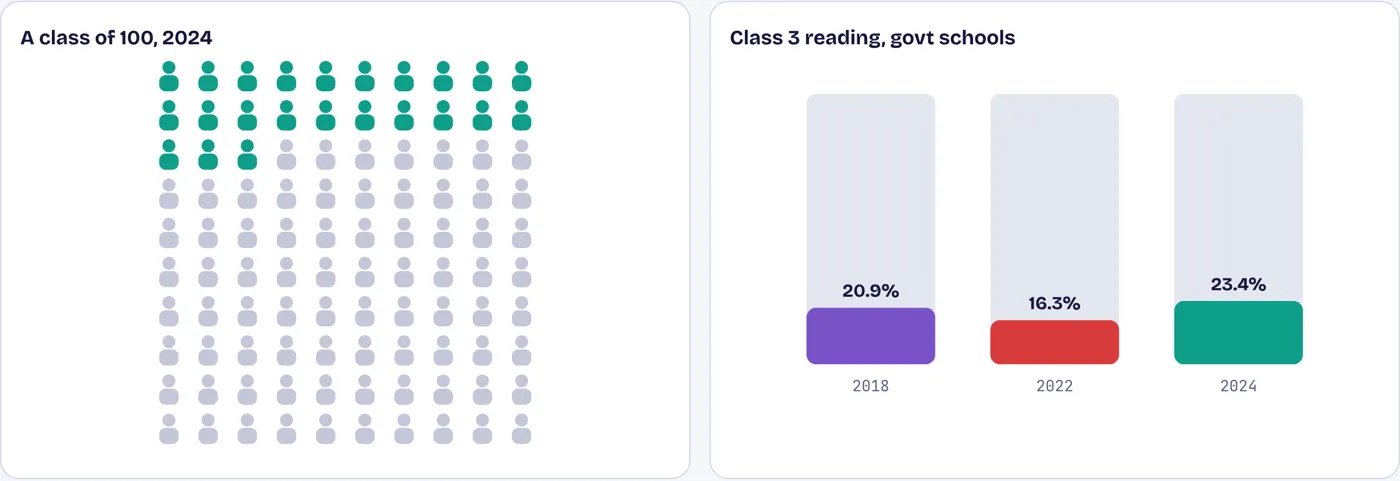
Ch. 14 · Left Behind
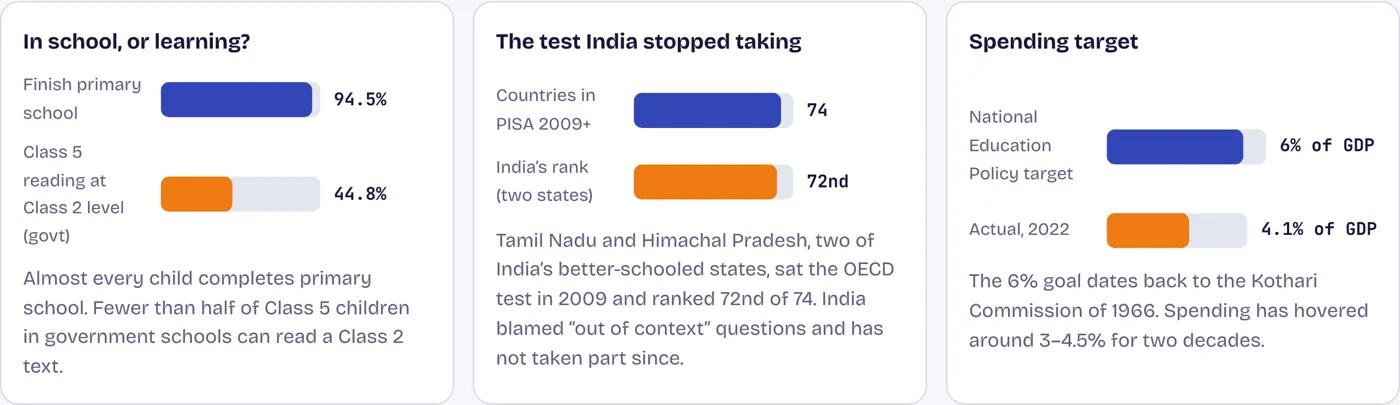
Fewer than one in four can read a Class 2 story
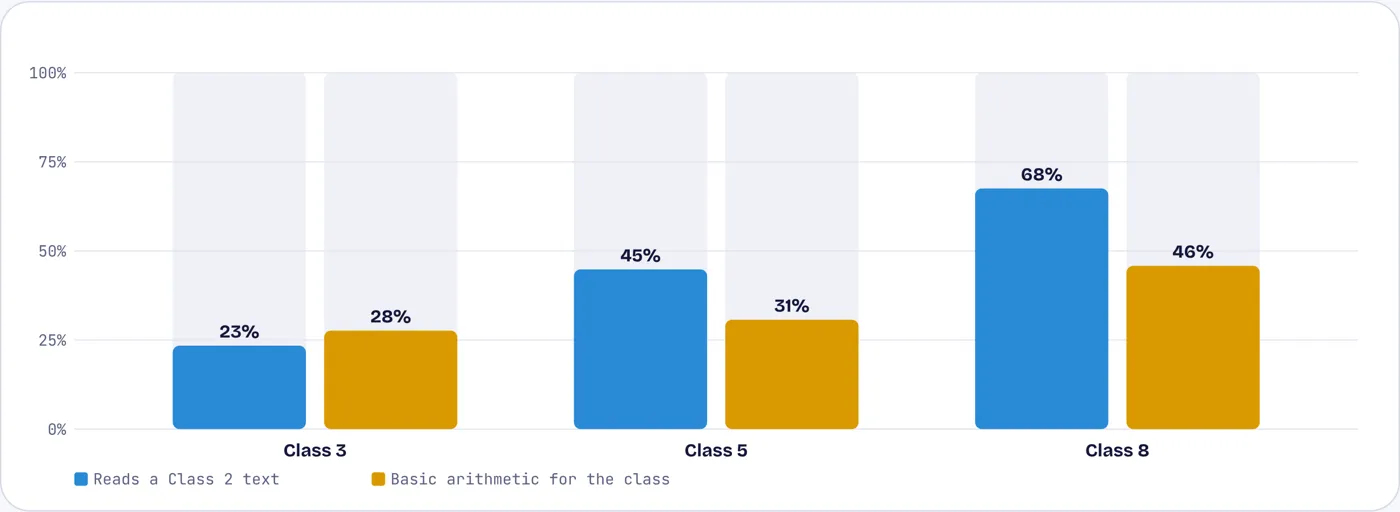
Ch. 14 · Left Behind
By Class 8, a third still cannot read a Class 2 text
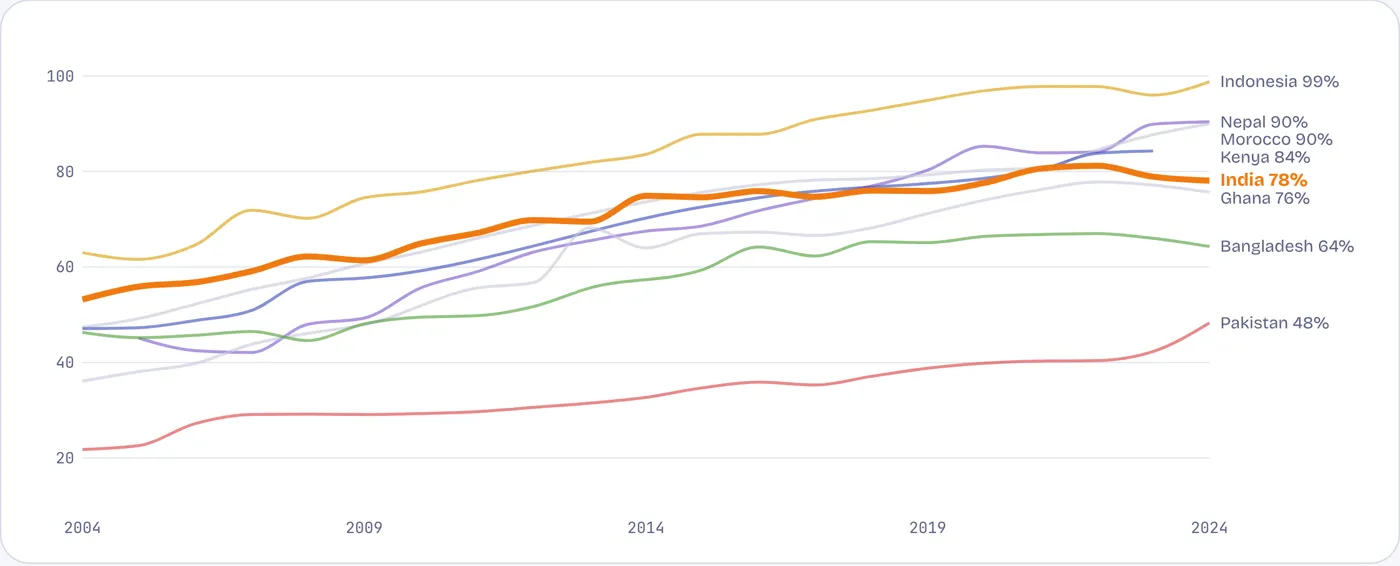
Ch. 14 · Left Behind
Enrolment rose fast, but some poorer neighbours enrol more
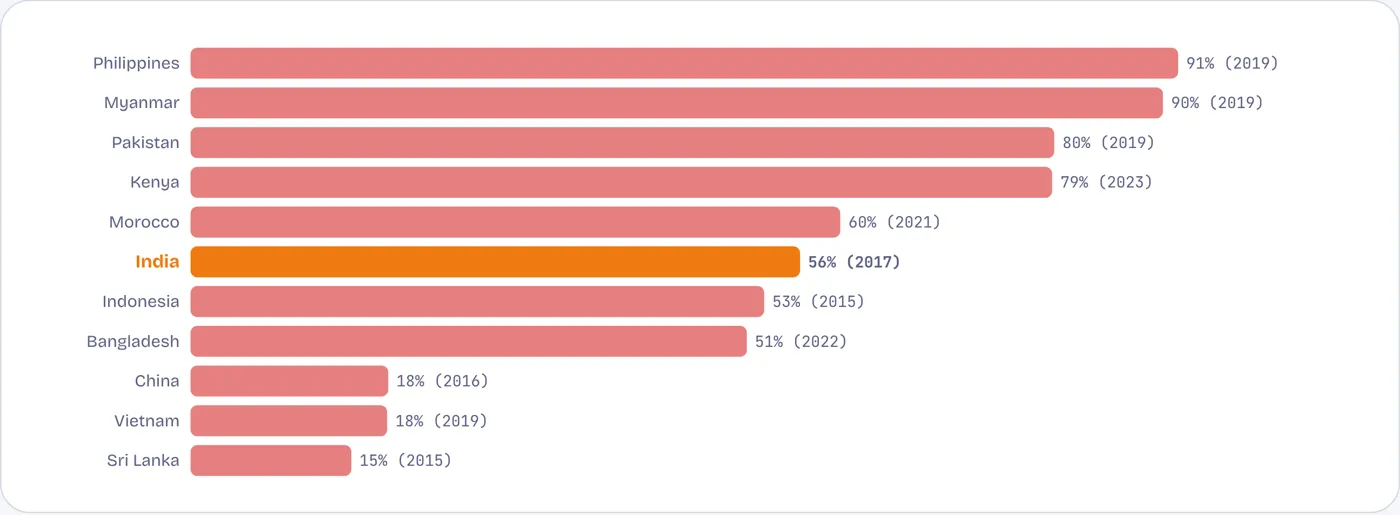
Ch. 14 · Left Behind
More than half of 10-year-olds cannot read and understand a simple text
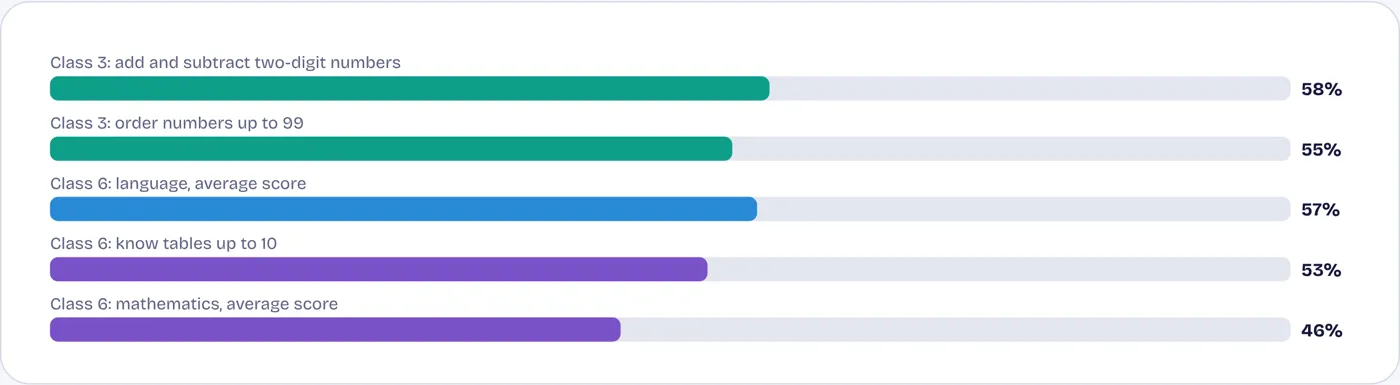
Ch. 14 · Left Behind
The national survey finds the same gaps
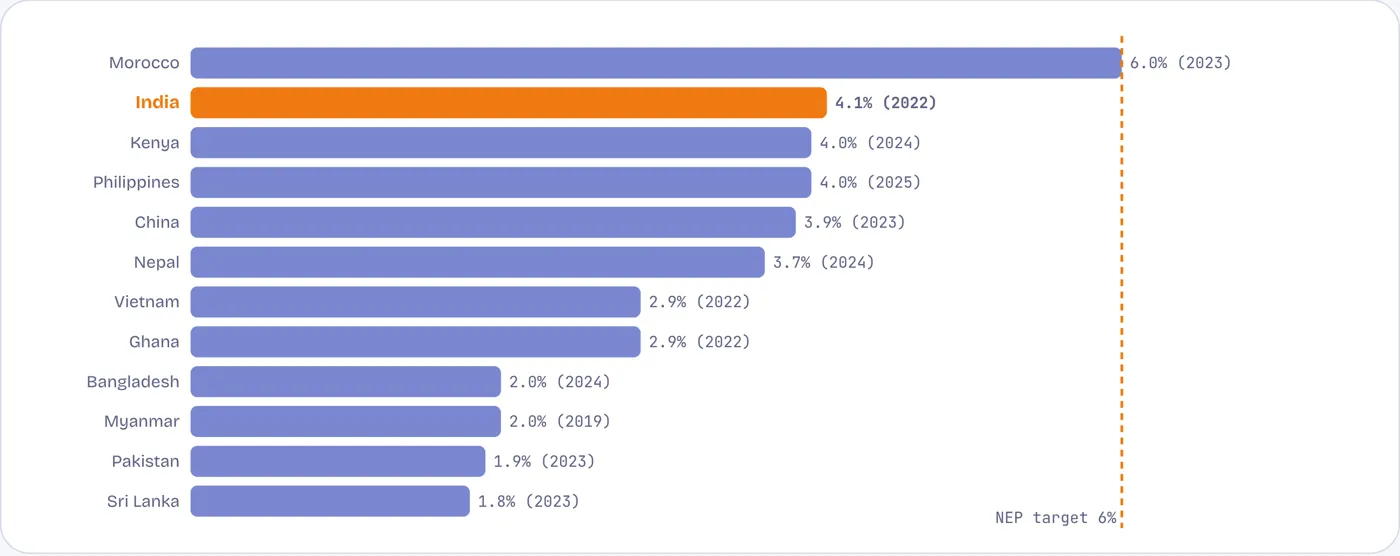
Ch. 14 · Left Behind
India spends more on schooling than most peers
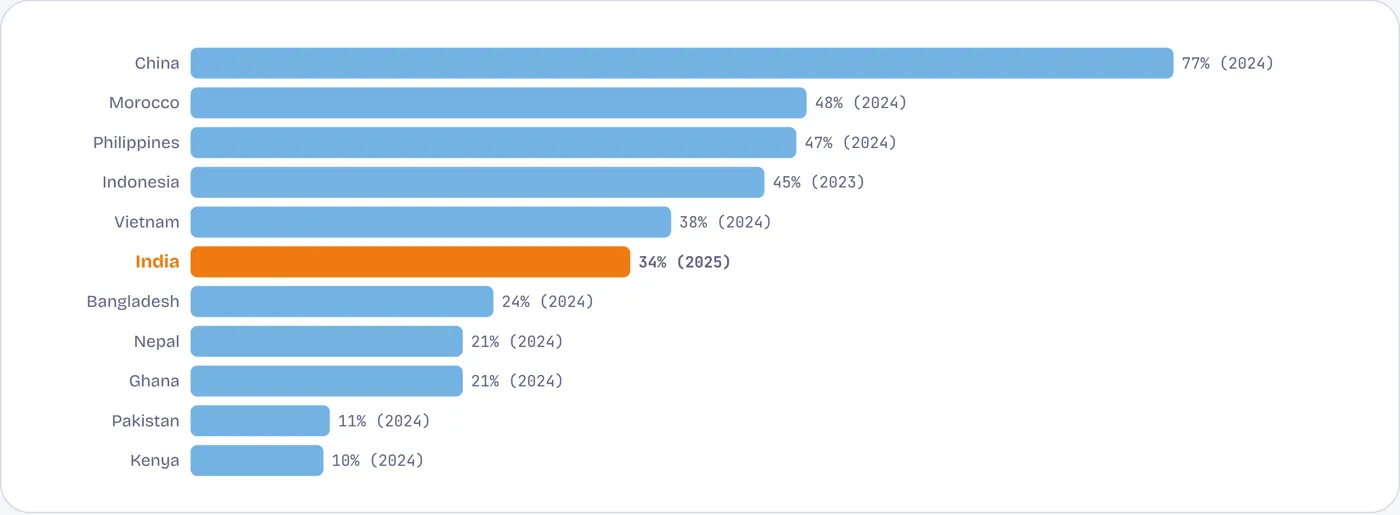
Ch. 14 · Left Behind
One in three young people in higher education
Ch. 14 · Left Behind
Three numbers that need a second look
Ch. 15 · Left Behind
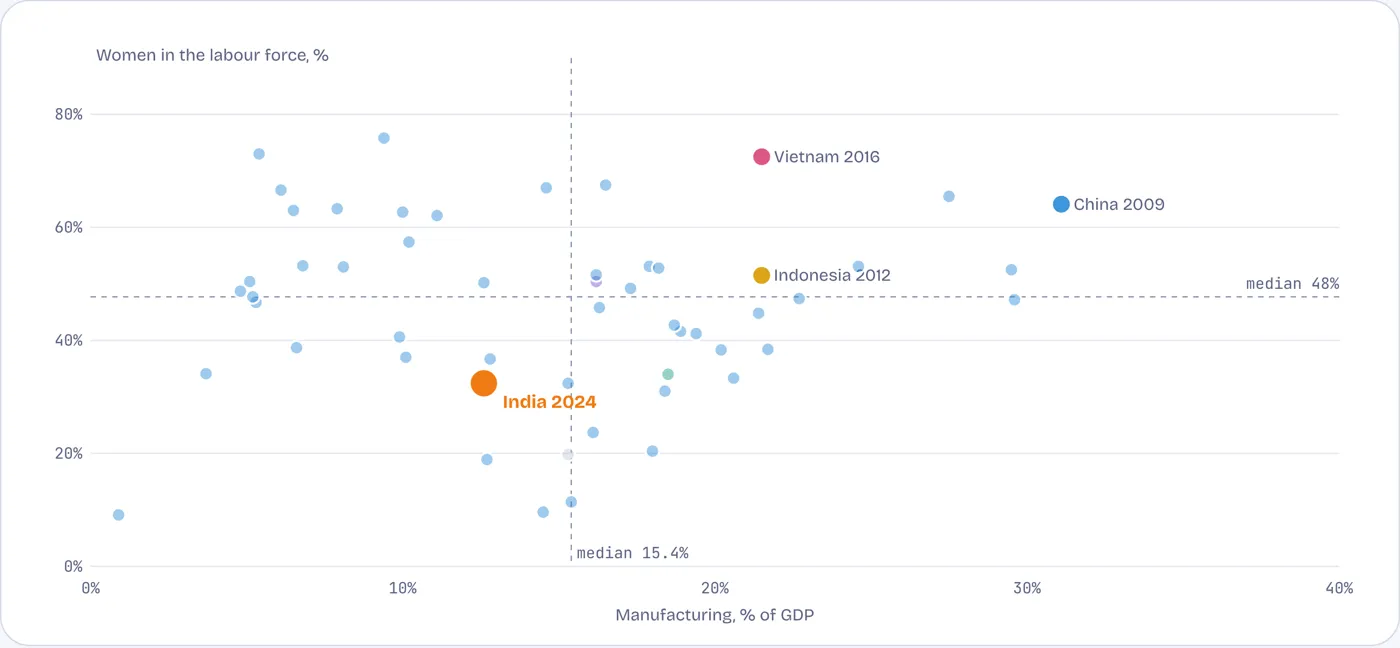
At India’s income, most countries had more factories and more women at work
Ch. 15 · Left Behind
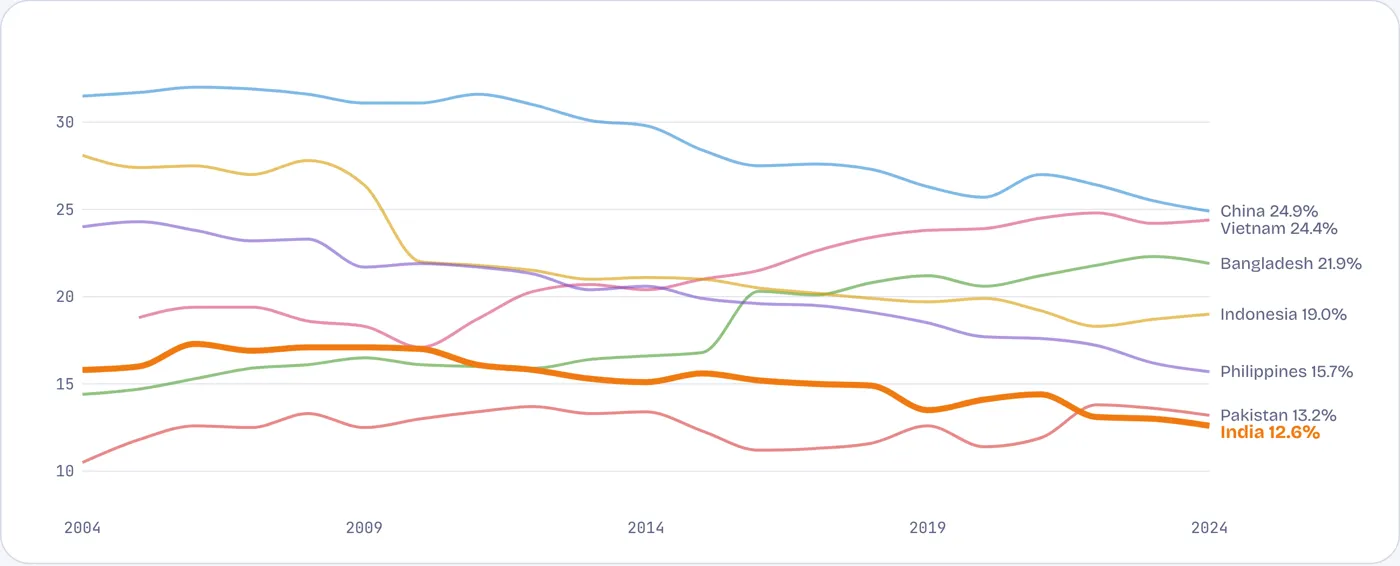
Bangladesh and Vietnam built factories; India’s share fell
Ch. 15 · Left Behind
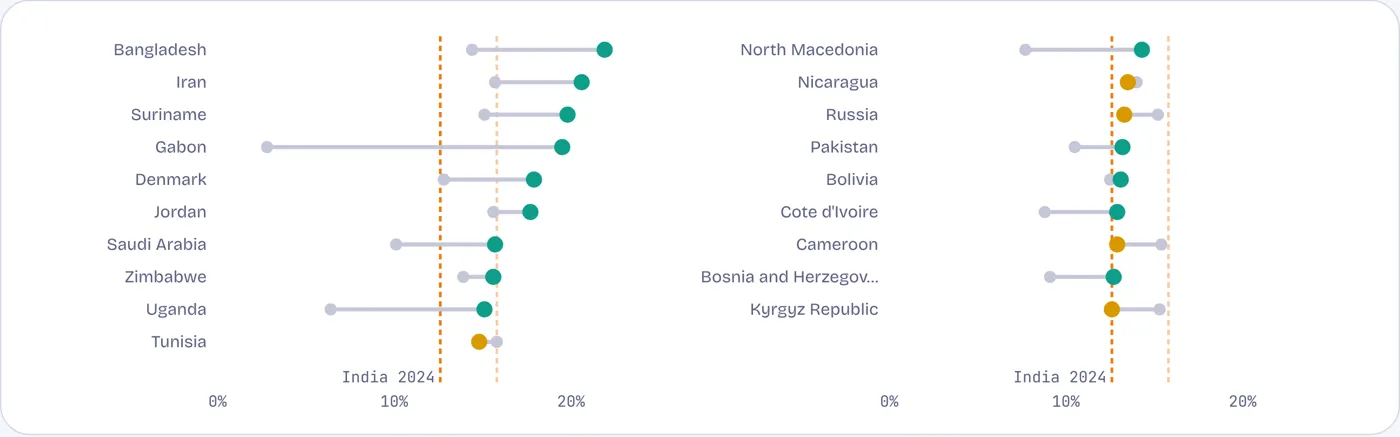
Nineteen countries moved past India
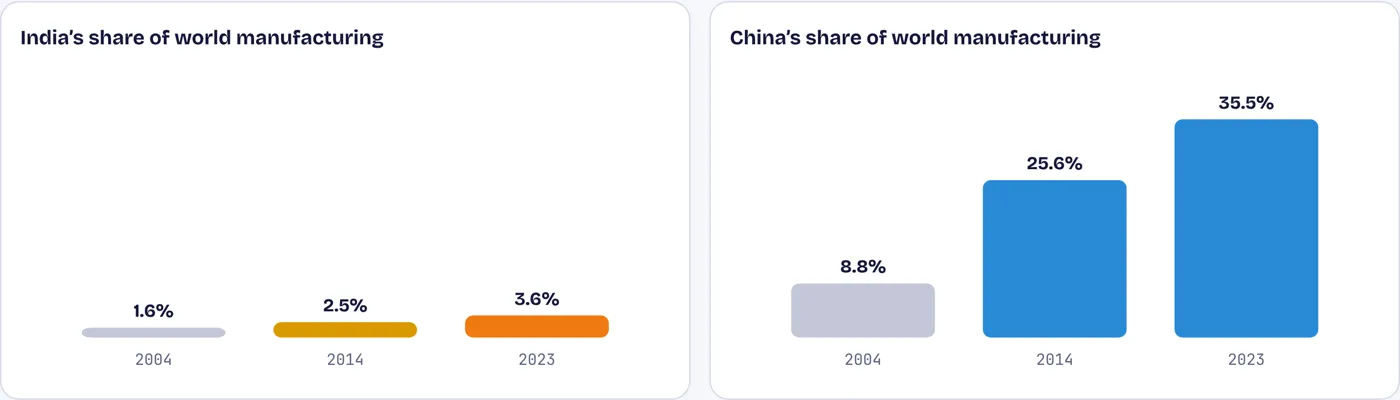
Ch. 15 · Left Behind
India makes under 4% of the world’s manufactured goods
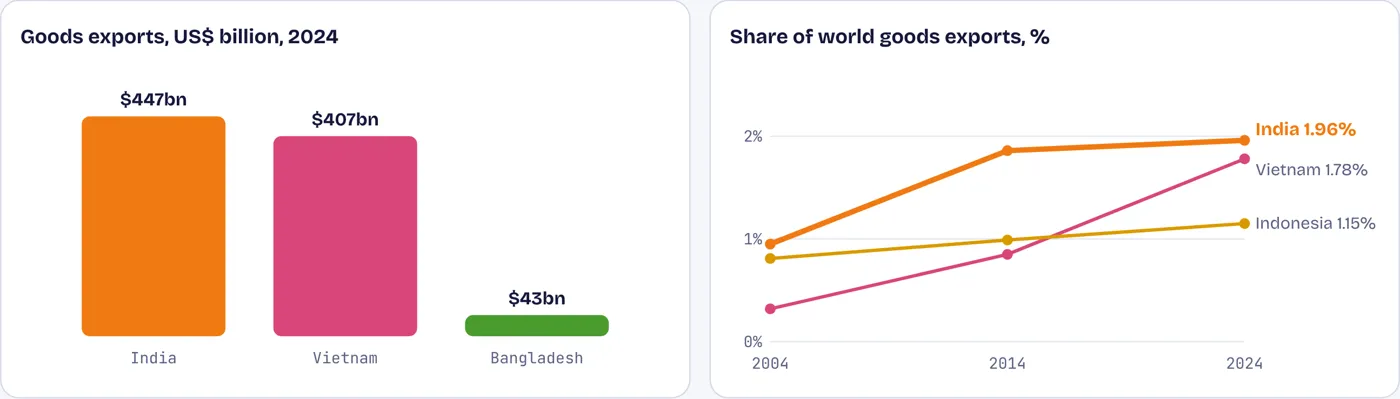
Ch. 15 · Left Behind
Vietnam, with a fourteenth of India’s people, exports almost as many goods
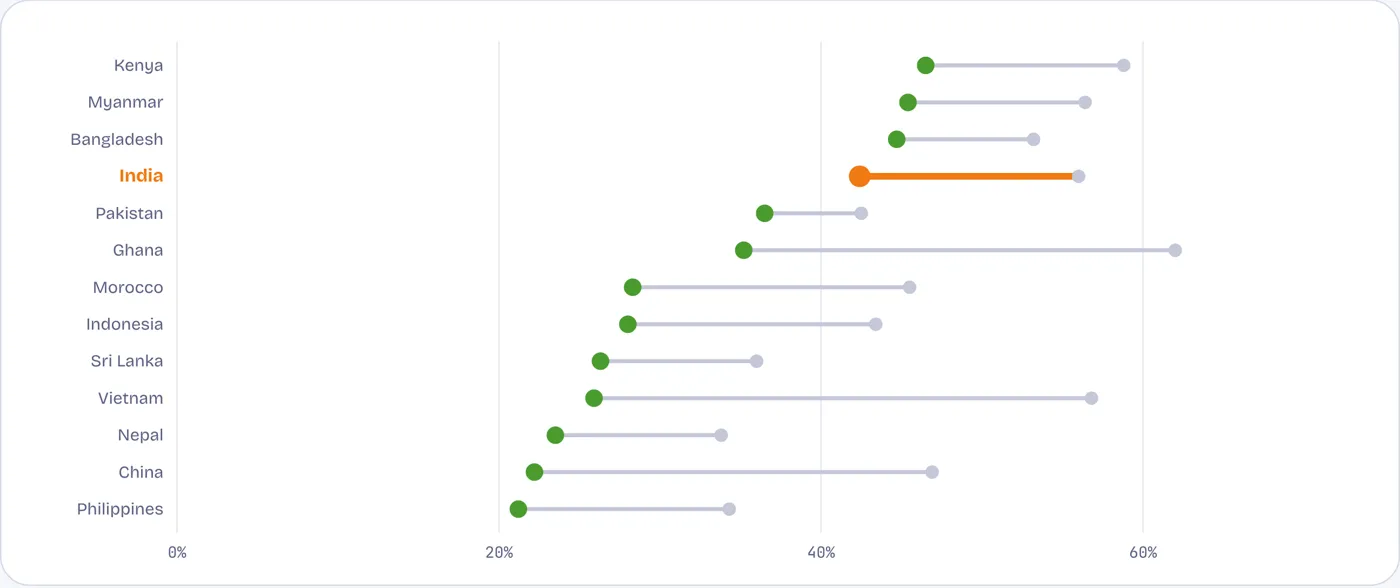
Ch. 15 · Left Behind
Four in ten Indians still work on farms
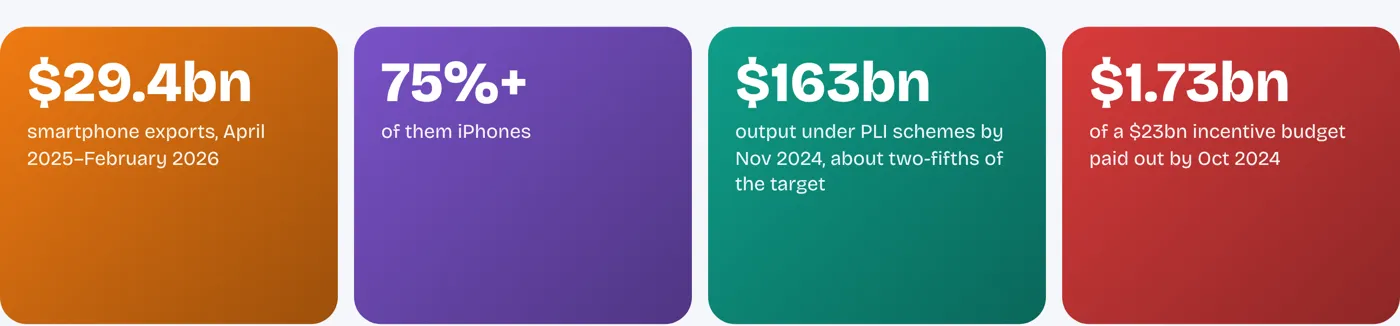
Ch. 15 · Left Behind
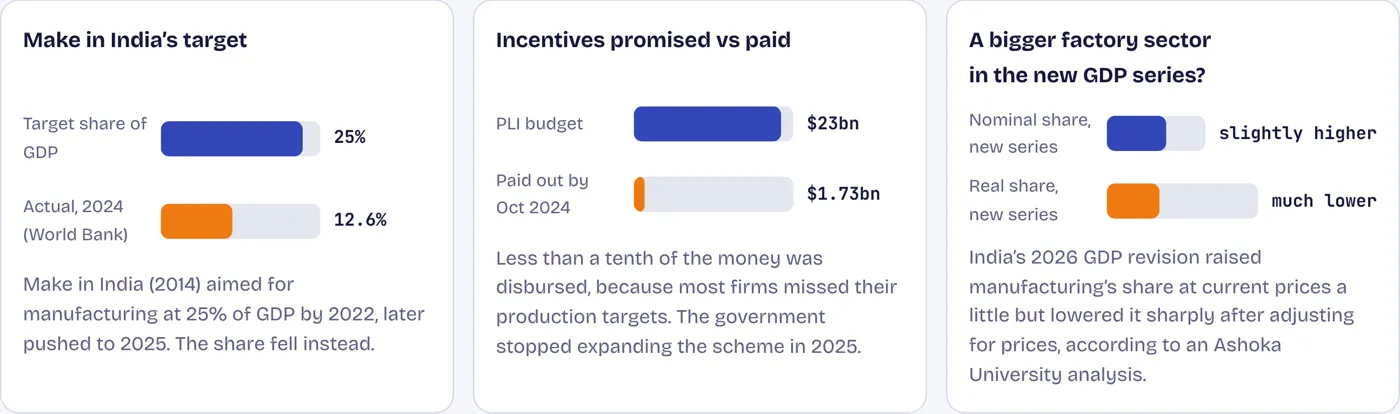
Smartphones became one of India’s largest exports
Ch. 15 · Left Behind
Three numbers that need a second look
Ch. 16 · Left Behind
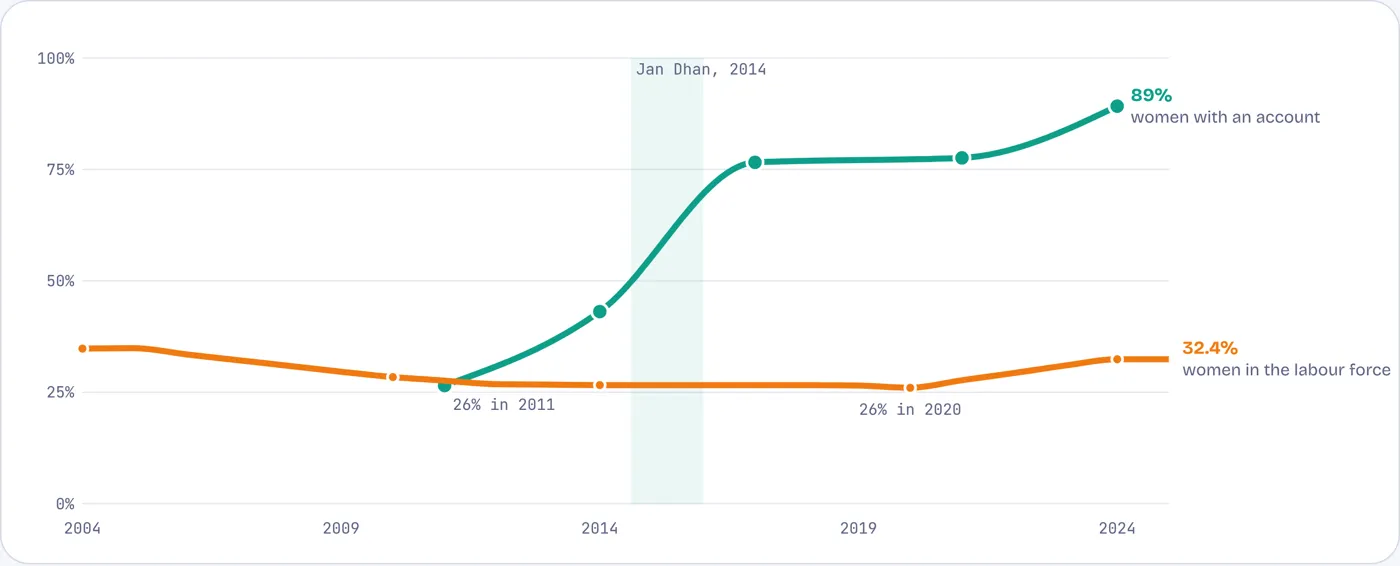
Almost every woman got a bank account; most still have no job
Ch. 16 · Left Behind
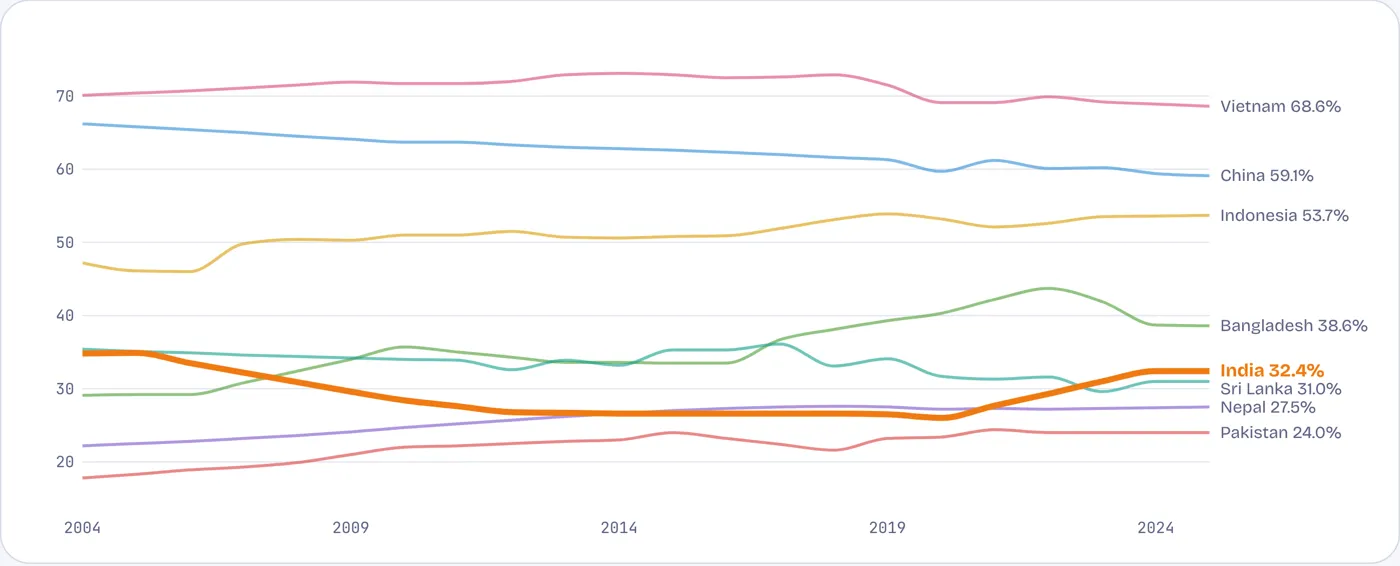
Bangladesh’s women went to work; India’s went home, then partly came back
Ch. 16 · Left Behind
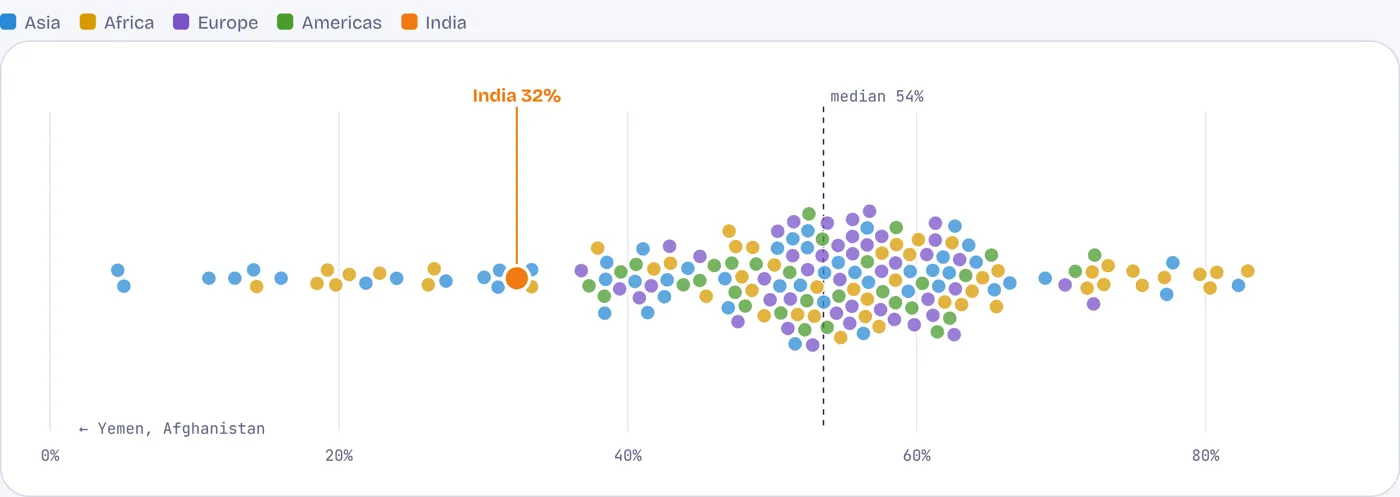
Only twenty countries have a smaller share of women in the labour force
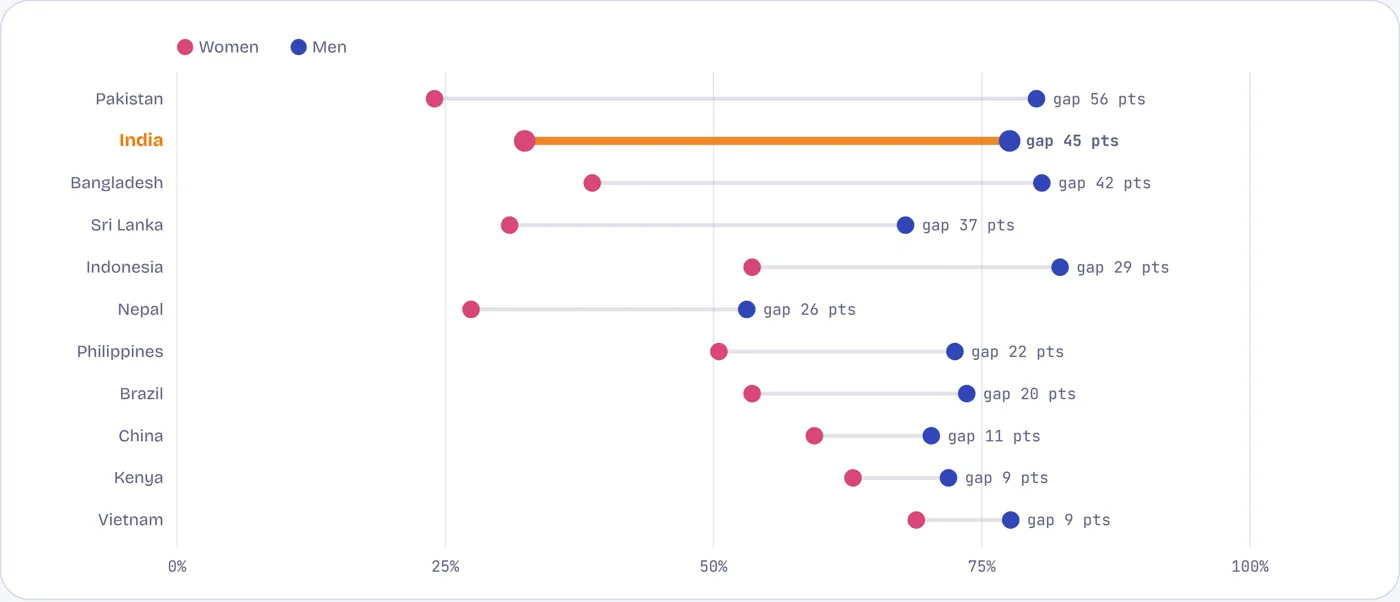
Ch. 16 · Left Behind
Men work at about the same rate everywhere; women make the difference
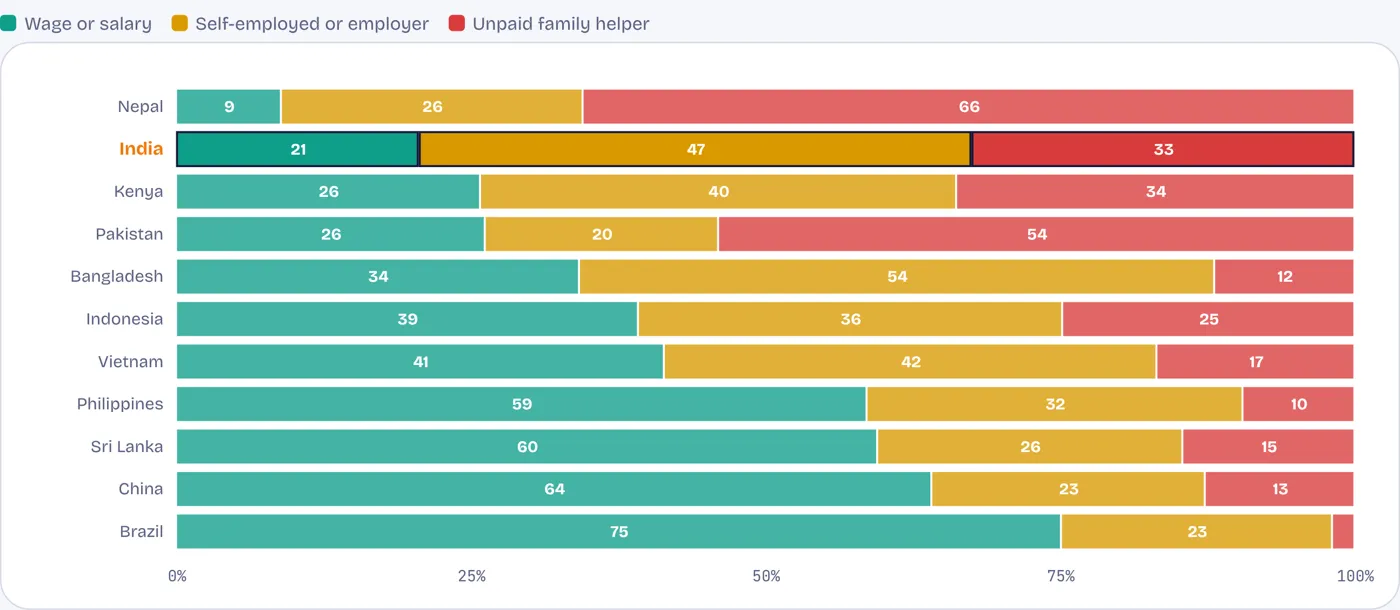
Ch. 16 · Left Behind
One in five working Indian women earns a wage; one in three is an unpaid family helper
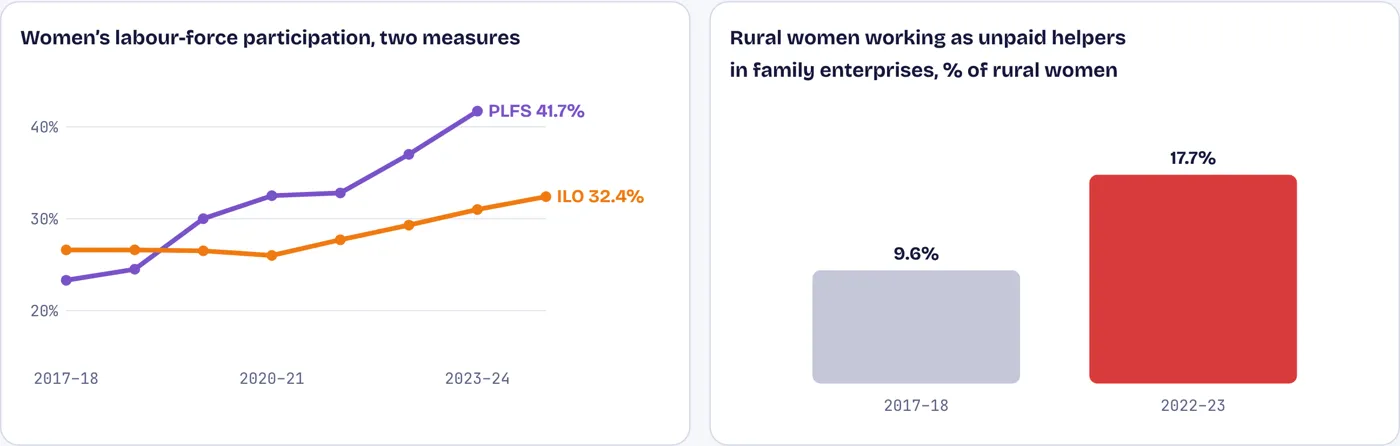
Ch. 16 · Left Behind
Much of the recent rise is unpaid work on family farms
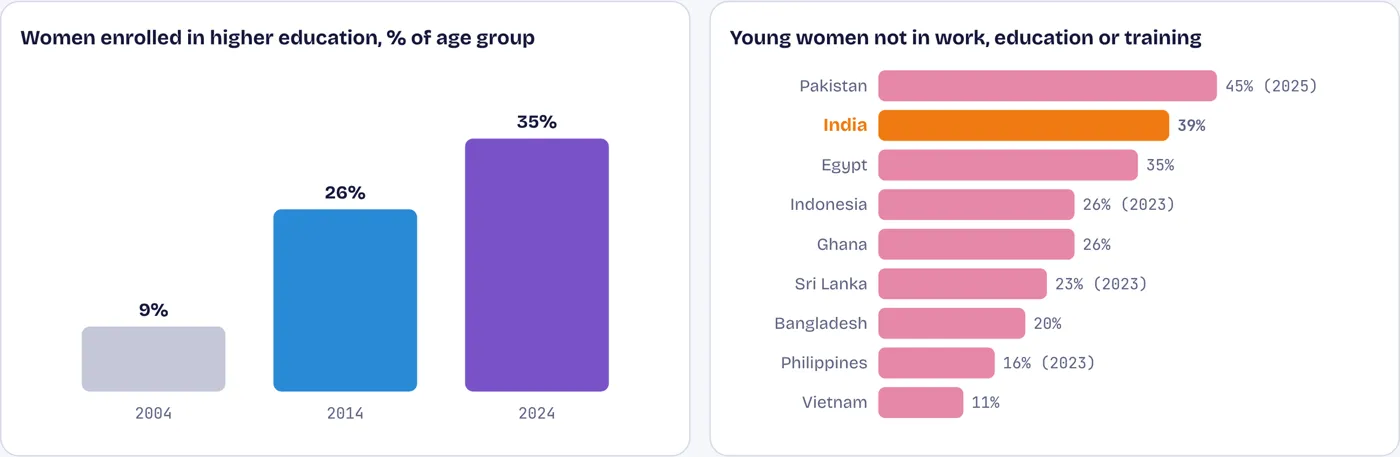
Ch. 16 · Left Behind
Four times as many women go to college; four in ten young women are not in work or study
Ch. 16 · Left Behind
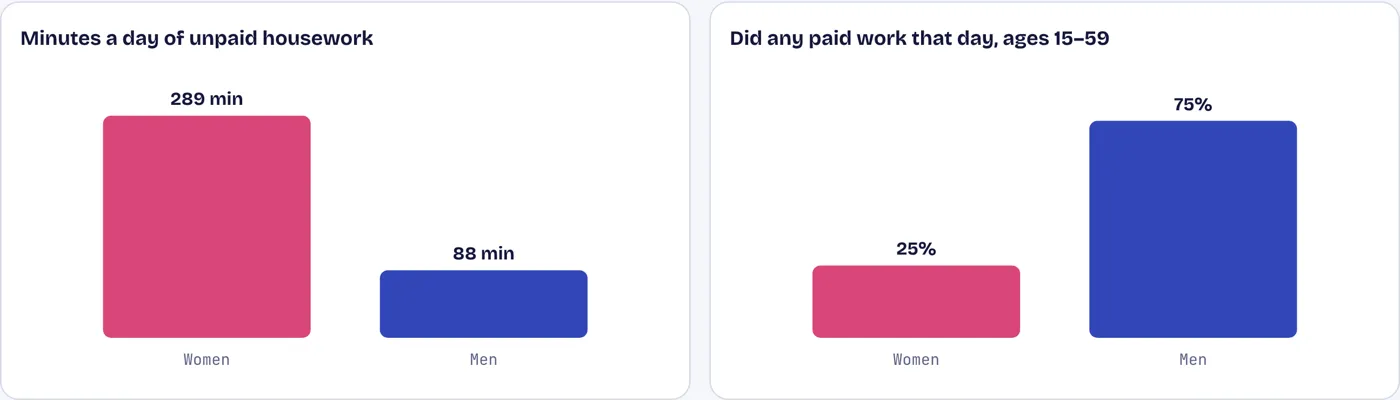
Women do more than three times the unpaid housework men do
Ch. 16 · Left Behind
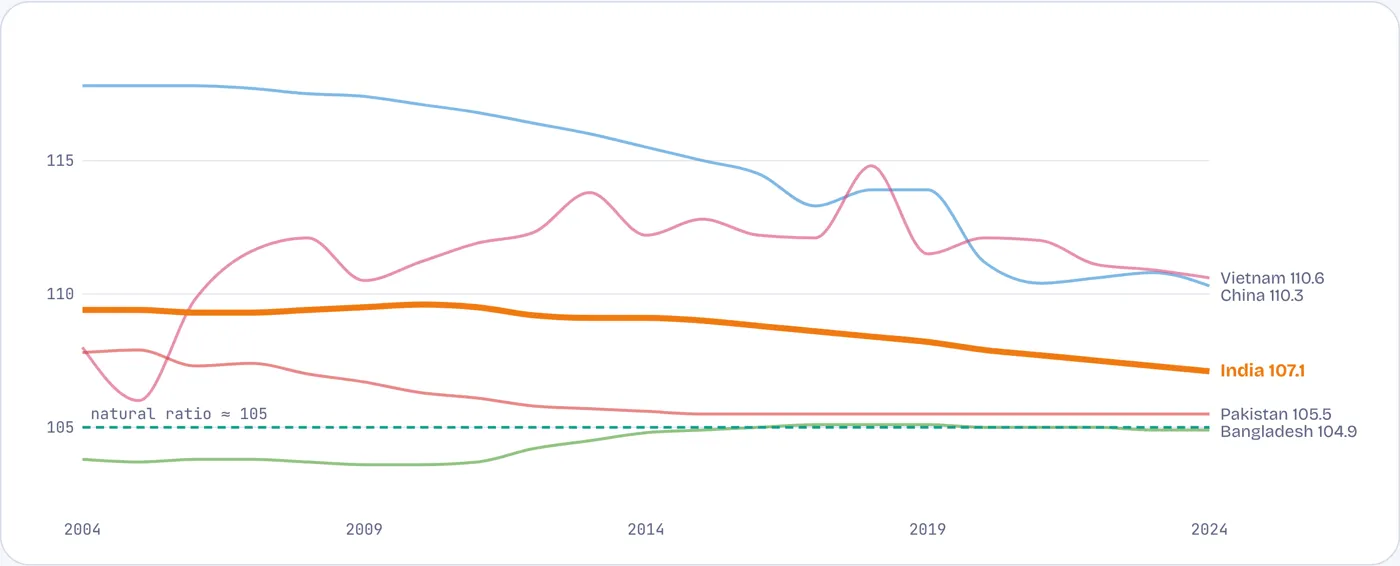
Fewer girls are being lost before birth, but the gap has not closed
Ch. 16 · Left Behind
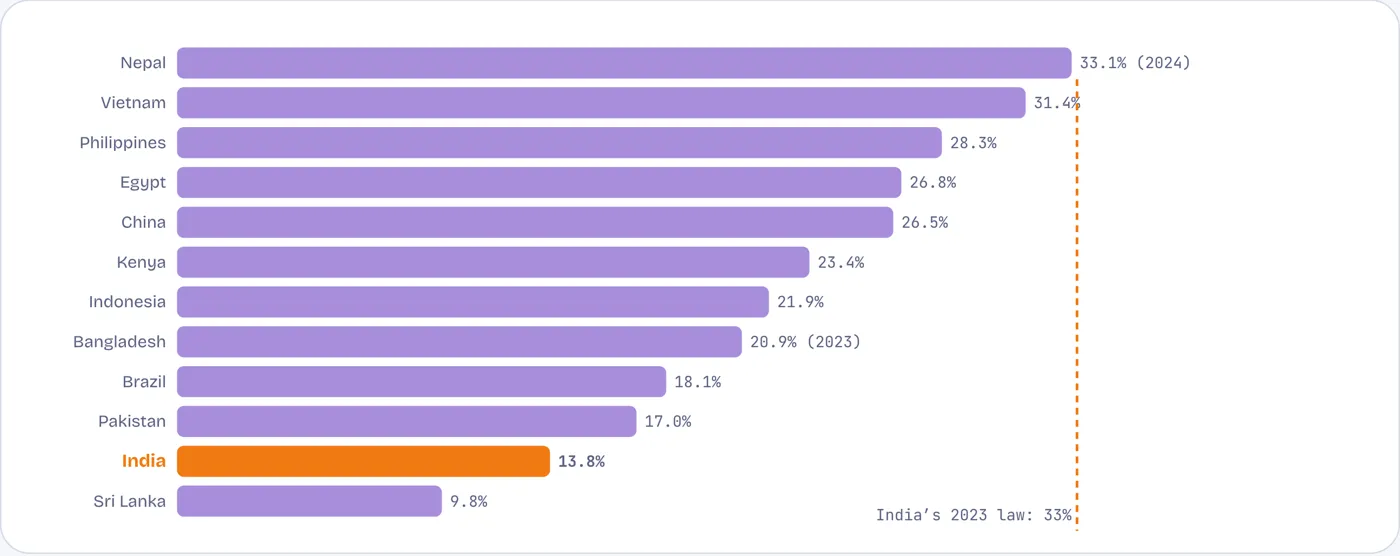
Fewer than one MP in seven is a woman
Ch. 16 · Left Behind
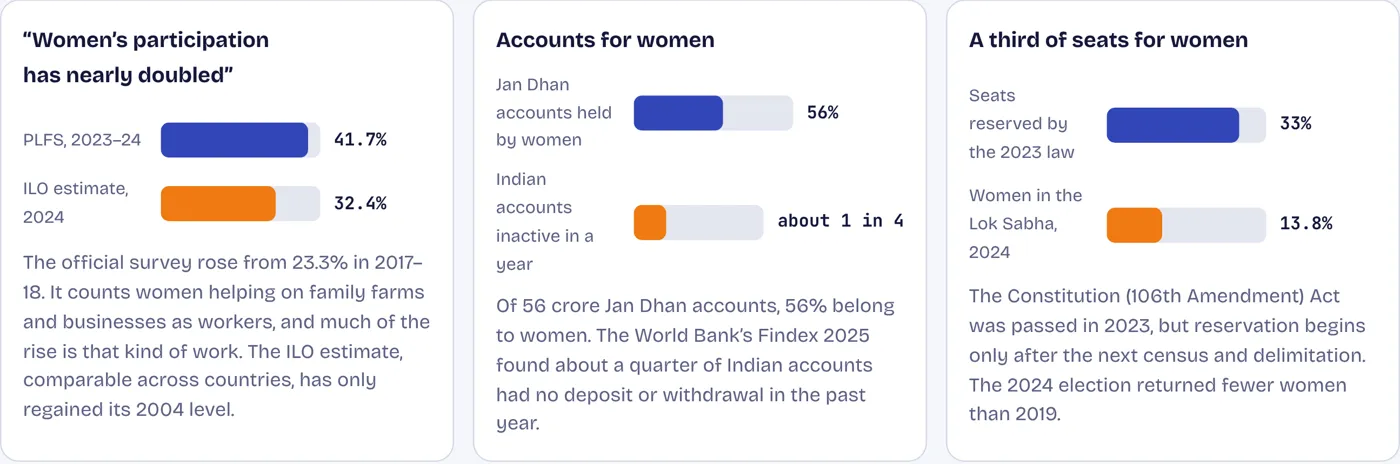
Three numbers that need a second look
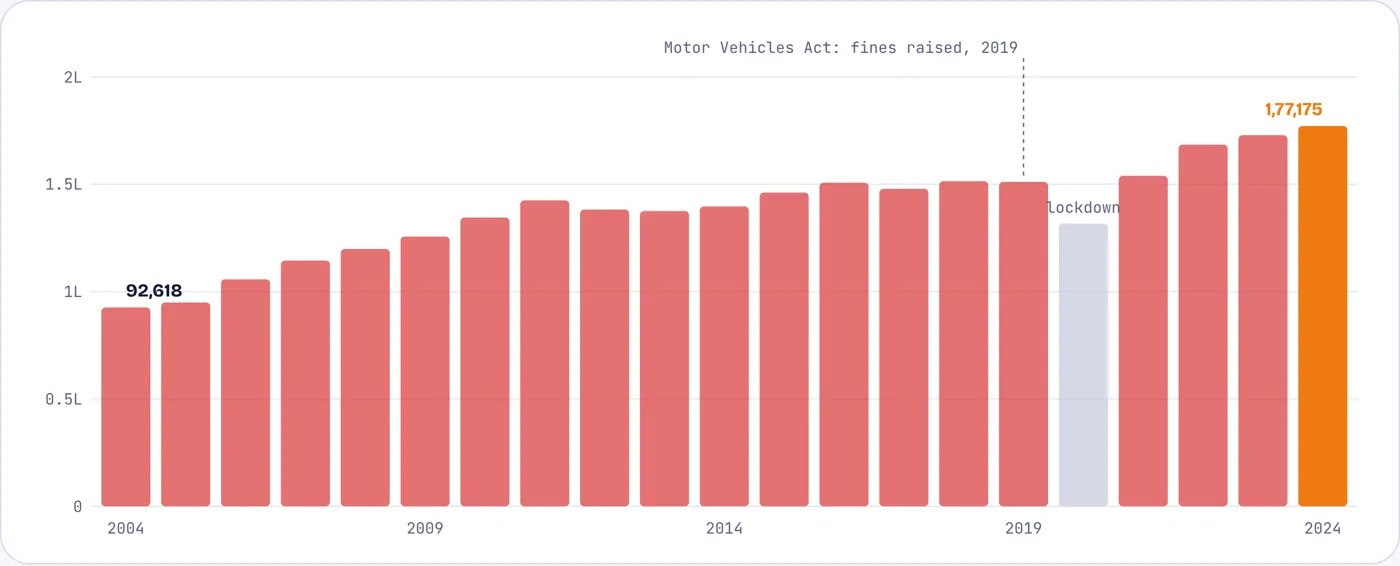
Ch. 17 · Left Behind
Road deaths almost doubled in twenty years
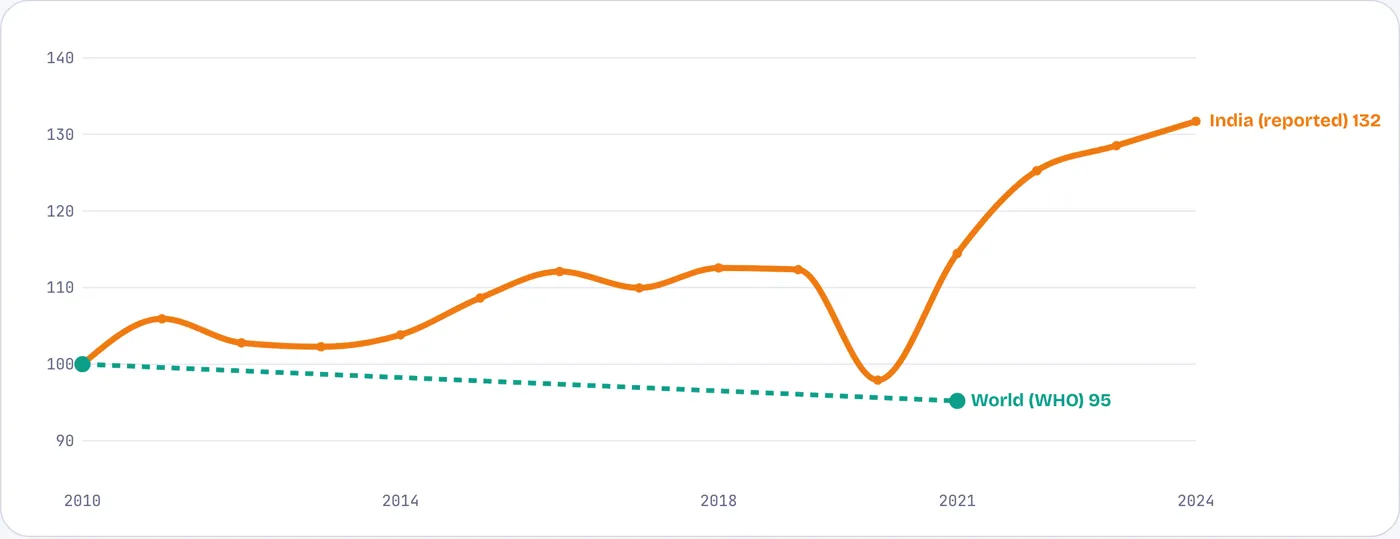
Ch. 17 · Left Behind
The world began cutting road deaths; India did not
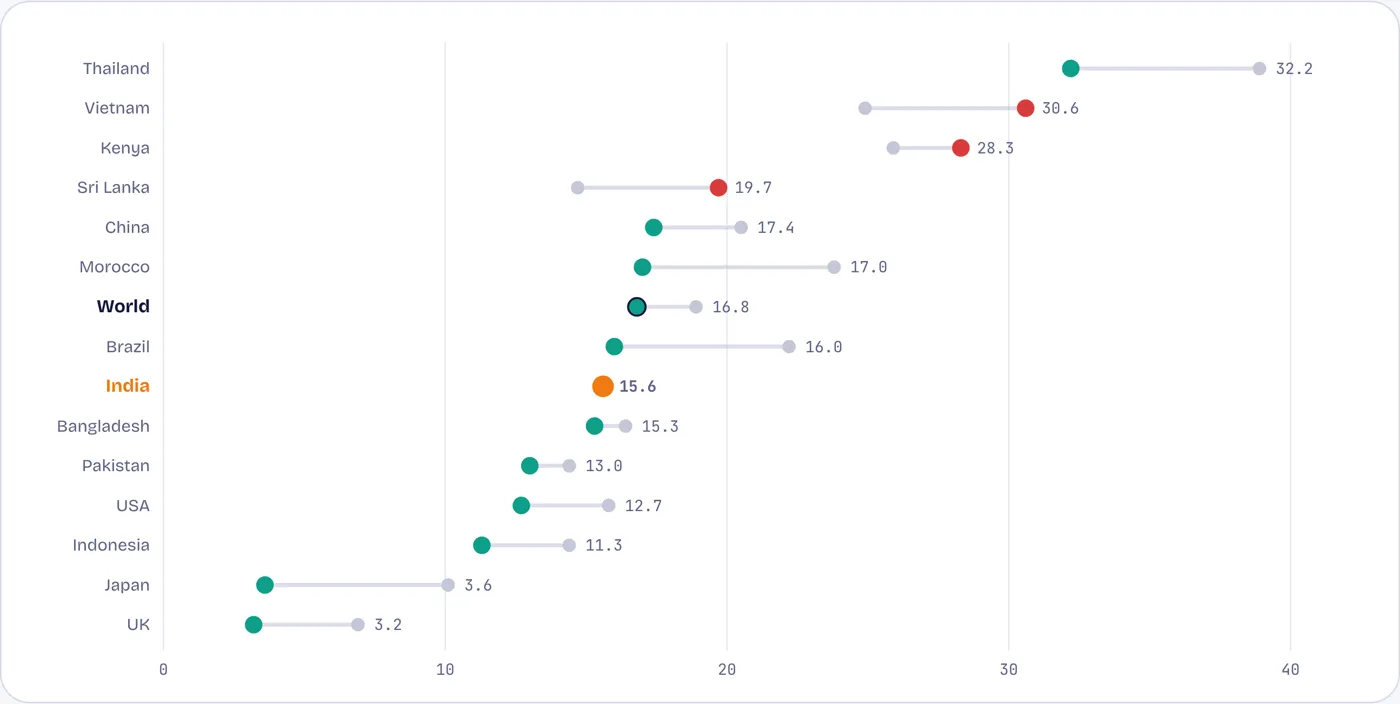
Ch. 17 · Left Behind
India’s death rate is middling, but it has not fallen
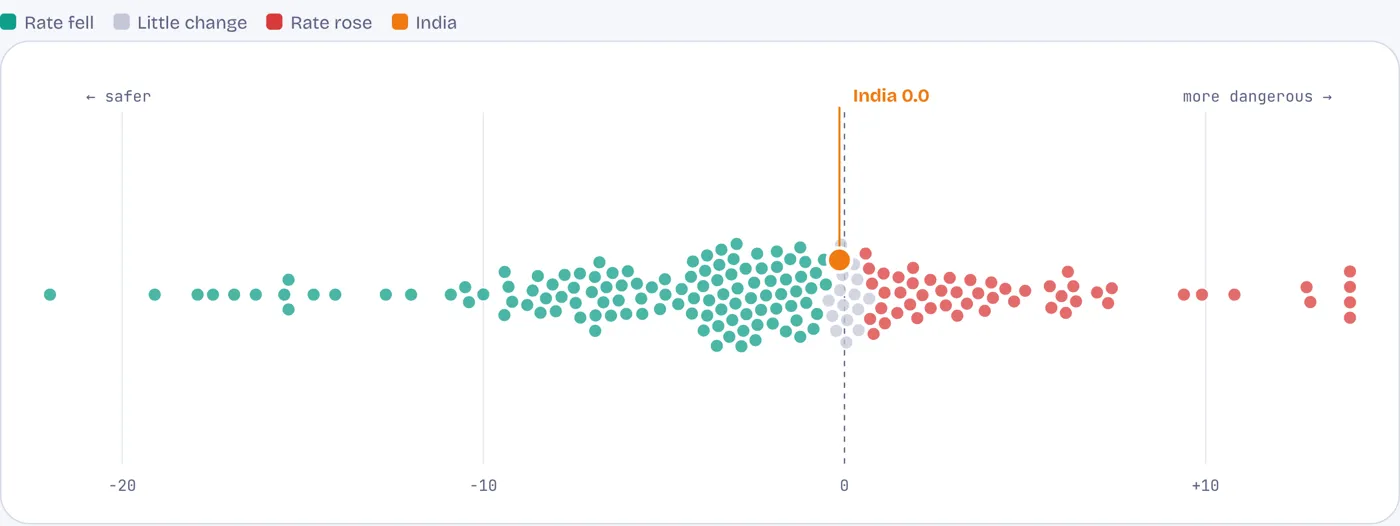
Ch. 17 · Left Behind
115 of 183 countries made their roads safer; India stayed where it was
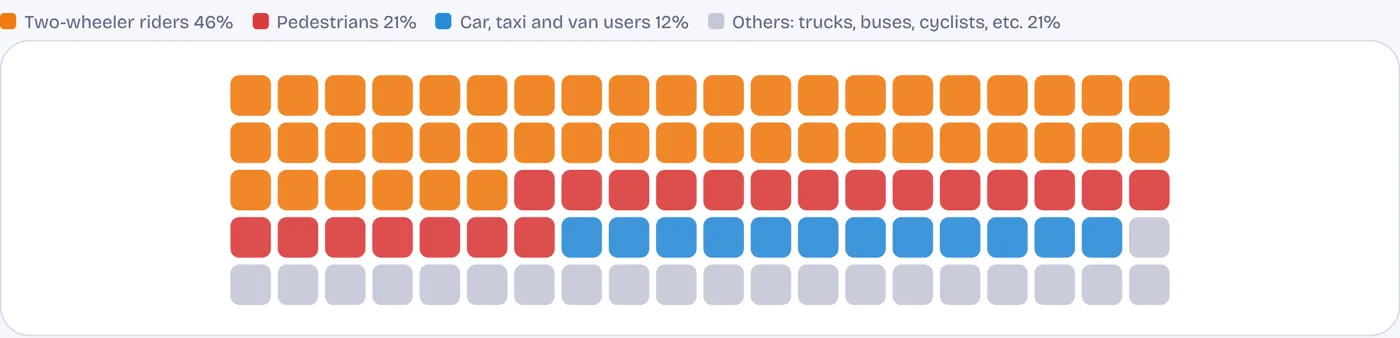
Ch. 17 · Left Behind
Two in three of the dead were on two wheels or on foot
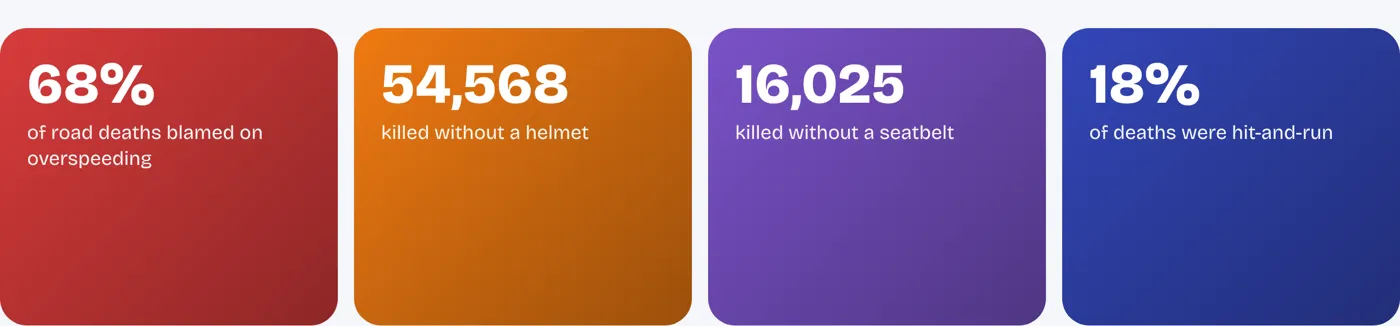
Ch. 17 · Left Behind
Speed, and no helmet
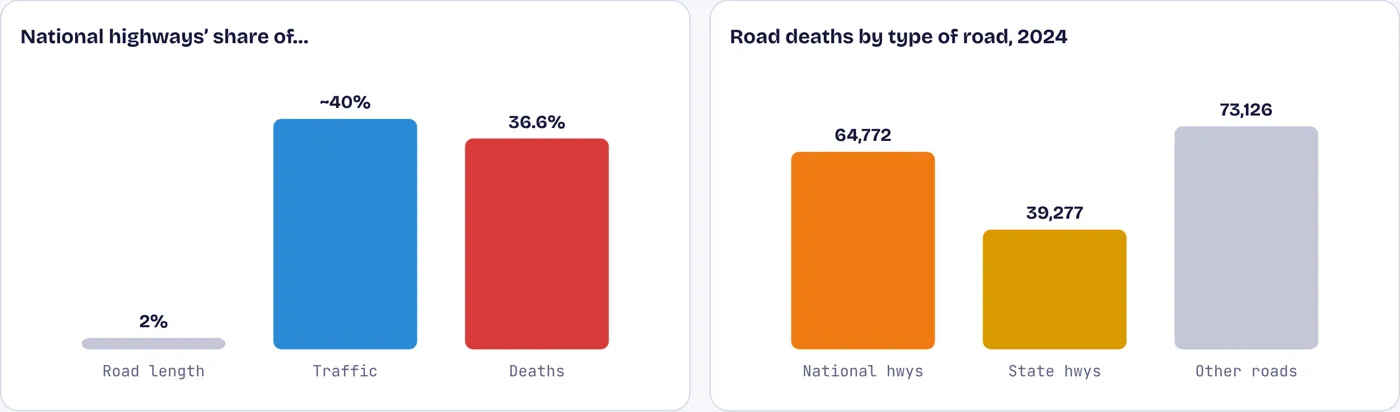
Ch. 17 · Left Behind
National highways are 2% of roads and carry over a third of the deaths
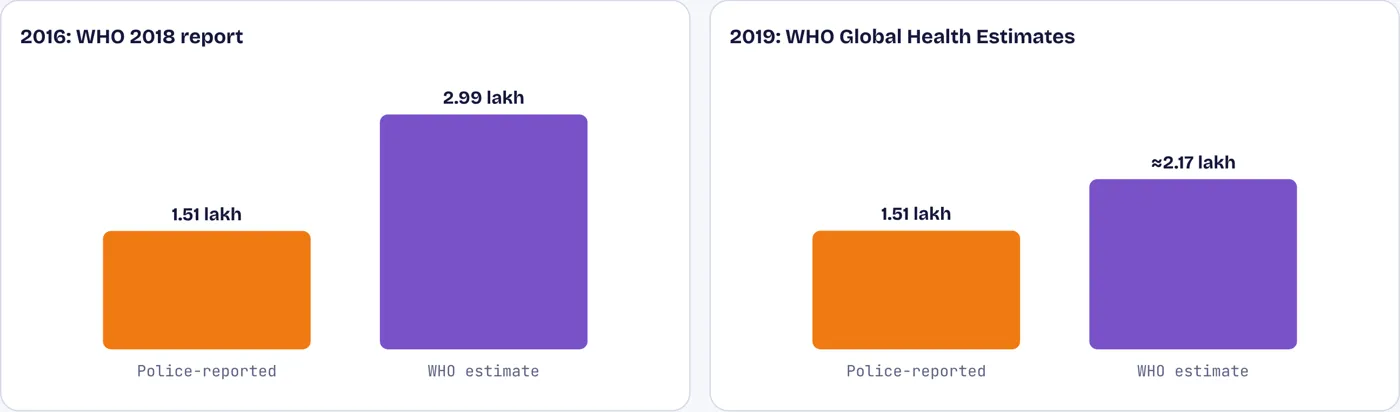
Ch. 17 · Left Behind
India’s official count may miss a third to a half of road deaths
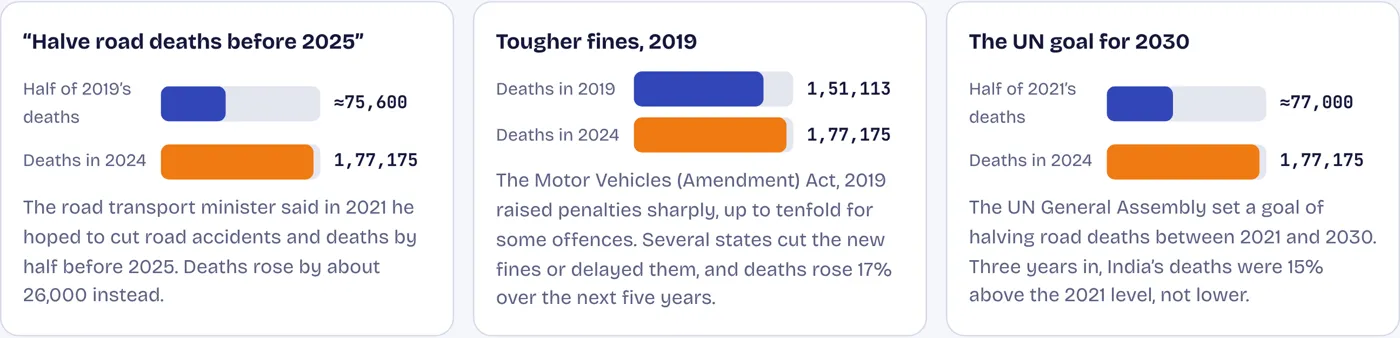
Ch. 17 · Left Behind
Three numbers that need a second look
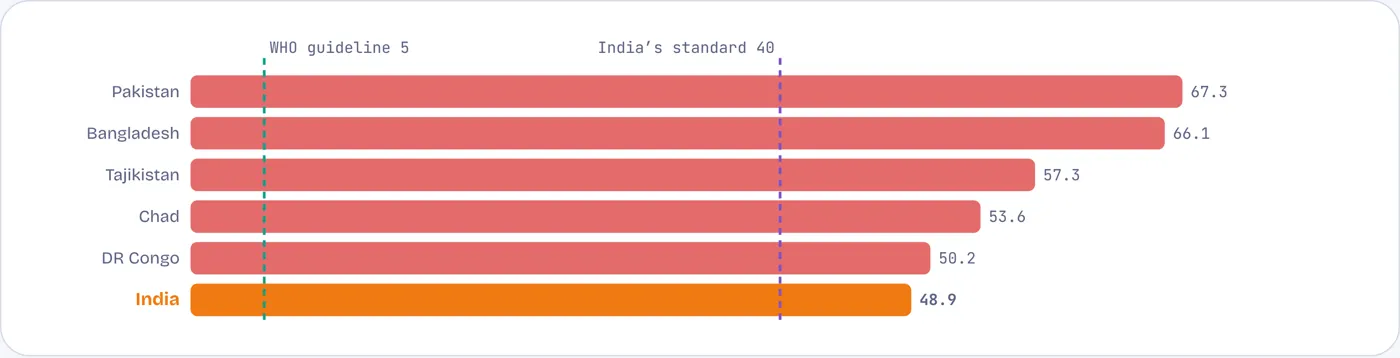
Ch. 18 · Left Behind
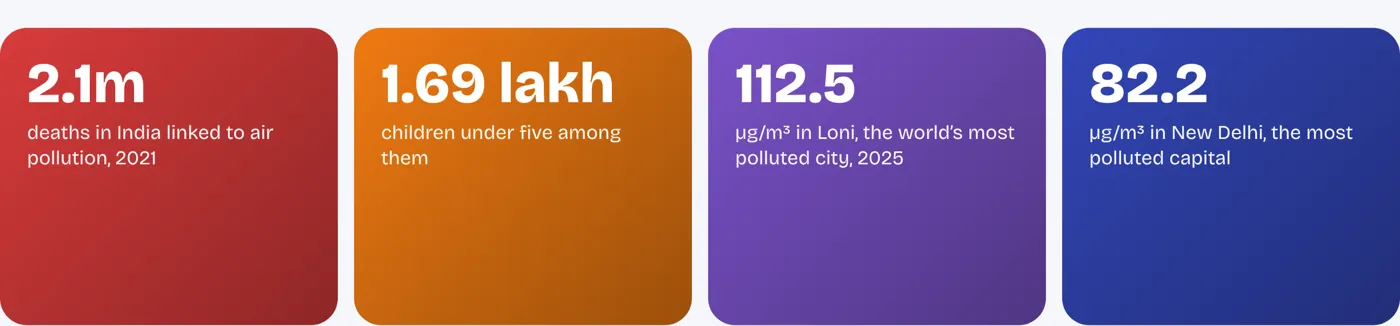
Only five countries recorded dirtier air than India in 2025
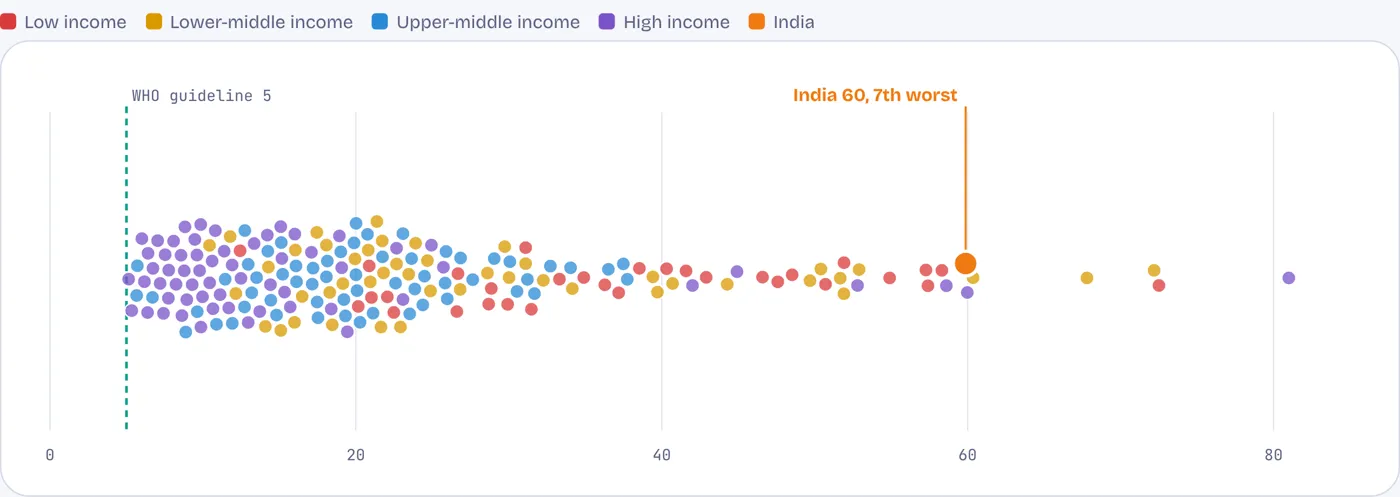
Ch. 18 · Left Behind
Almost every poor country breathes cleaner air than India
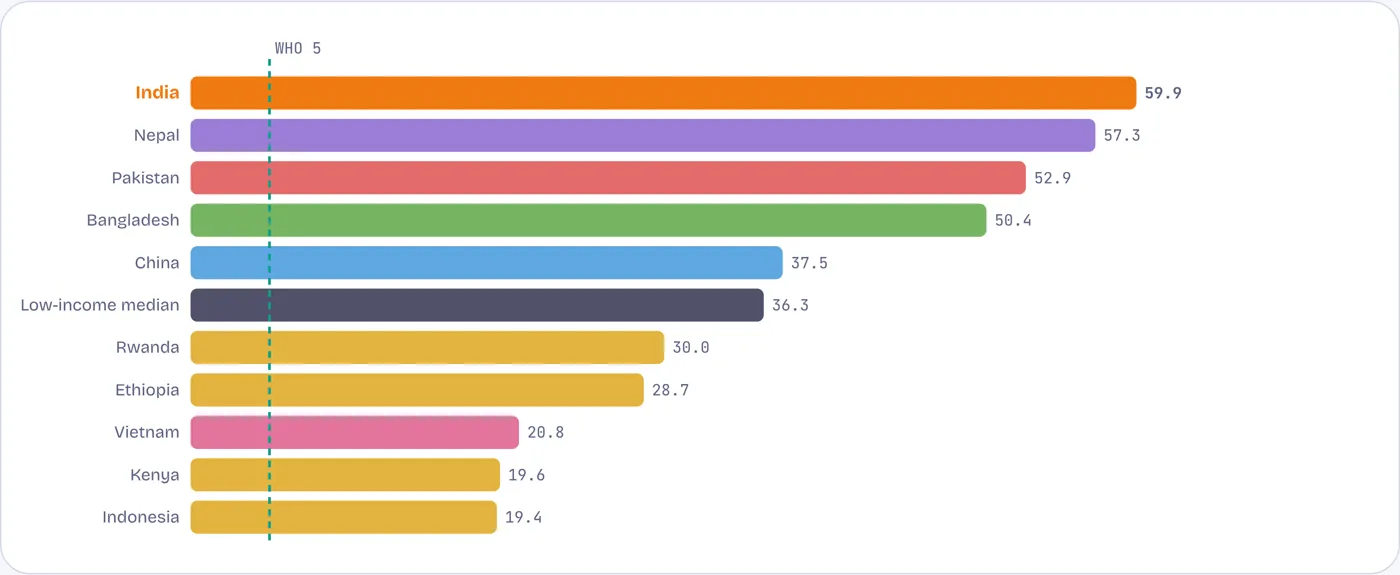
Ch. 18 · Left Behind
Kenya, Ethiopia and Rwanda breathe far cleaner air
Ch. 18 · Left Behind
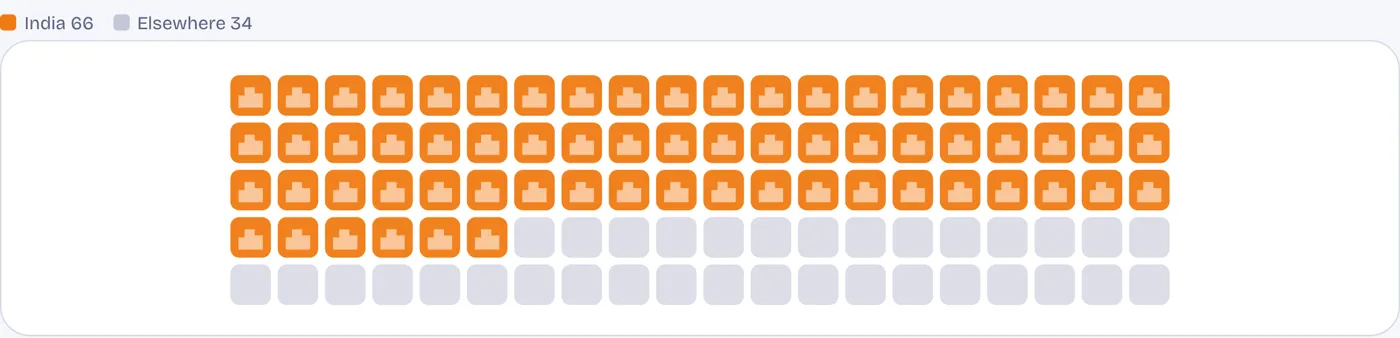
Two of every three of the world’s most polluted cities are Indian
Ch. 18 · Left Behind
Dirty air is the biggest single threat to life in South Asia

Ch. 18 · Left Behind
The average Indian loses three and a half years of life to dirty air; a Delhi resident eight
Ch. 18 · Left Behind
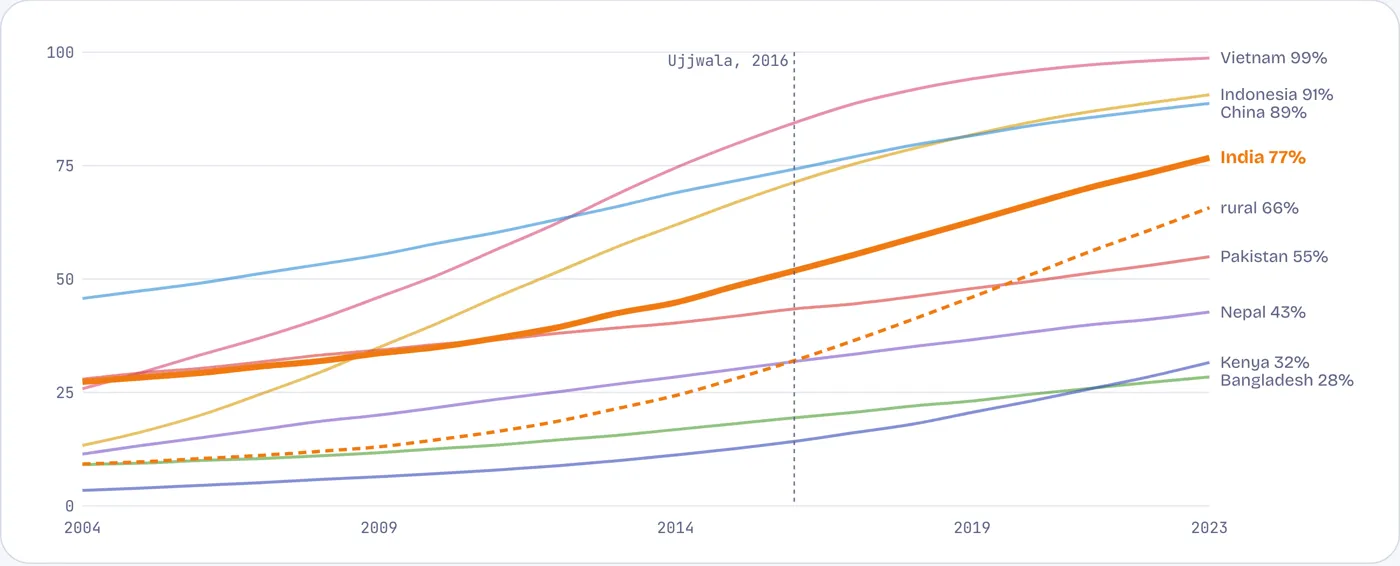
Clean cooking fuel reached most homes, and cut smoke indoors
Ch. 18 · Left Behind
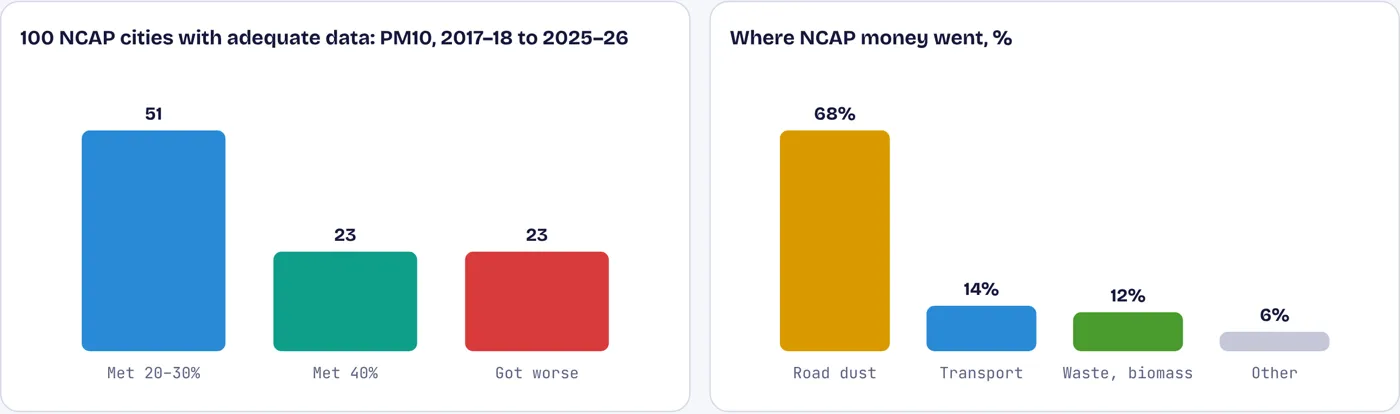
Most cities missed their clean-air targets; most money went on road dust
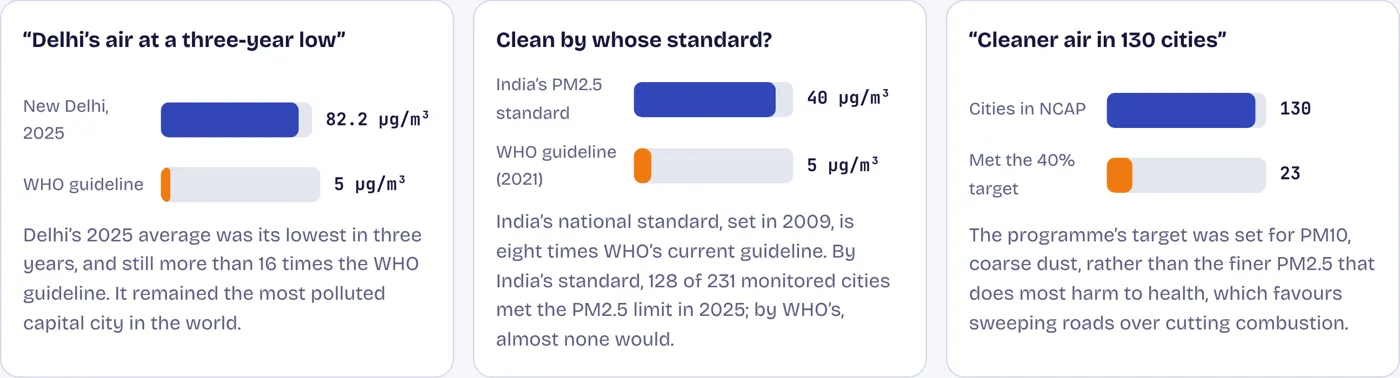
Ch. 18 · Left Behind
Three numbers that need a second look
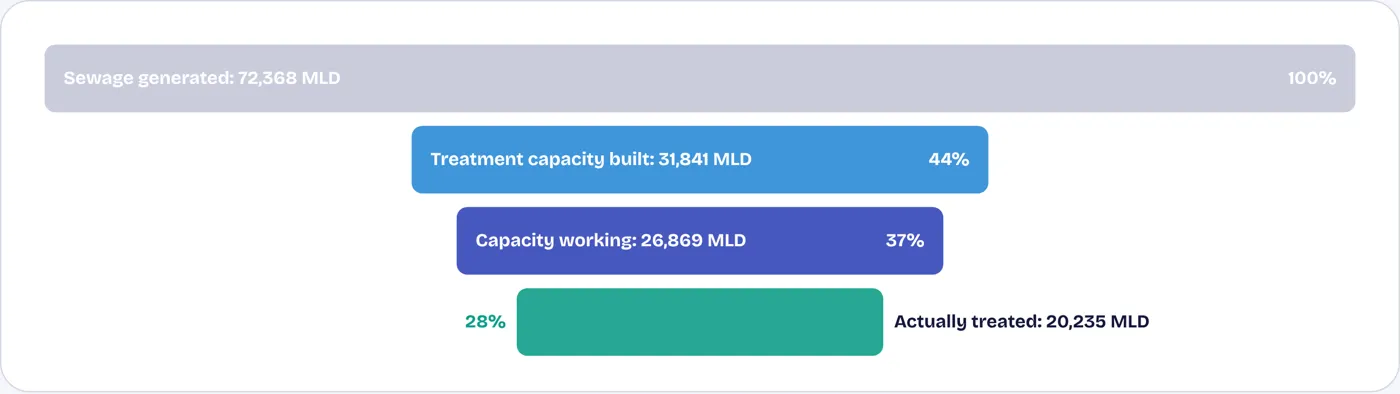
Ch. 19 · Left Behind
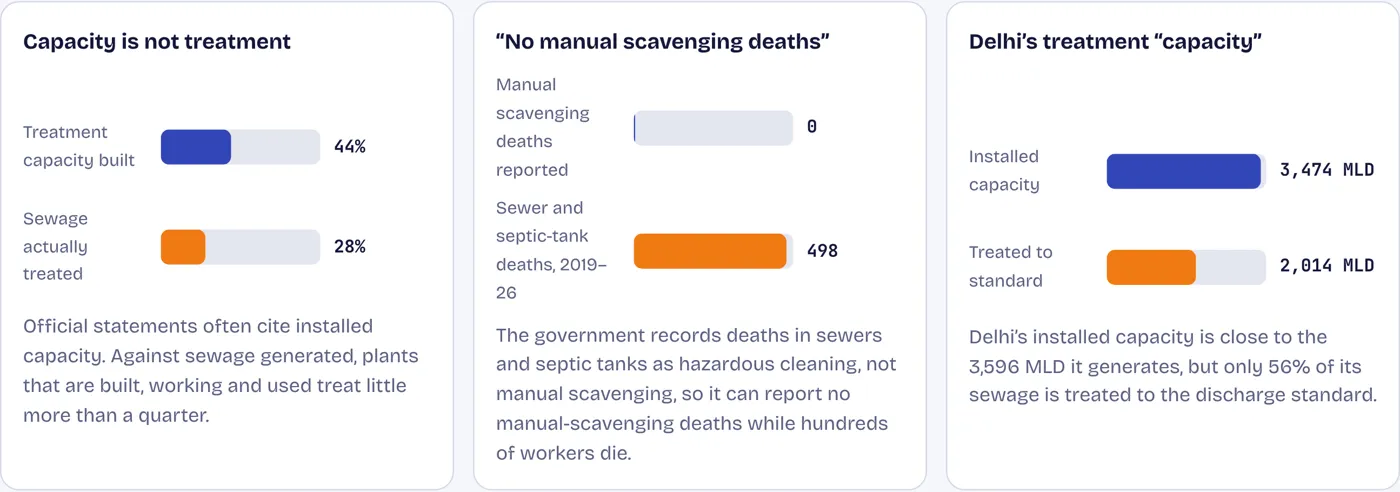
Of every 100 litres of urban sewage, 28 are treated
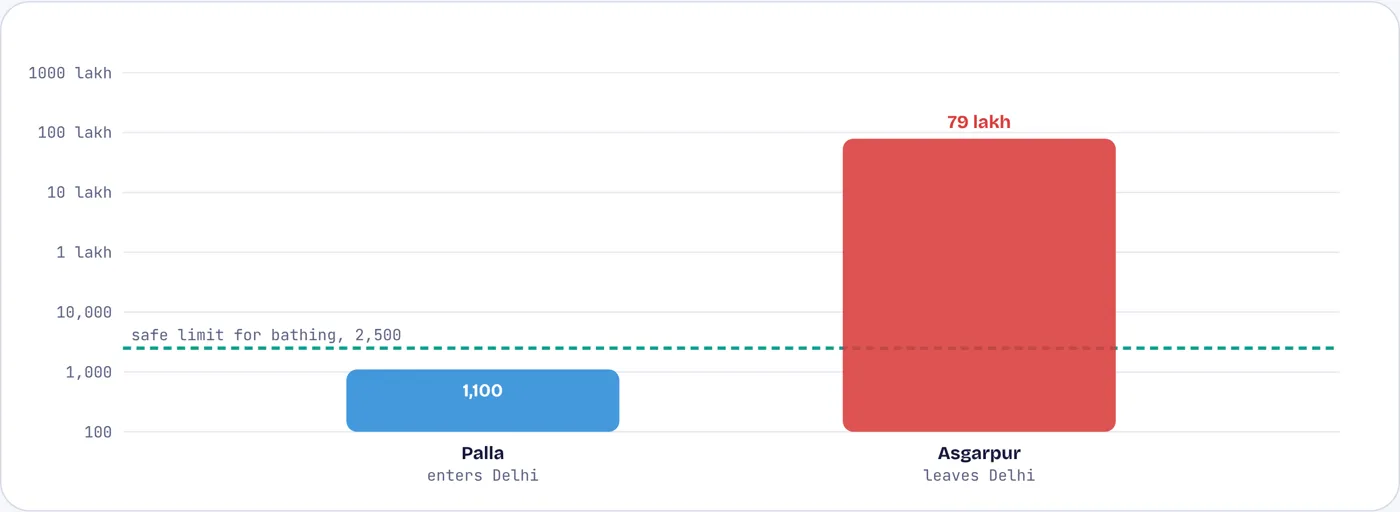
Ch. 19 · Left Behind
The Yamuna enters Delhi within the safe limit and leaves it 3,160 times over
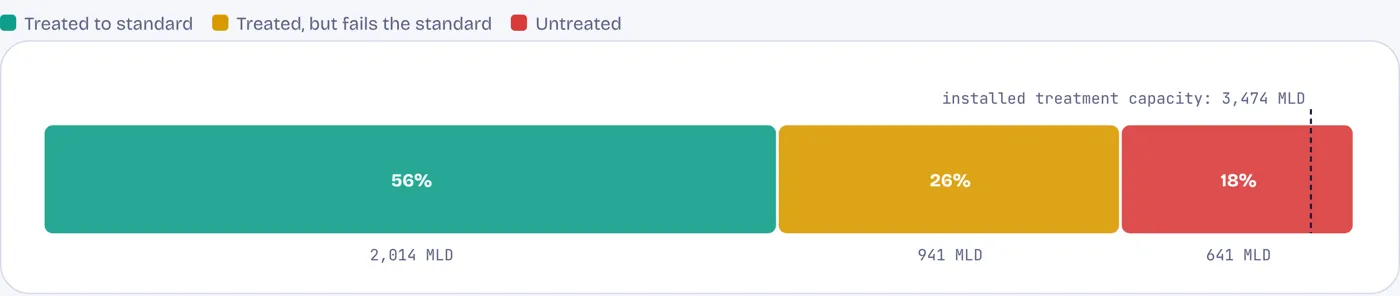
Ch. 19 · Left Behind
Delhi has the plants but not the results
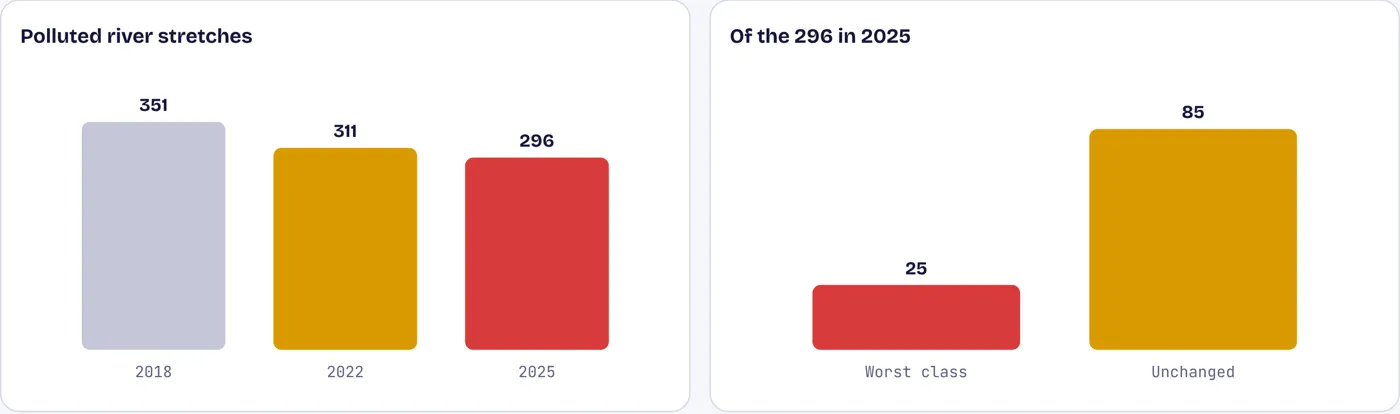
Ch. 19 · Left Behind
Fewer polluted stretches, but nearly 300 remain
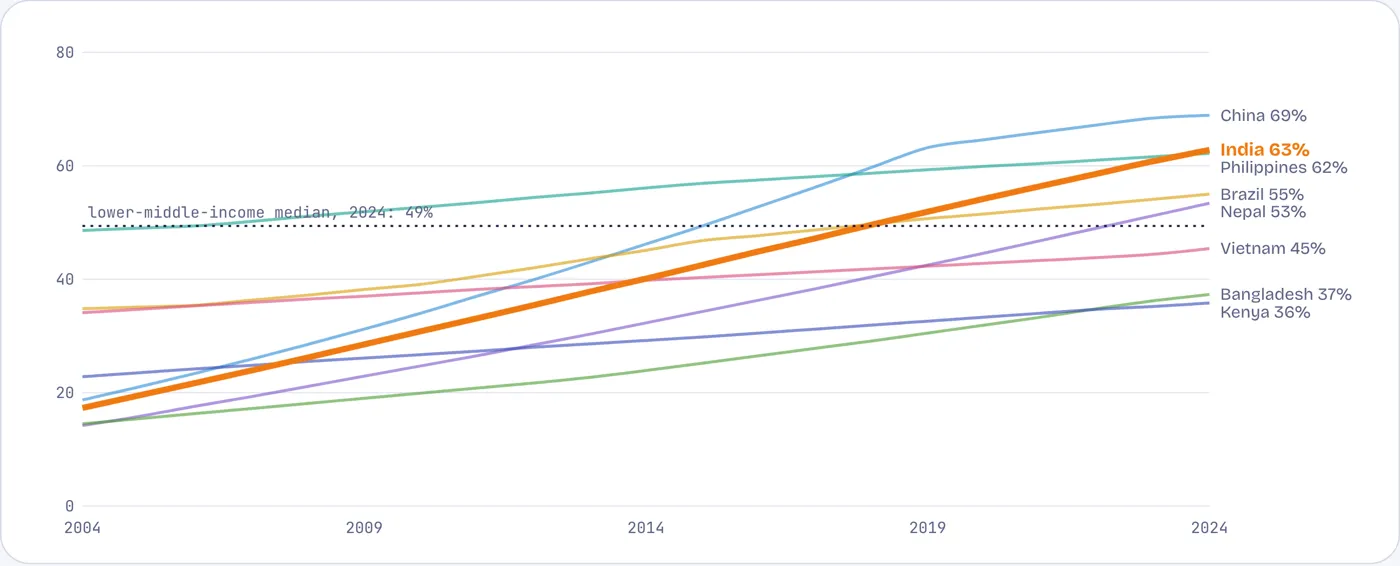
Ch. 19 · Left Behind
On safely managed sanitation, India is above the average for its income
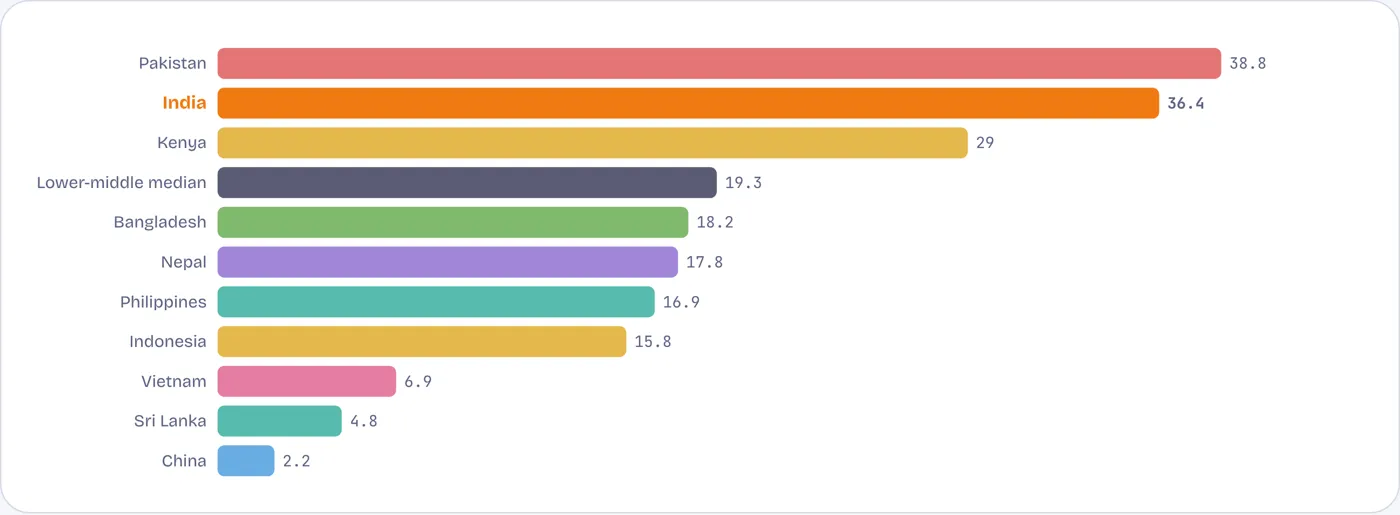
Ch. 19 · Left Behind
Dirty water still kills Indians at twice the rate of their neighbours
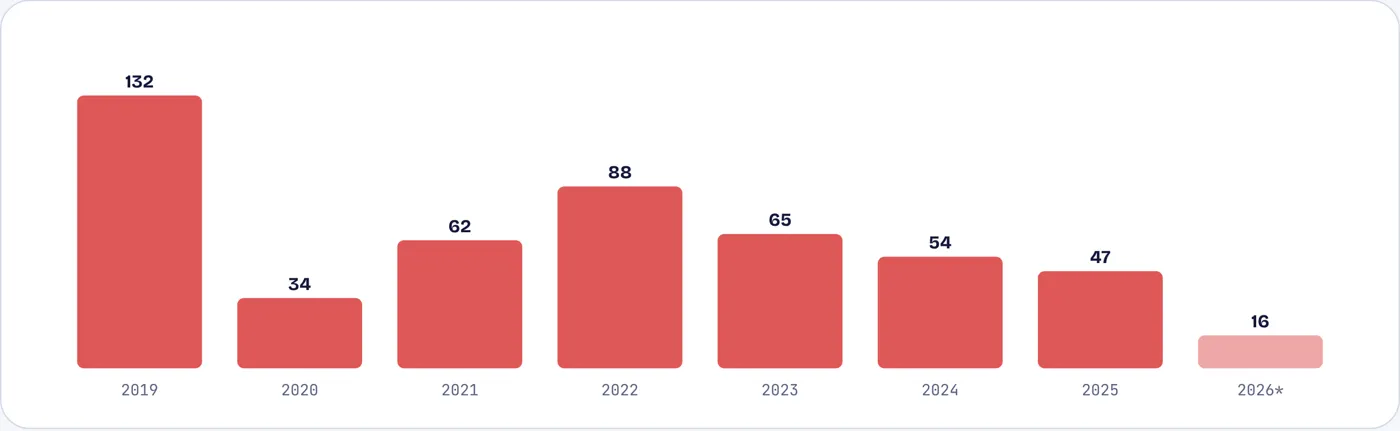
Ch. 19 · Left Behind
Nearly 500 workers have died in sewers and septic tanks since 2019
Ch. 19 · Left Behind
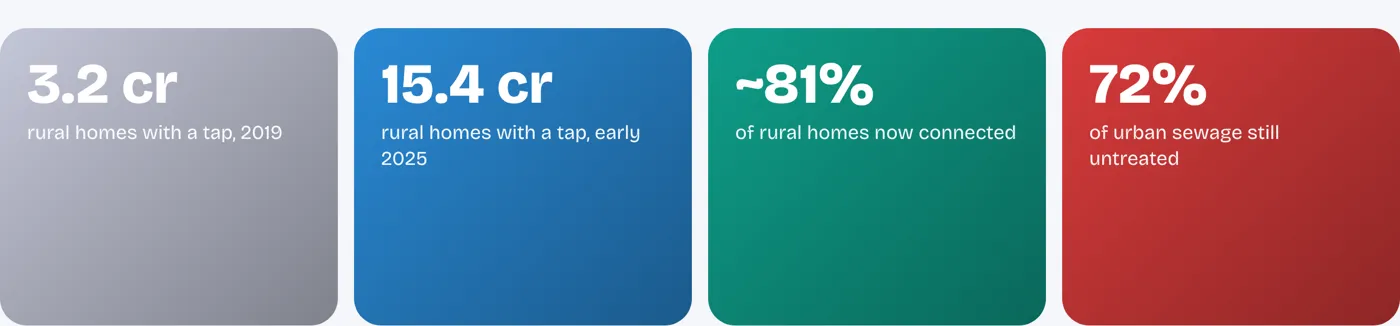
Taps reached four rural homes in five; the waste water from them has nowhere to go
Ch. 19 · Left Behind
Three numbers that need a second look
Ch. 20 · Left Behind
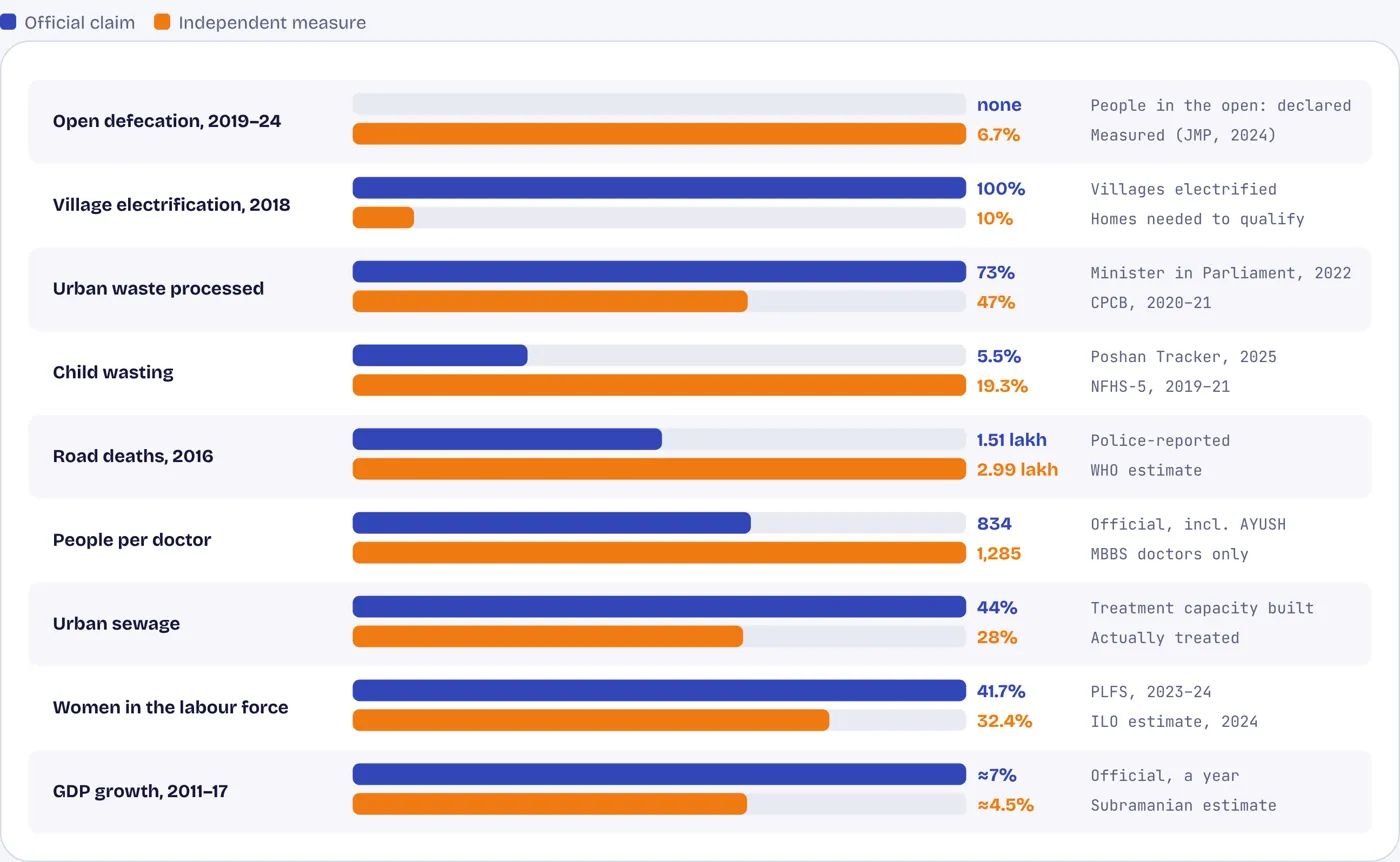
Nine claims, nine checks
Ch. 20 · Left Behind
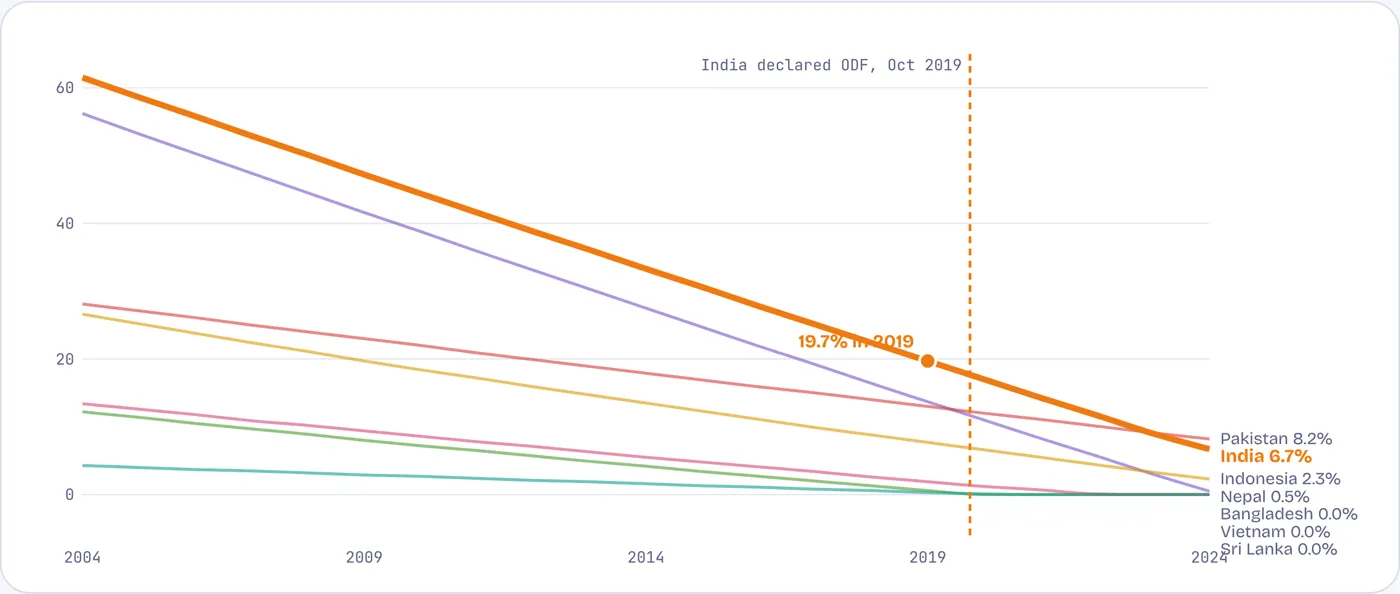
Nepal and India were both declared free of open defecation in 2019. Only Nepal got there.
Ch. 20 · Left Behind
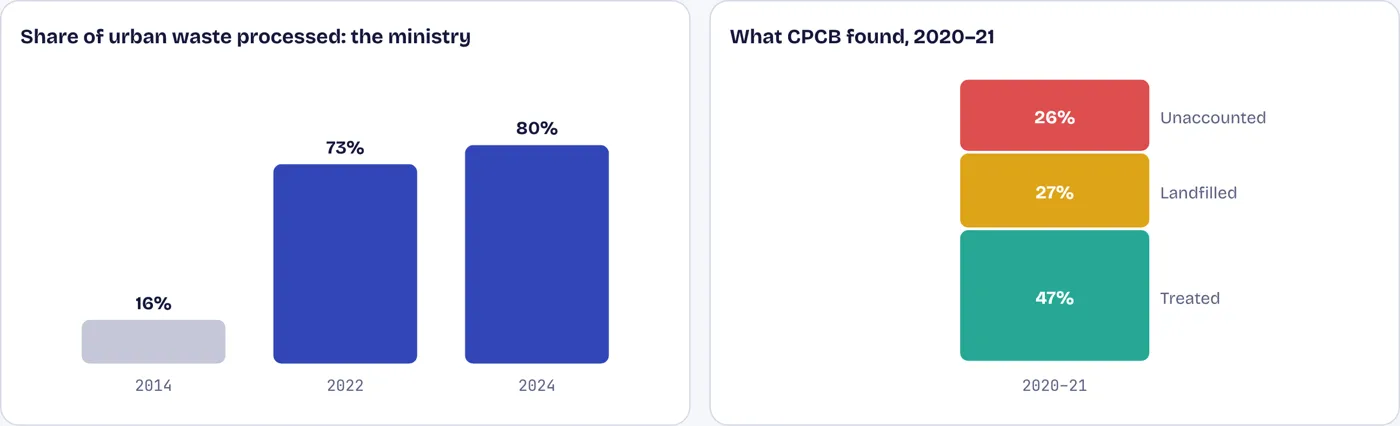
Three-quarters processed, according to the ministry; less than half, according to the pollution board
Ch. 20 · Left Behind
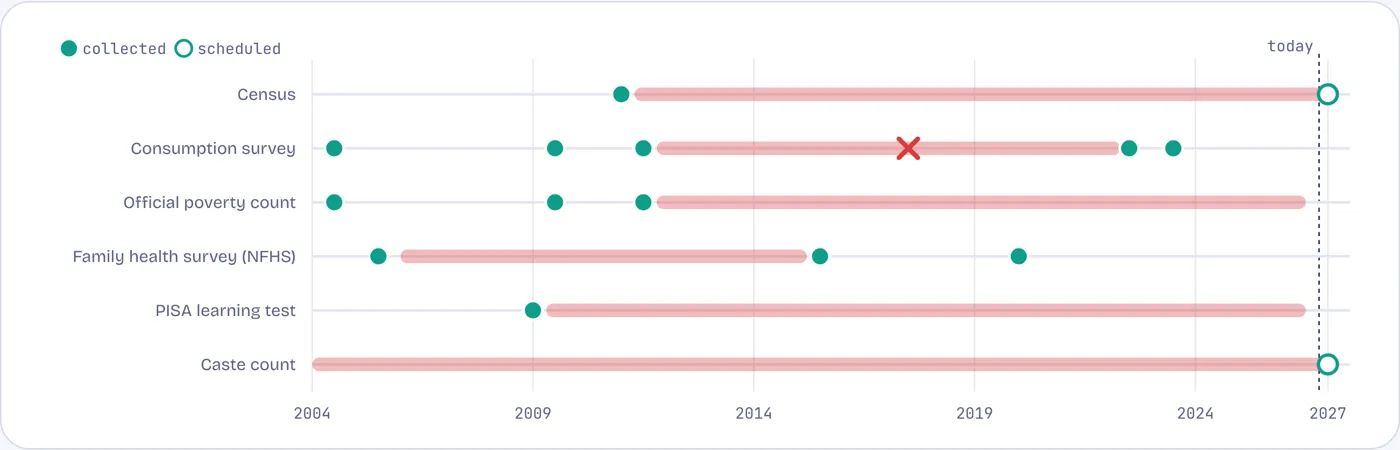
The surveys that could check the claims ran late, or did not appear
Ch. 20 · Left Behind
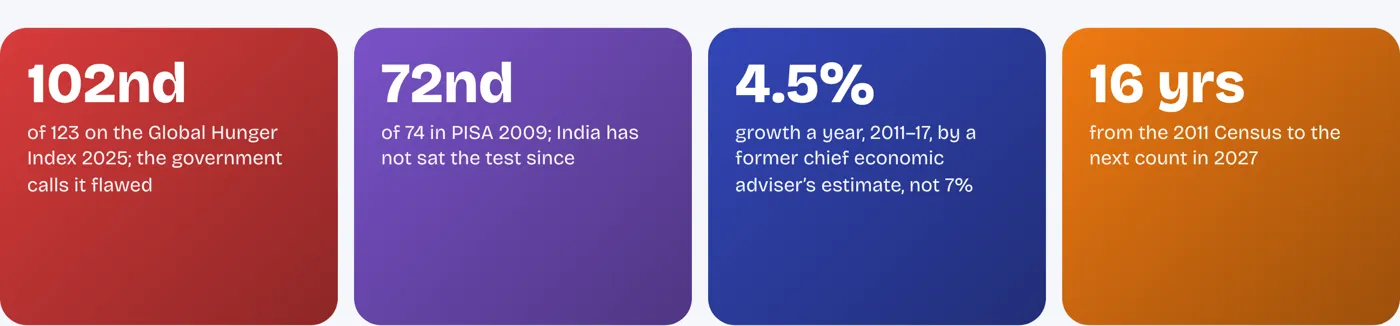
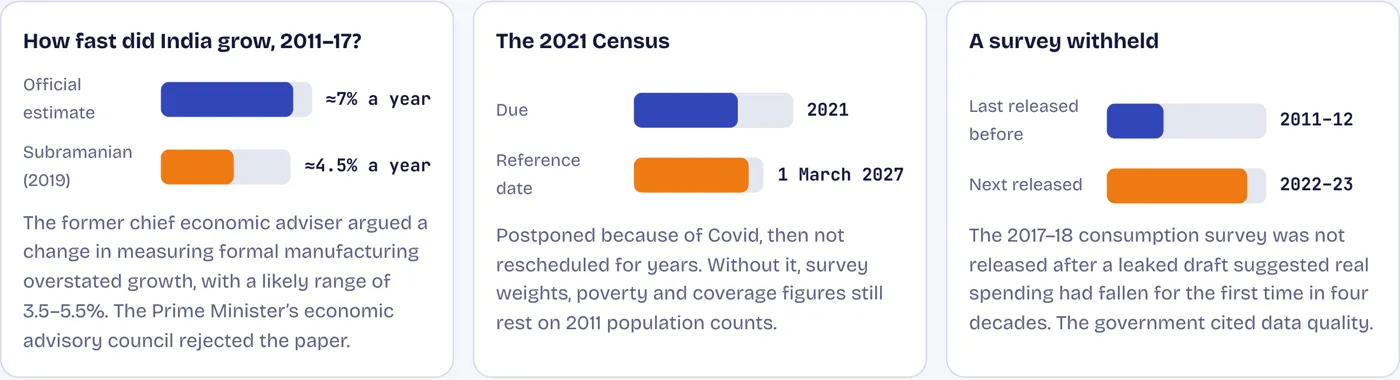
When outside measures disagreed, the response was often to reject the measure
Ch. 20 · Left Behind
Three numbers that need a second look
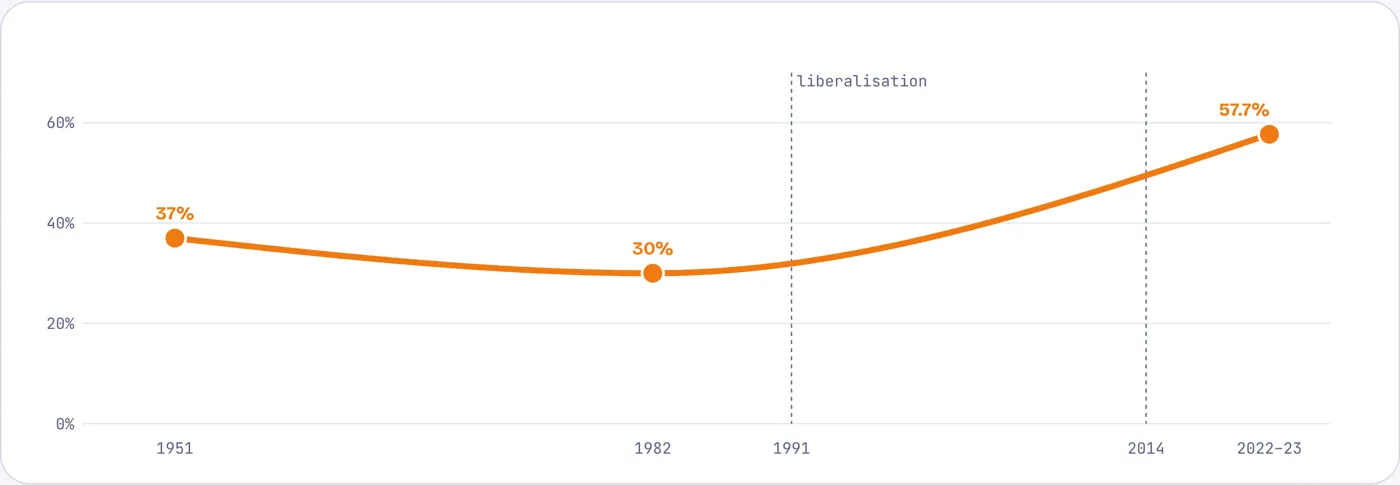
Ch. 21 · Who Gets What
Income concentration fell for thirty years after independence, then rose past colonial levels
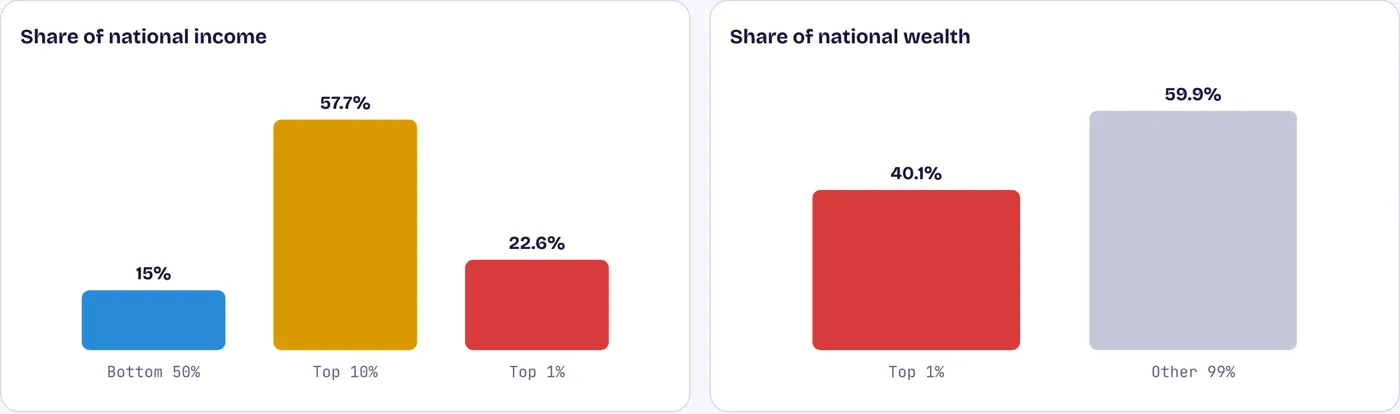
Ch. 21 · Who Gets What
The top 1% earn 23 times the average Indian; the bottom half share 15%
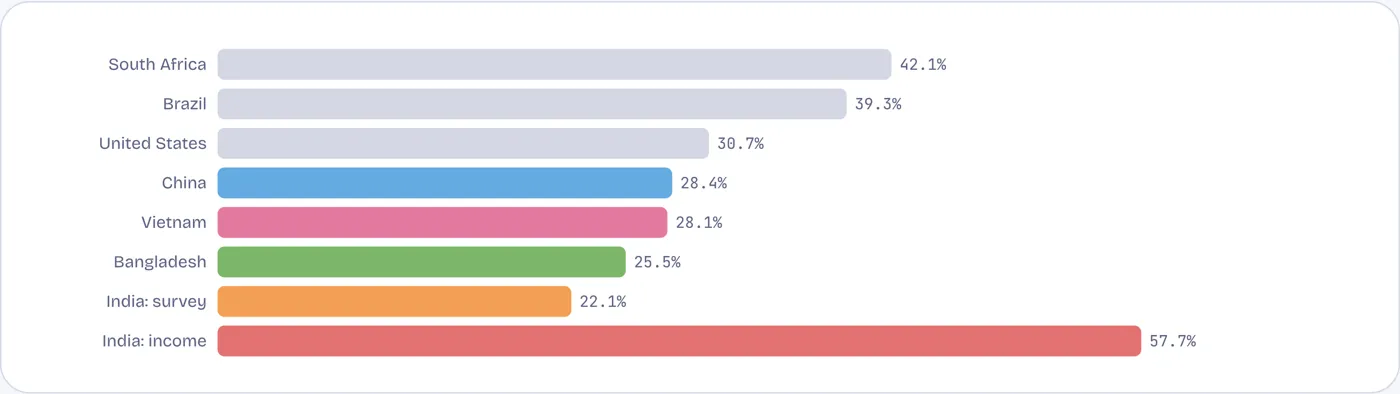
Ch. 21 · Who Gets What
Household surveys show India as one of the more equal countries; income and tax records show the opposite
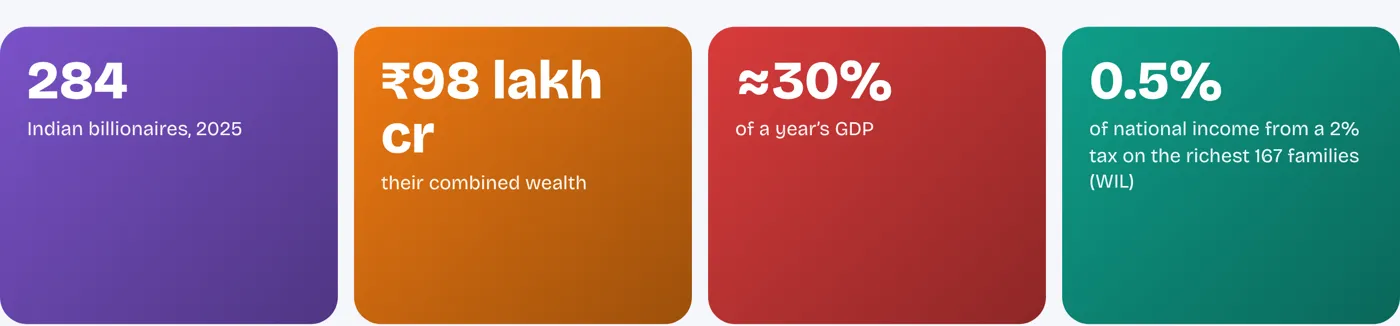
Ch. 21 · Who Gets What
284 billionaires hold wealth worth almost a third of India’s annual output
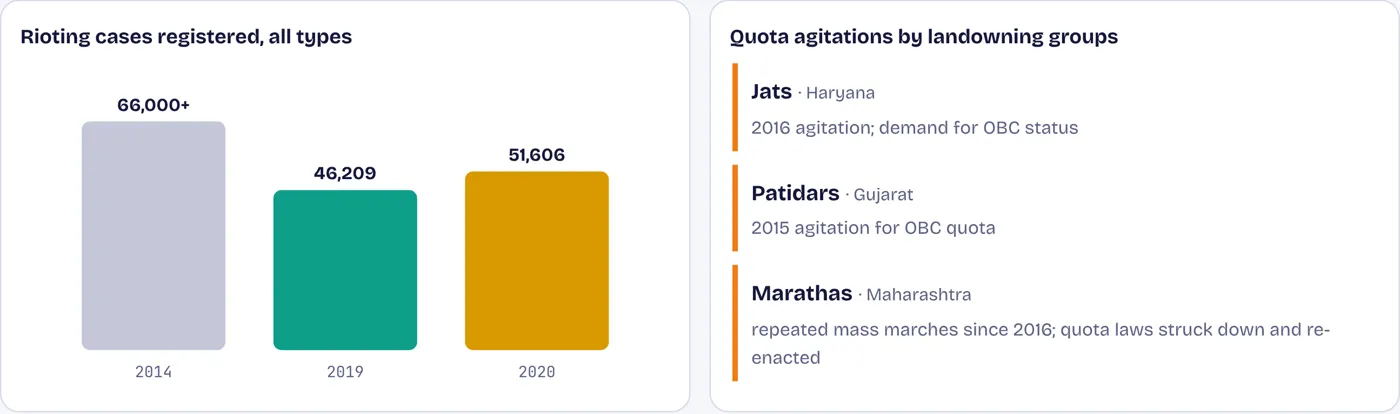
Ch. 21 · Who Gets What
Recorded riots fell; protests by prosperous groups for quotas grew
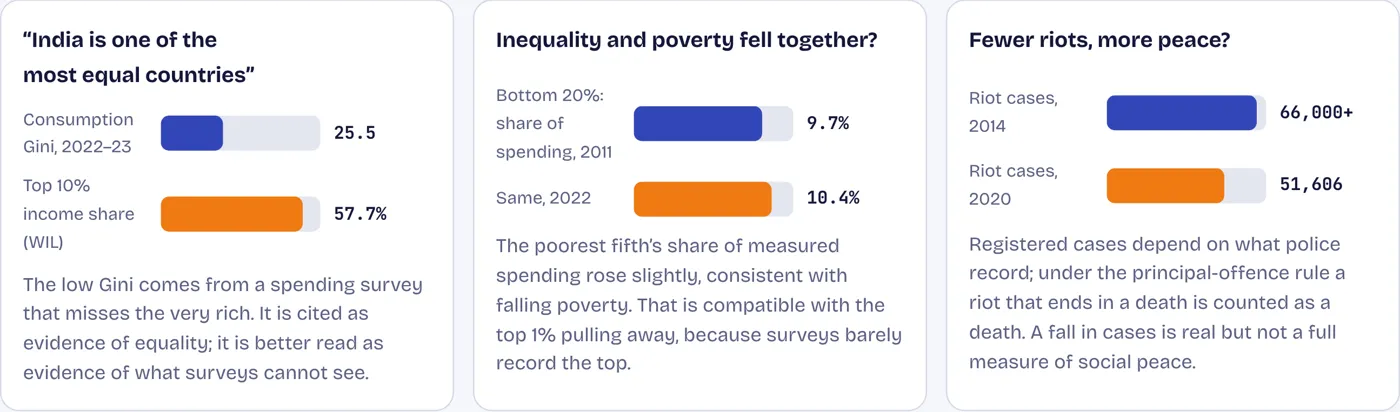
Ch. 21 · Who Gets What
Three numbers that need a second look
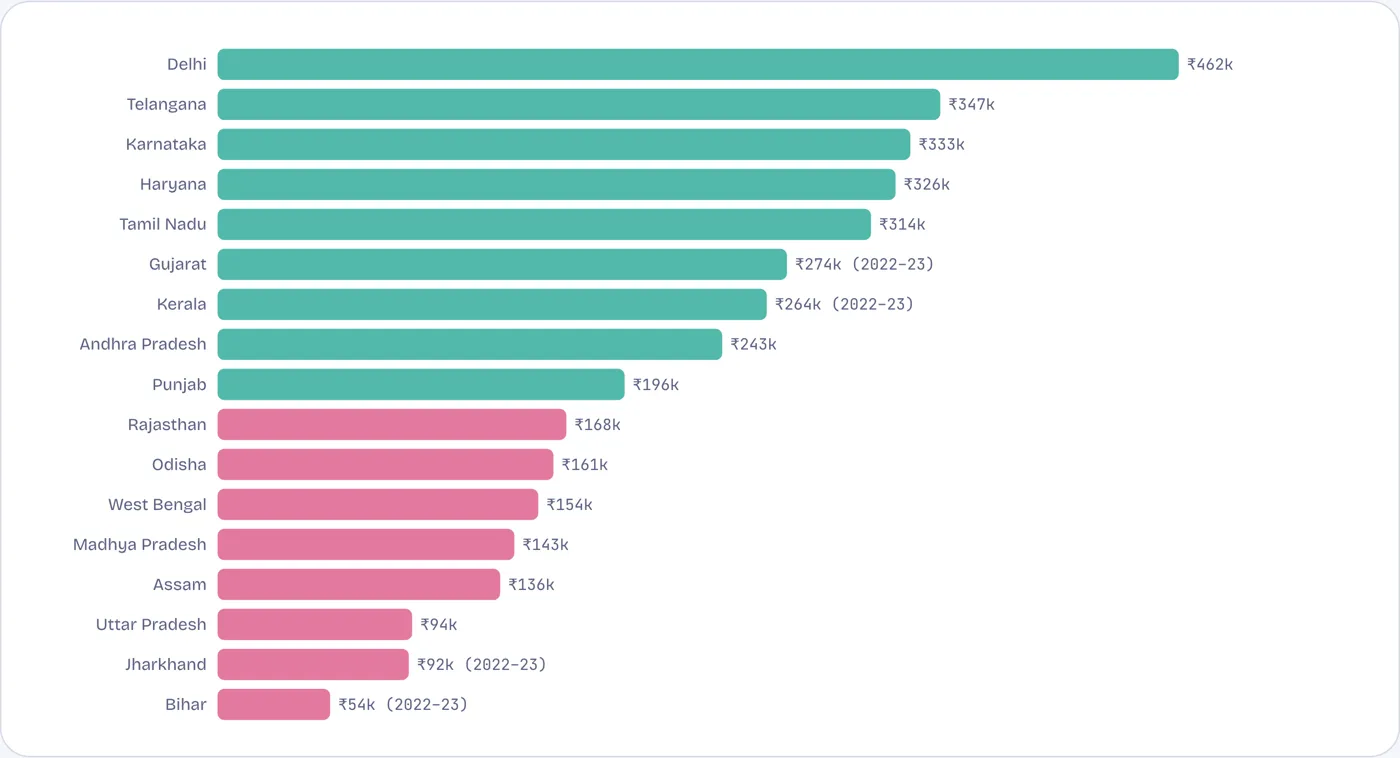
Ch. 22 · Who Gets What
An average person in Delhi earns eight times as much as one in Bihar
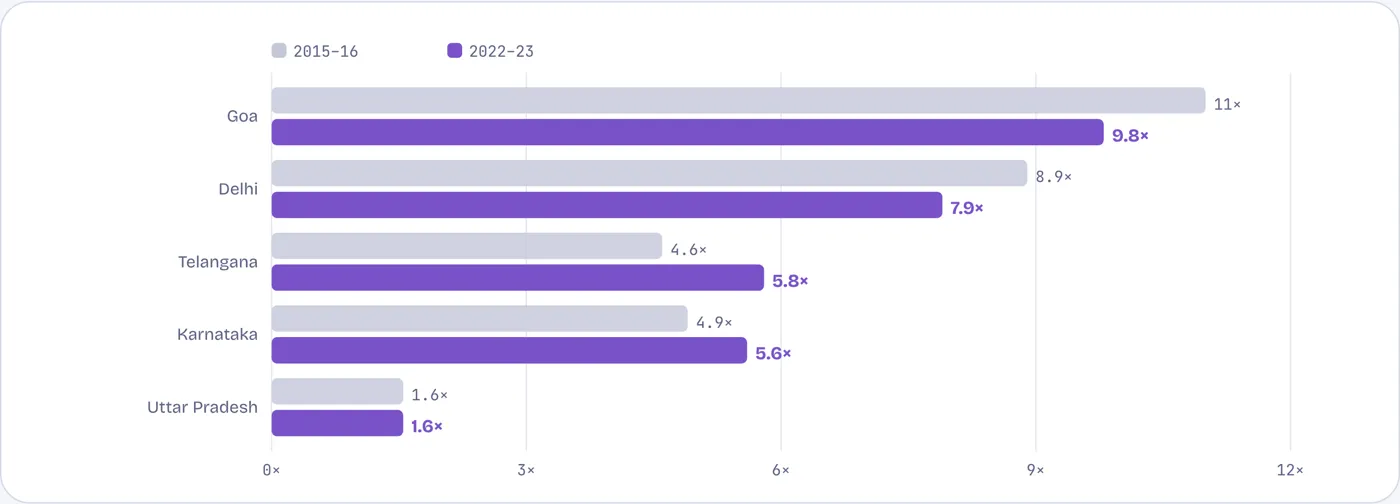
Ch. 22 · Who Gets What
The big southern states are pulling further ahead of Bihar
Ch. 22 · Who Gets What
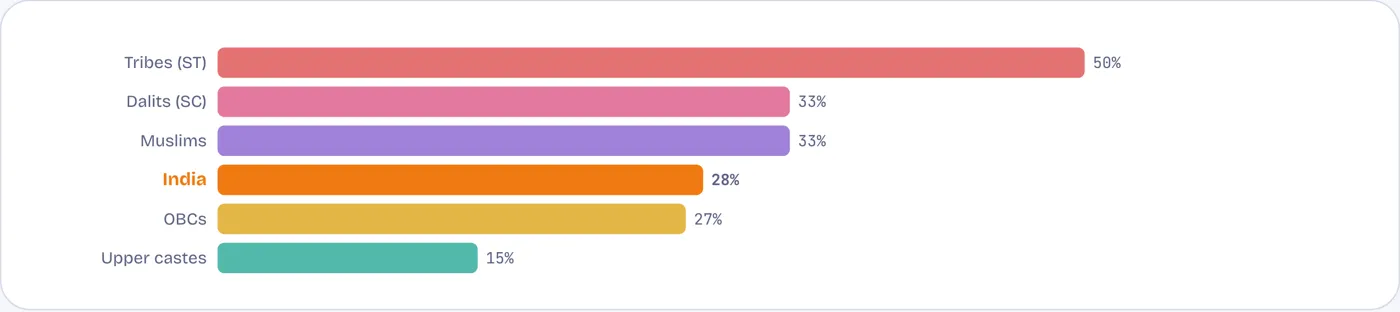
Half of tribal Indians and a third of Dalits and Muslims are multidimensionally poor
Ch. 22 · Who Gets What
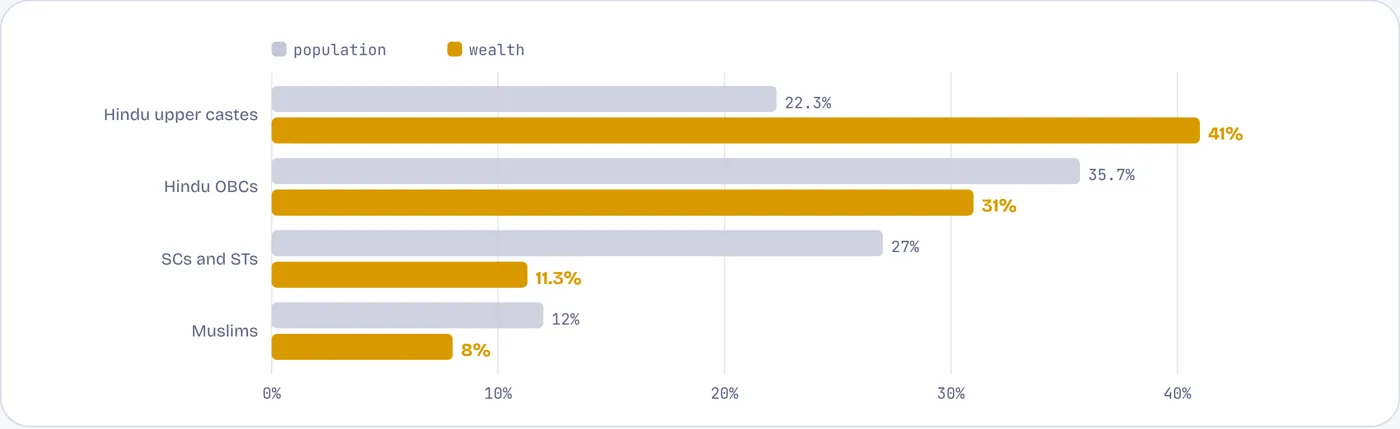
Upper-caste Hindus own 41% of household wealth with 22% of the people
Ch. 22 · Who Gets What
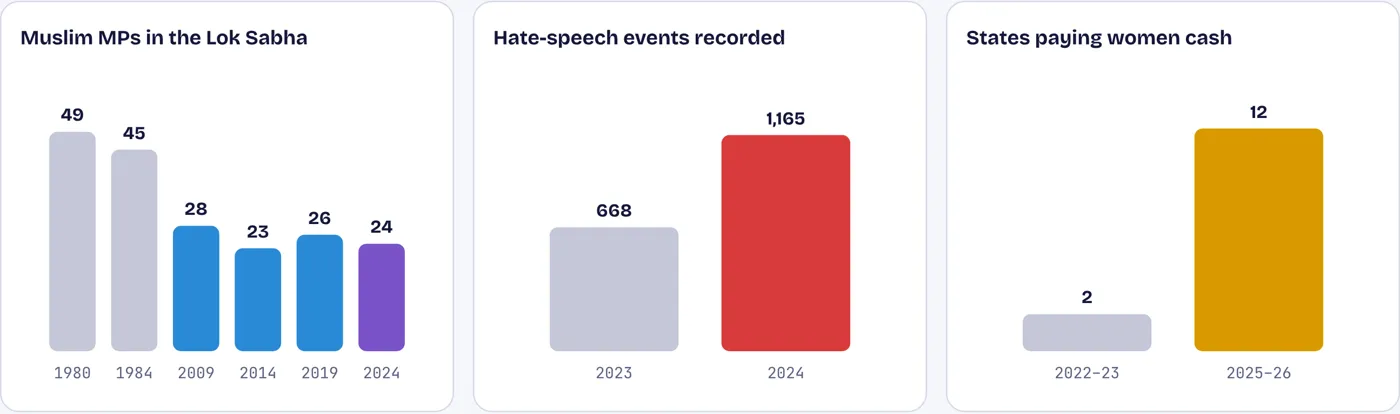
Gaps that follow identity reward identity politics and cash handouts

Ch. 22 · Who Gets What
Manipur: a fight over quotas and land turned into three years of killing
Ch. 22 · Who Gets What
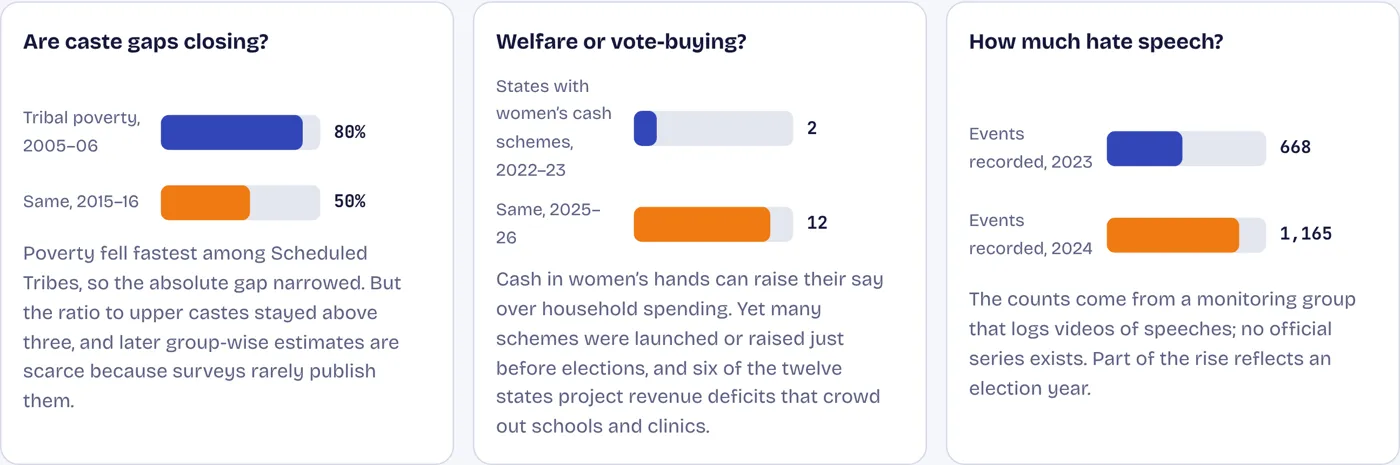
Three numbers that need a second look
Ch. 23 · Who Gets What
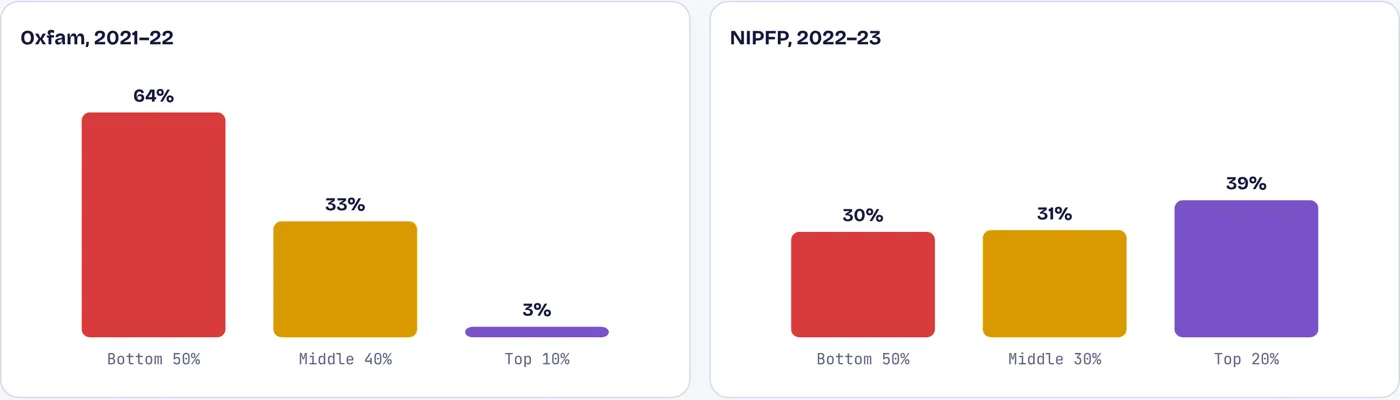
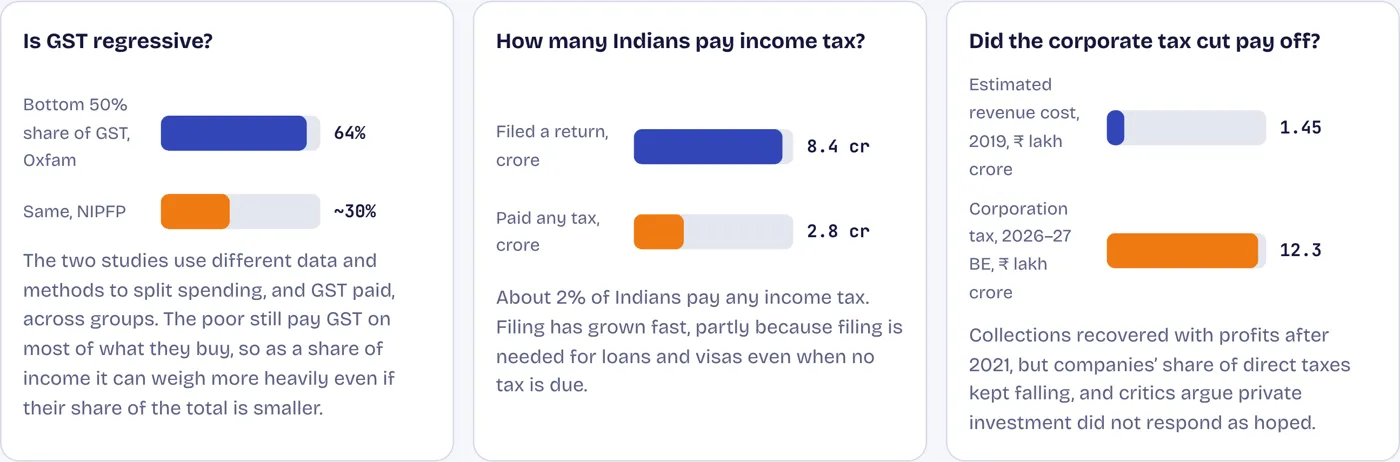
Two studies, opposite answers: who carries the GST?
Ch. 23 · Who Gets What
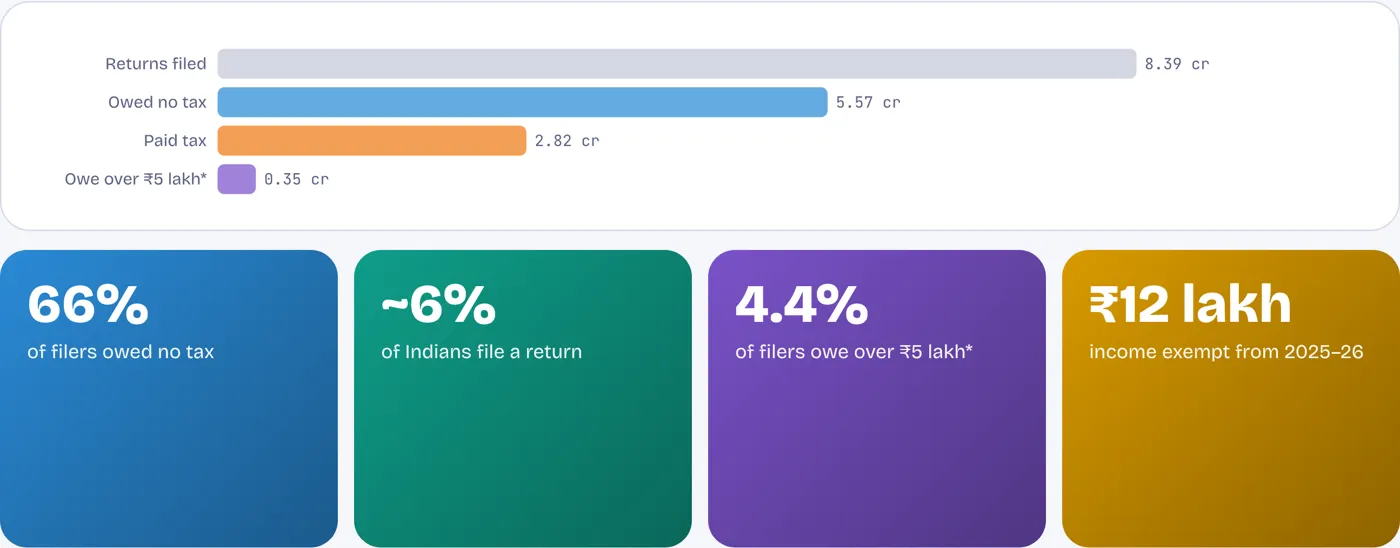
Two of every three people who file a return pay no income tax
Ch. 23 · Who Gets What
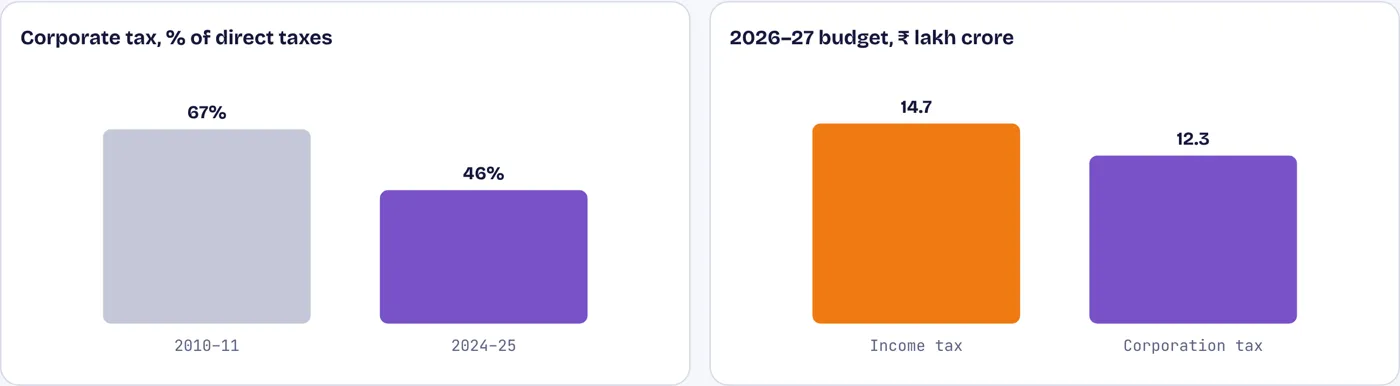
Individuals now pay more income tax than companies do
Ch. 23 · Who Gets What
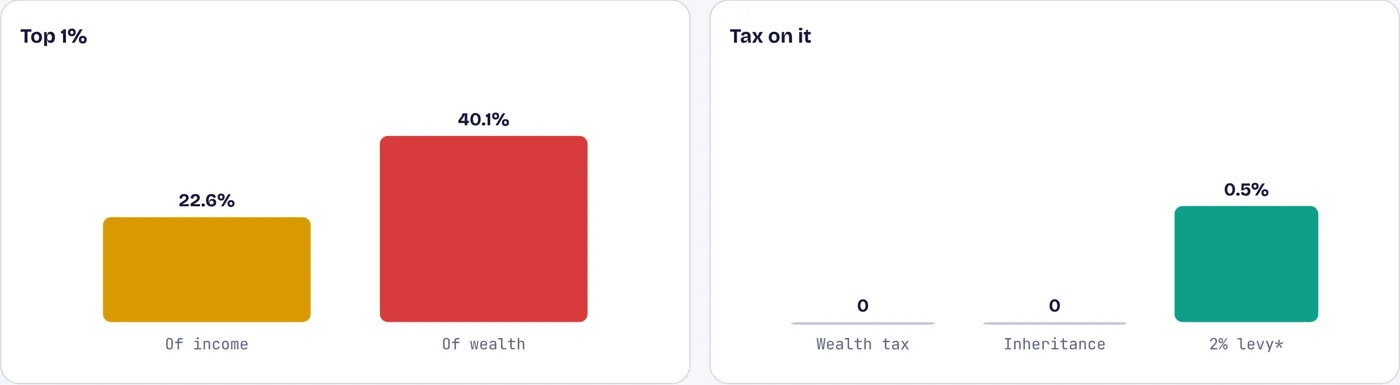
The richest 1% own 40% of the wealth, and wealth itself is not taxed

Ch. 23 · Who Gets What
GST 2.0 cut taxes on everyday goods and added a 40% rate for luxuries
Ch. 23 · Who Gets What
Three numbers that need a second look
Ch. 24 · Who Gets What
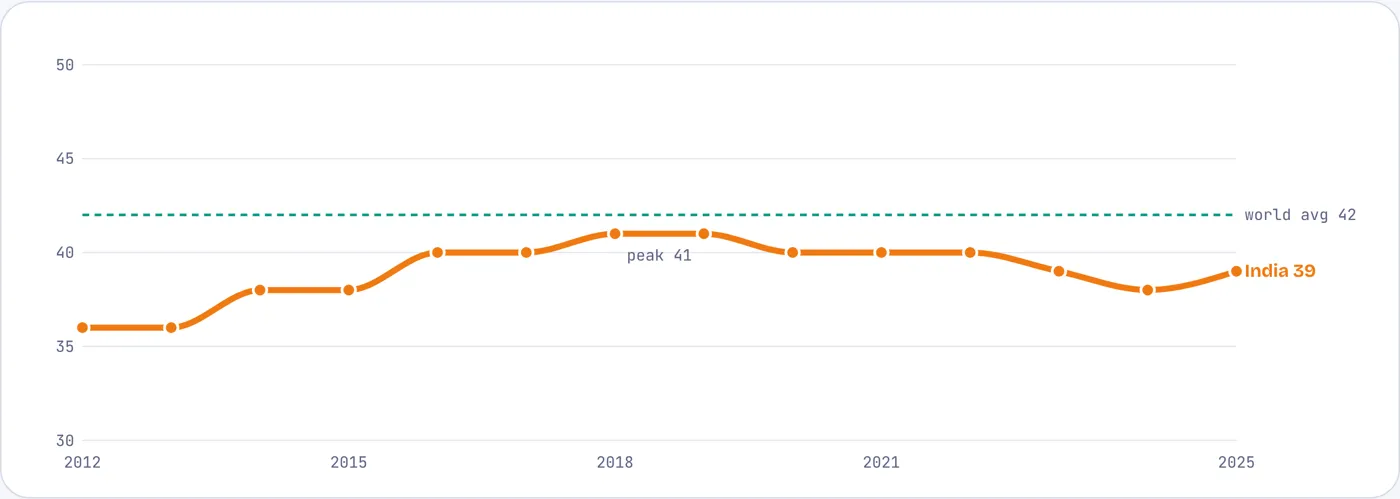
India’s corruption score has hovered around 40 for a decade, below the world average
Ch. 24 · Who Gets What
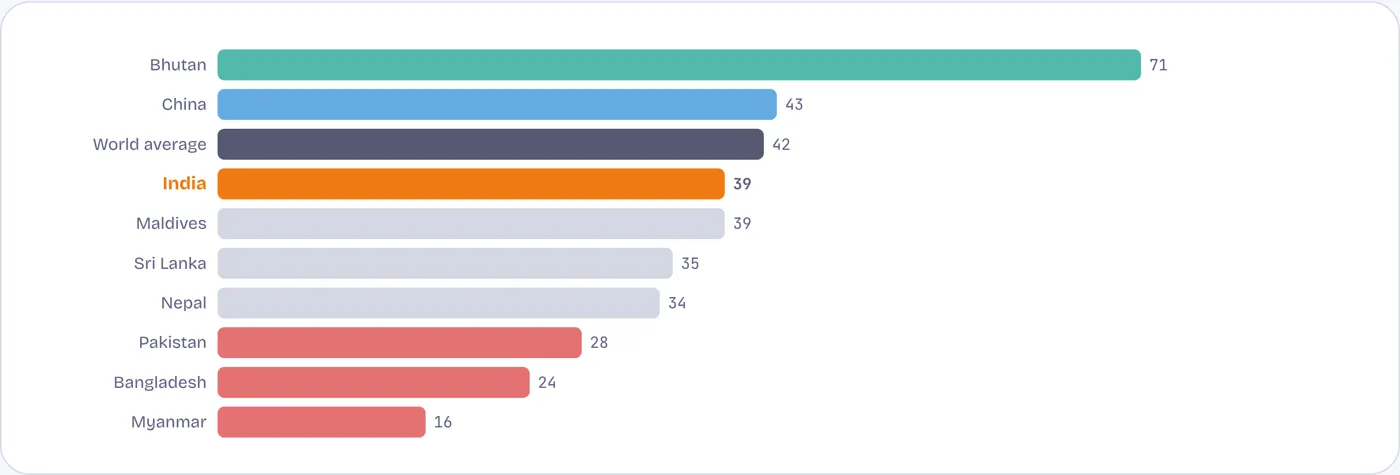
Cleaner than most of South Asia, well behind China and Bhutan
Ch. 24 · Who Gets What
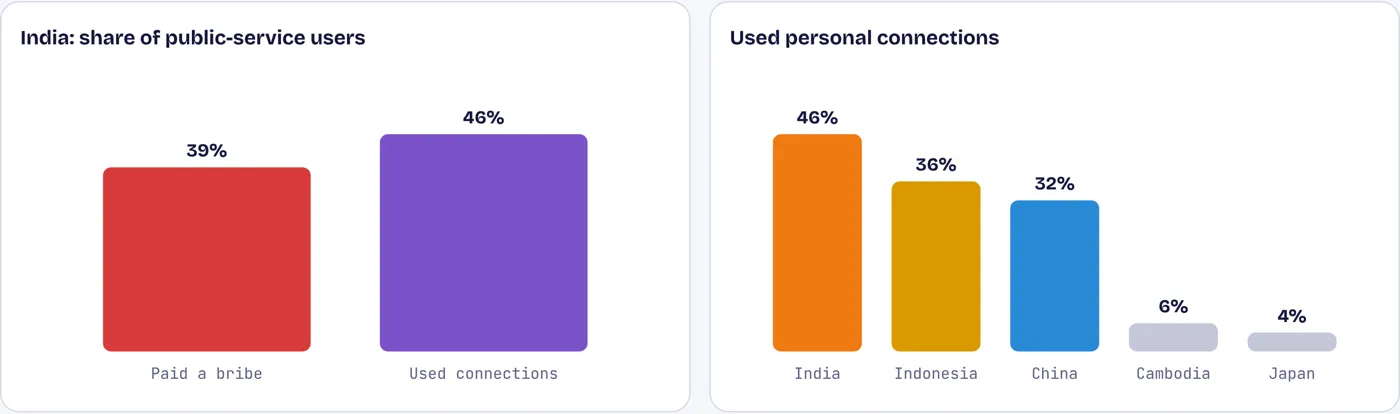
Four in ten Indians who used a public service paid a bribe; nearly half used connections
Ch. 24 · Who Gets What
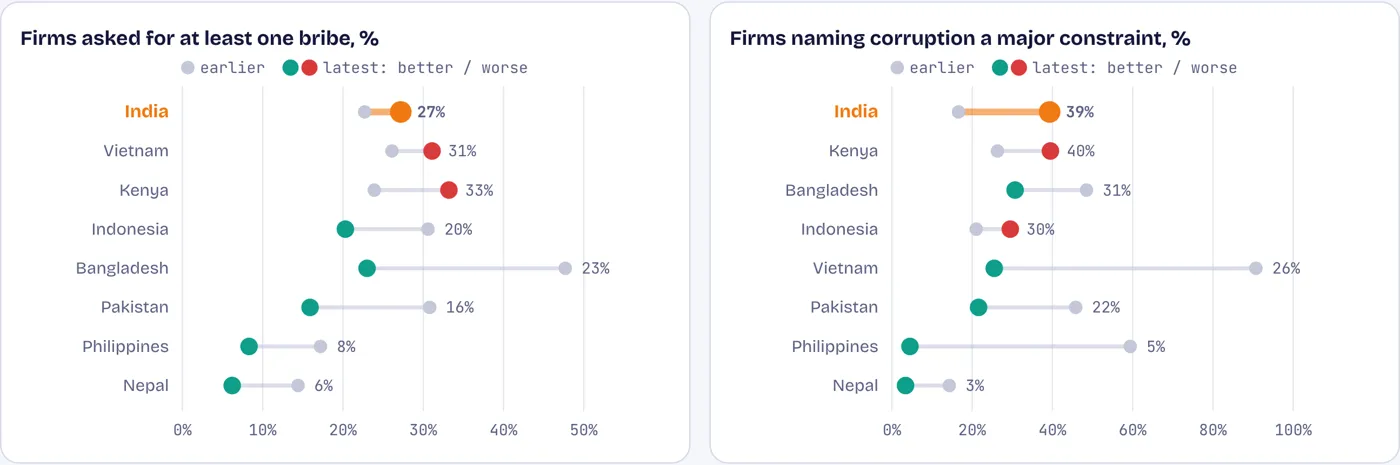
More firms meet bribe demands and see corruption as a major obstacle than a decade ago
Ch. 24 · Who Gets What
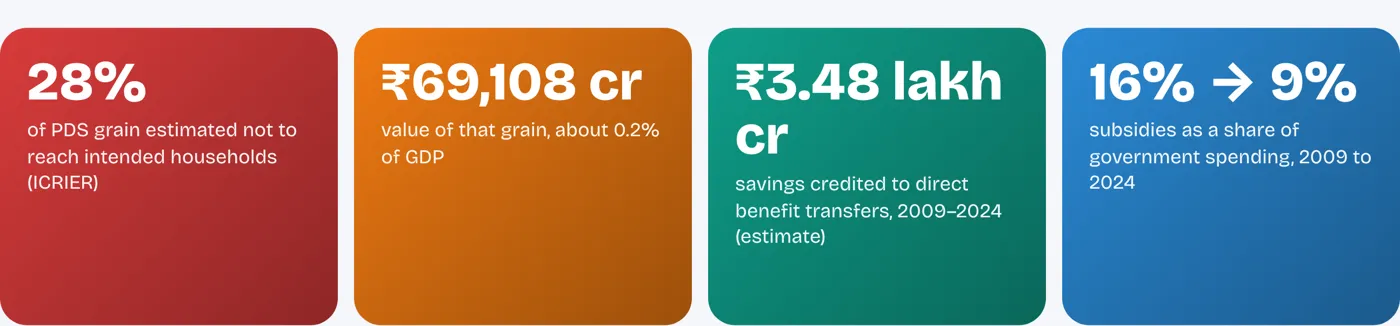
Direct transfers closed some leaks; grain still goes missing on a large scale
Ch. 24 · Who Gets What
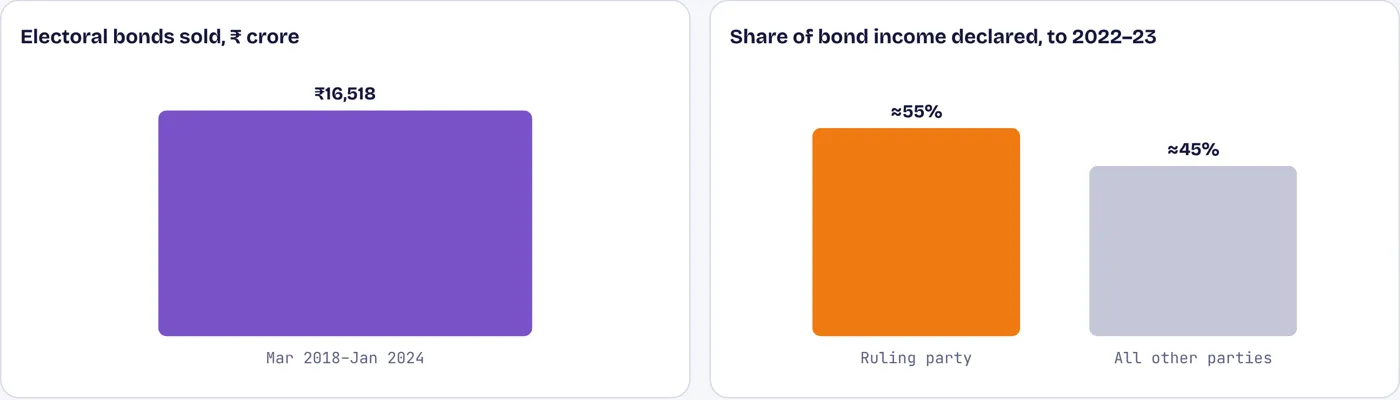
₹16,518 crore flowed to parties through anonymous bonds before the Supreme Court struck them down
Ch. 24 · Who Gets What
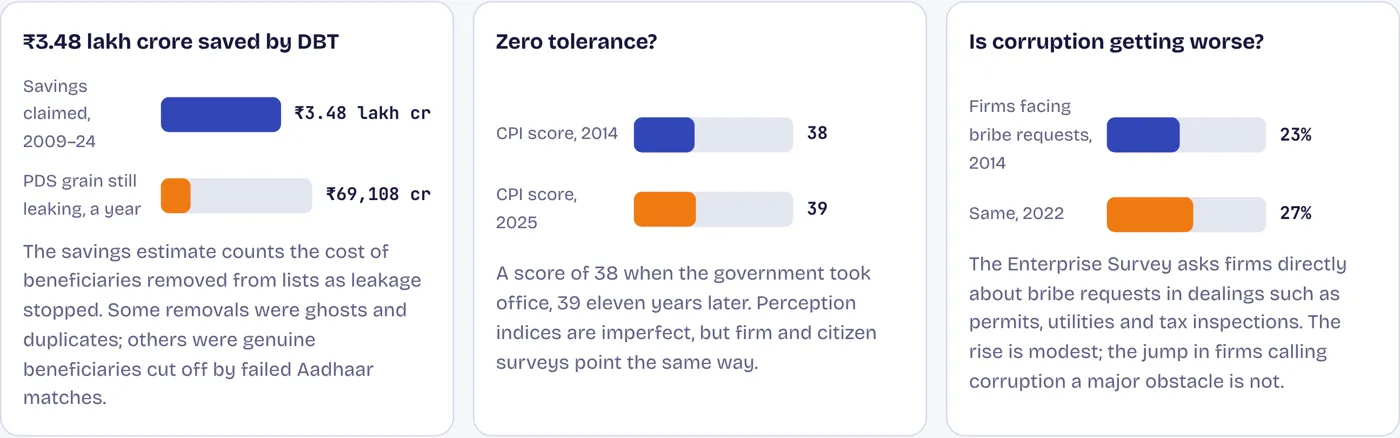
Three numbers that need a second look

Ch. 25 · Who Gets What
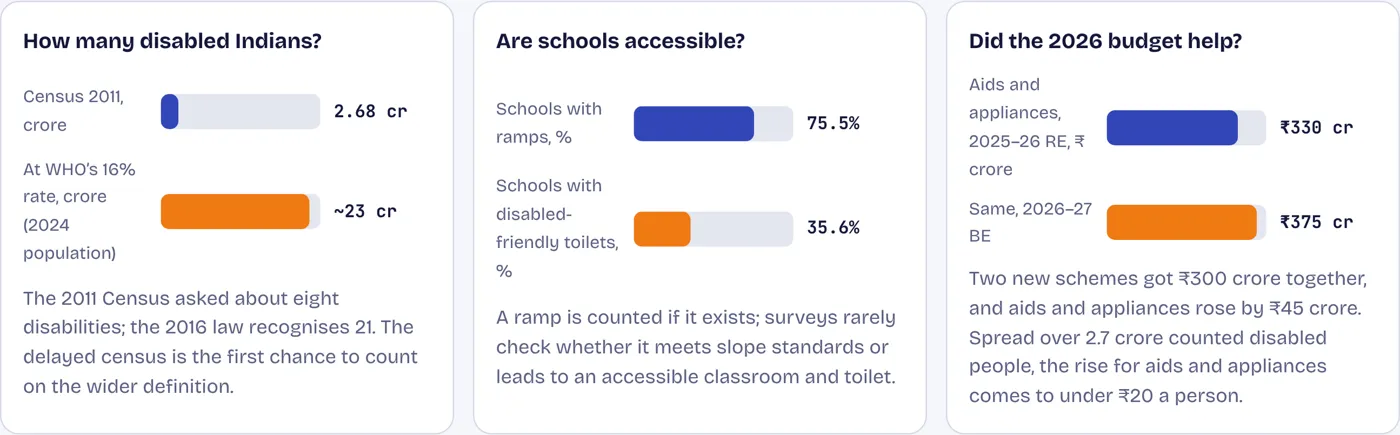
India counts one in forty-five people as disabled; the world average is one in six
Ch. 25 · Who Gets What
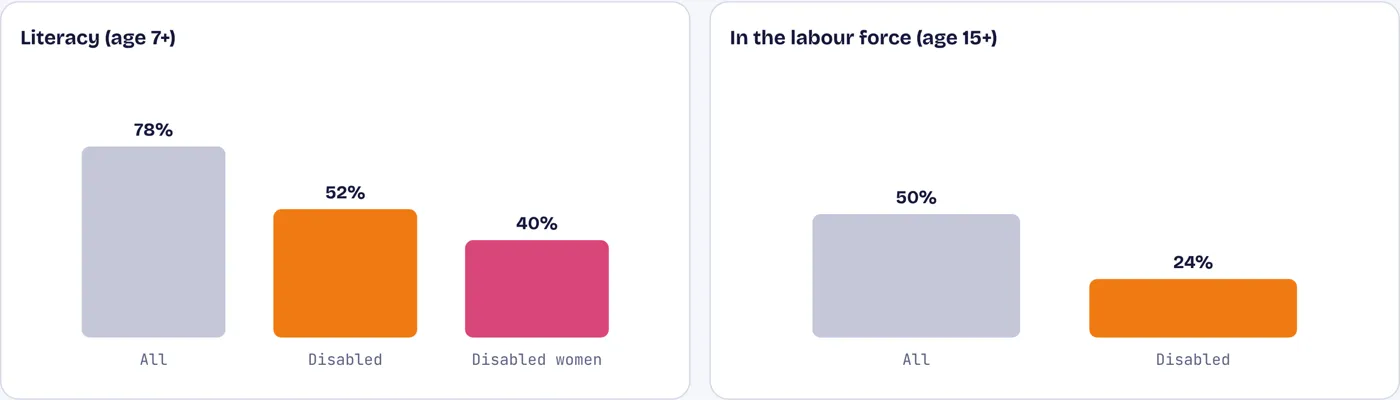
Half of disabled Indians can read, and one in four is in the labour force
Ch. 25 · Who Gets What
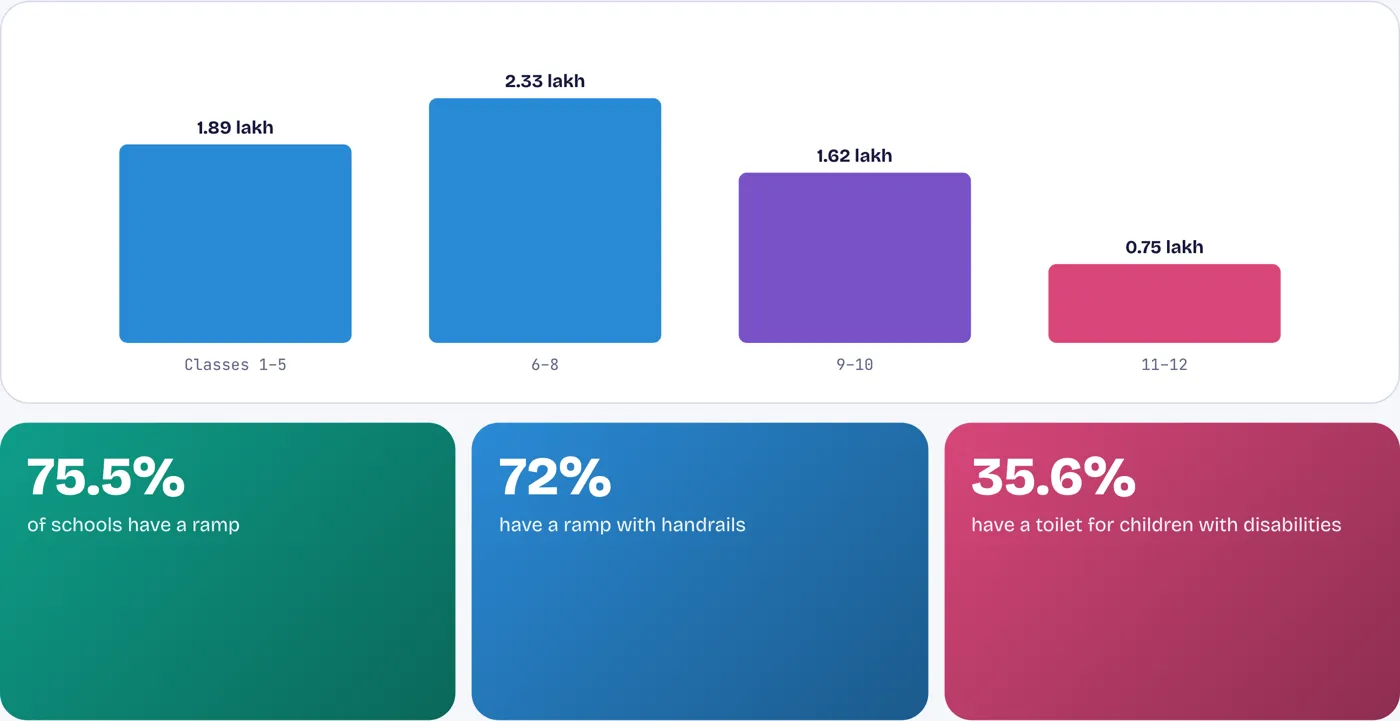
Children with special needs thin out sharply in the senior classes
Ch. 25 · Who Gets What
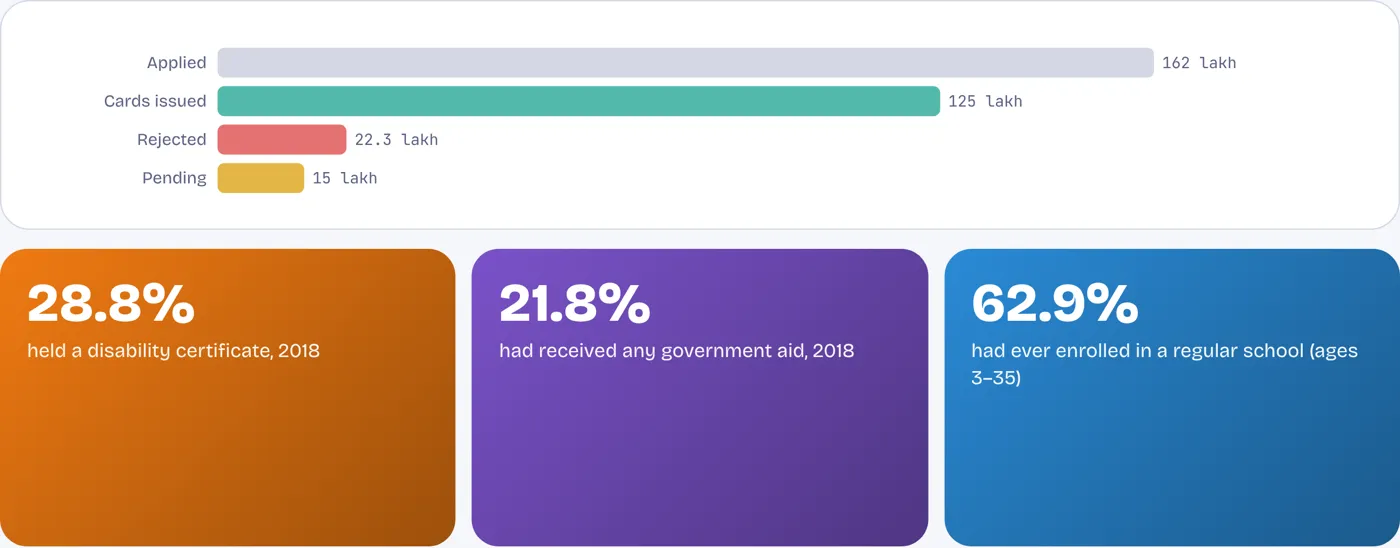
Fewer than a third had the certificate that unlocks benefits

Ch. 25 · Who Gets What
The central pension is ₹300 a month and is open to about one disabled person in twenty
Ch. 25 · Who Gets What
Three numbers that need a second look
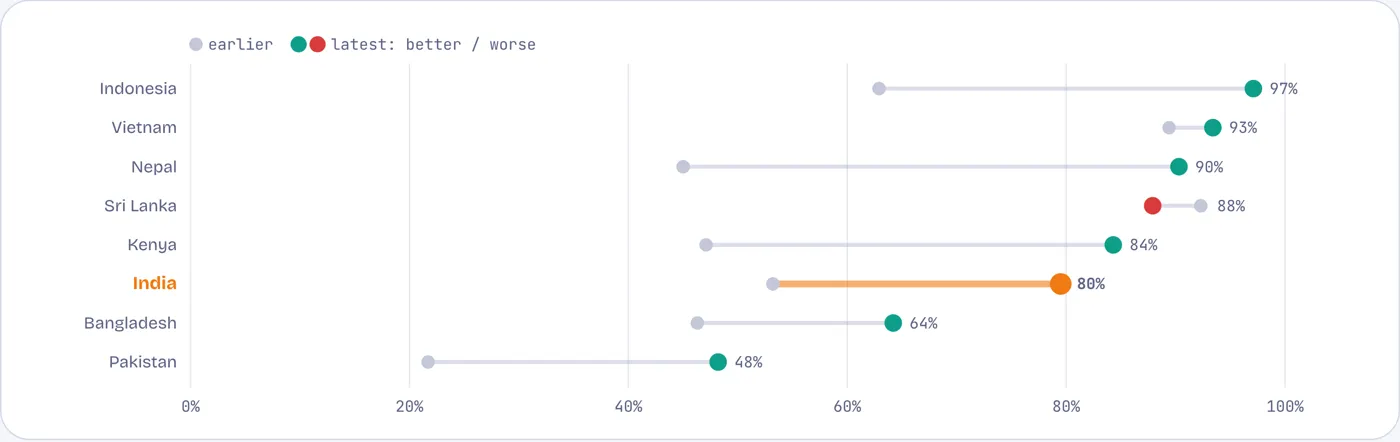
Ch. 26 · The Young and the Old
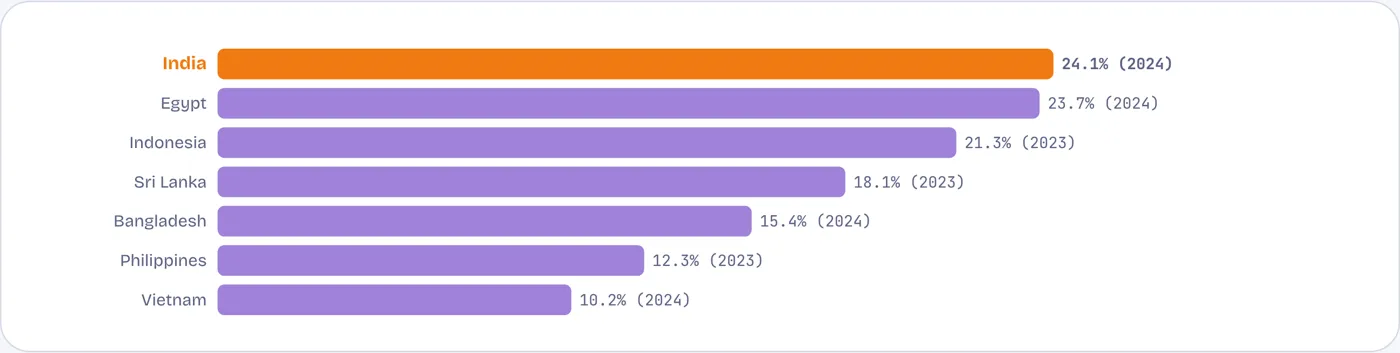
Secondary enrolment rose fast but still trails poorer Nepal and Kenya
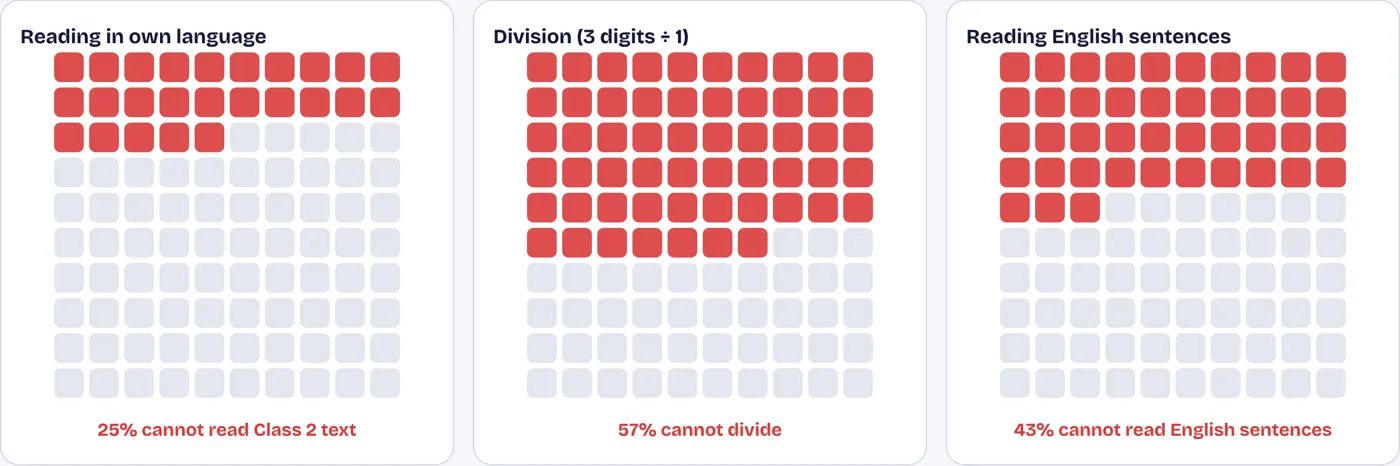
Ch. 26 · The Young and the Old
A quarter of rural 14–18-year-olds cannot read a Class 2 text fluently
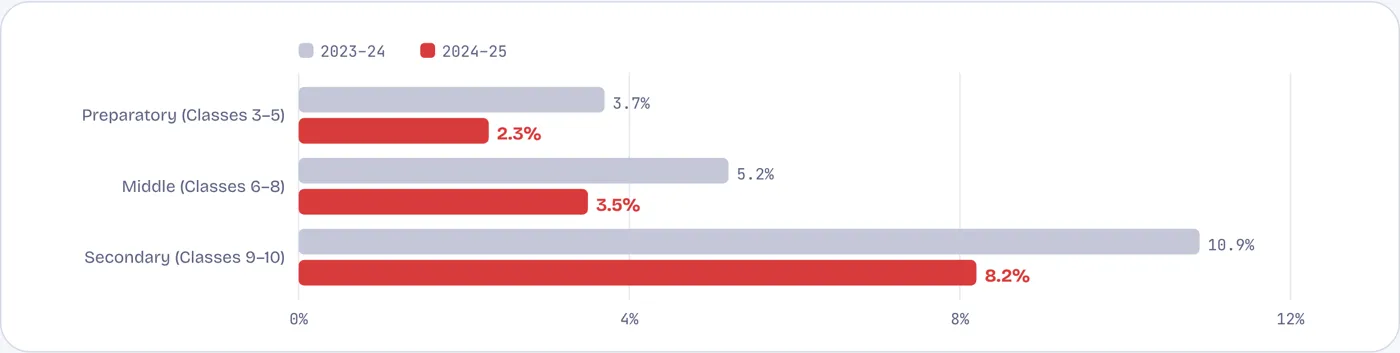
Ch. 26 · The Young and the Old
Dropout jumps at the secondary stage
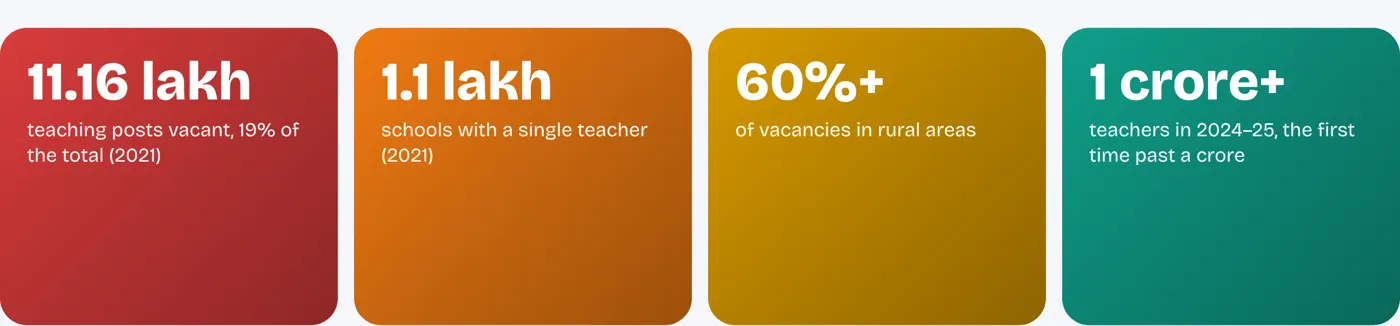
Ch. 26 · The Young and the Old
Eleven lakh teacher posts vacant; one lakh schools with a single teacher
Ch. 26 · The Young and the Old
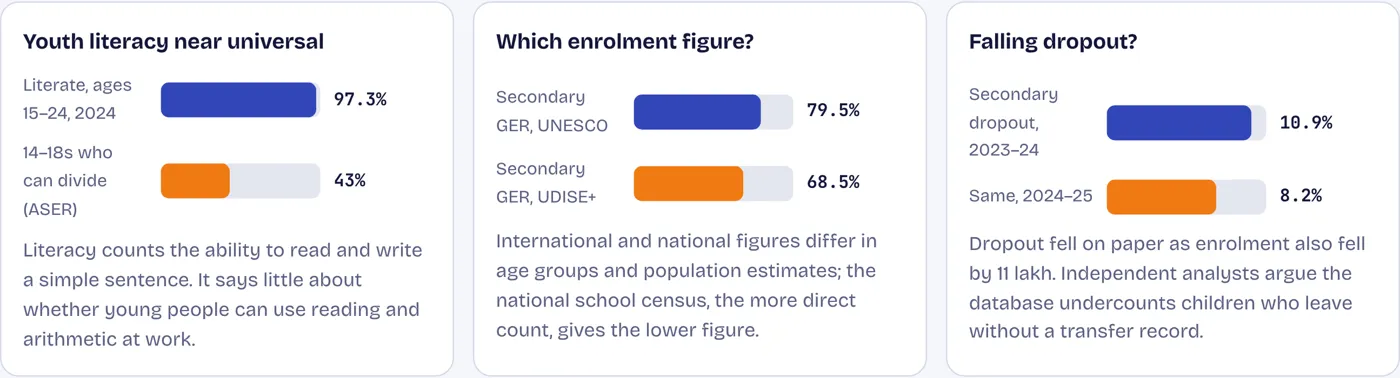
Weak schooling shows up later as idle youth and unemployable graduates
Ch. 26 · The Young and the Old
Three numbers that need a second look
Ch. 27 · The Young and the Old
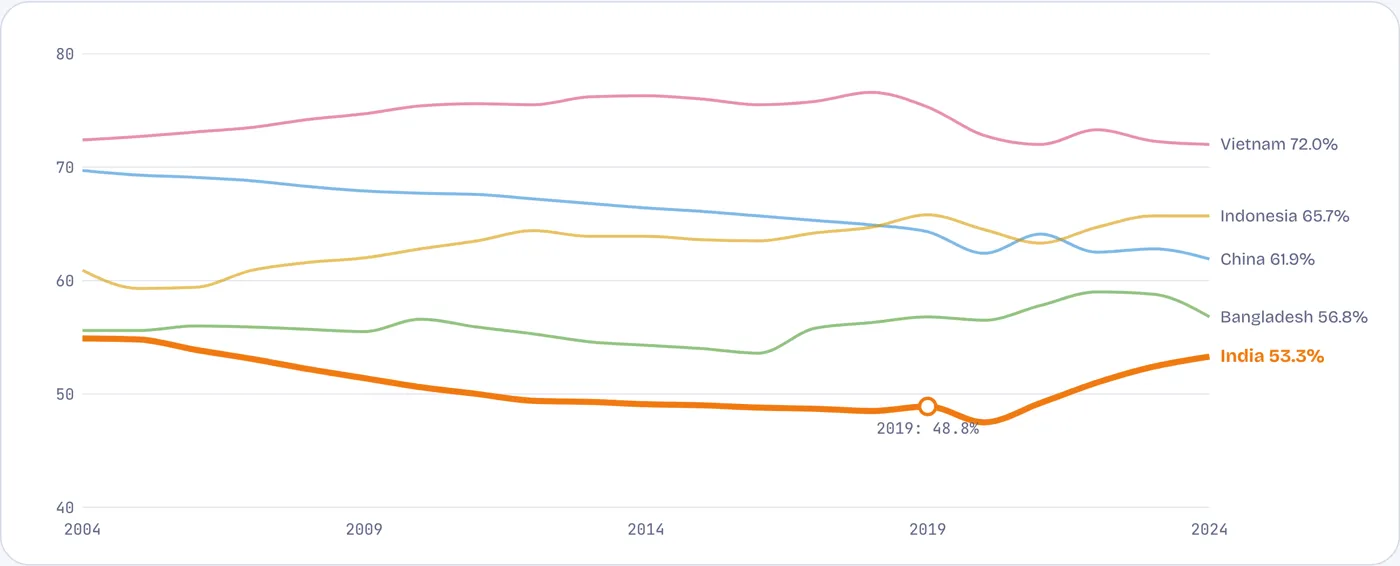
India’s share of adults in work fell for fifteen years of fast growth
Ch. 27 · The Young and the Old
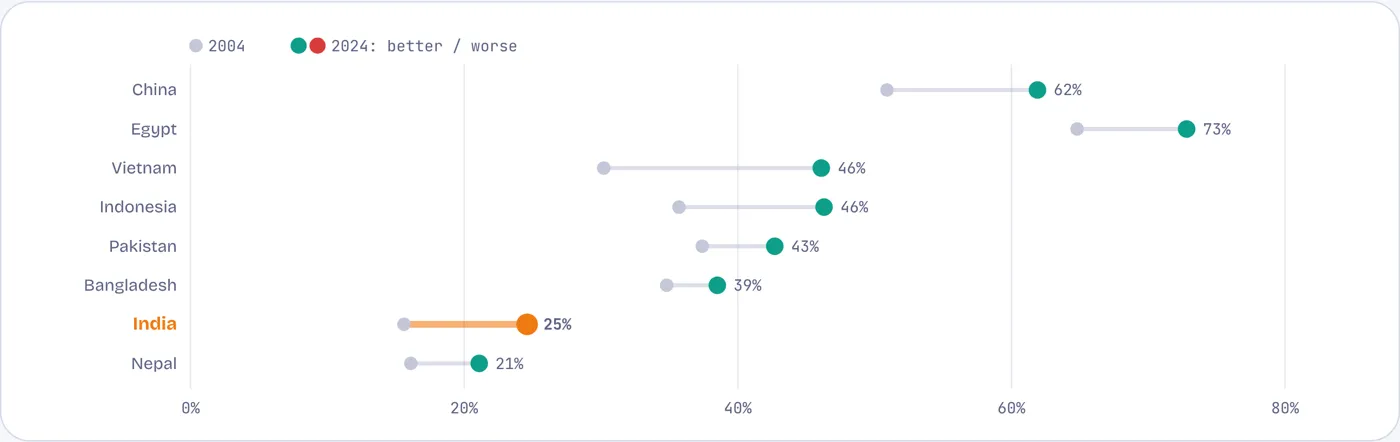
Only one Indian worker in four earns a regular wage or salary
Ch. 27 · The Young and the Old
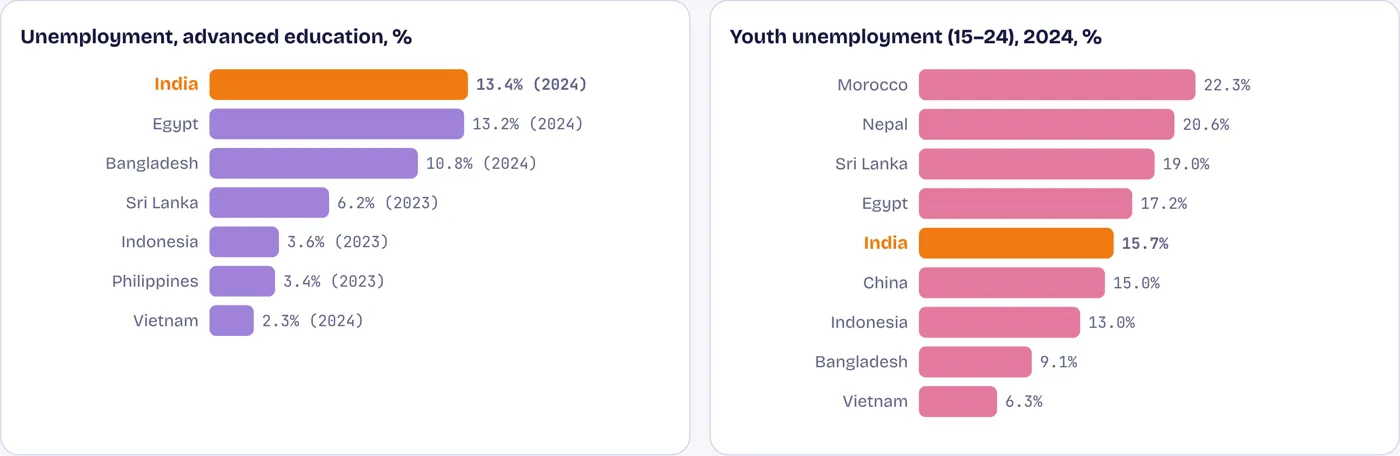
The more education a young Indian has, the likelier they are to be unemployed
Ch. 27 · The Young and the Old
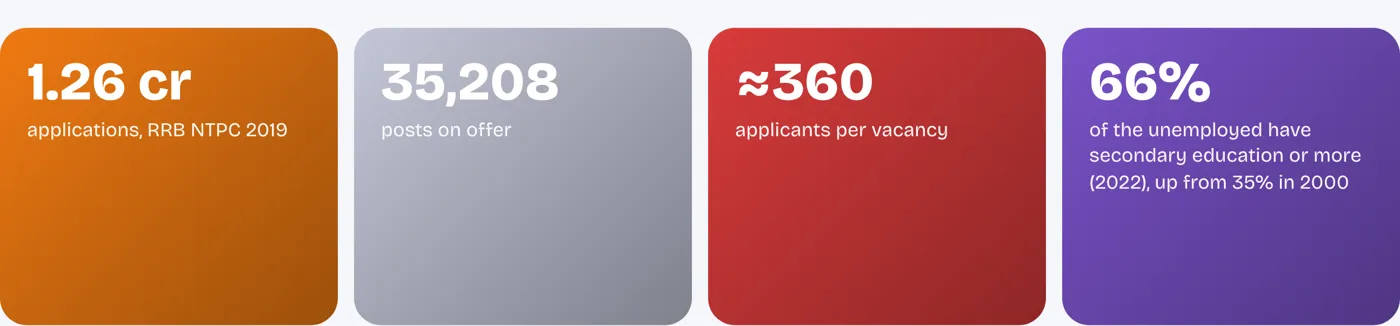
1.26 crore applications for 35,208 railway jobs
Ch. 27 · The Young and the Old
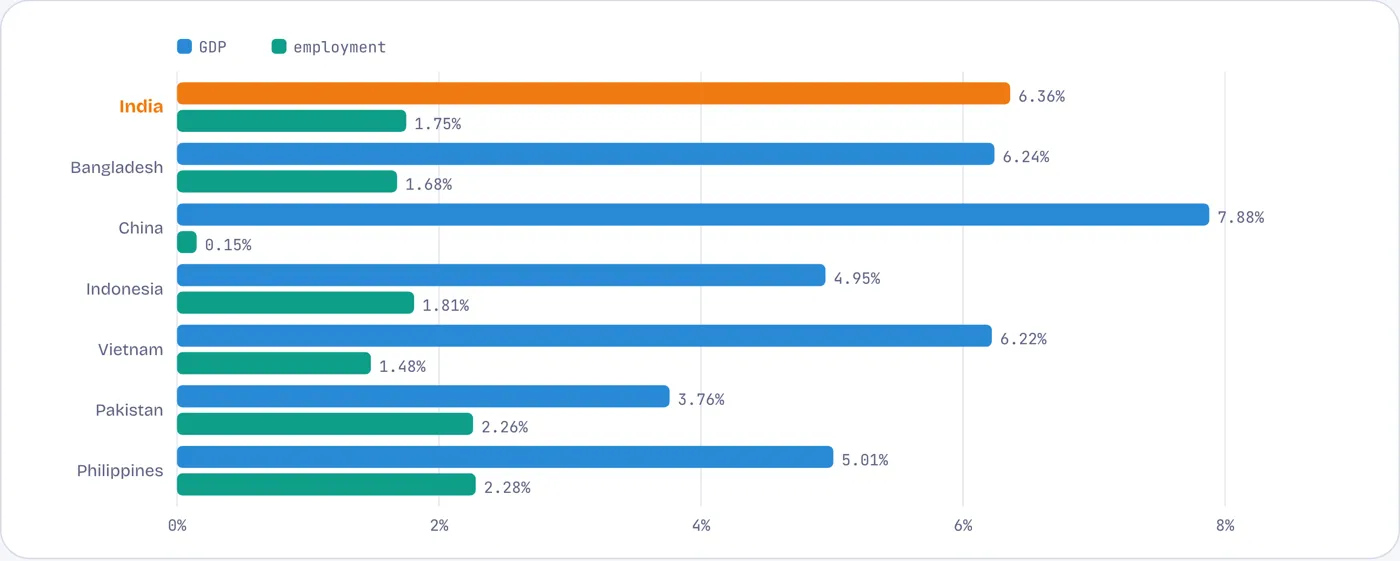
India’s growth created jobs at a similar rate to its peers; its problem is quality and who is left out
Ch. 27 · The Young and the Old
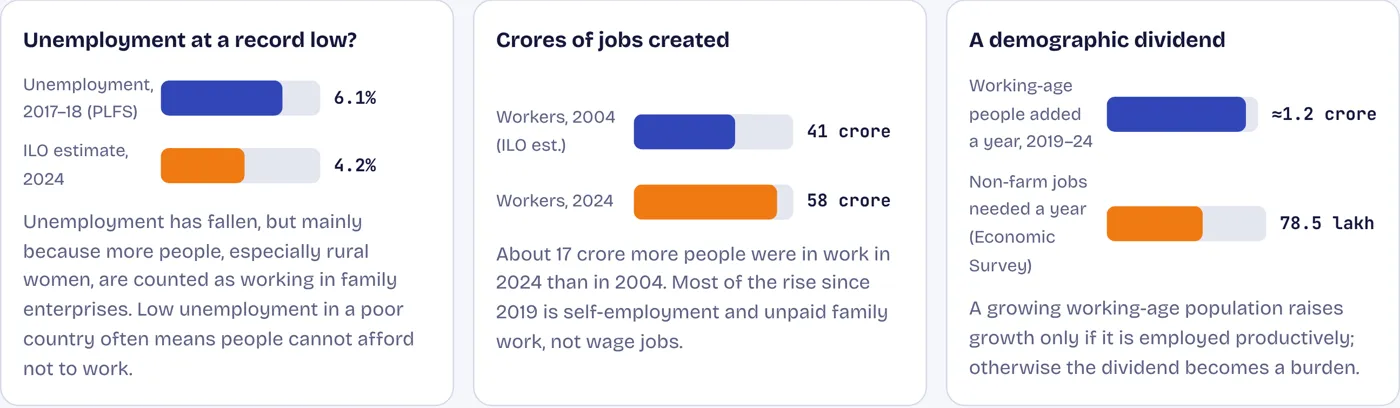
Three numbers that need a second look
Ch. 28 · The Young and the Old
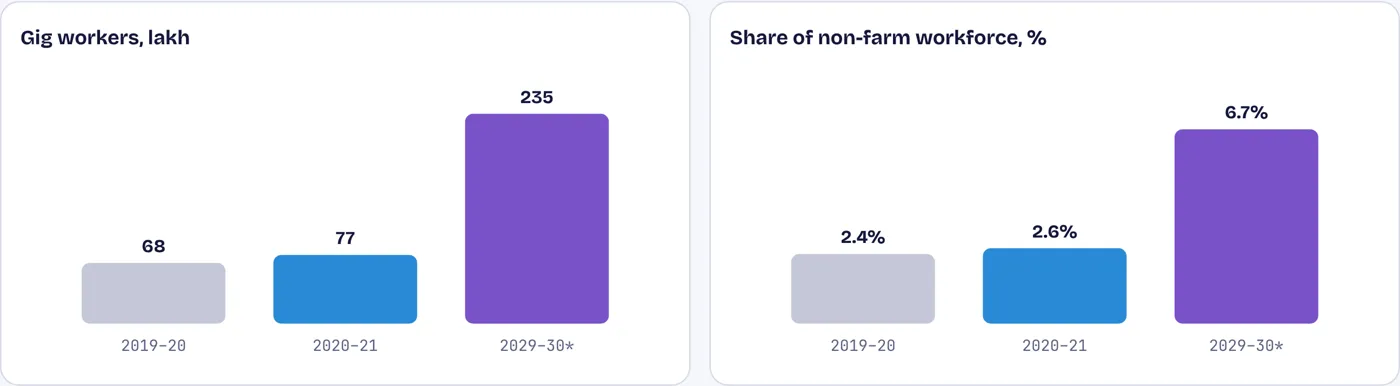
A workforce the size of a large state, growing three times over
Ch. 28 · The Young and the Old
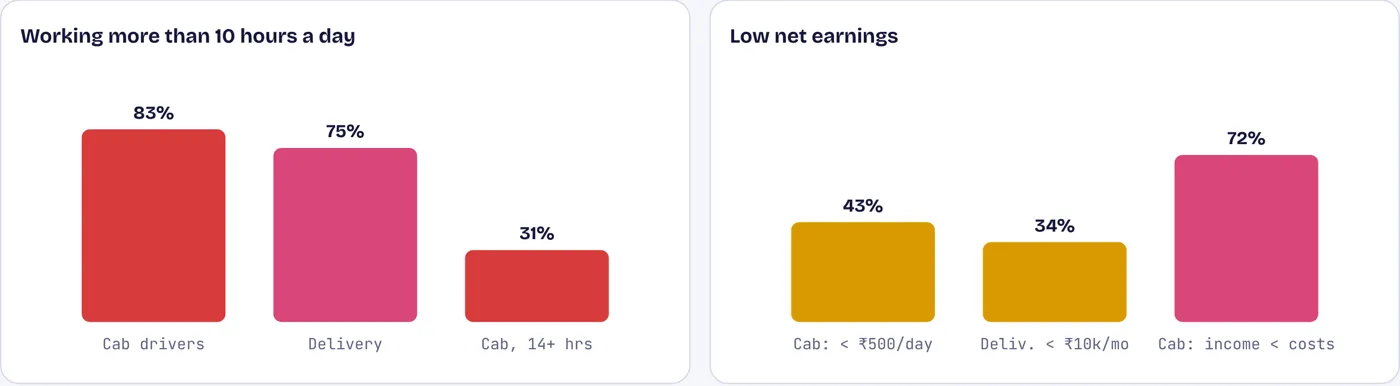
Long days, thin margins

Ch. 28 · The Young and the Old
Four in ten face violence at work, and nearly half have no insurance
Ch. 28 · The Young and the Old
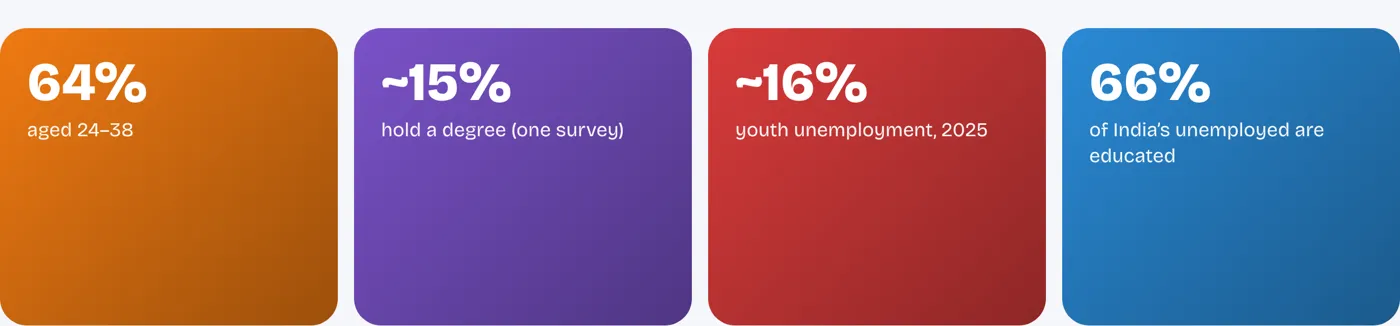
Young, urban and schooled: the profile of a restless workforce
Ch. 28 · The Young and the Old
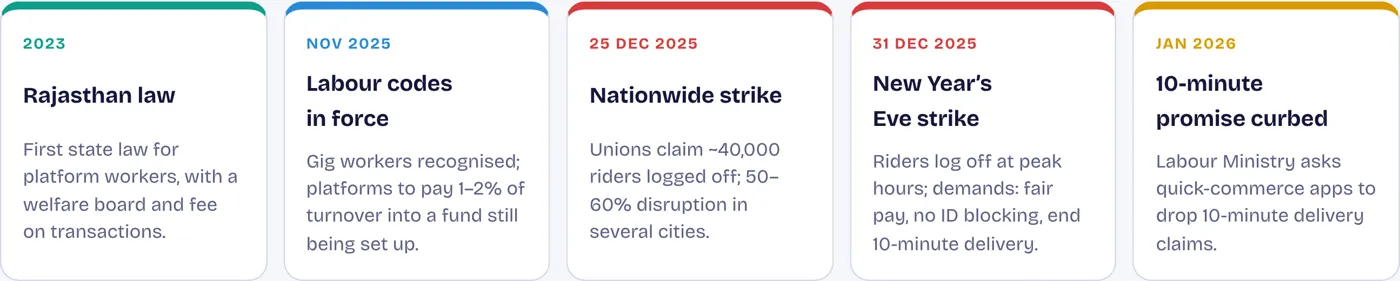
From scattered protests to nationwide strikes
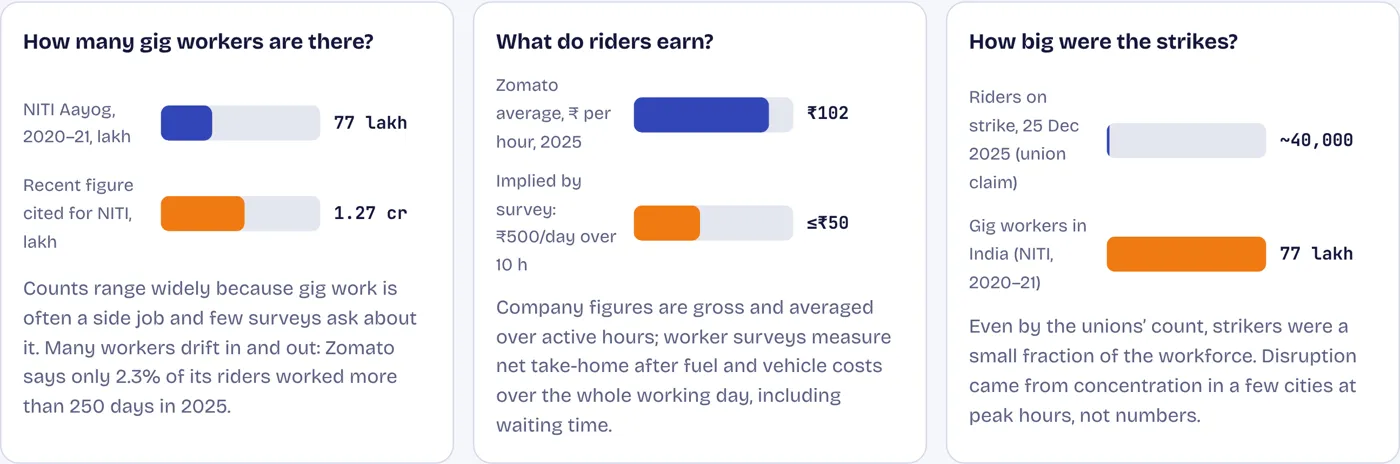
Ch. 28 · The Young and the Old
Three numbers that need a second look
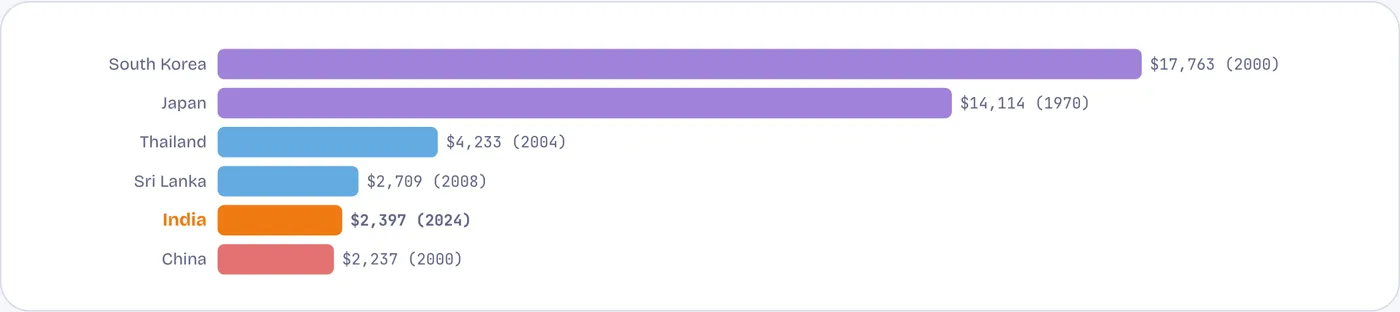
Ch. 29 · The Young and the Old
India has started ageing at a fraction of the income at which East Asia did
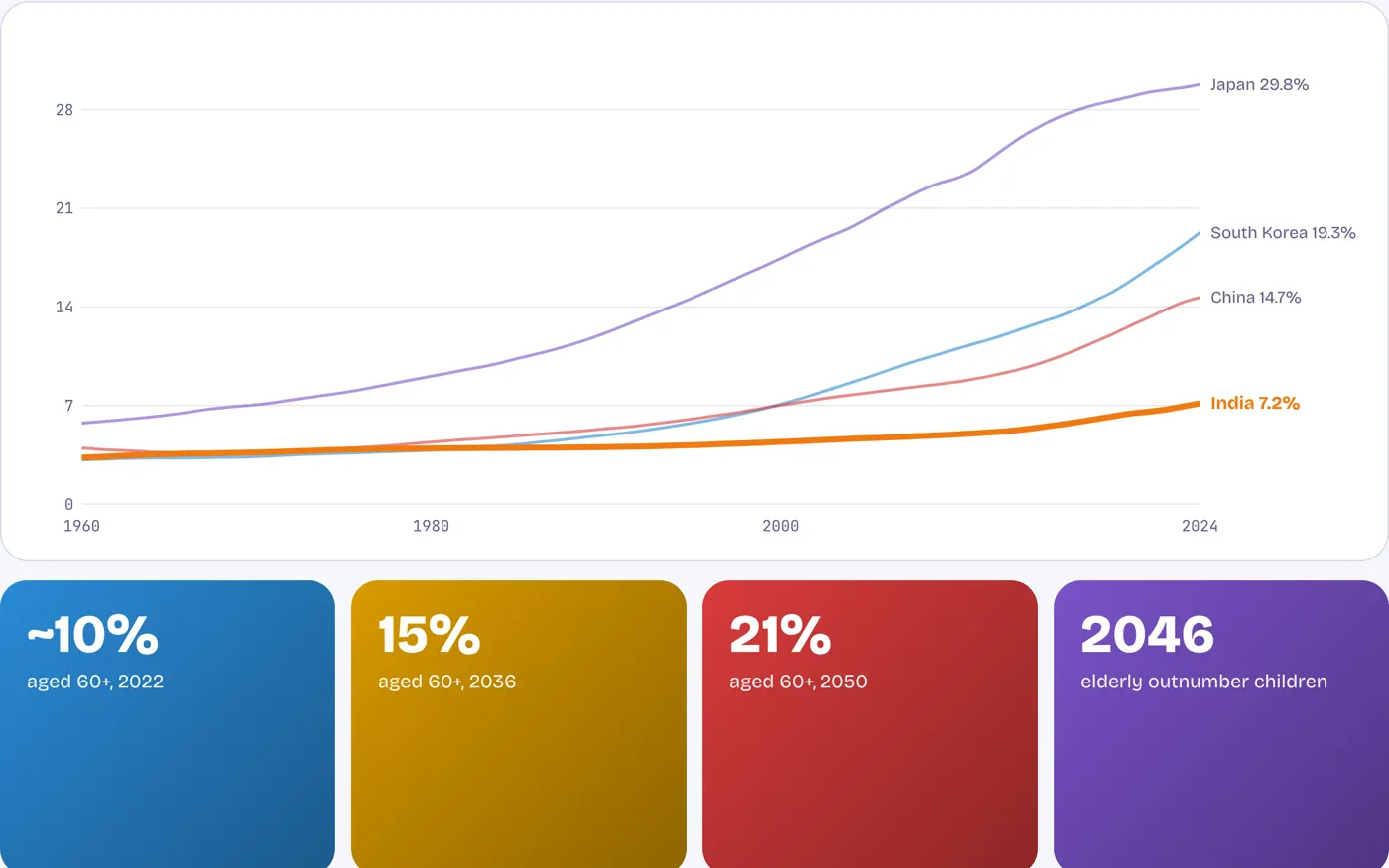
Ch. 29 · The Young and the Old
India’s ageing has begun where China’s stood in 2000
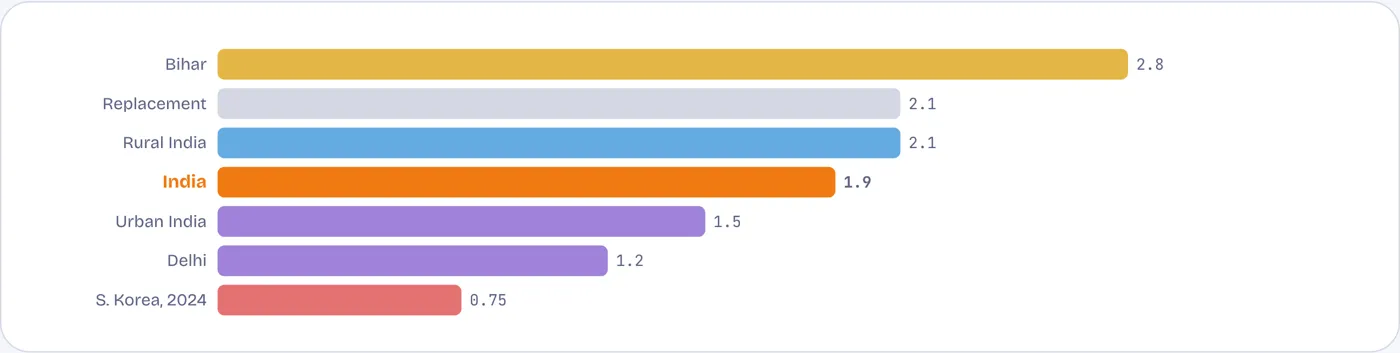
Ch. 29 · The Young and the Old
Fertility has fallen below replacement, fastest in the richer states and cities
Ch. 29 · The Young and the Old
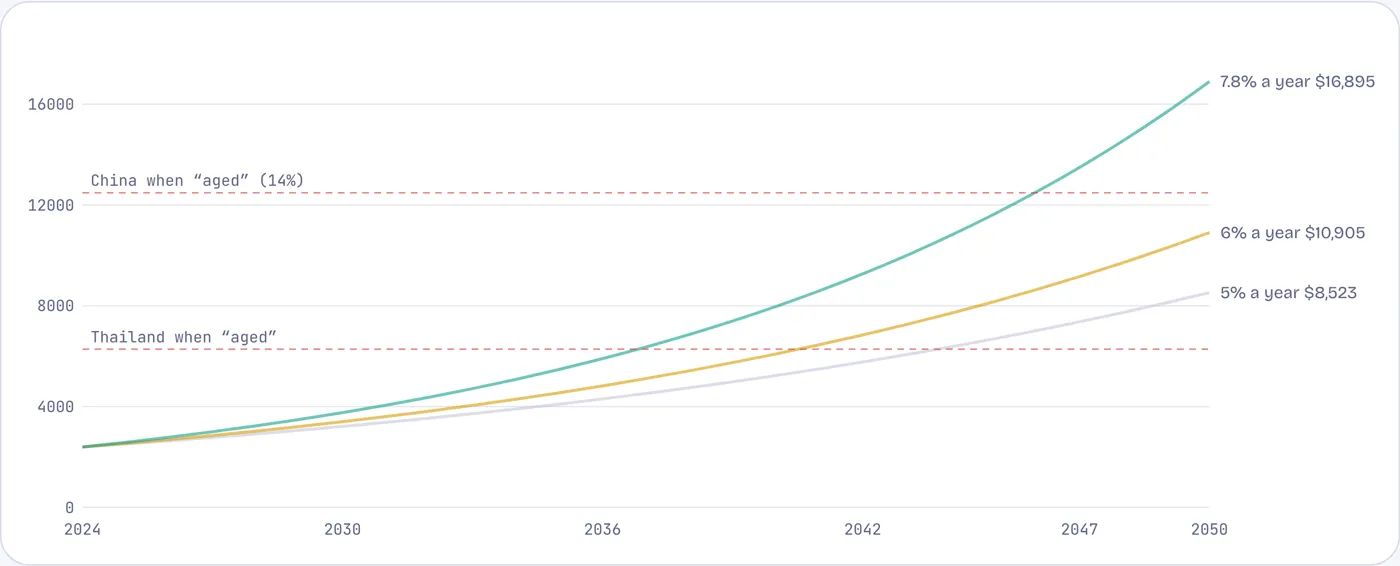
At past growth rates, India reaches China’s ‘aged’ income only in the 2050s
Ch. 29 · The Young and the Old
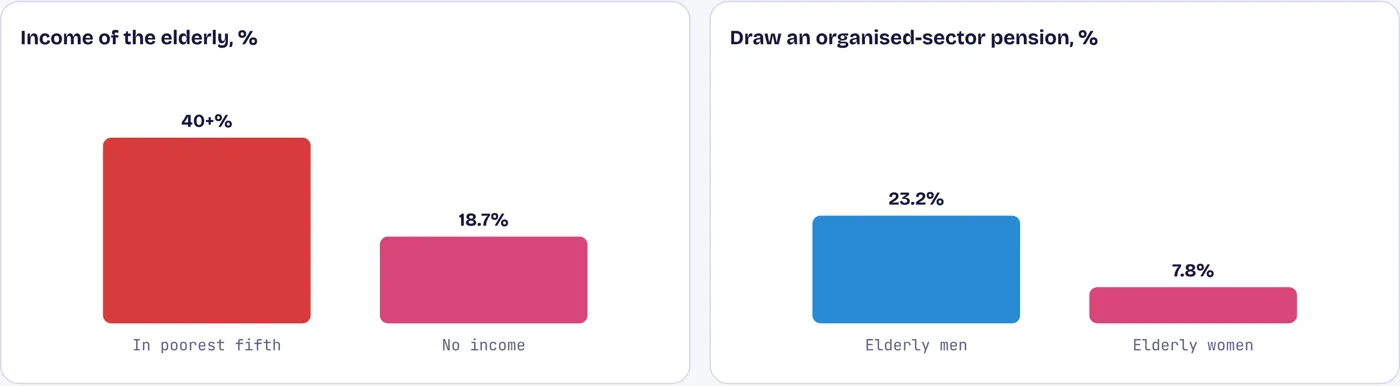
Most elderly Indians have no pension and many have no income
Ch. 29 · The Young and the Old
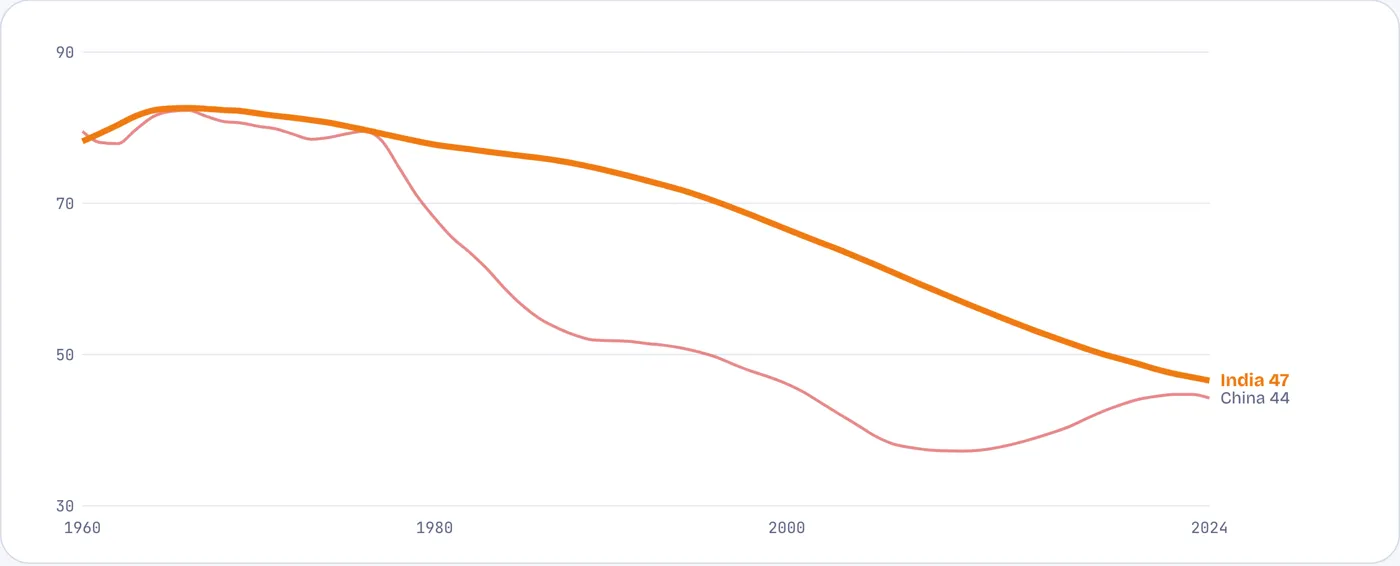
The share of dependants has fallen to its lowest; from here it turns
Ch. 29 · The Young and the Old
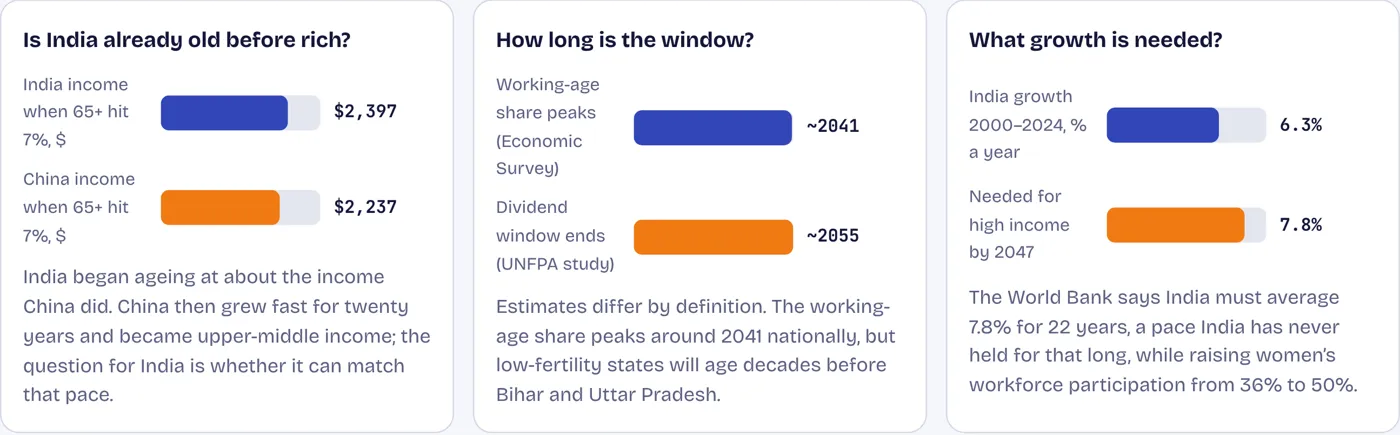
Three numbers that need a second look
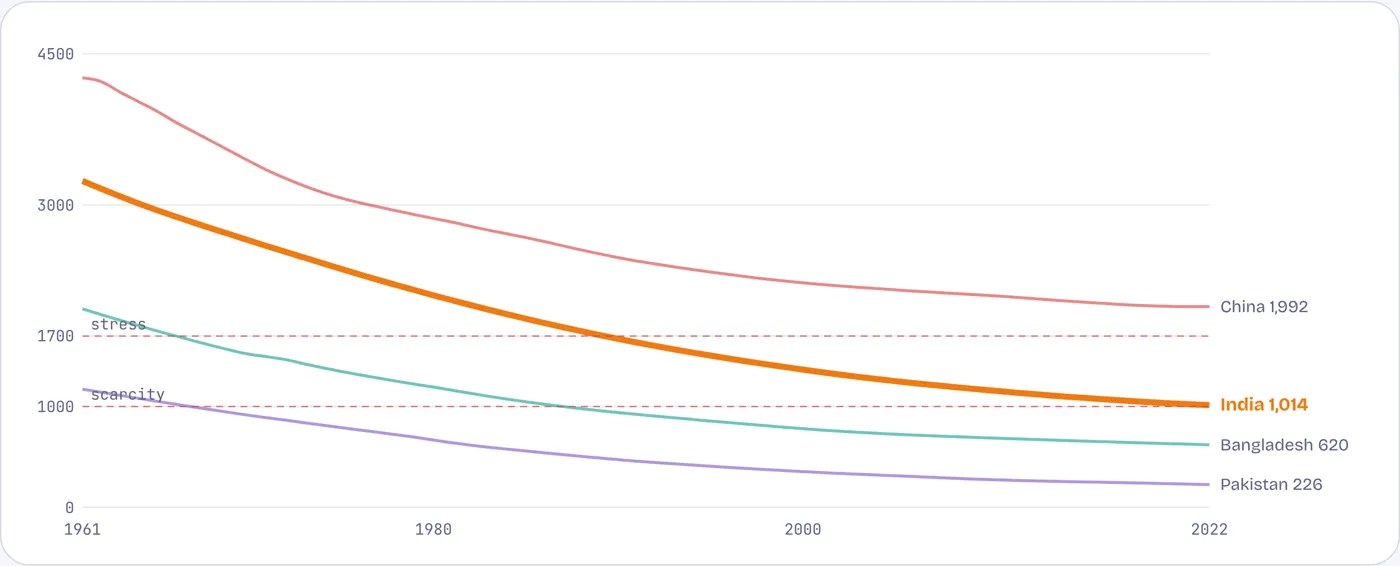
Ch. 30 · The Land Pushes Back
Water per person crossed the stress line around 1990 and is nearing scarcity
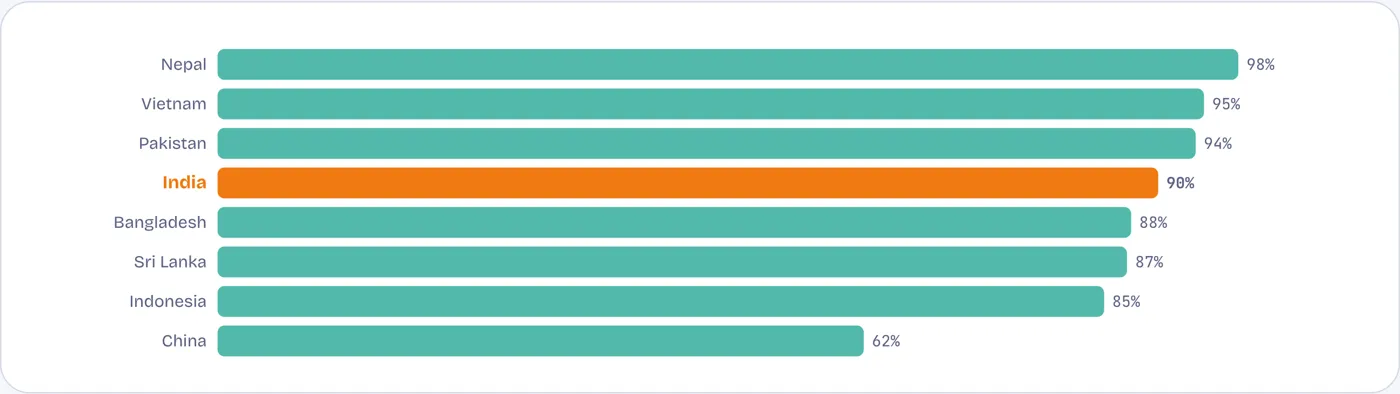
Ch. 30 · The Land Pushes Back
Farms take nine of every ten litres India withdraws
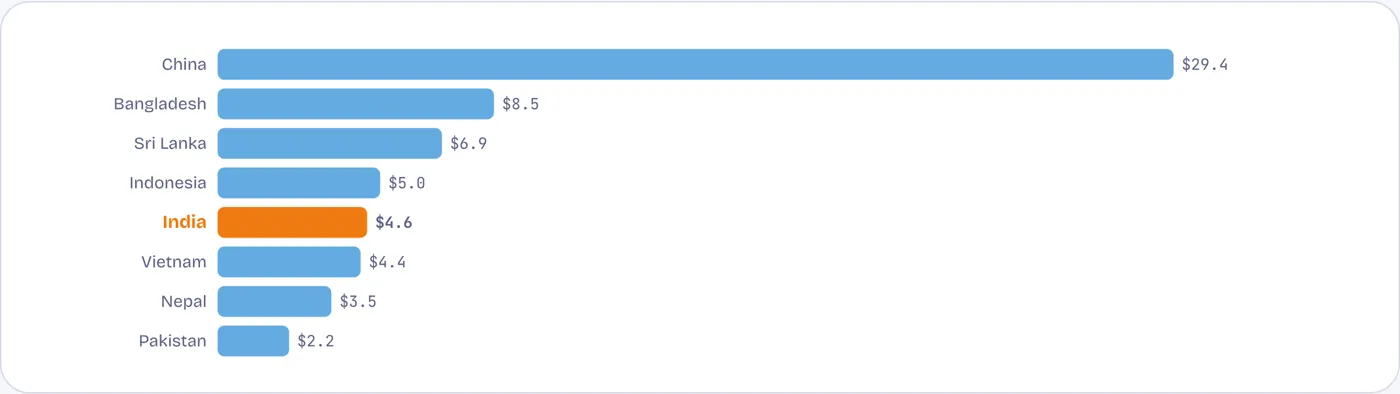
Ch. 30 · The Land Pushes Back
Each cubic metre of water produces a sixth of the output it does in China
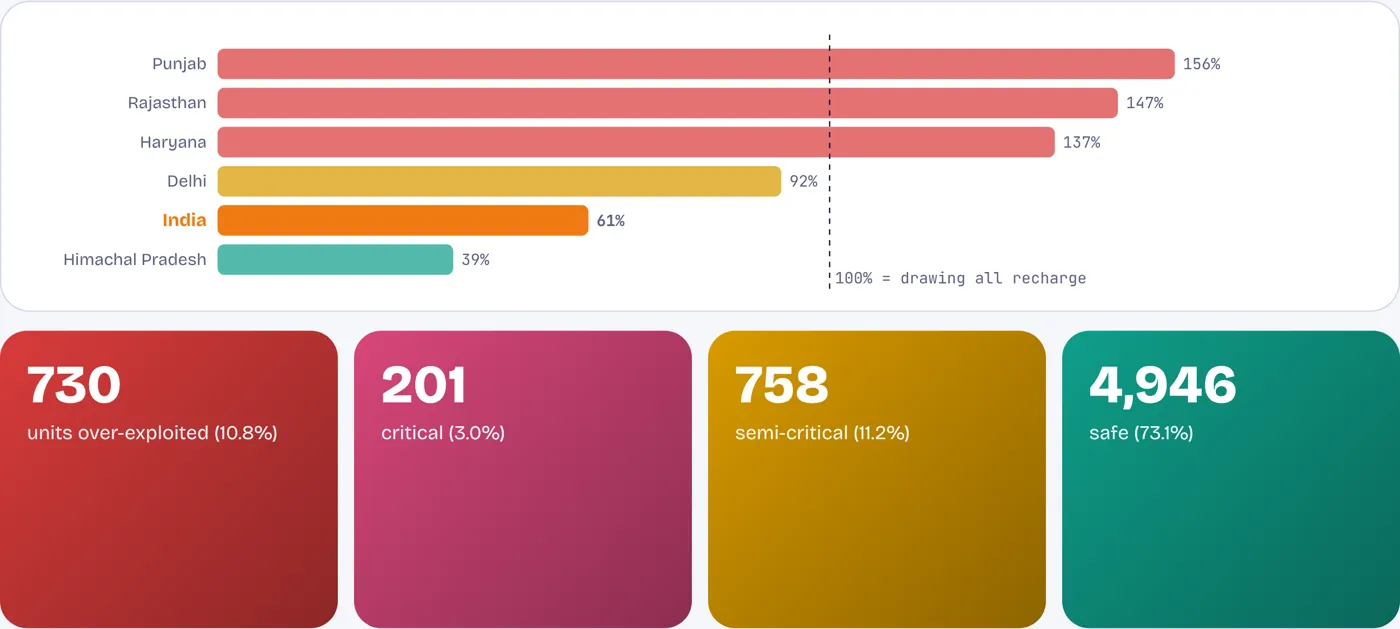
Ch. 30 · The Land Pushes Back
Three northern states pump out far more groundwater than rain puts back
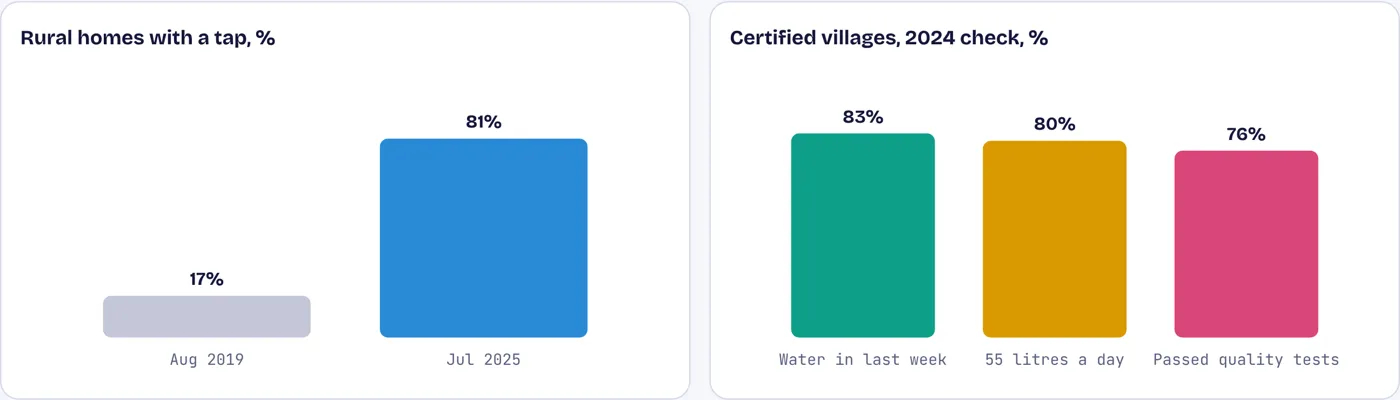
Ch. 30 · The Land Pushes Back
Taps reached four in five rural homes; safe, regular water reached fewer
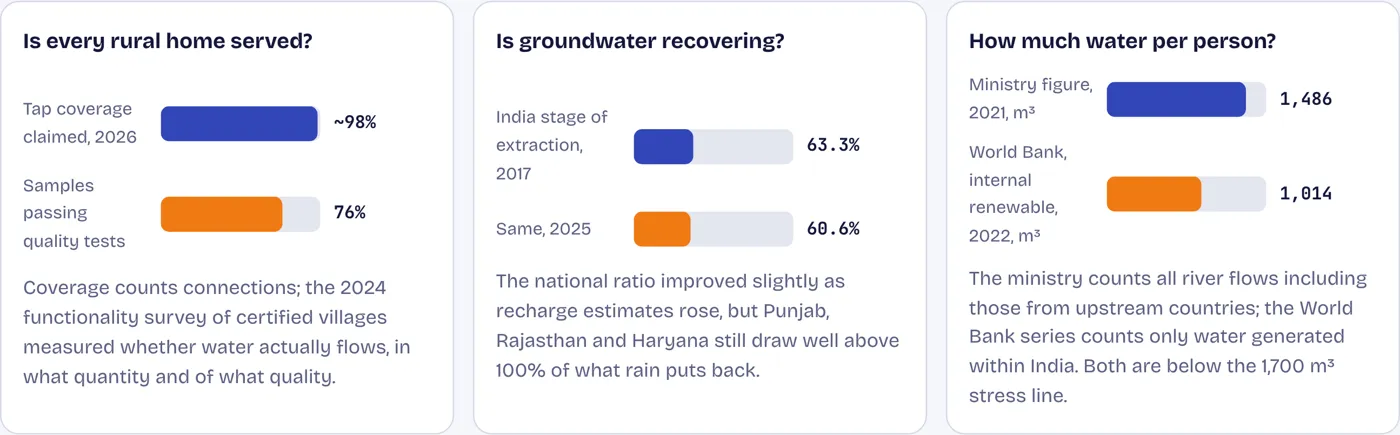
Ch. 30 · The Land Pushes Back
Three numbers that need a second look

Ch. 31 · The Land Pushes Back
Rice alone outweighs wheat; pulses and oilseeds are an afterthought
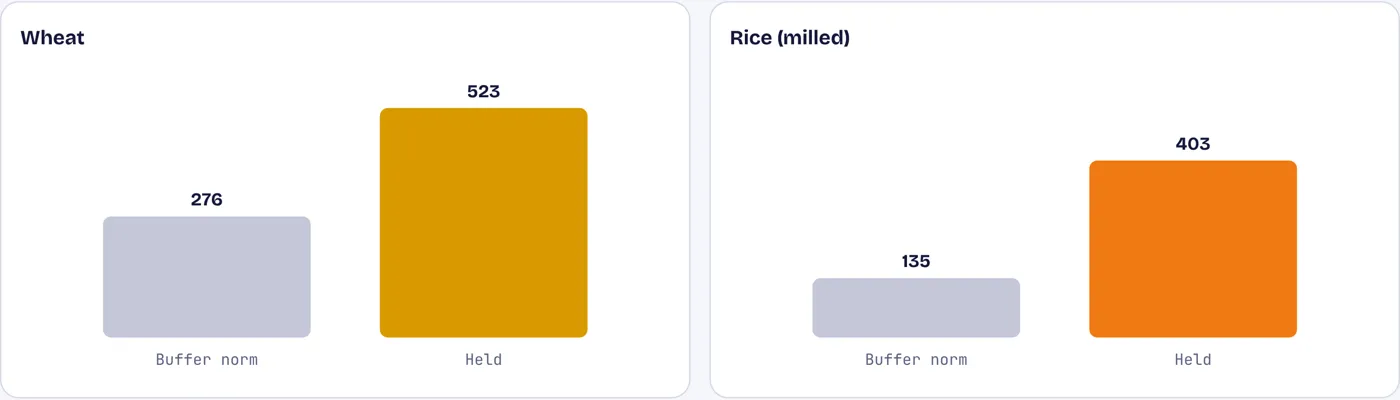
Ch. 31 · The Land Pushes Back
Government granaries hold more than twice what the buffer requires
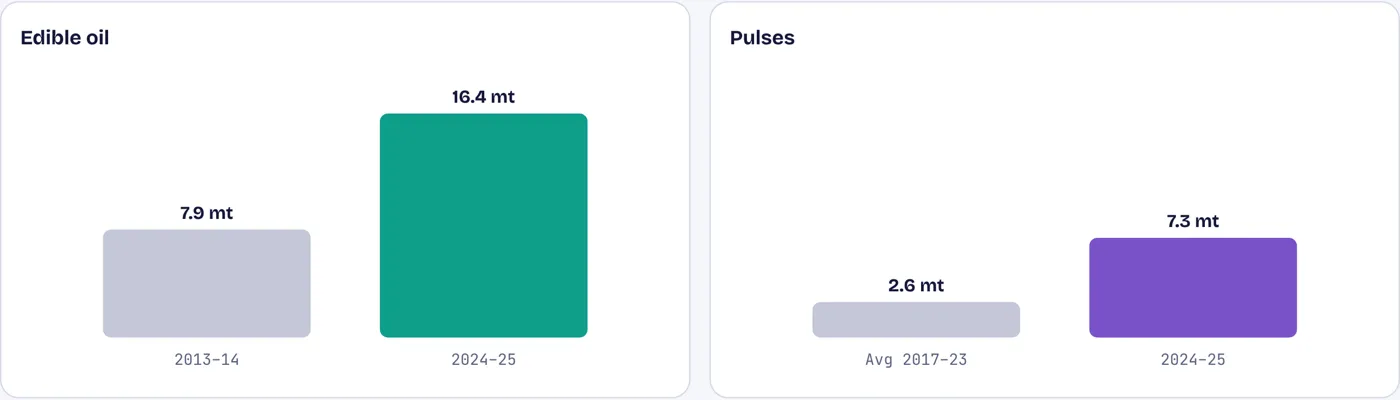
Ch. 31 · The Land Pushes Back
Imports fill the gaps the grain-first policy leaves
Ch. 31 · The Land Pushes Back
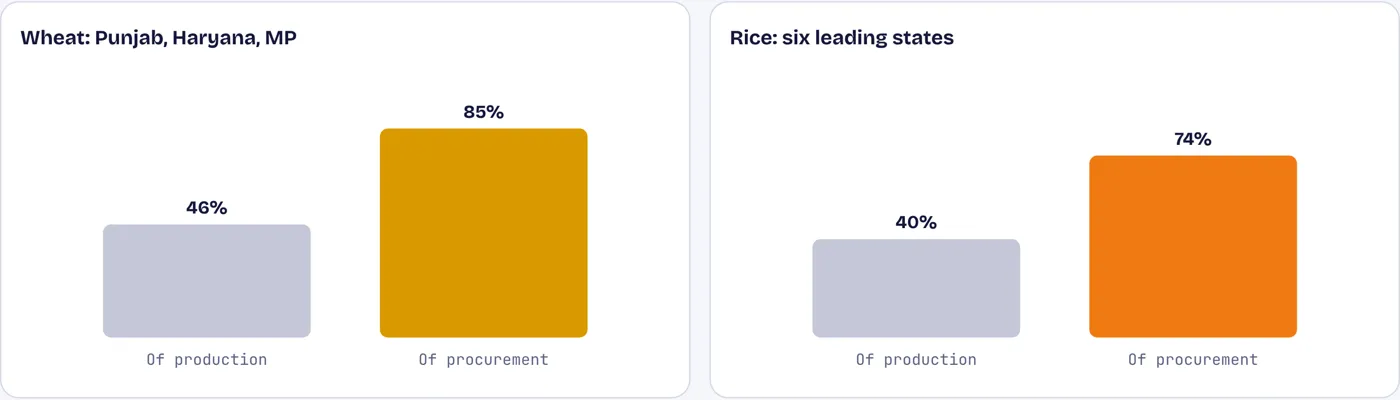
The state buys mainly rice and wheat, and mostly from a few states
Ch. 31 · The Land Pushes Back
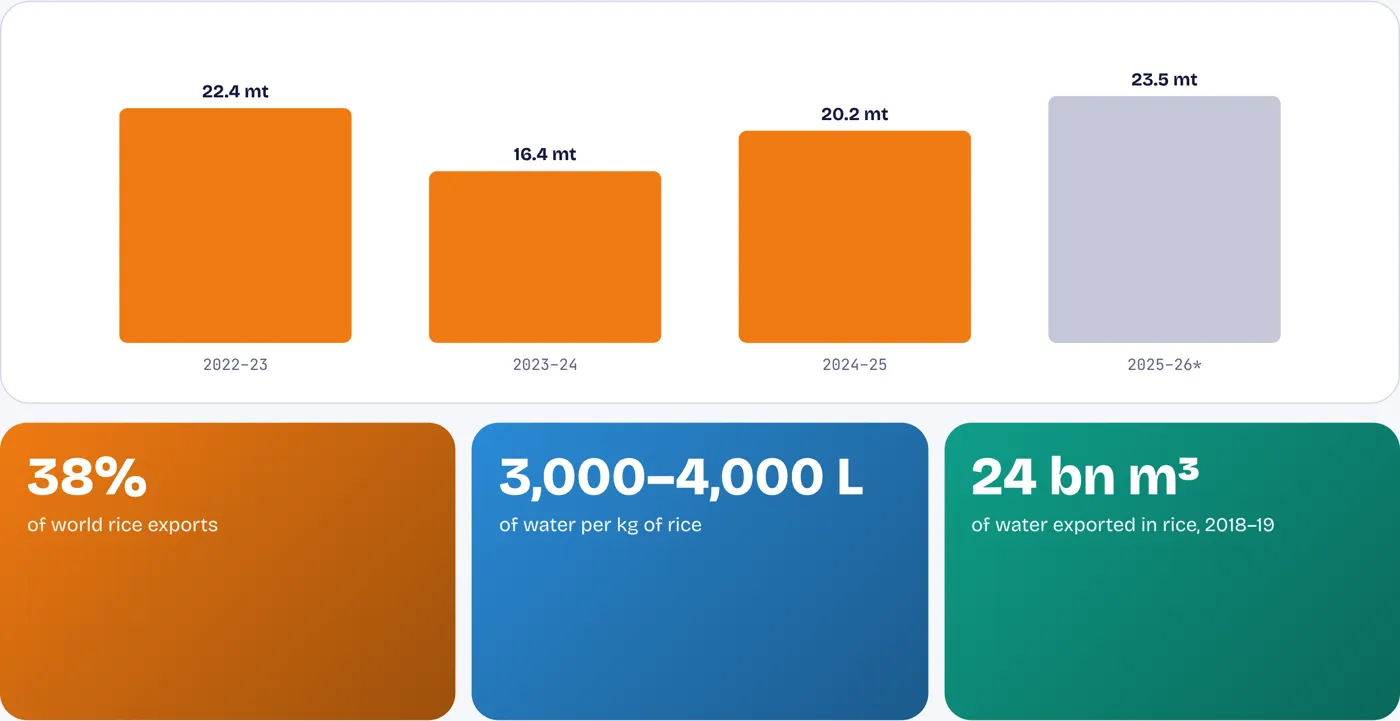
India sells 38% of the world’s traded rice, and ships out its groundwater with it
Ch. 31 · The Land Pushes Back
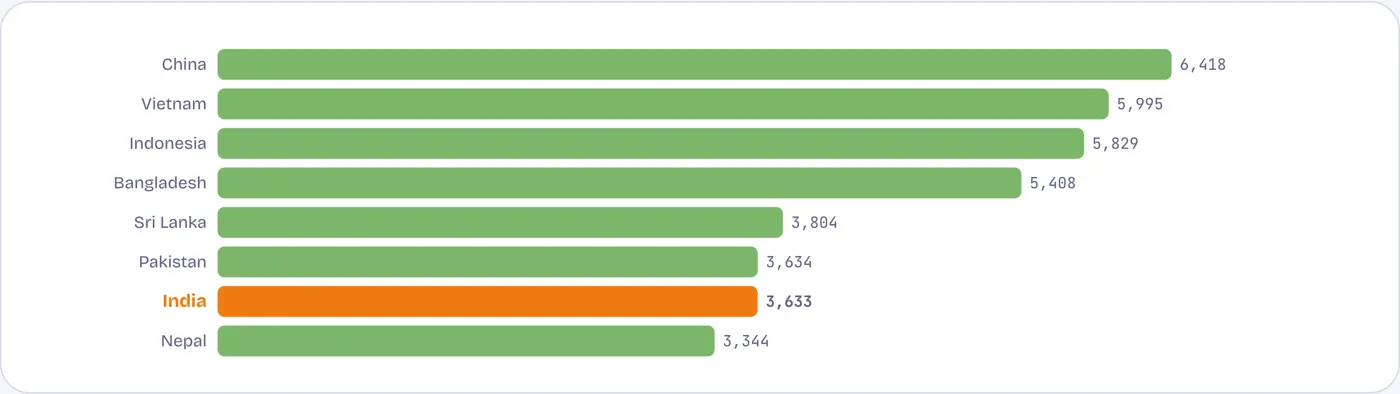
India harvests far less grain per hectare than its neighbours
Ch. 31 · The Land Pushes Back
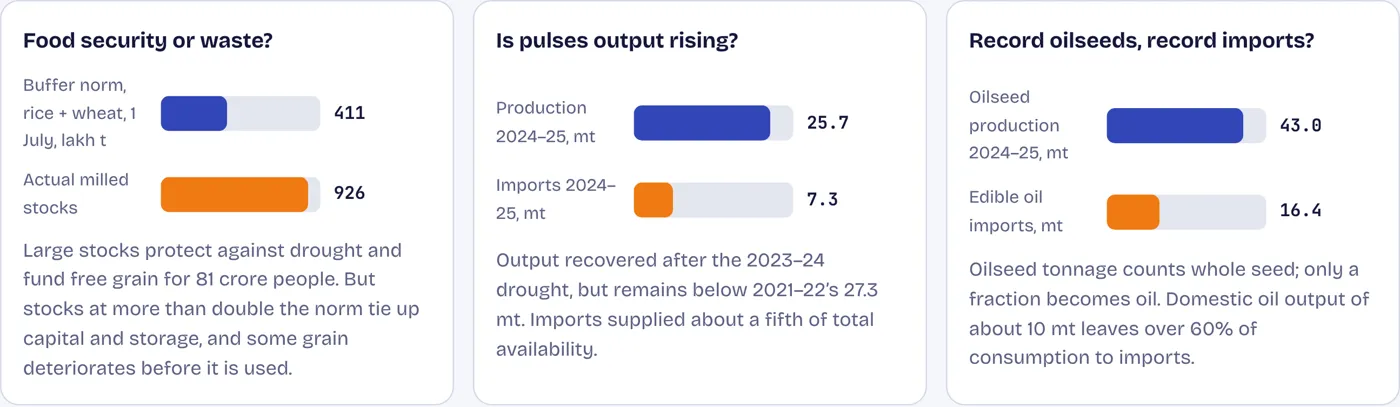
Three numbers that need a second look
Ch. 32 · The Land Pushes Back
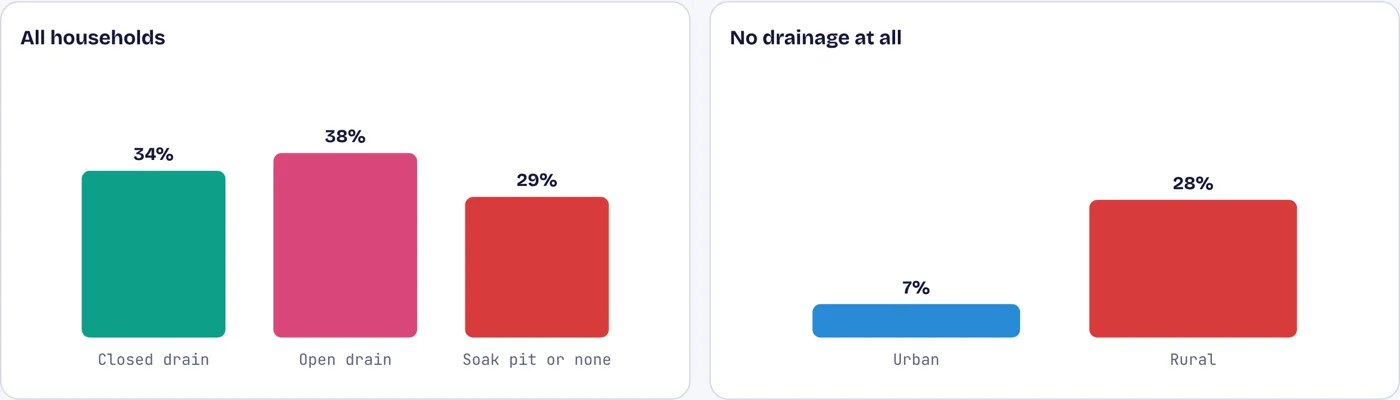
Two homes in three send their wastewater into open drains, soak pits or nowhere

Ch. 32 · The Land Pushes Back
Fewer than one litre in five of household wastewater flows into a sewer

Ch. 32 · The Land Pushes Back
Cities generate 72,000 million litres of sewage a day and treat 20,000
Ch. 32 · The Land Pushes Back
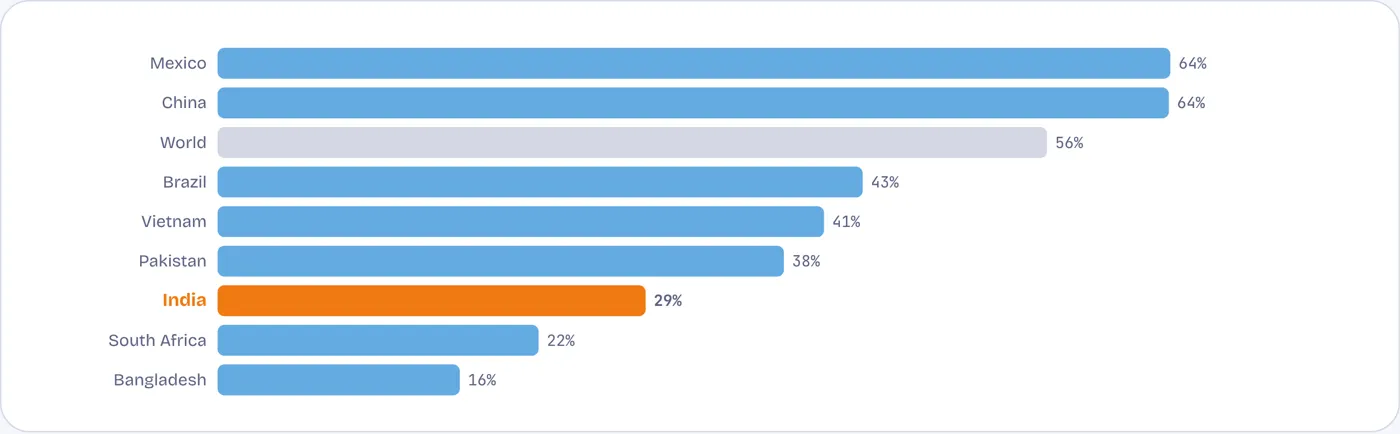
India treats a smaller share of household wastewater than China, Vietnam or Pakistan
Ch. 32 · The Land Pushes Back
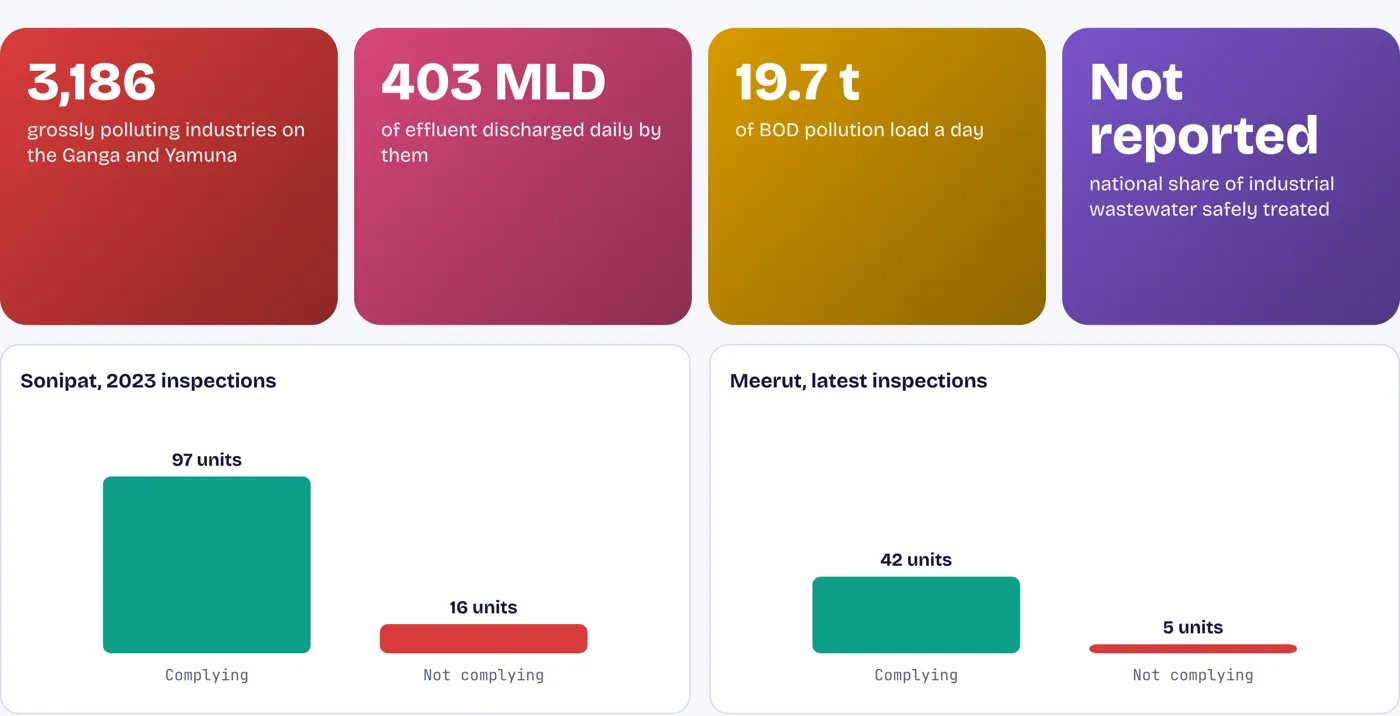
Industrial effluent is tracked river by river, not nationally
Ch. 32 · The Land Pushes Back
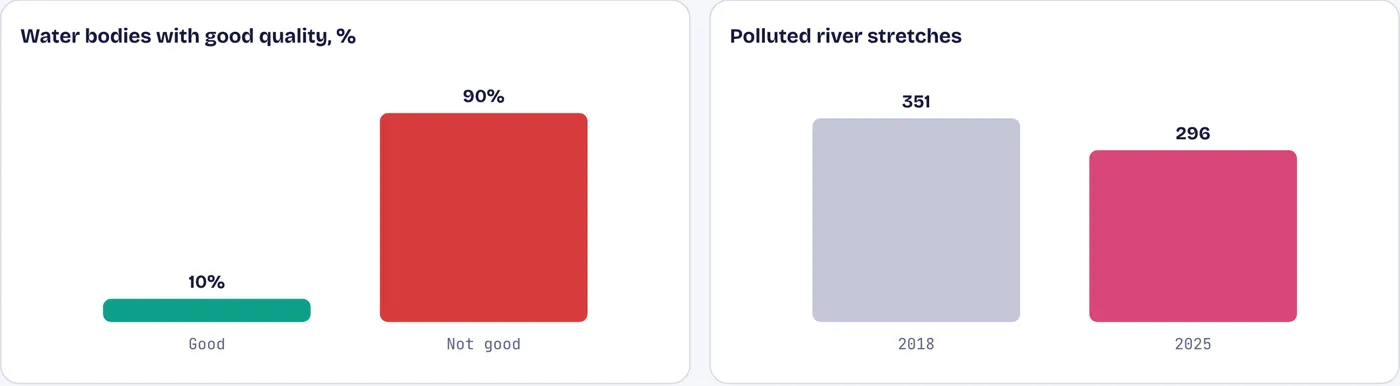
Only one water body in ten that India monitors has good water quality
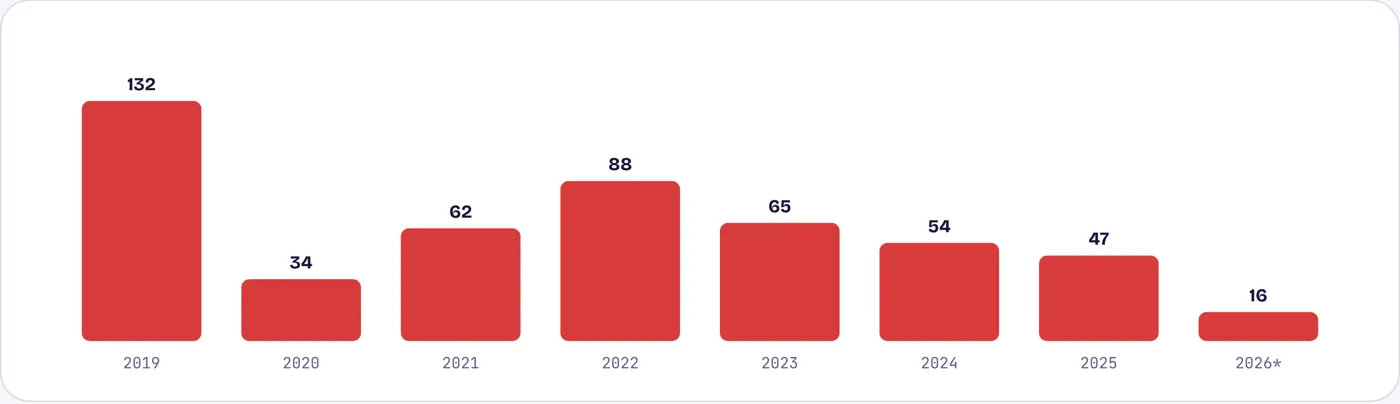
Ch. 32 · The Land Pushes Back
Nearly 500 workers died cleaning sewers and septic tanks since 2019
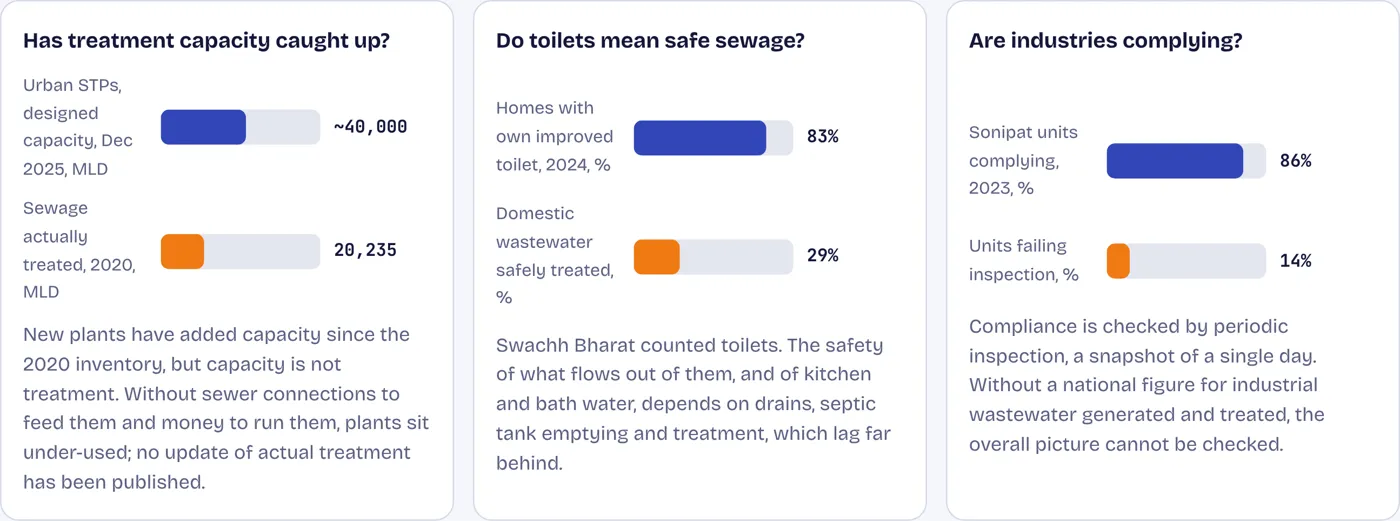
Ch. 32 · The Land Pushes Back
Three numbers that need a second look

Ch. 33 · The Land Pushes Back
Officially, India’s forests are growing slowly, but most of the cover is thin
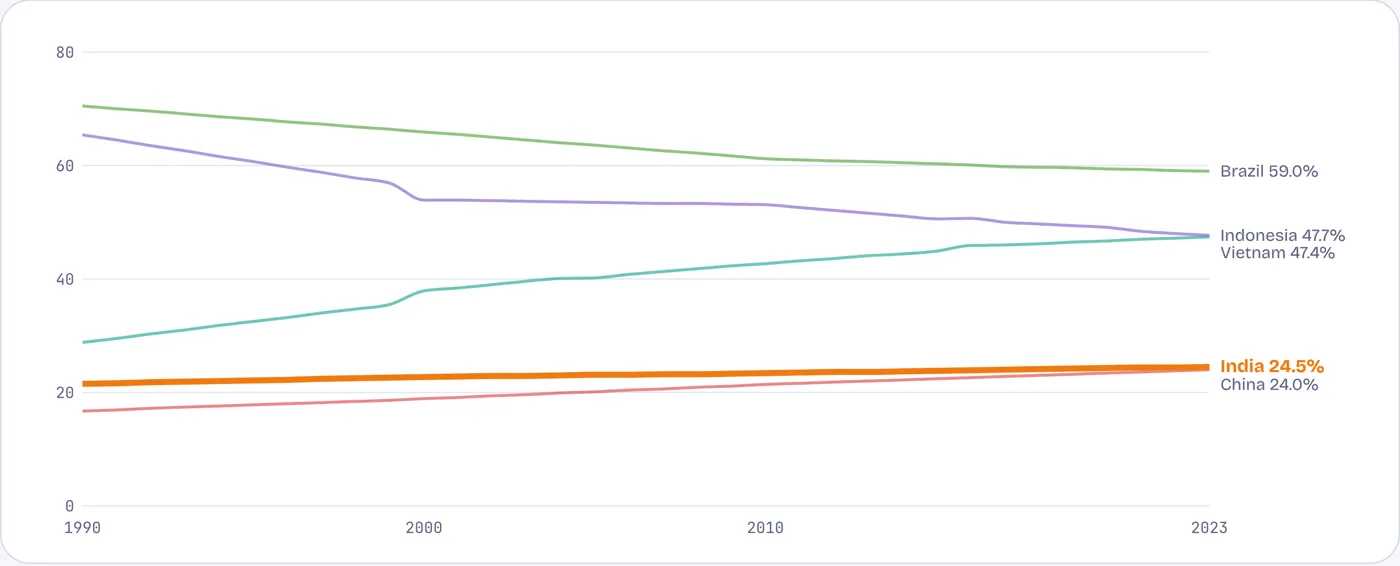
Ch. 33 · The Land Pushes Back
India and China have added forest area; Indonesia and Brazil have lost it
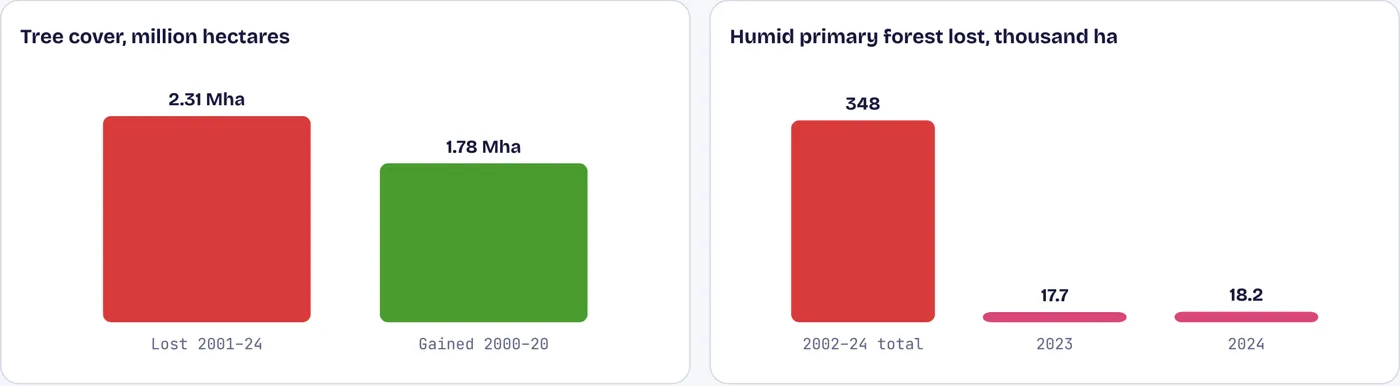
Ch. 33 · The Land Pushes Back
Satellites show steady loss of natural forest

Ch. 33 · The Land Pushes Back
Three lakh hectares of forest land were handed over for projects in fifteen years
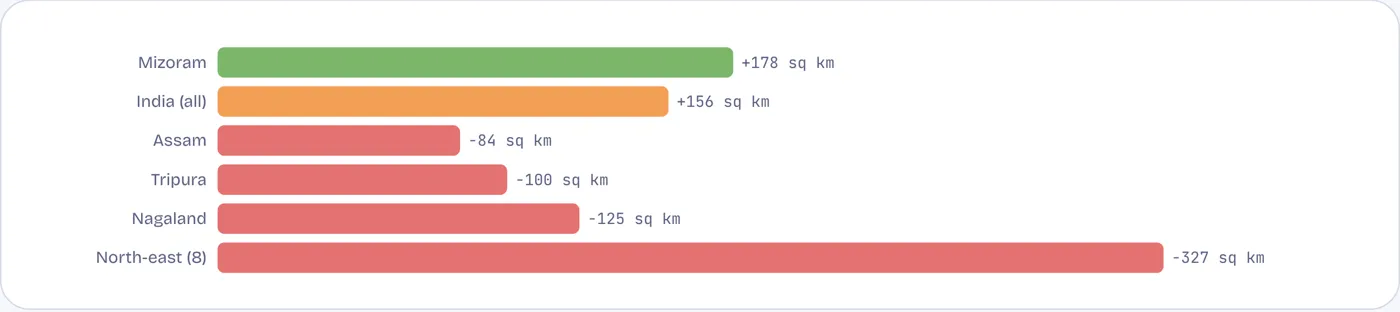
Ch. 33 · The Land Pushes Back
The most forested region is losing cover while the country gains
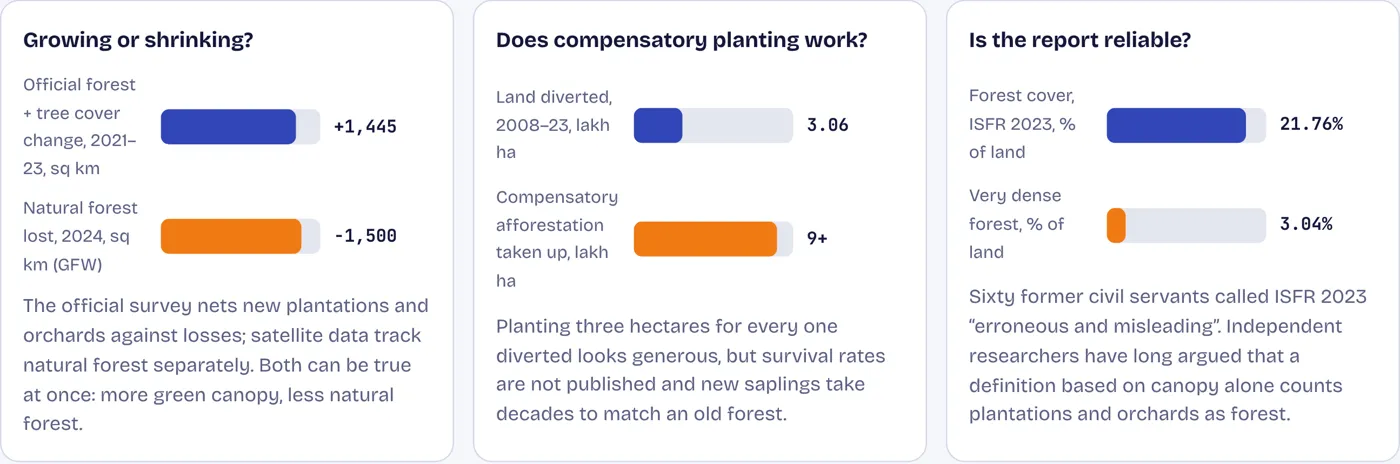
Ch. 33 · The Land Pushes Back
Three numbers that need a second look
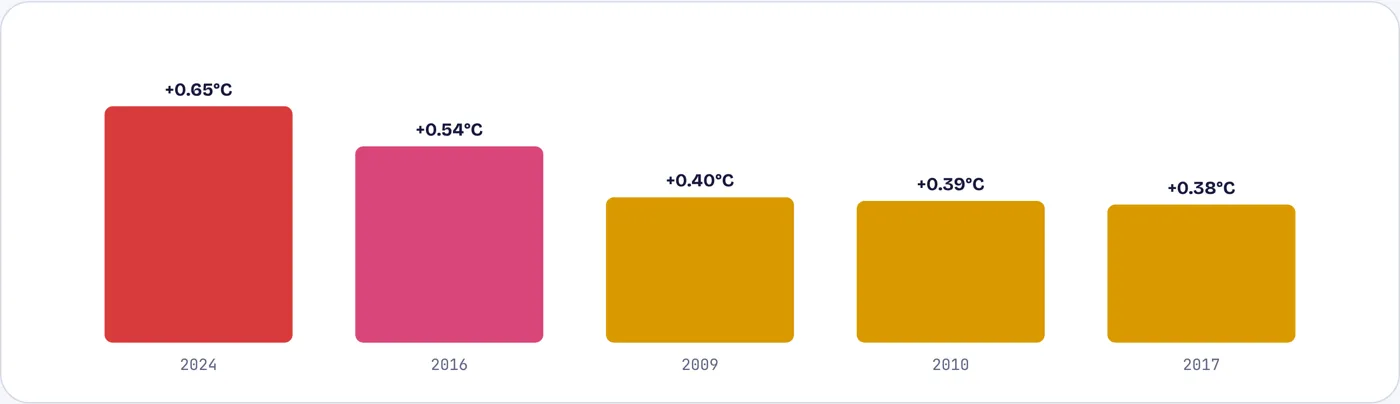
Ch. 34 · The Land Pushes Back
The five warmest years on record all came after 2008
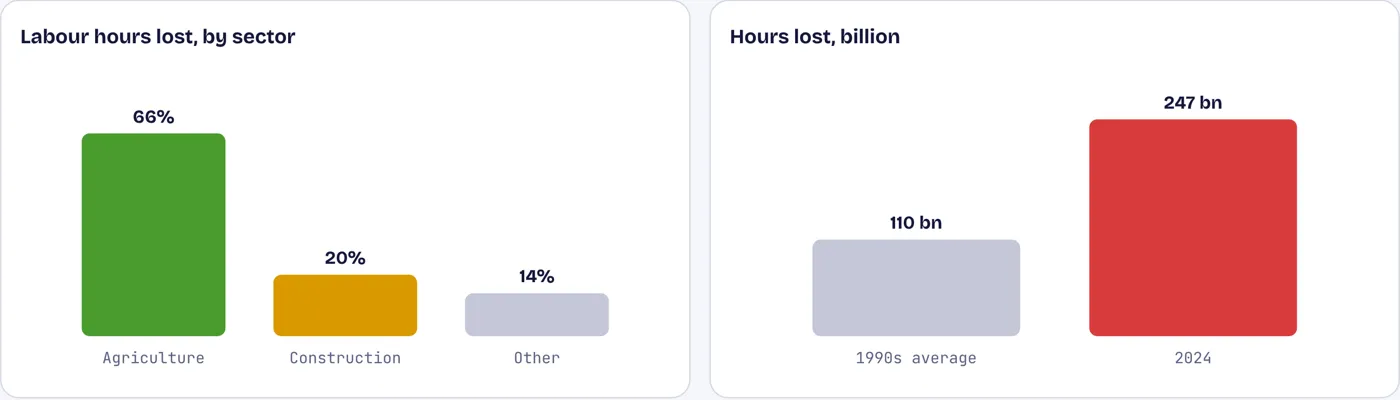
Ch. 34 · The Land Pushes Back
Heat cost India 247 billion working hours in 2024, two-thirds of them in farming
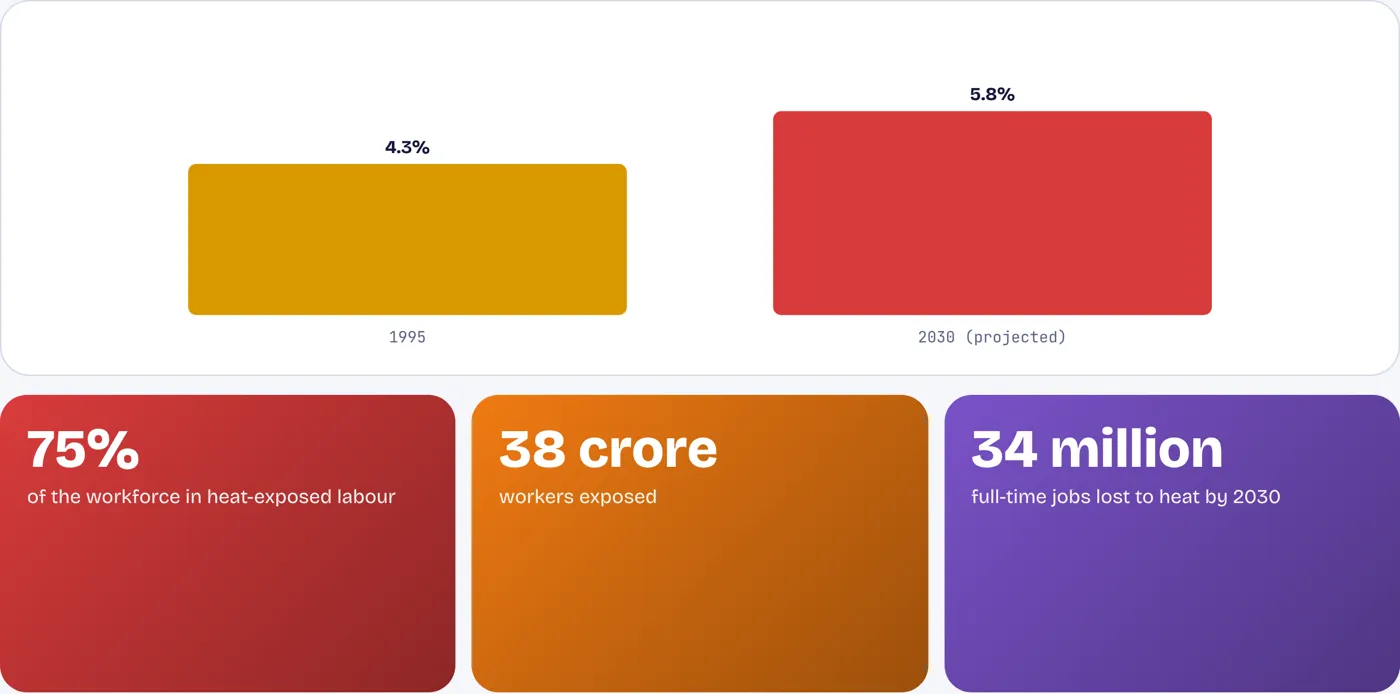
Ch. 34 · The Land Pushes Back
Three-quarters of India’s workers labour in the heat

Ch. 34 · The Land Pushes Back
Each extra degree cuts an informal worker’s earnings by about a seventh
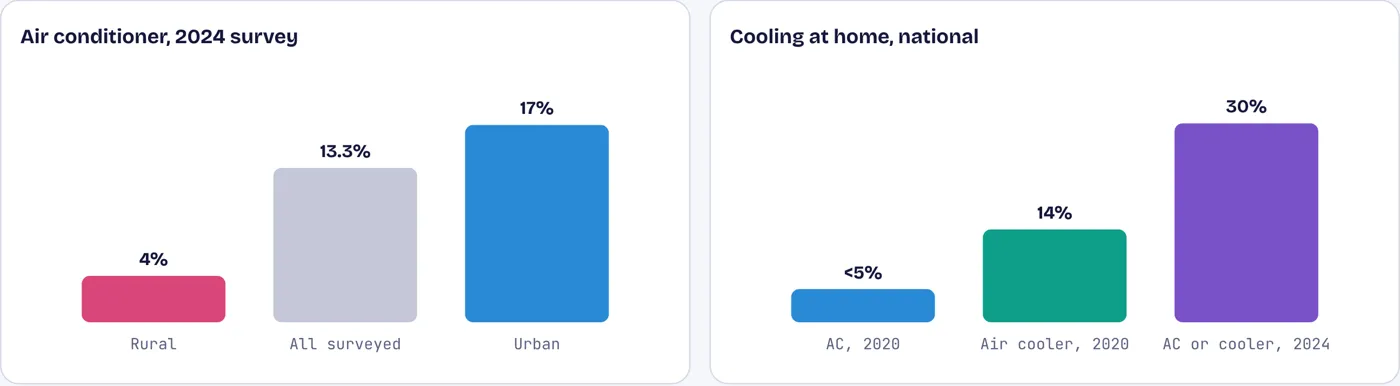
Ch. 34 · The Land Pushes Back
One urban home in six has an air conditioner; one rural home in twenty-five does
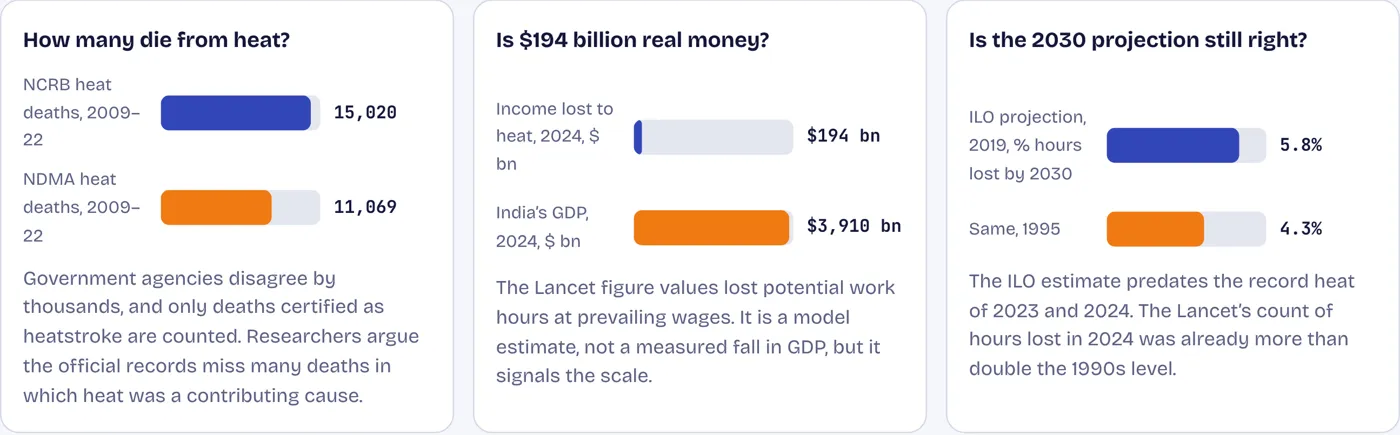
Ch. 34 · The Land Pushes Back
Three numbers that need a second look
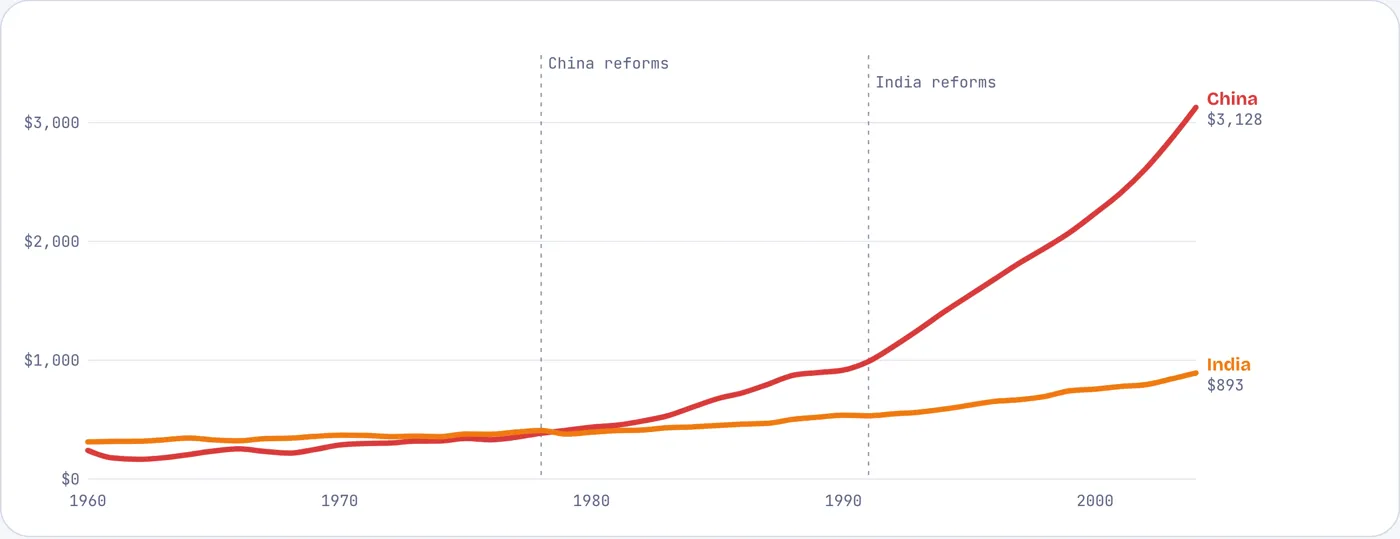
Ch. 35 · The World Outside
Neck and neck until the mid-1980s, then China pulled away
Ch. 35 · The World Outside
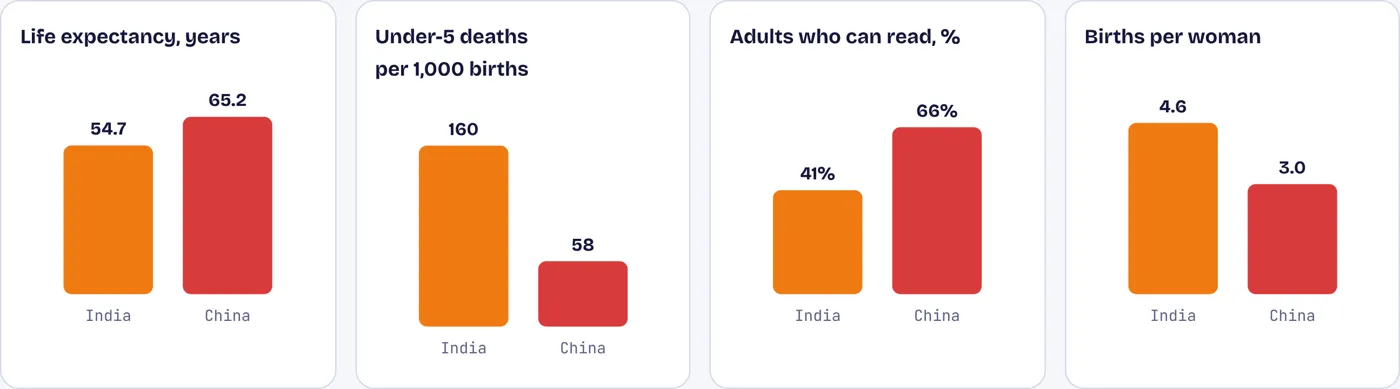
China entered the race with healthier, more literate, smaller families
Ch. 35 · The World Outside
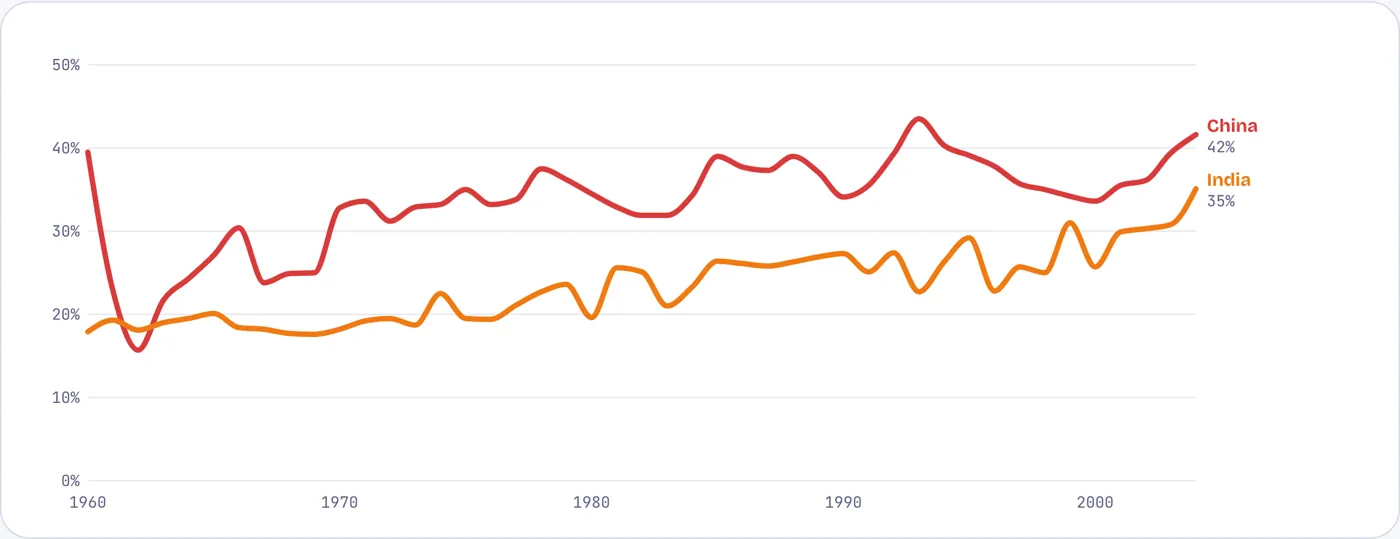
China invested a far larger share of its income, every year
Ch. 35 · The World Outside
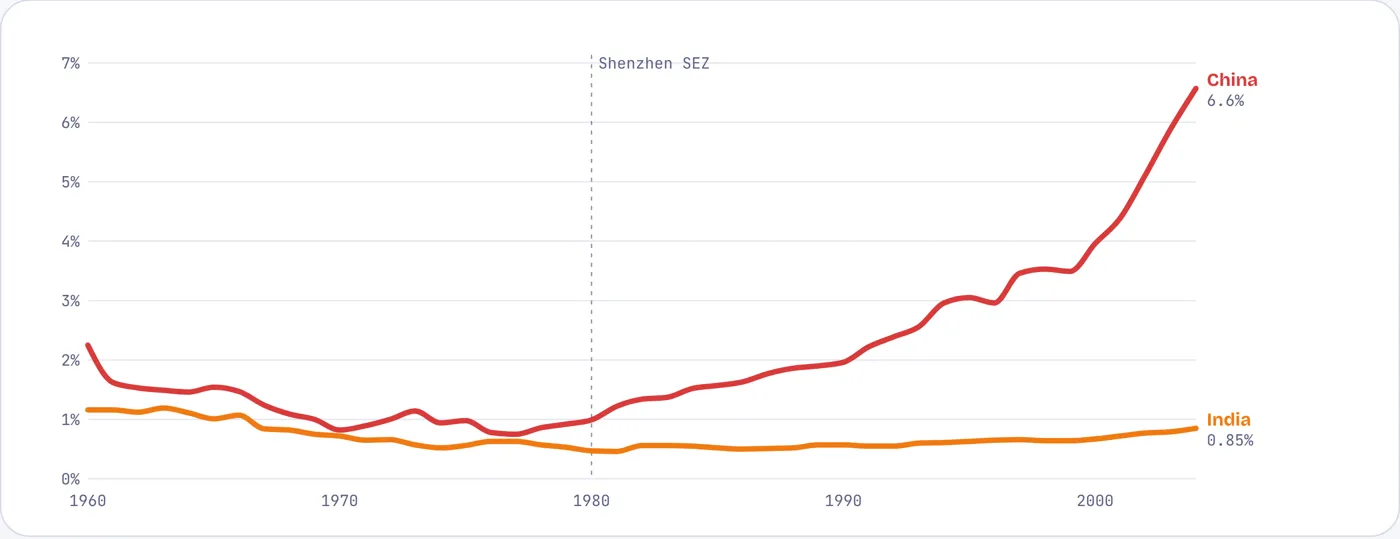
China’s share of world exports rose fivefold; India’s barely moved
Ch. 35 · The World Outside
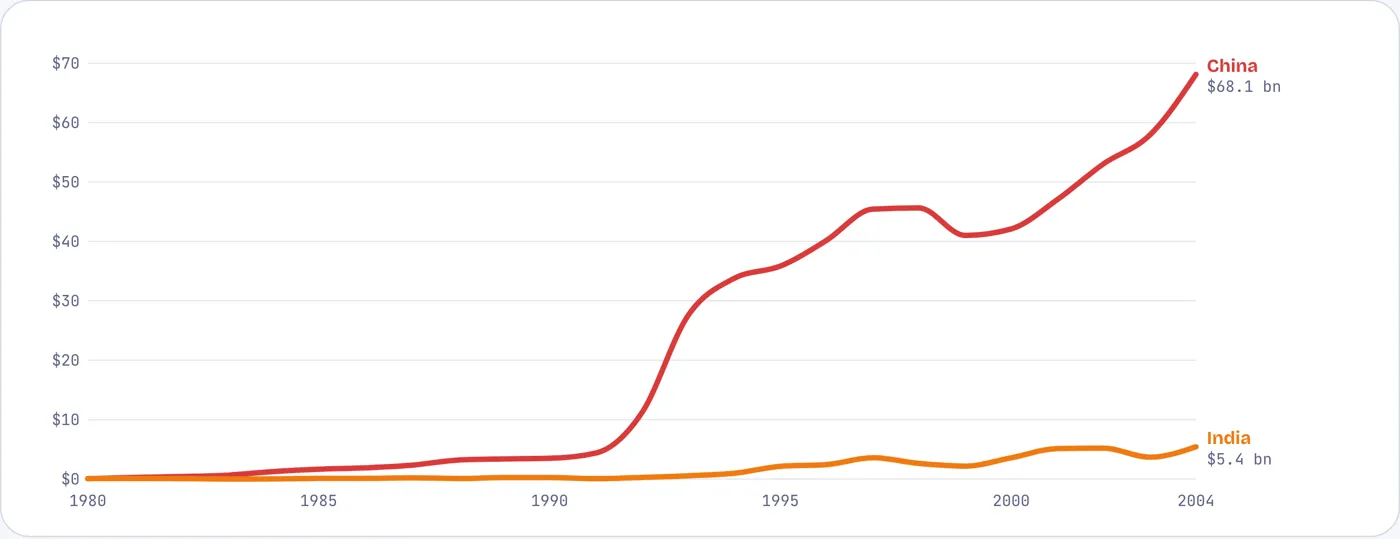
Foreign investment flowed to China a dozen times faster
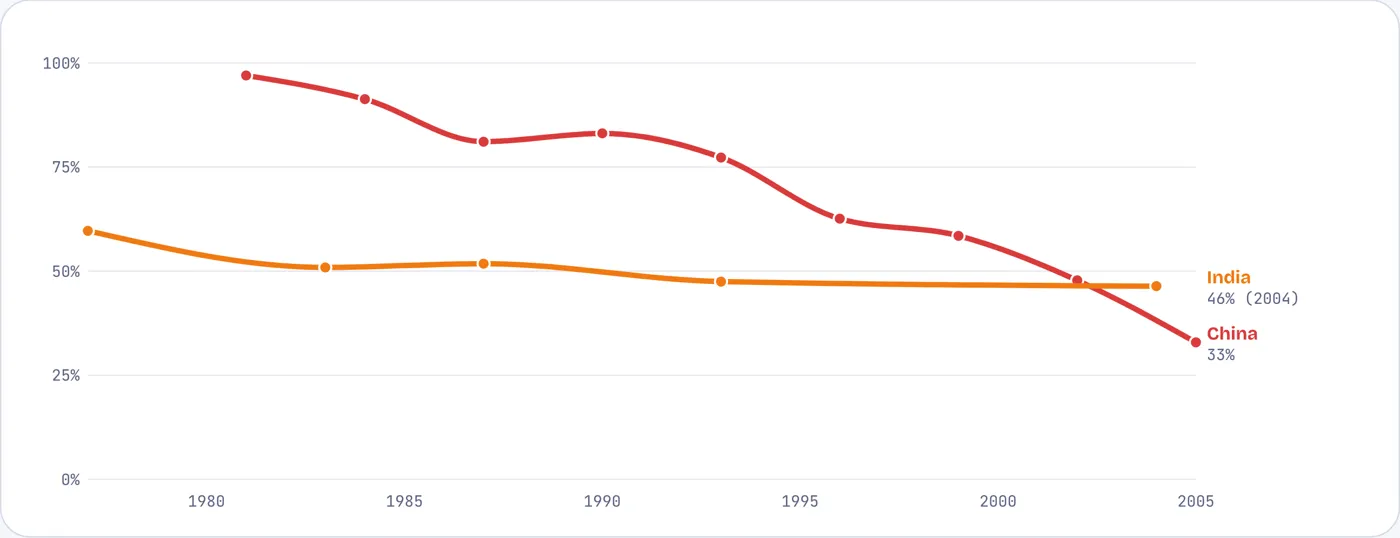
Ch. 35 · The World Outside
China cut extreme poverty from almost everyone to a third; India from half to under half
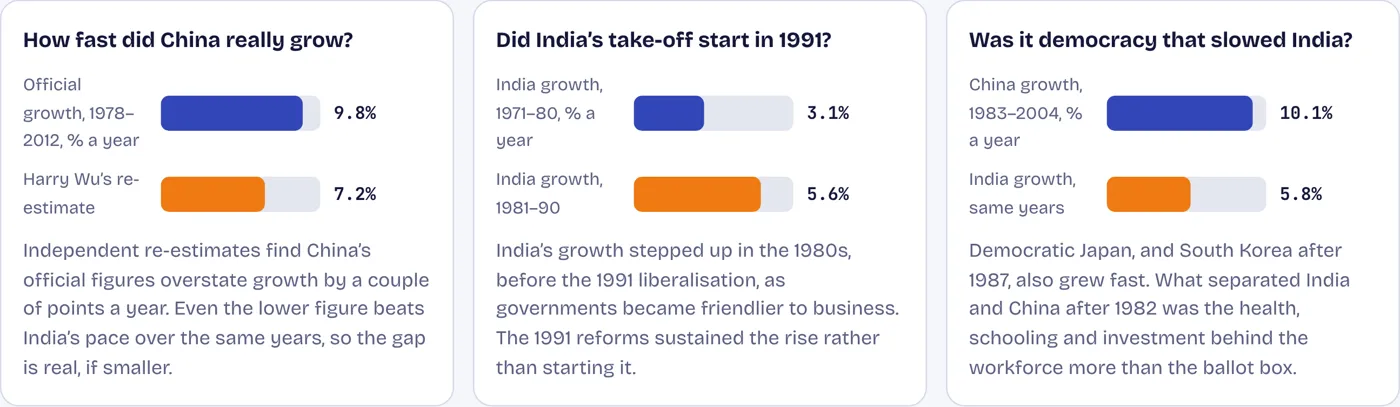
Ch. 35 · The World Outside
Three numbers that need a second look
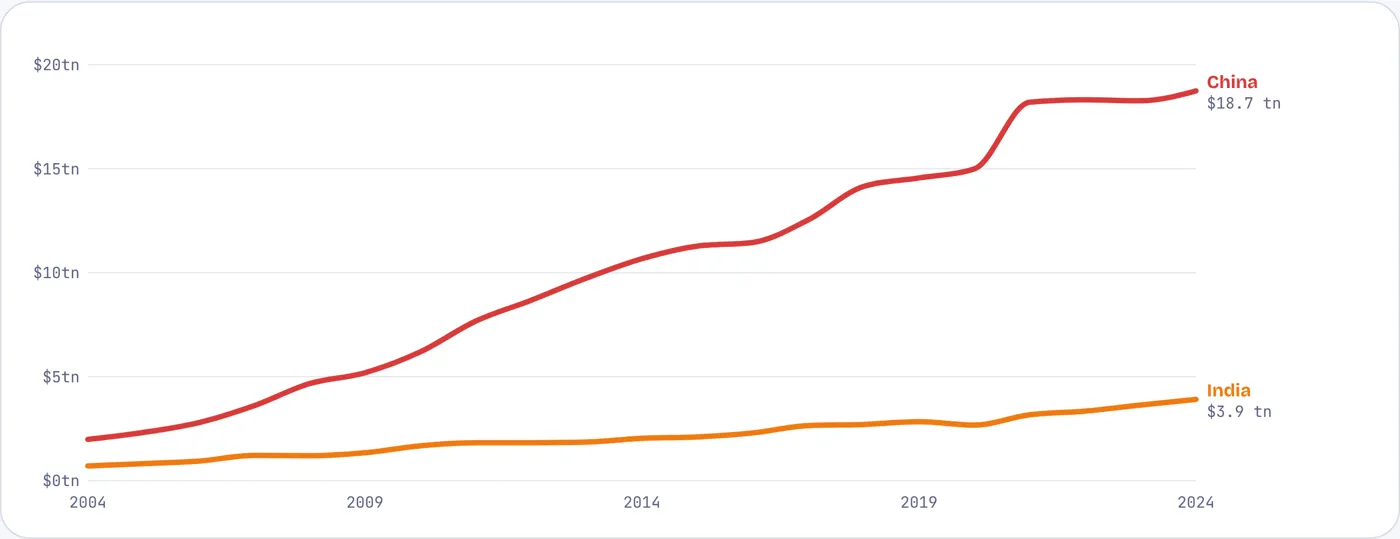
Ch. 36 · The World Outside
China added more than four Indias
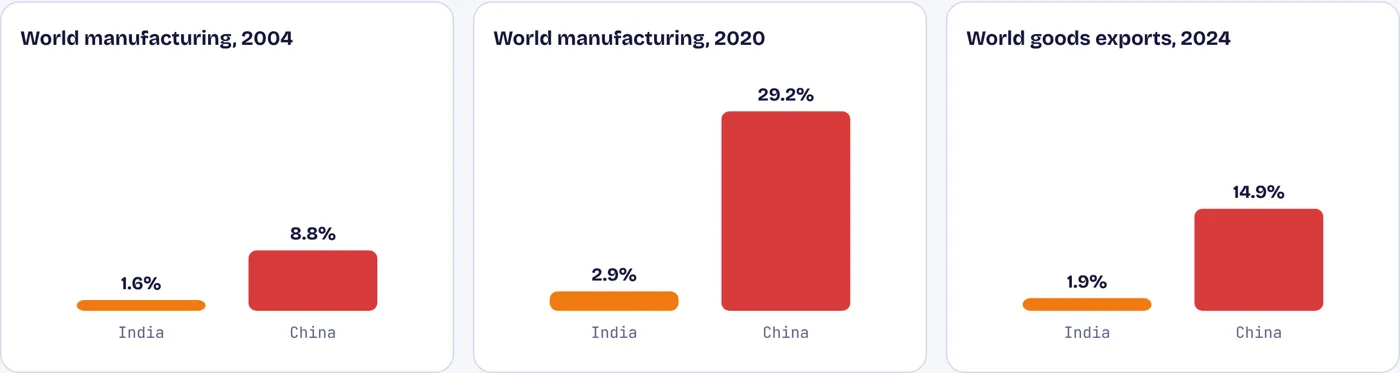
Ch. 36 · The World Outside
China makes three of every ten manufactured goods; India makes three in a hundred
Ch. 36 · The World Outside
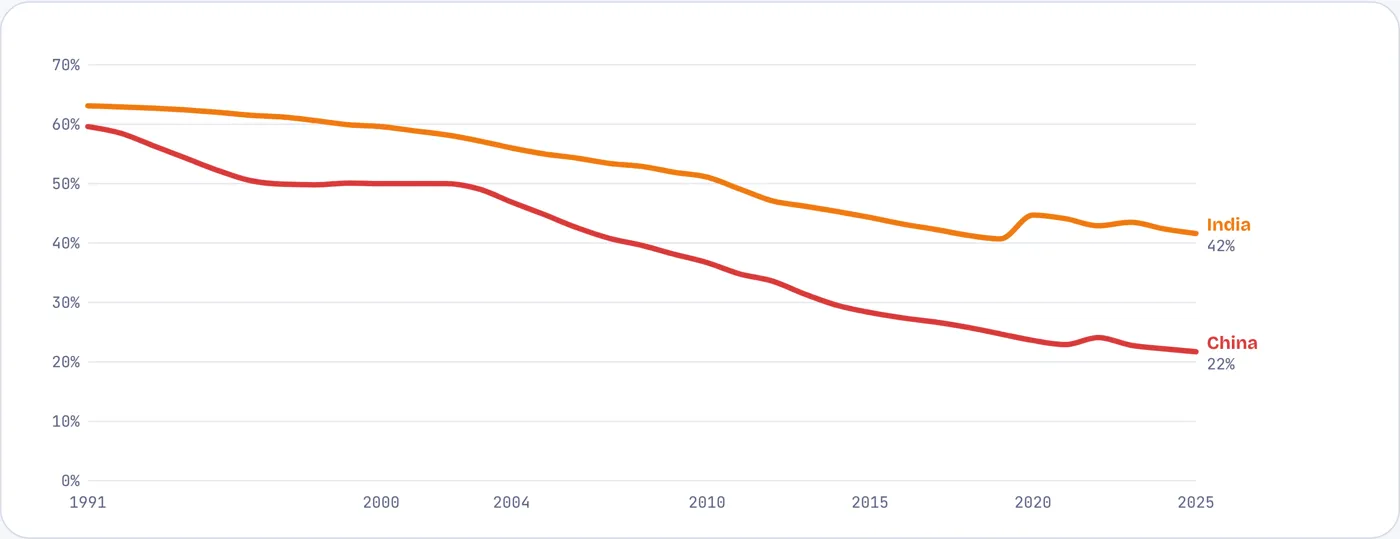
China halved the share of its workers on farms; India cut it by a quarter
Ch. 36 · The World Outside
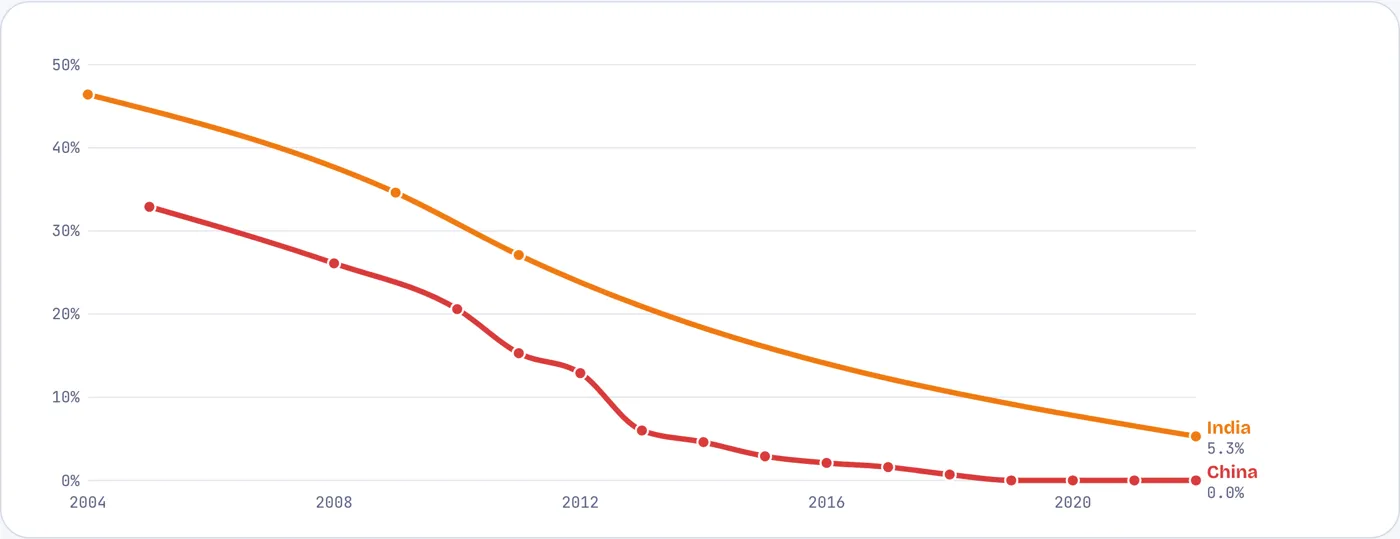
Both countries all but ended extreme poverty, China a decade earlier
Ch. 36 · The World Outside
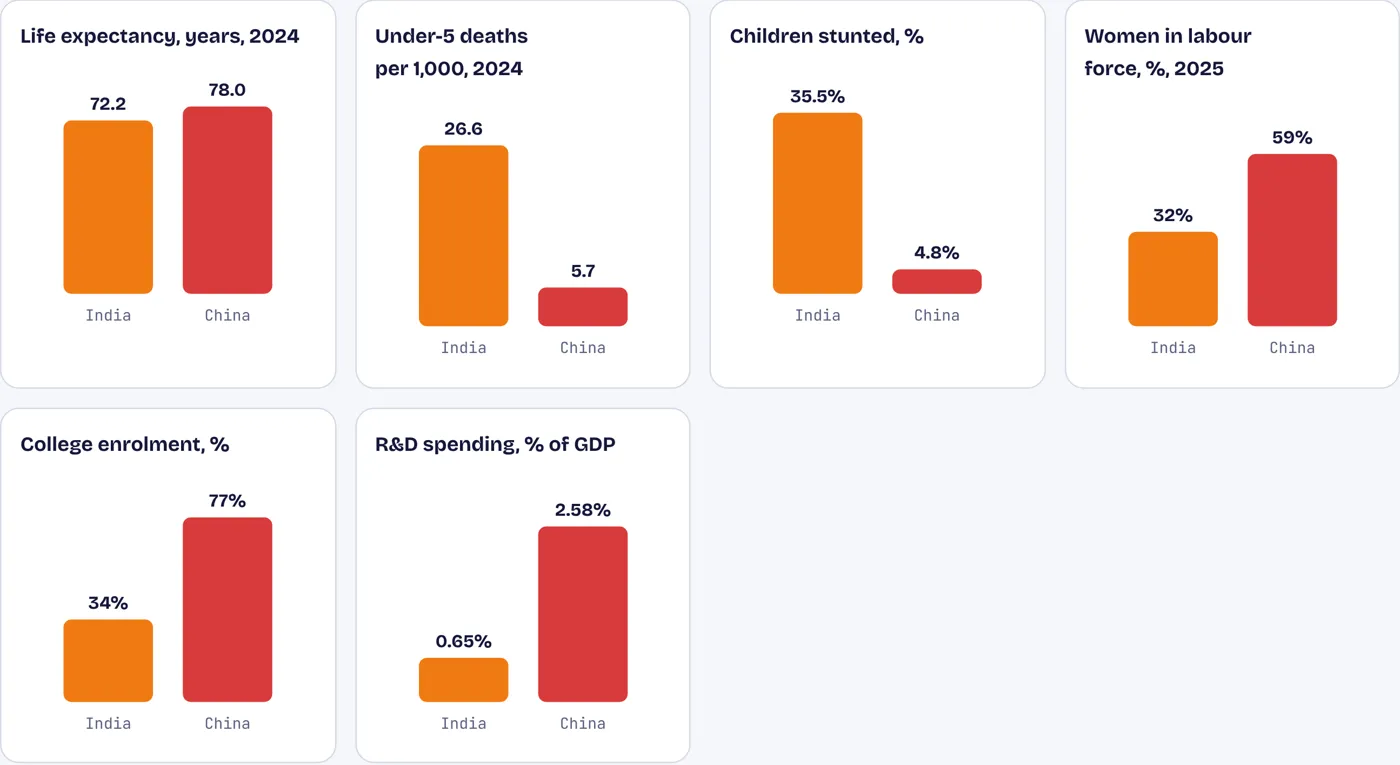
On health, women’s work, universities and research, the gaps are still wide
Ch. 36 · The World Outside
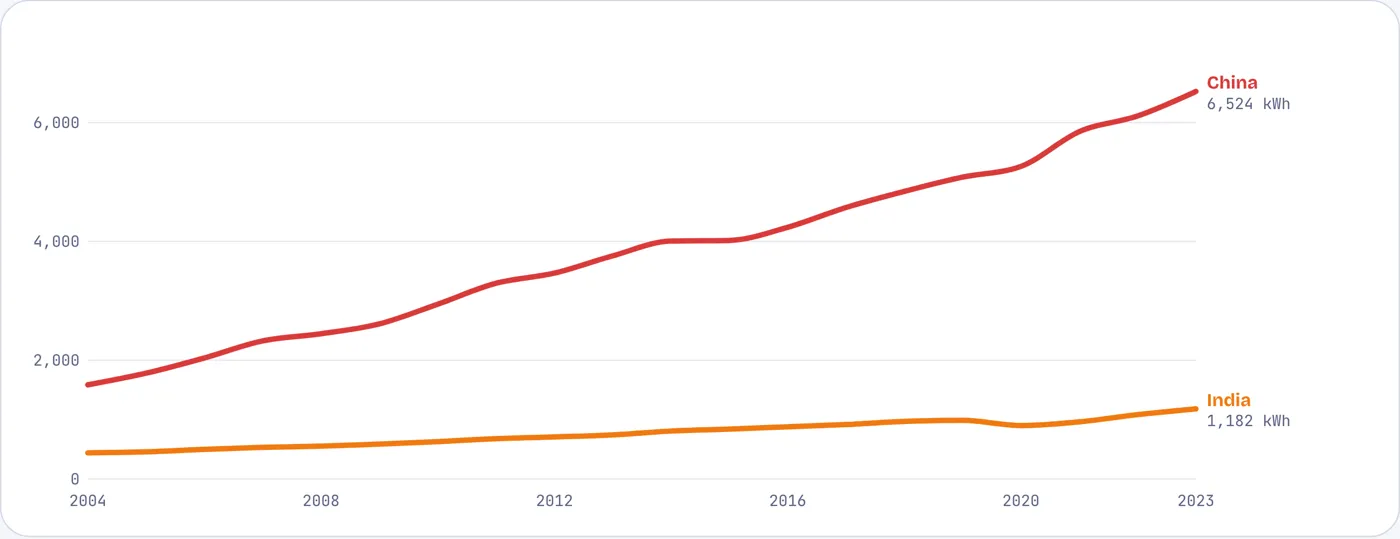
The average Chinese uses five times as much electricity as the average Indian
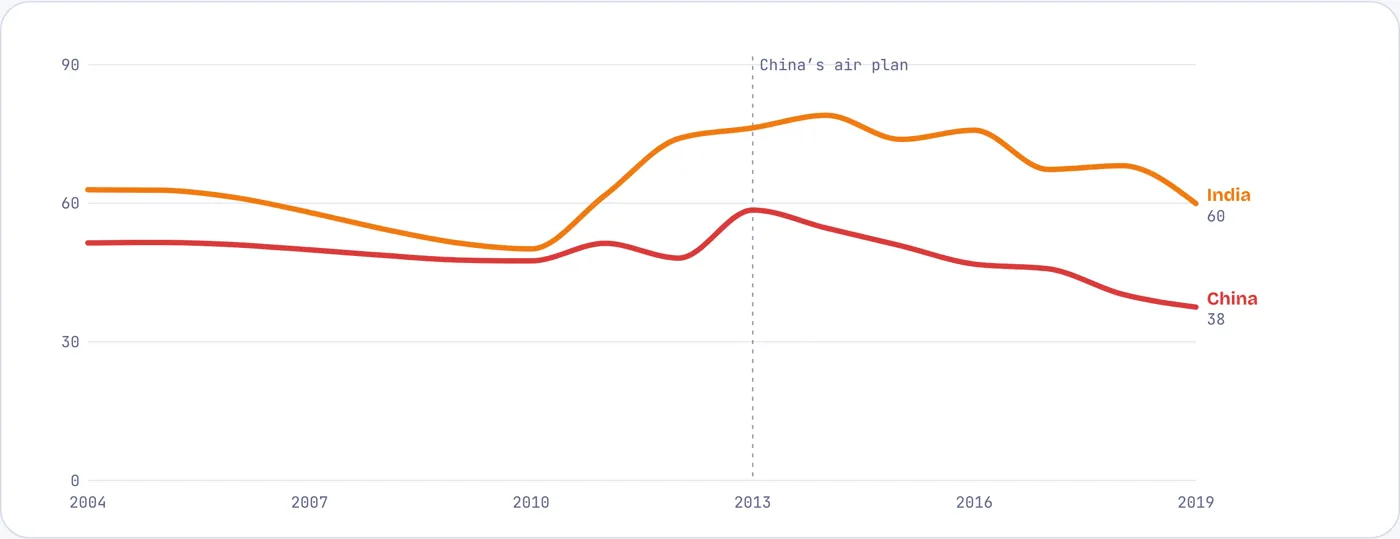
Ch. 36 · The World Outside
China cut fine-particle pollution by a third in six years; India’s fell less
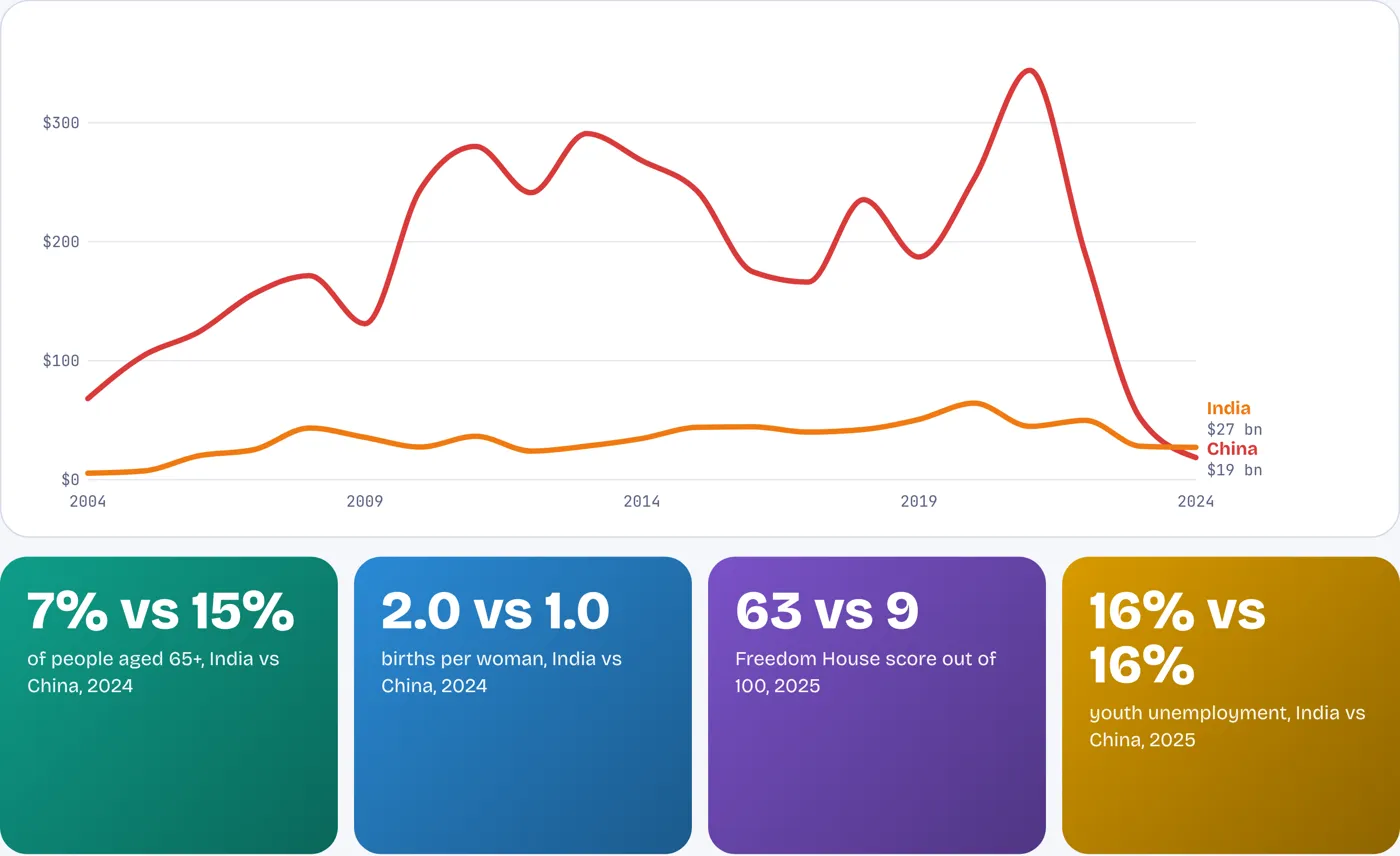
Ch. 36 · The World Outside
India now attracts more foreign investment, is younger and is free to argue
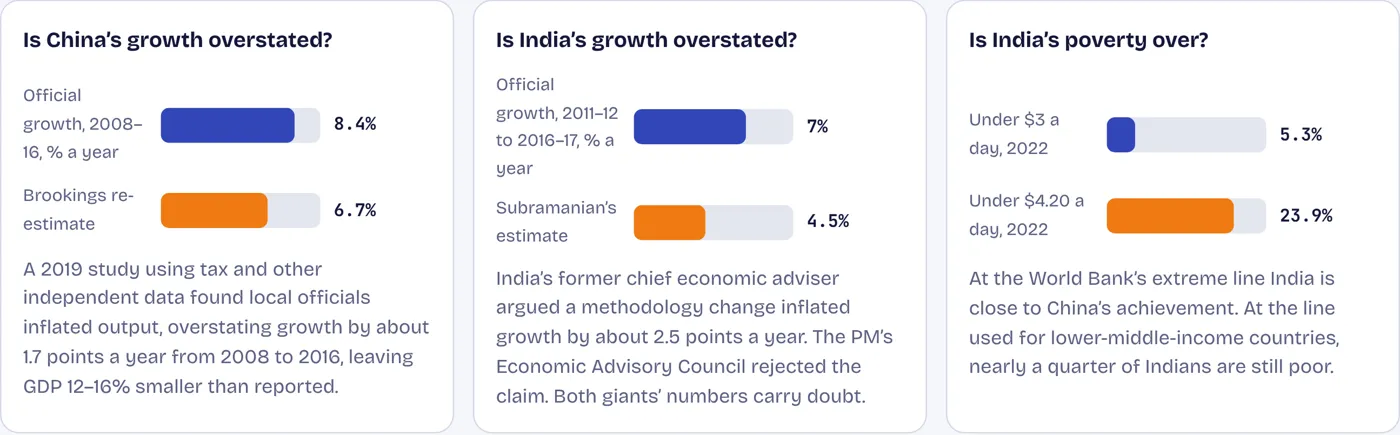
Ch. 36 · The World Outside
Three numbers that need a second look
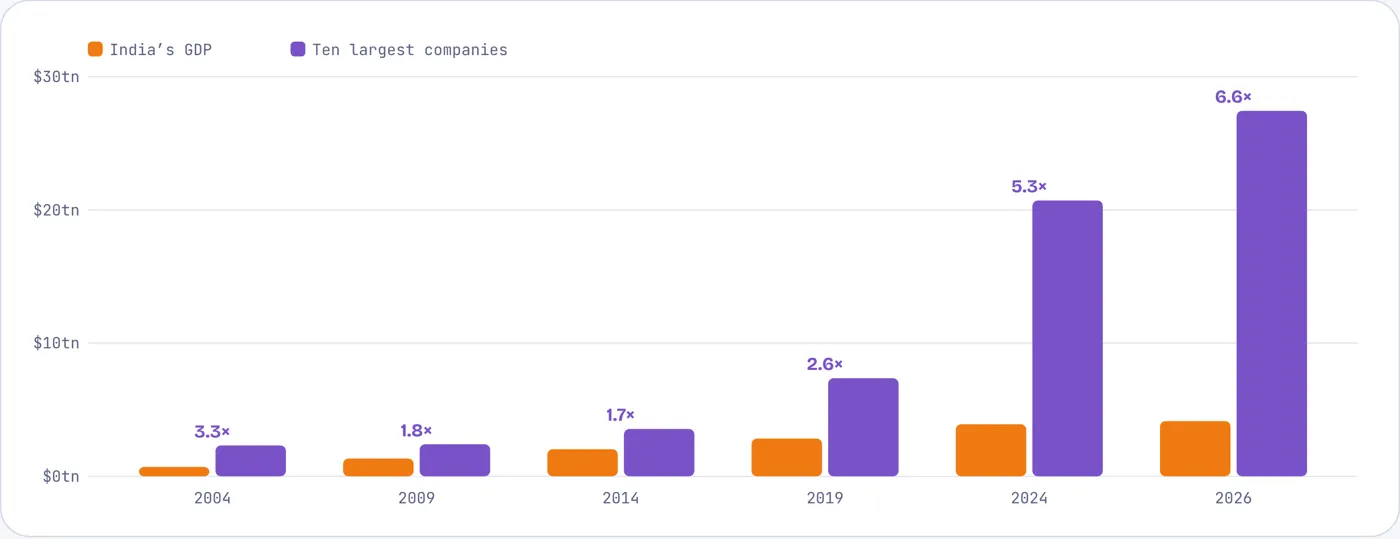
Ch. 37 · The World Outside
India’s economy grew almost sixfold; the ten largest companies grew twelvefold
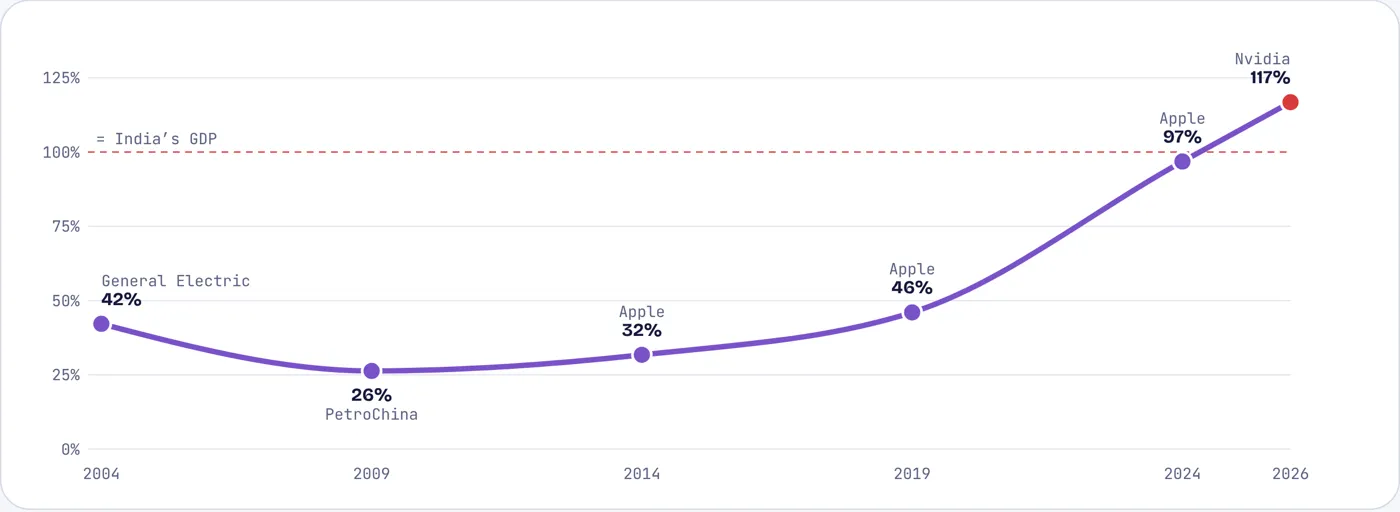
Ch. 37 · The World Outside
The single largest company is now worth more than India’s annual output
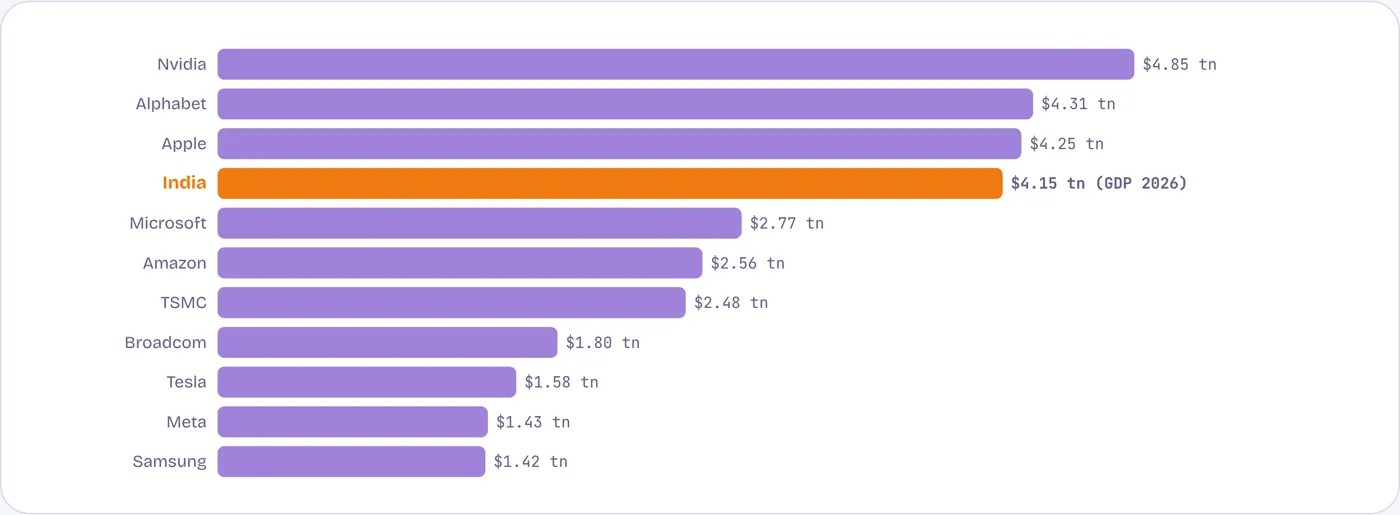
Ch. 37 · The World Outside
Three companies are each worth more than India produces in a year

Ch. 37 · The World Outside
All of India’s ten largest firms together are worth a fifth of Nvidia
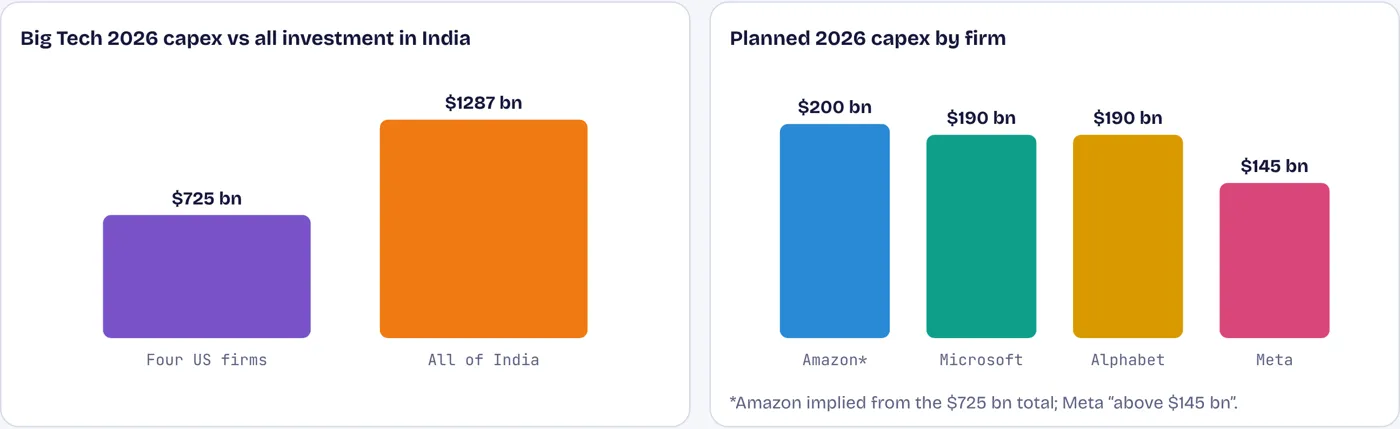
Ch. 37 · The World Outside
Four American firms will invest more than half as much as the whole Indian economy
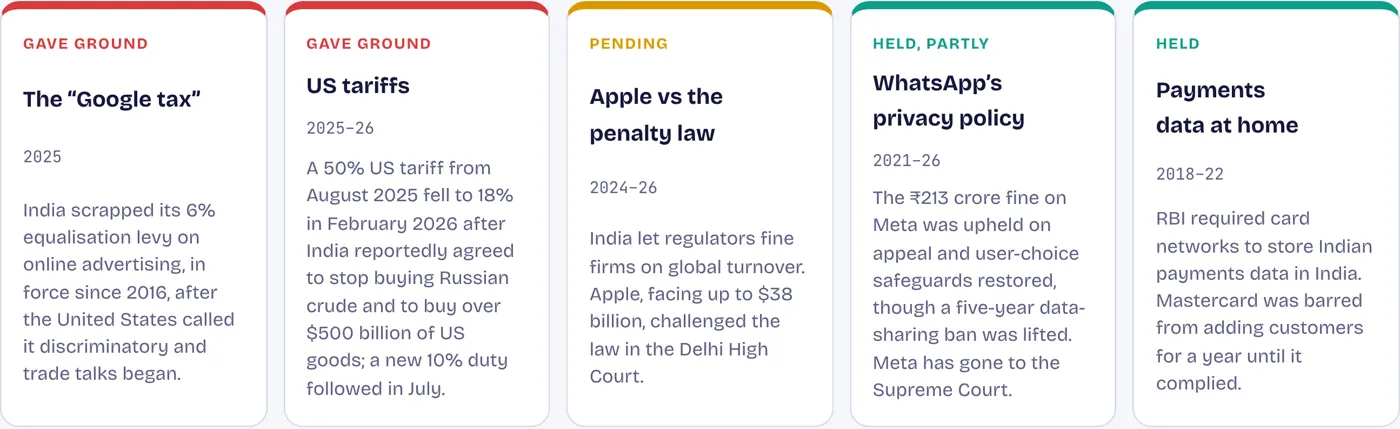
Ch. 37 · The World Outside
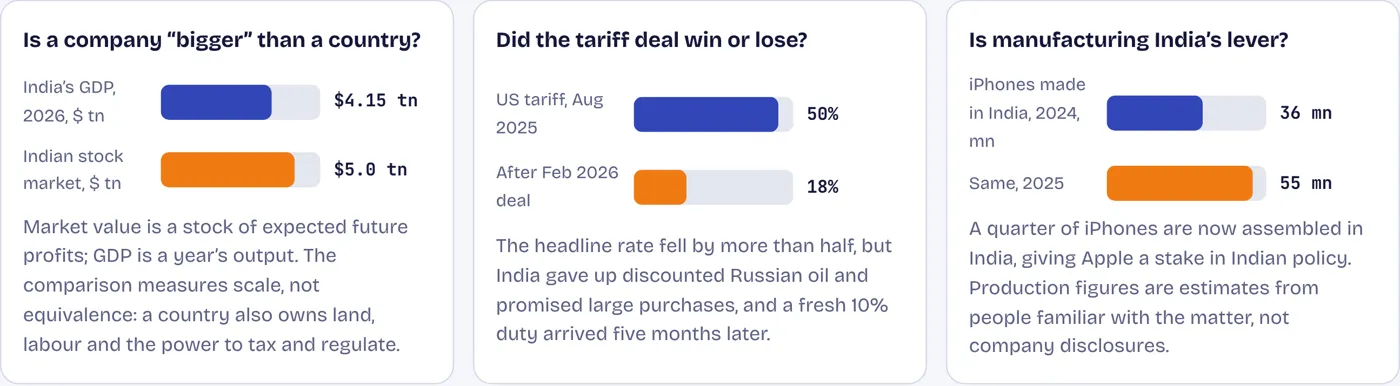
Against a superpower India gave ground; against single firms its rules mostly held
Ch. 37 · The World Outside
Three numbers that need a second look
Ch. 38 · Interlude: The Bill
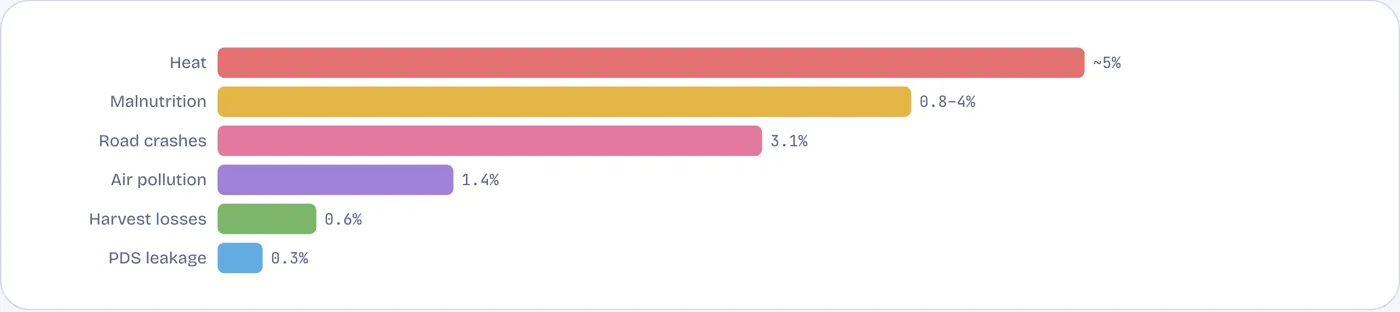
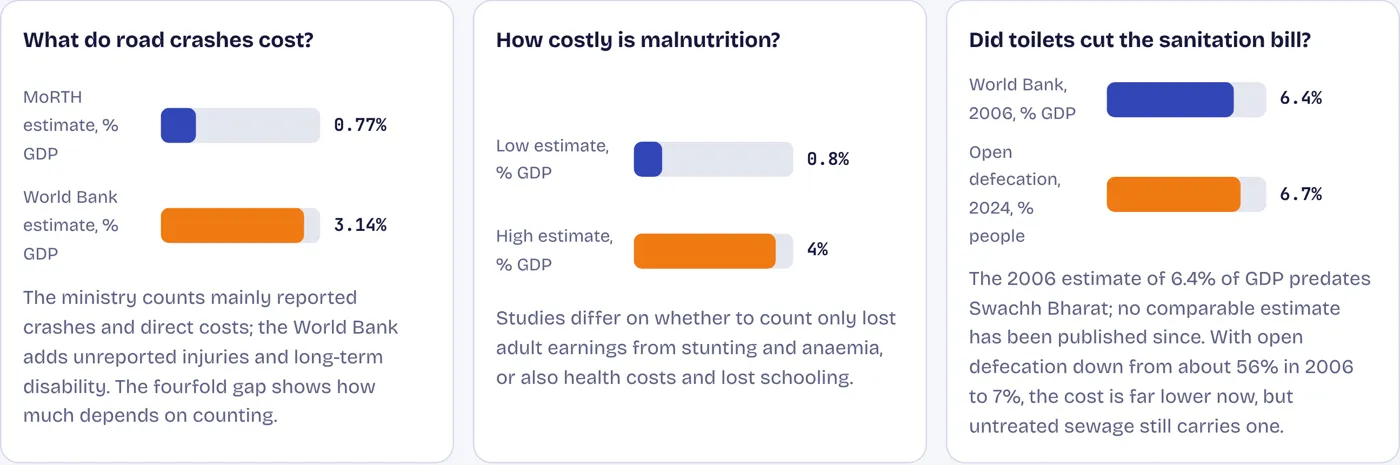
Six problems, each costing up to five percent of GDP a year
Ch. 38 · Interlude: The Bill
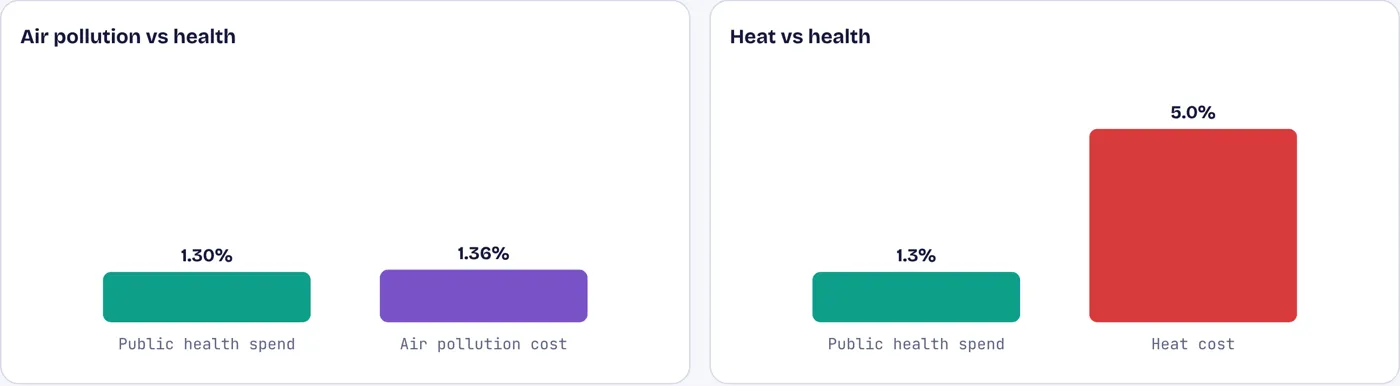
Air pollution alone costs more than India spends on public health
Ch. 38 · Interlude: The Bill
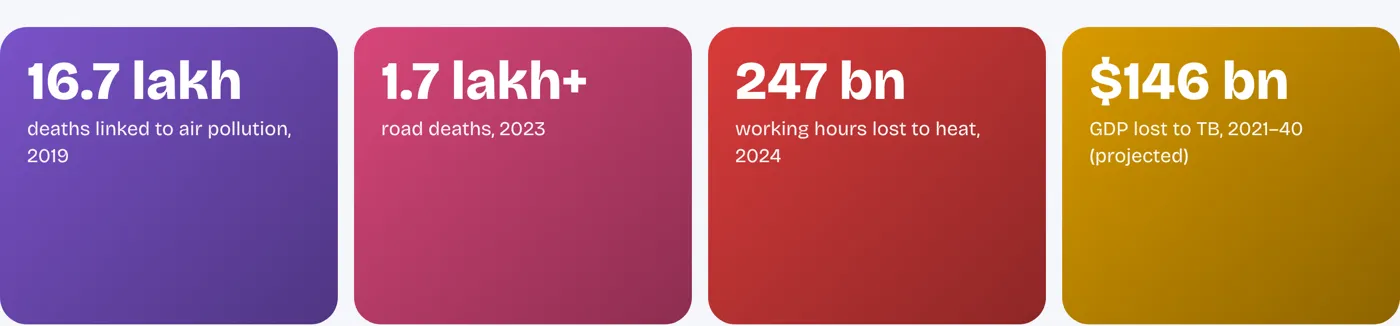
Behind the percentages are lives

Ch. 38 · Interlude: The Bill
The biggest cost is the paid work India’s women are kept out of
Ch. 38 · Interlude: The Bill
Three numbers that need a second look
Ch. 39 · Growth into Development
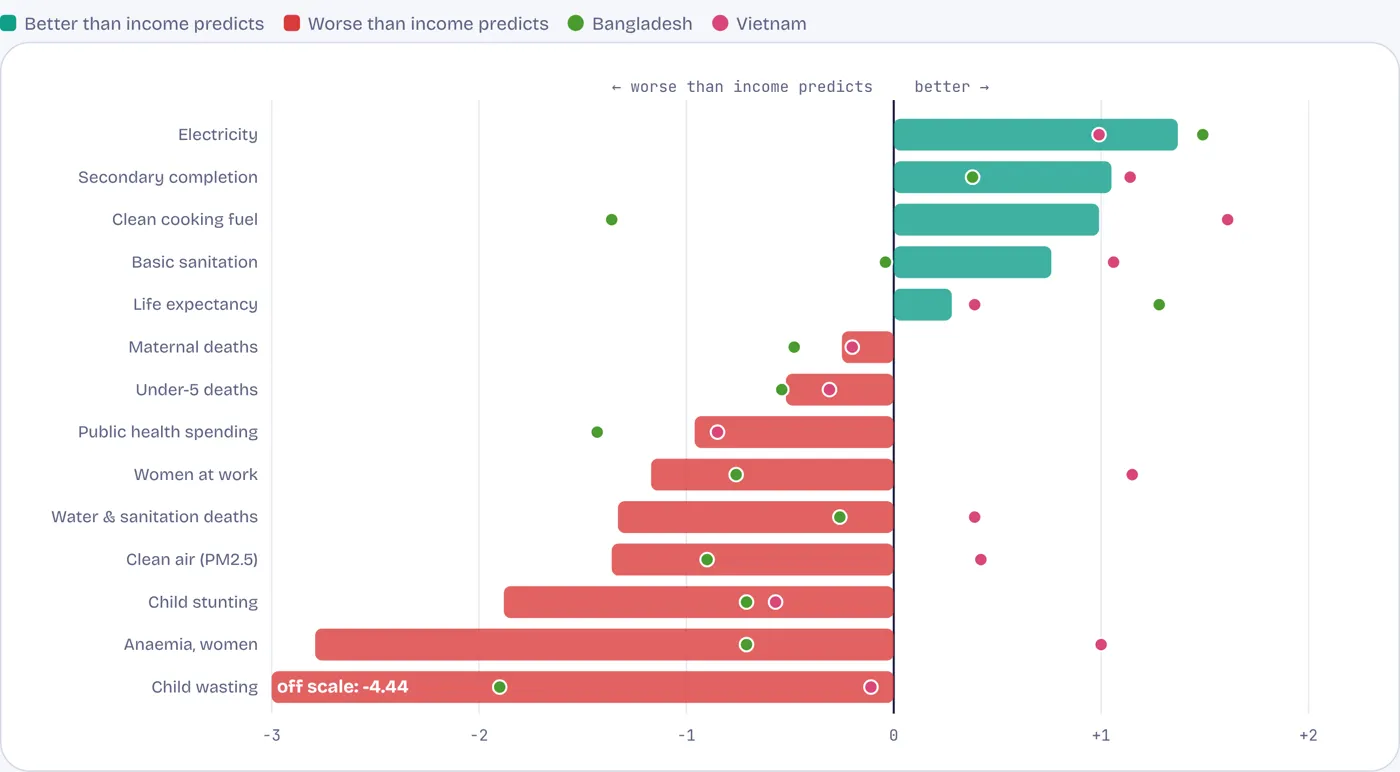
India turns income into wires and school places better than its peers, and into nutrition, health and clean air worse
Ch. 39 · Growth into Development
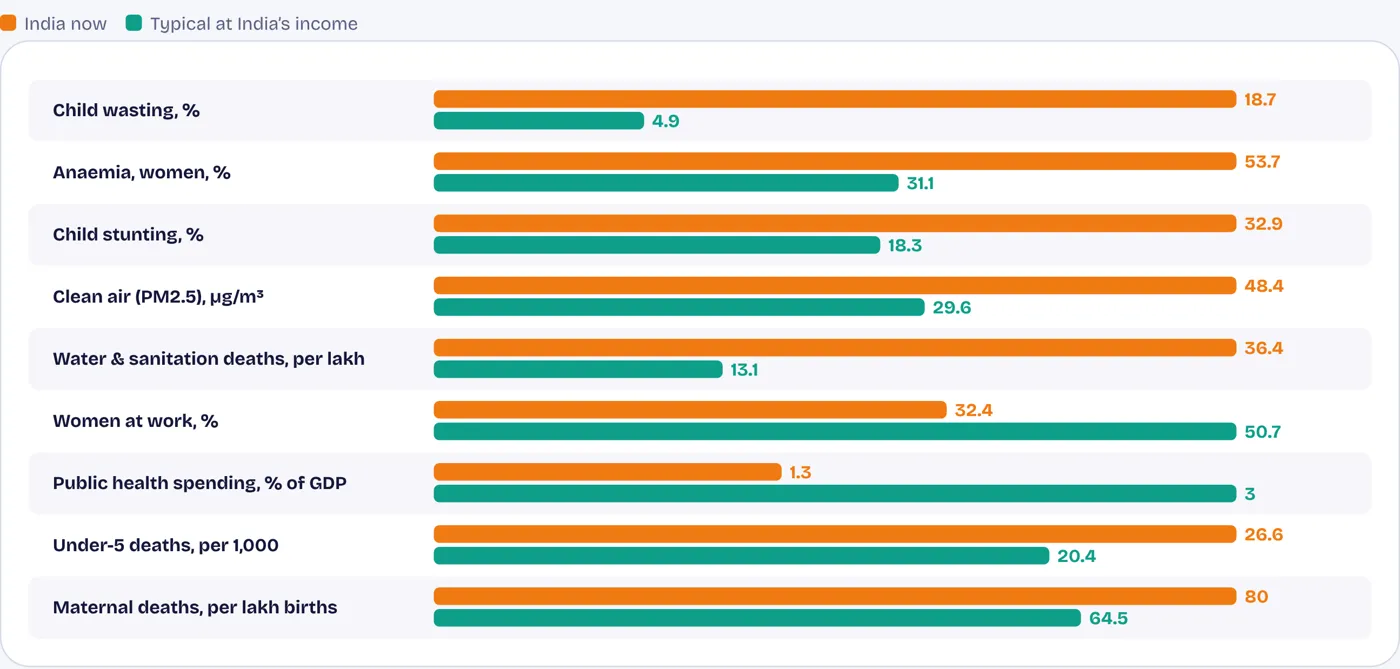
Just reaching what India’s income already predicts would transform nine outcomes
Ch. 39 · Growth into Development
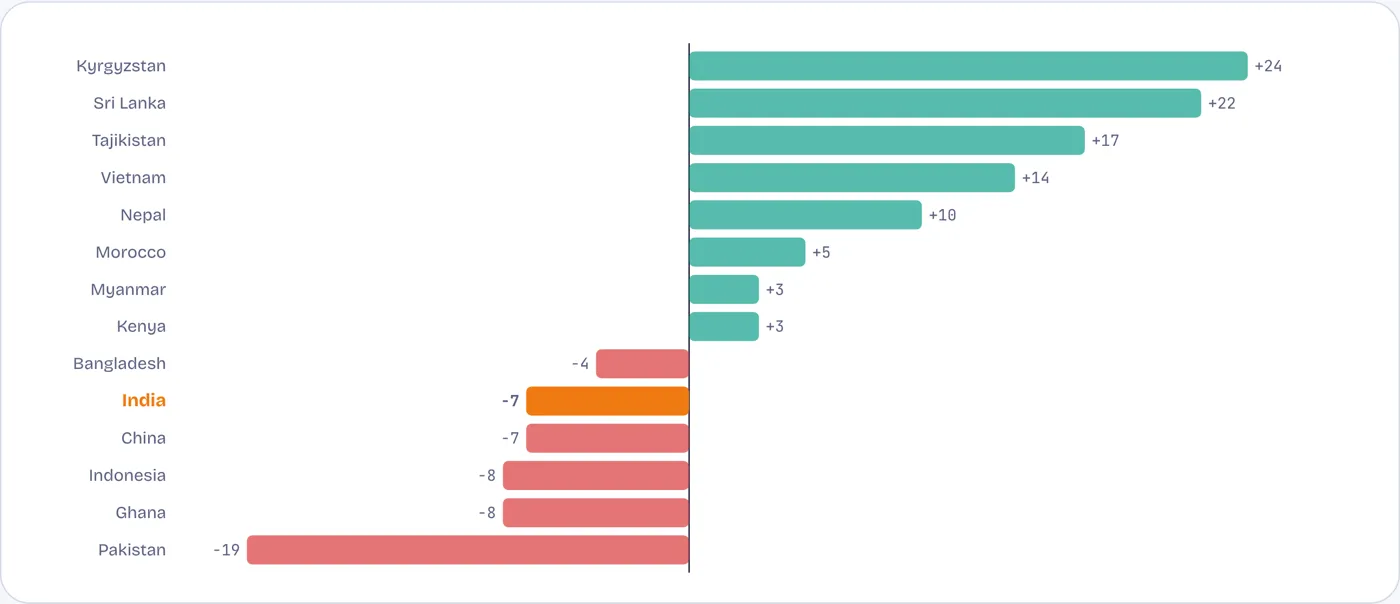
Poorer countries rank higher on human development than on income; India ranks seven places lower
Ch. 39 · Growth into Development
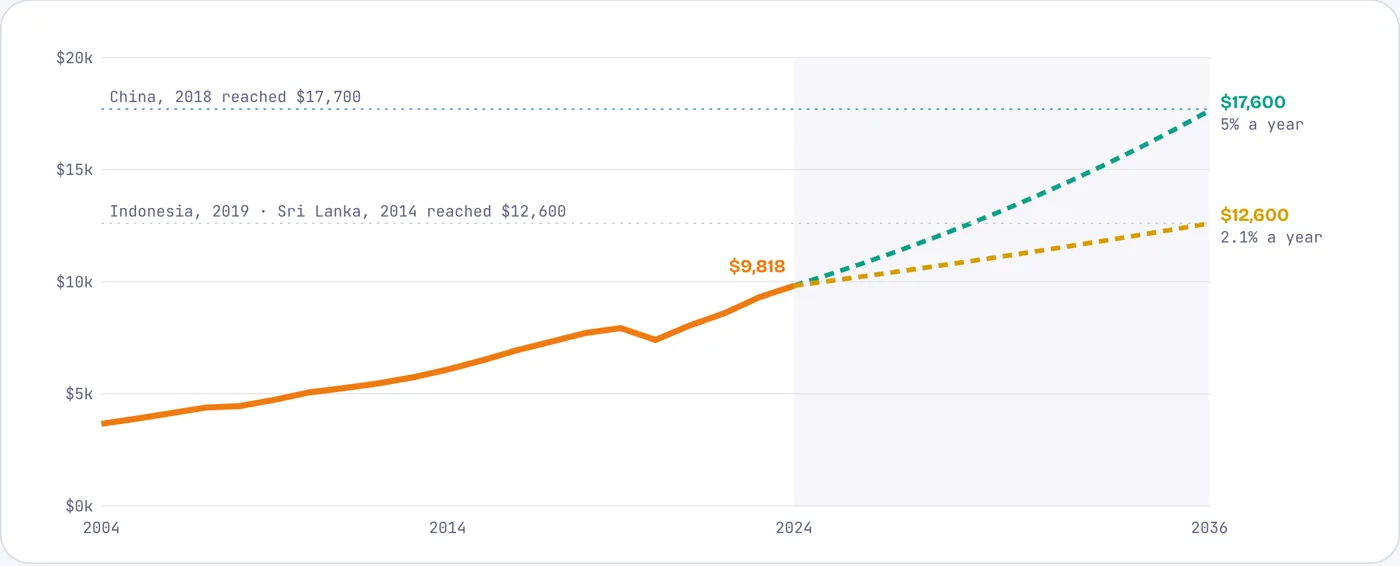
At 5% a year India reaches China’s 2018 income by 2036; at the typical pace, Indonesia’s of 2019
Ch. 39 · Growth into Development
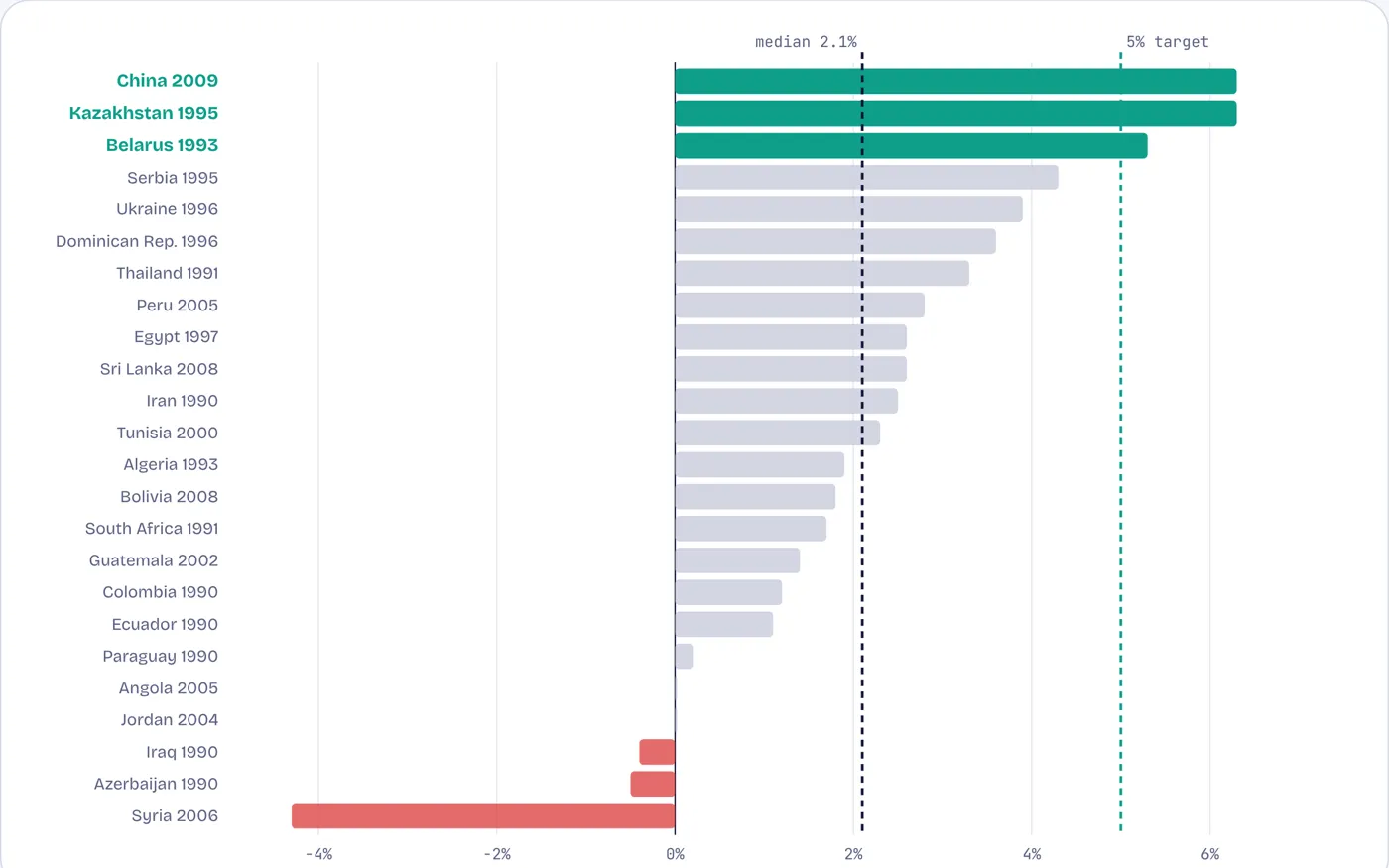
Only 3 of 24 countries at India’s income kept up 5% growth for the next fifteen years
Ch. 39 · Growth into Development
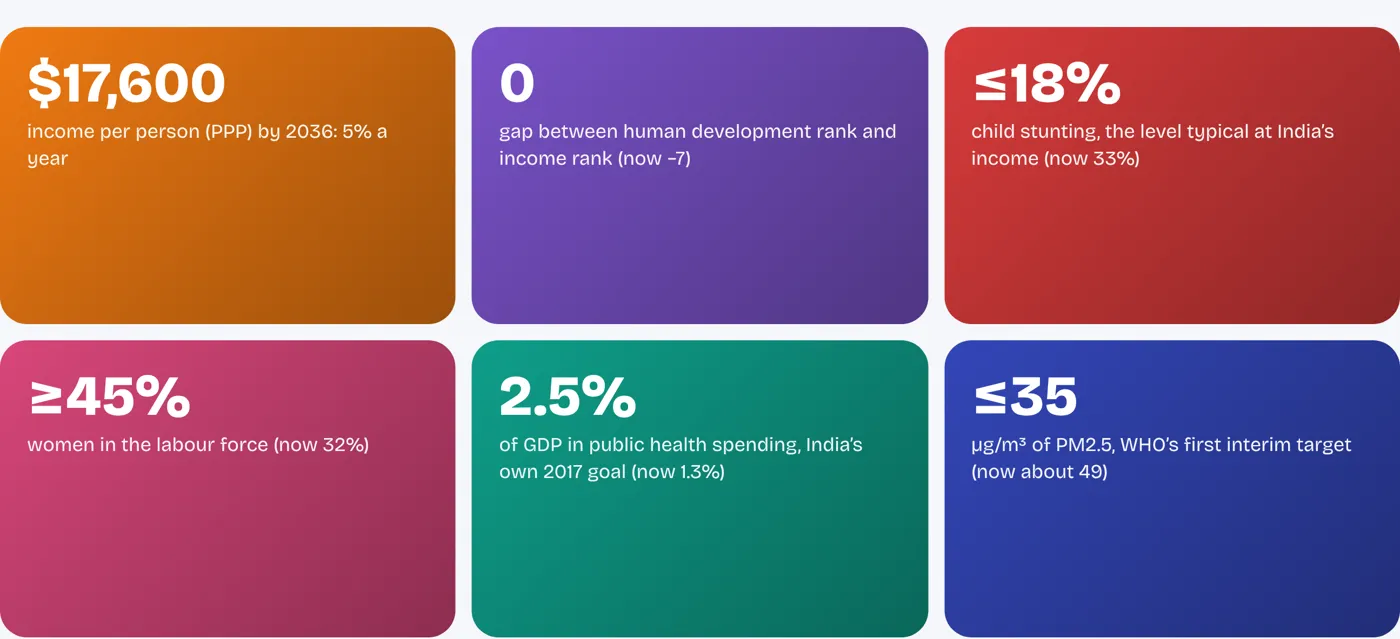
Six numbers for the decade
Ch. 39 · Growth into Development
Three numbers that need a second look
Ch. 40 · Growth into Development
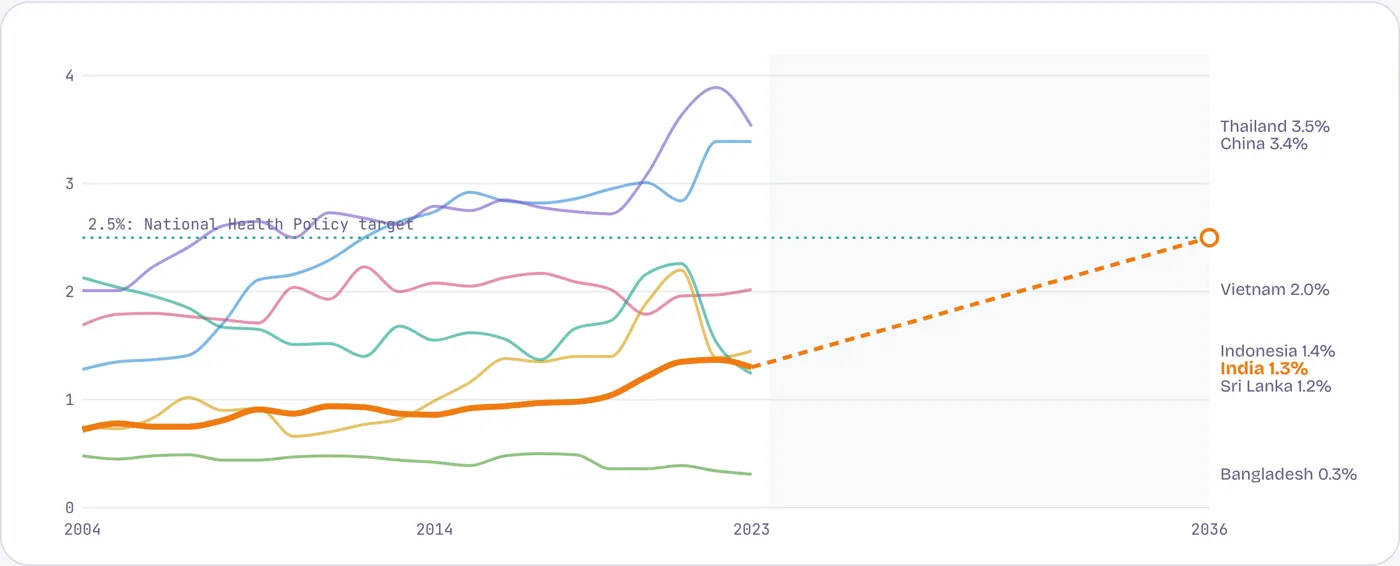
China and Thailand raised public health spending past 3% of GDP; India is at 1.3%
Ch. 40 · Growth into Development
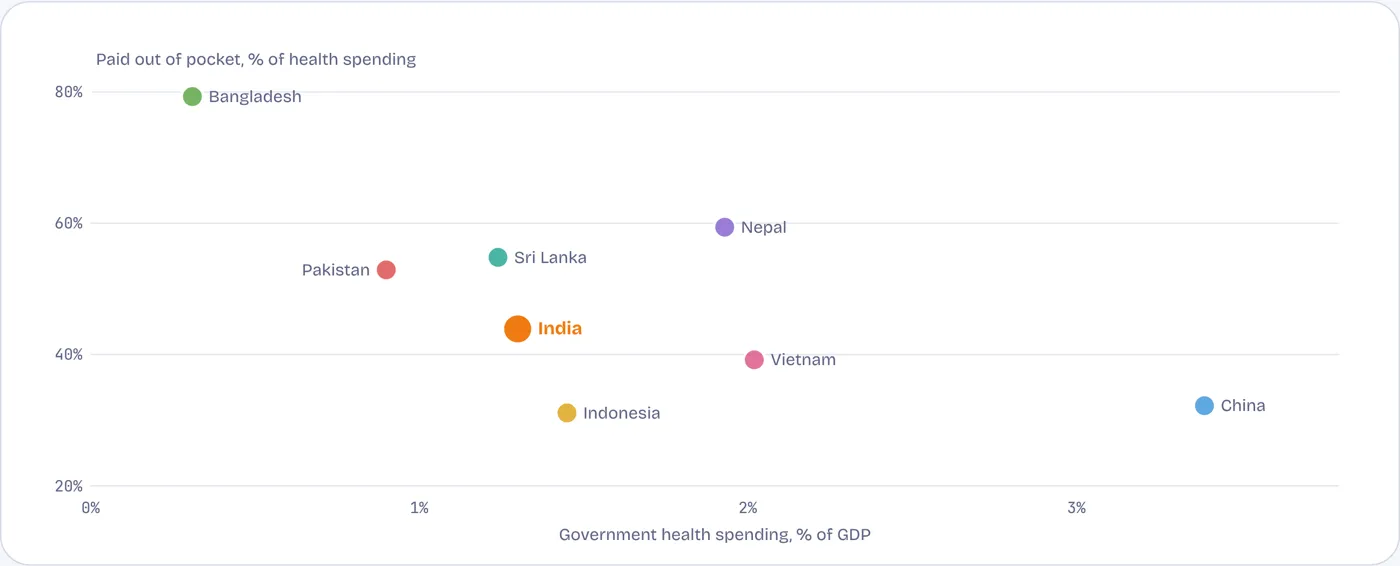
Where governments pay more, families pay less at the point of care
Ch. 40 · Growth into Development
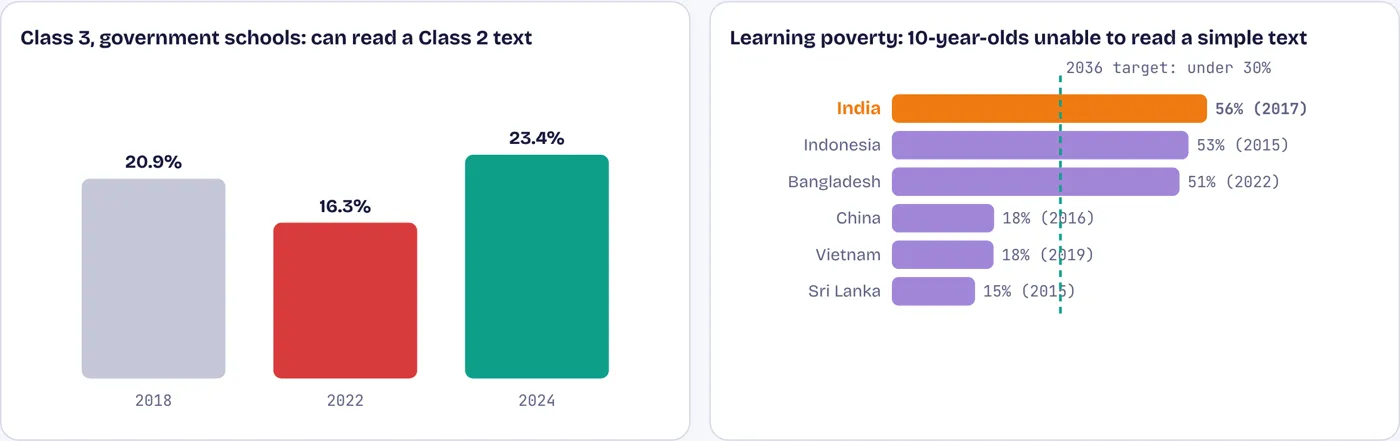
A focus on early reading has started to work; the gap to Vietnam is still vast
Ch. 40 · Growth into Development
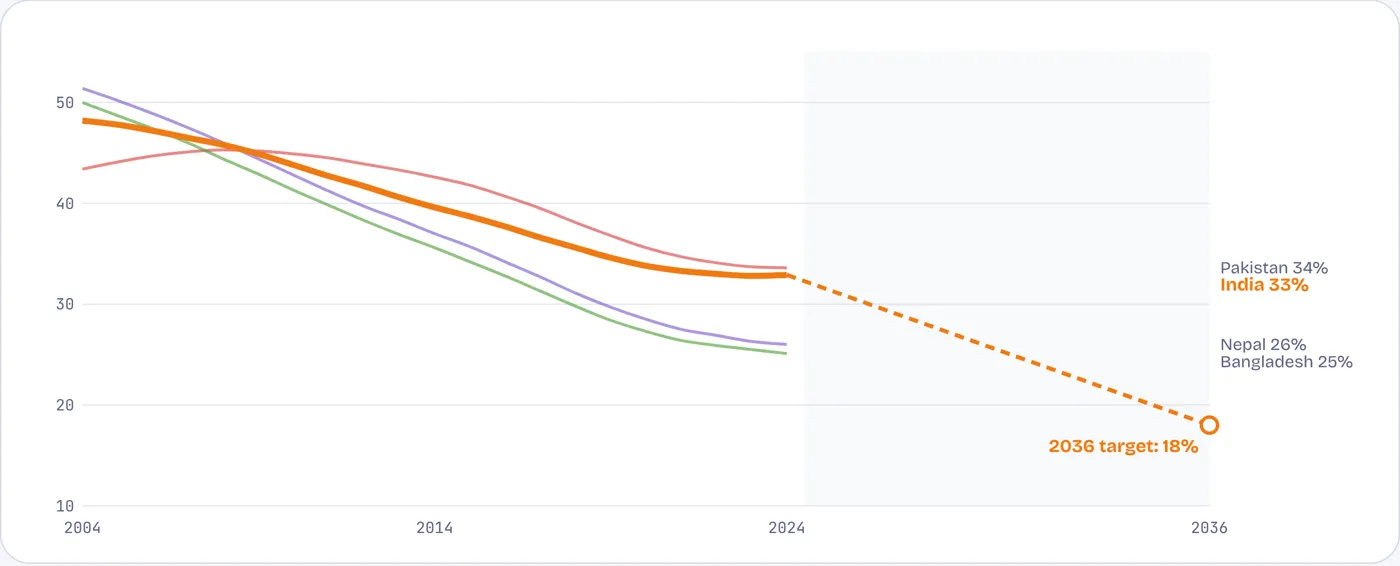
Bangladesh and Nepal cut stunting faster than India; at their pace India reaches 18% by 2036
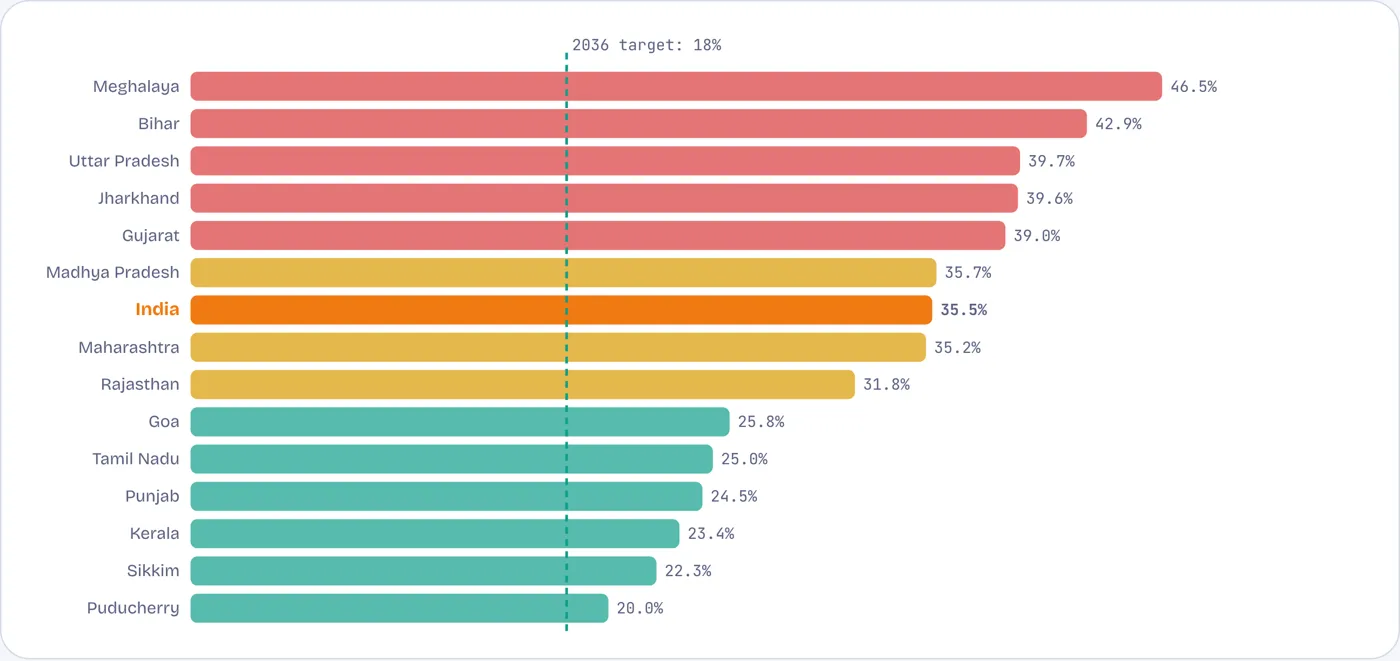
Ch. 40 · Growth into Development
Some Indian states are already near the target; others are twice as far
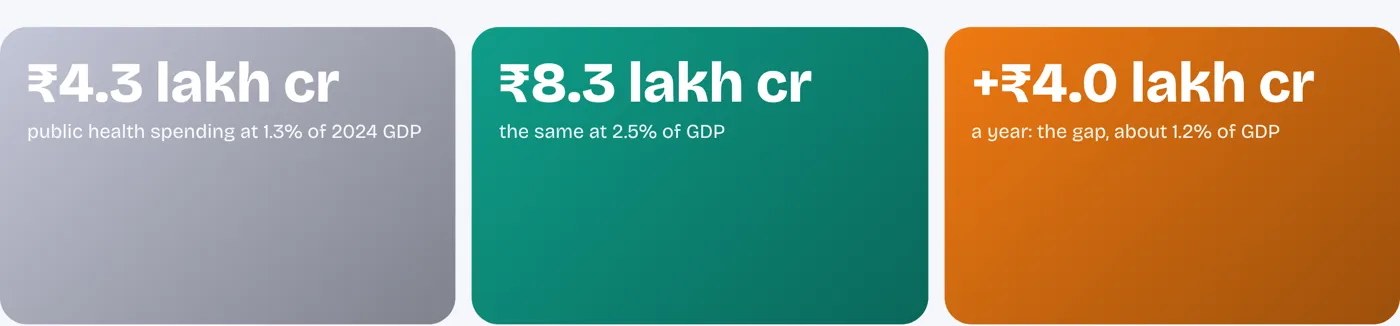
Ch. 40 · Growth into Development
Doubling public health spending costs about 1.2% of GDP
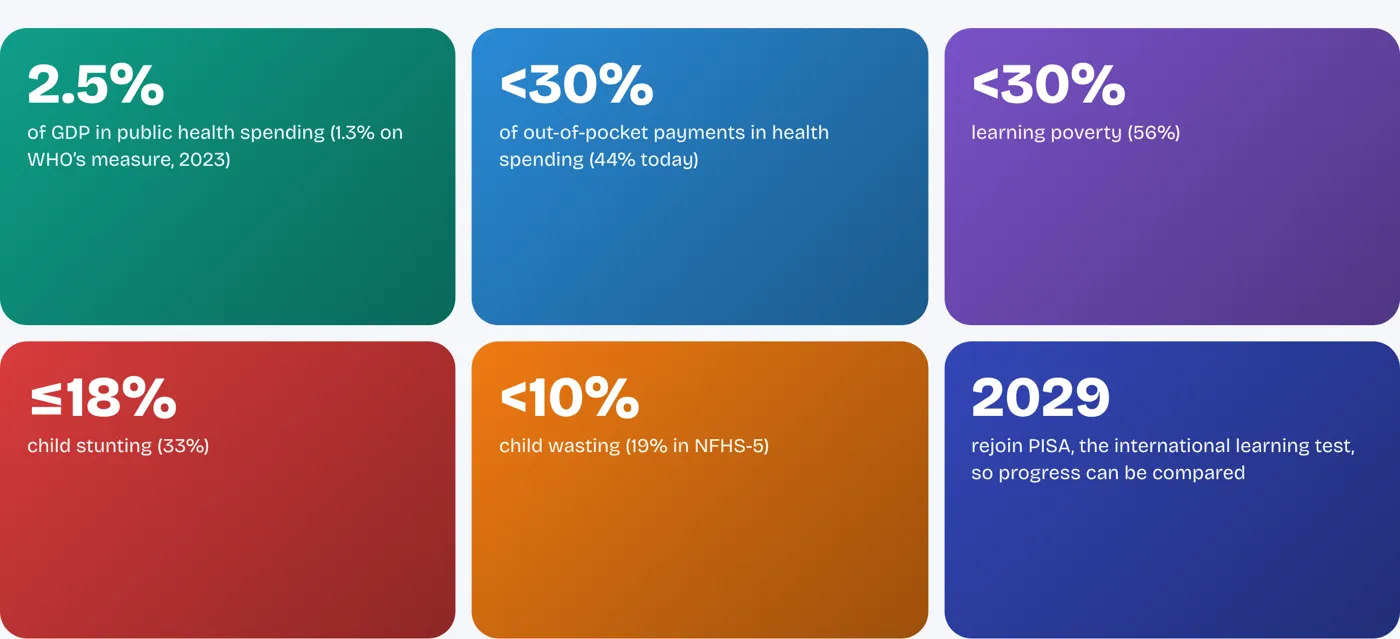
Ch. 40 · Growth into Development
Six numbers for people
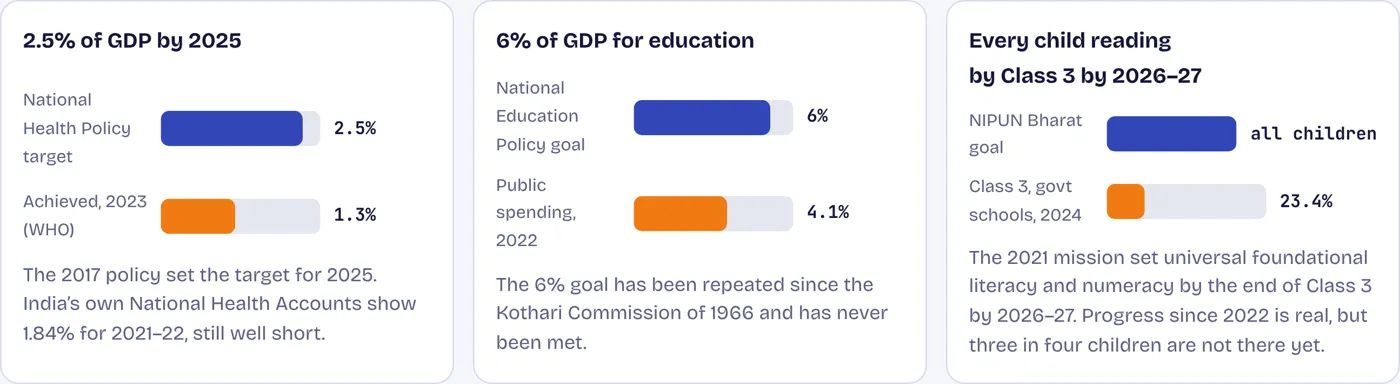
Ch. 40 · Growth into Development
Three numbers that need a second look
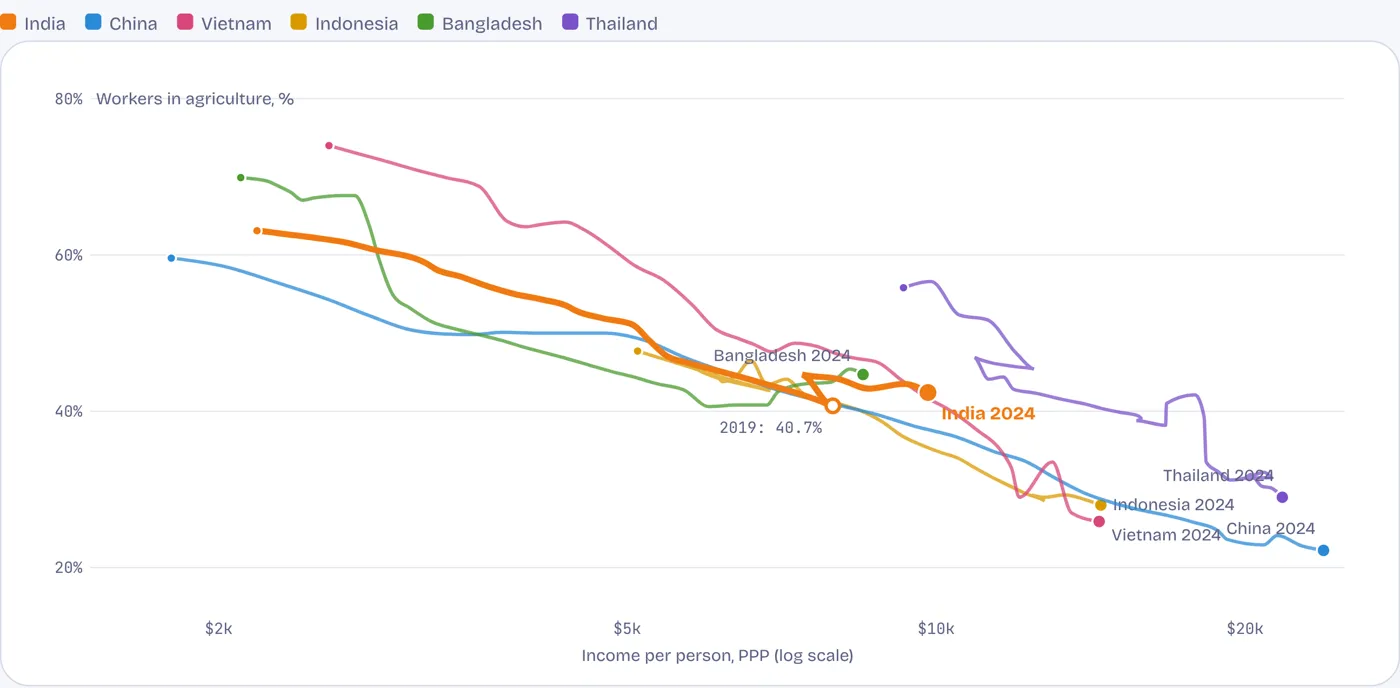
Ch. 41 · Growth into Development
Every fast-growing economy moved workers off the land; India’s move stalled and then reversed
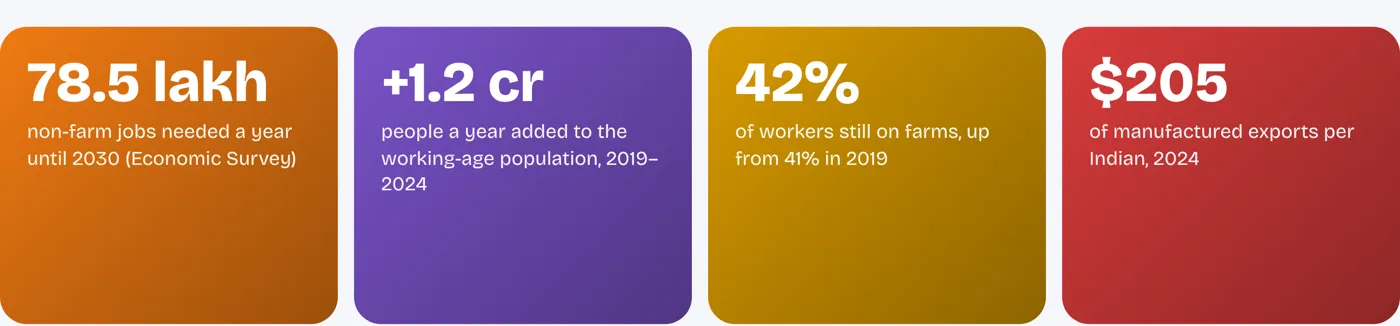
Ch. 41 · Growth into Development
India needs about 80 lakh new jobs off the farm every year
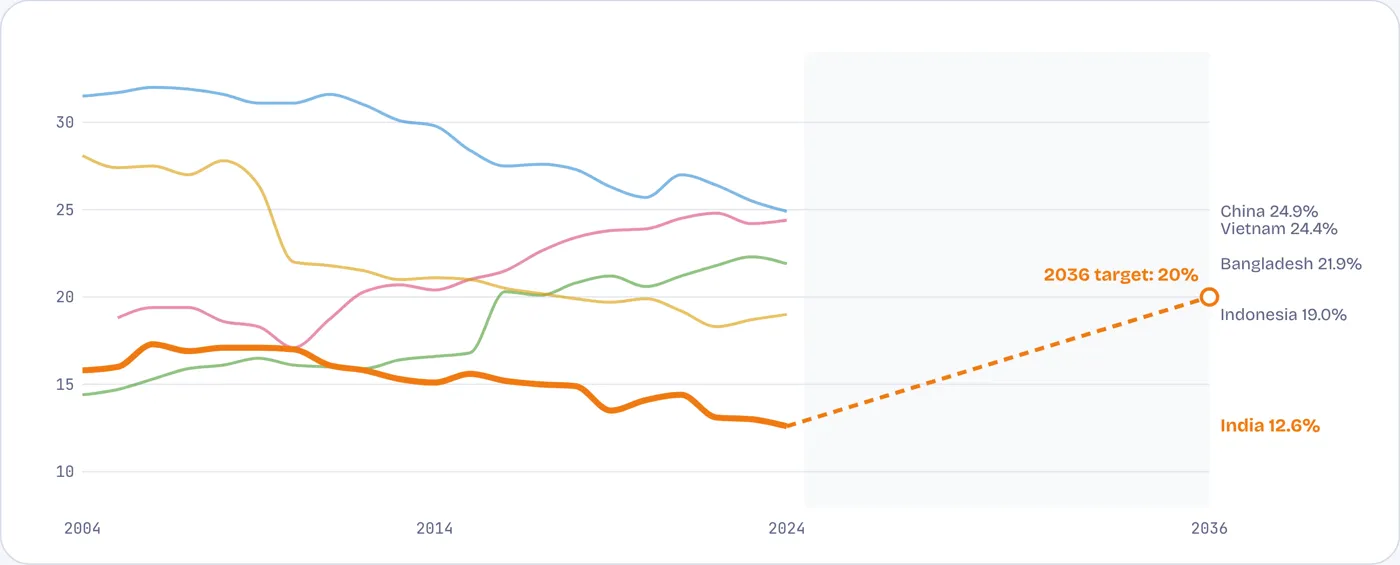
Ch. 41 · Growth into Development
A path back to 20%: what Bangladesh and Vietnam reached
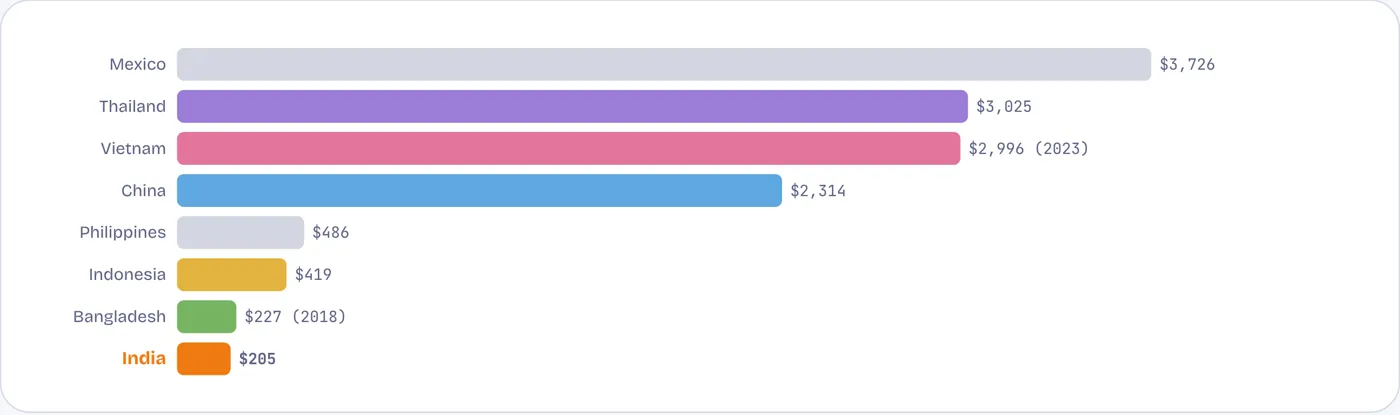
Ch. 41 · Growth into Development
Vietnam exports fifteen times as many manufactured goods per person as India
Ch. 41 · Growth into Development
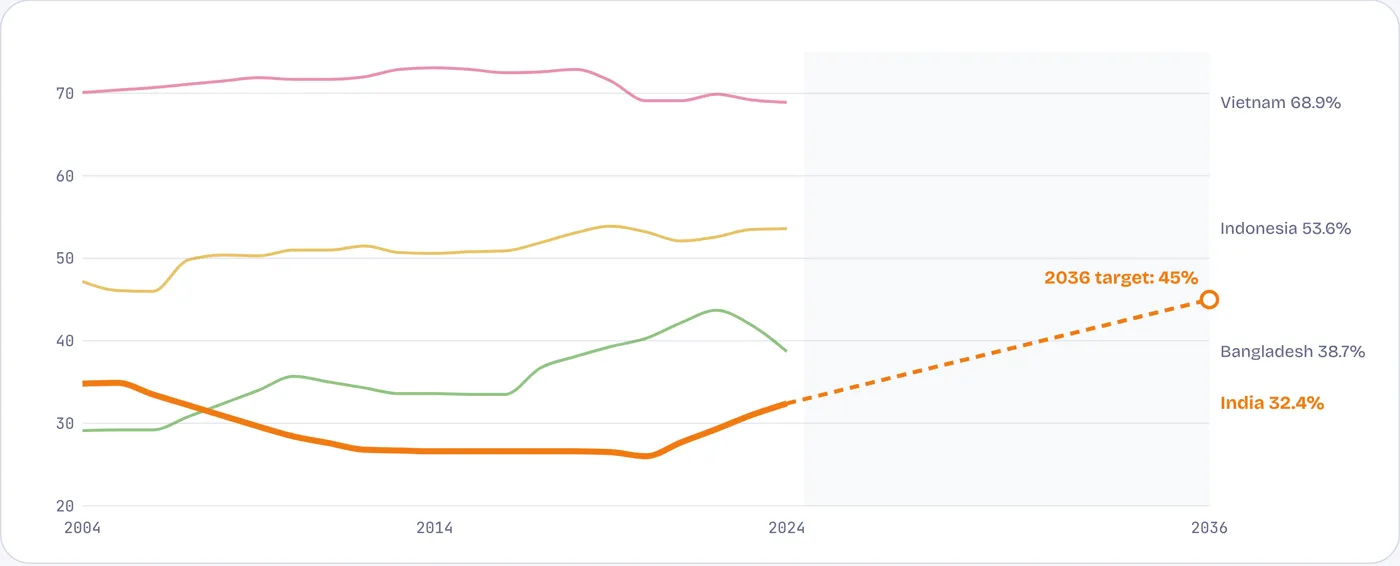
A path to 45%: what Indonesia already has
Ch. 41 · Growth into Development
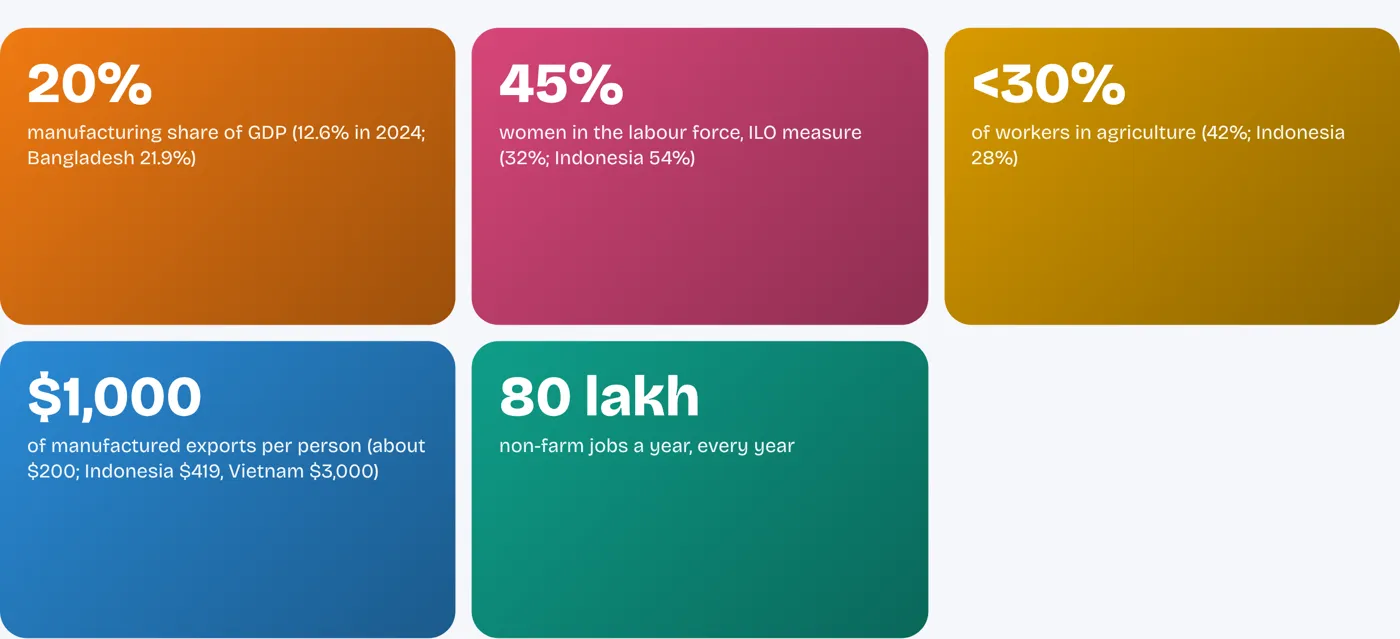
Five numbers for work
Ch. 41 · Growth into Development
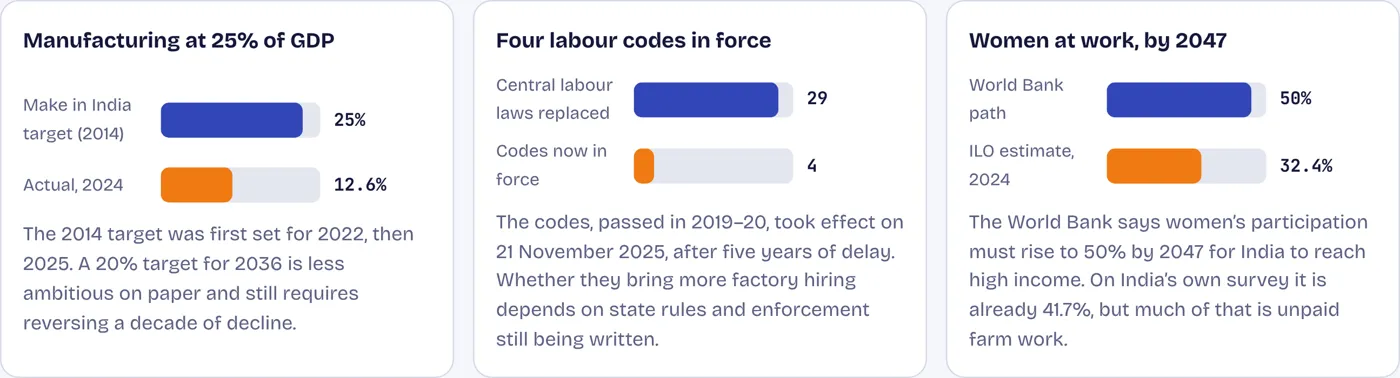
Three numbers that need a second look
Ch. 42 · Growth into Development
Three targets for a state that maintains what it builds
Ch. 42 · Growth into Development
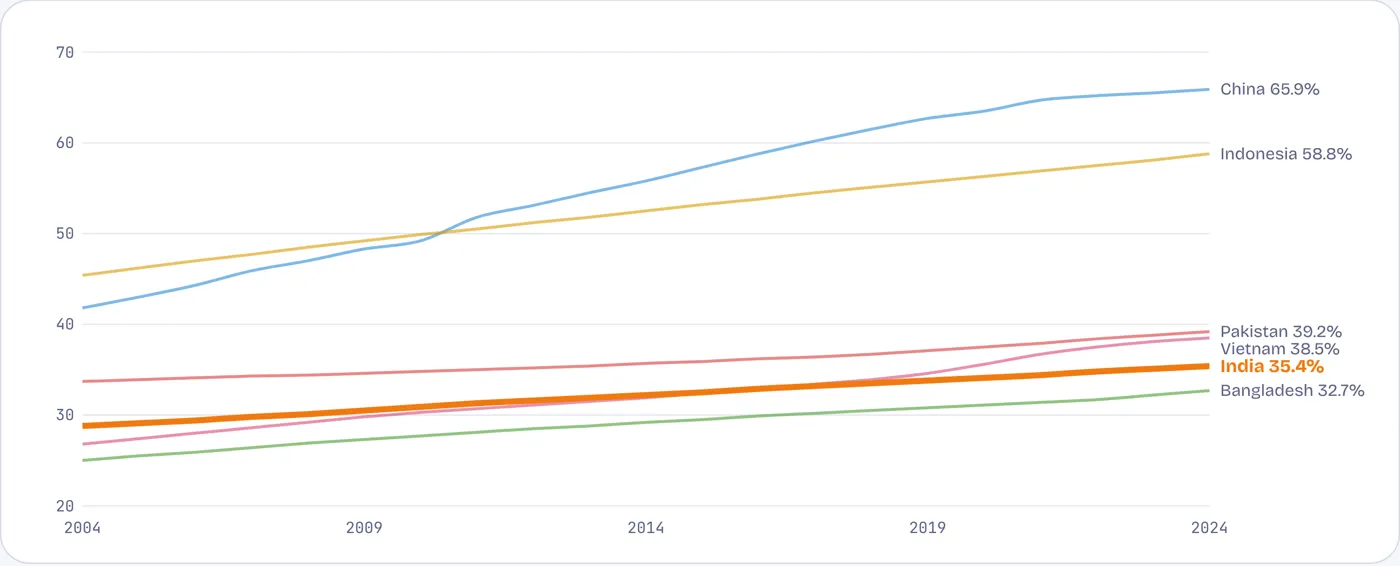
India’s towns added 19 crore people in twenty years, and will add many more
Ch. 42 · Growth into Development
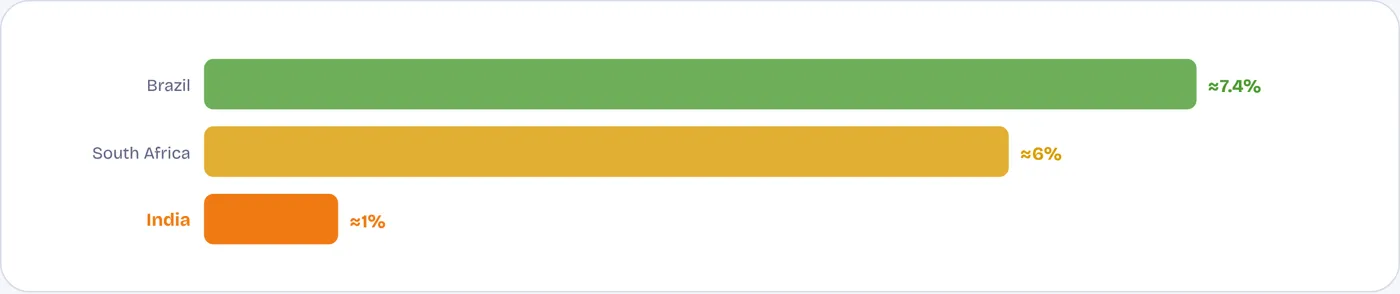
Brazil’s cities raise seven times as much as India’s, relative to the economy
Ch. 42 · Growth into Development
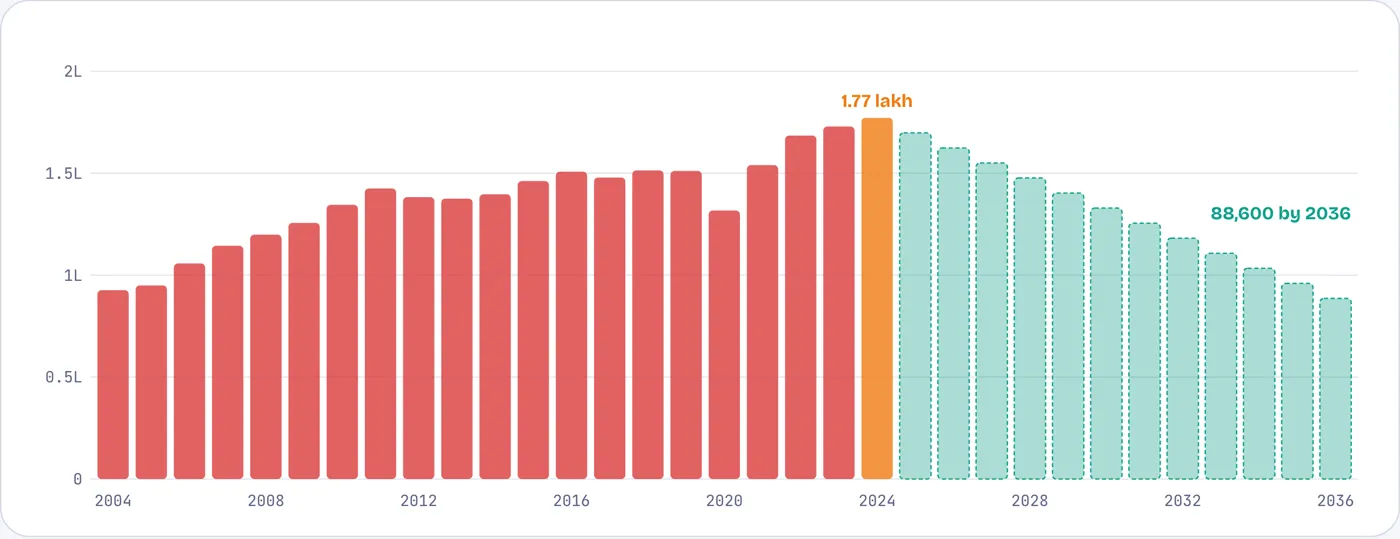
Halving road deaths by 2036 means reversing a twenty-year climb
Ch. 42 · Growth into Development
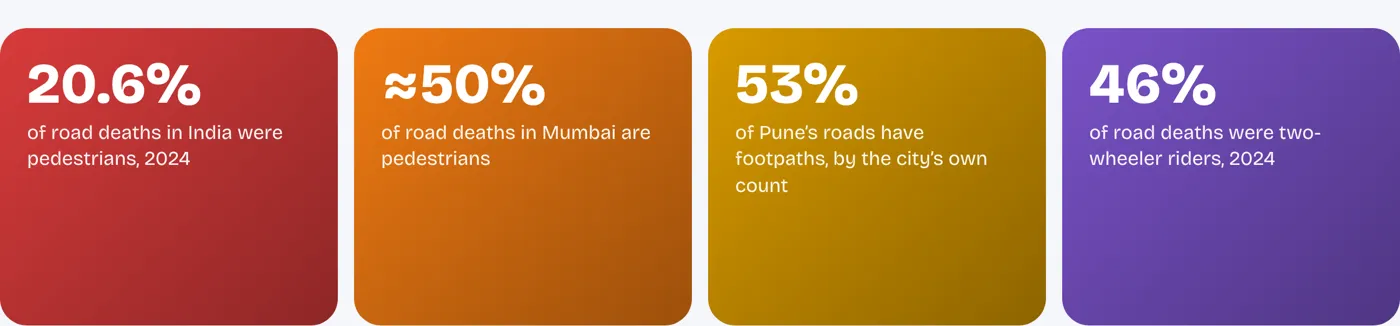
Pedestrians die where streets have no room for them
Ch. 42 · Growth into Development
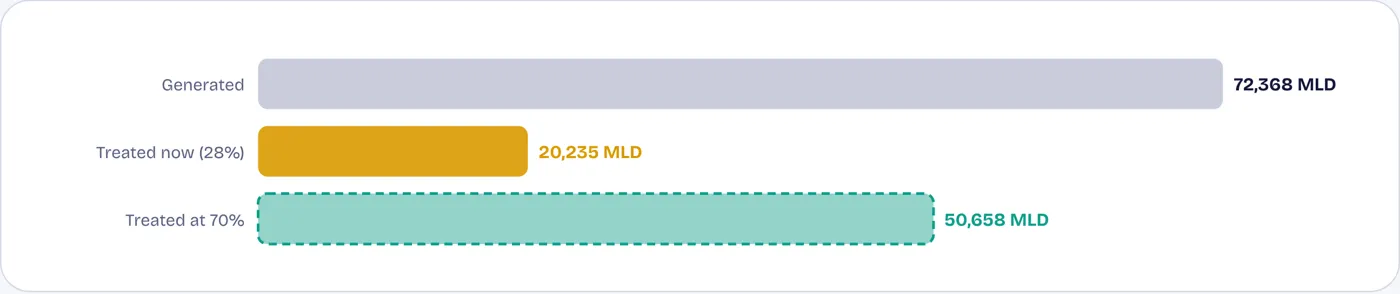
Treating 70% of urban sewage means two and a half times today’s treatment
Ch. 42 · Growth into Development
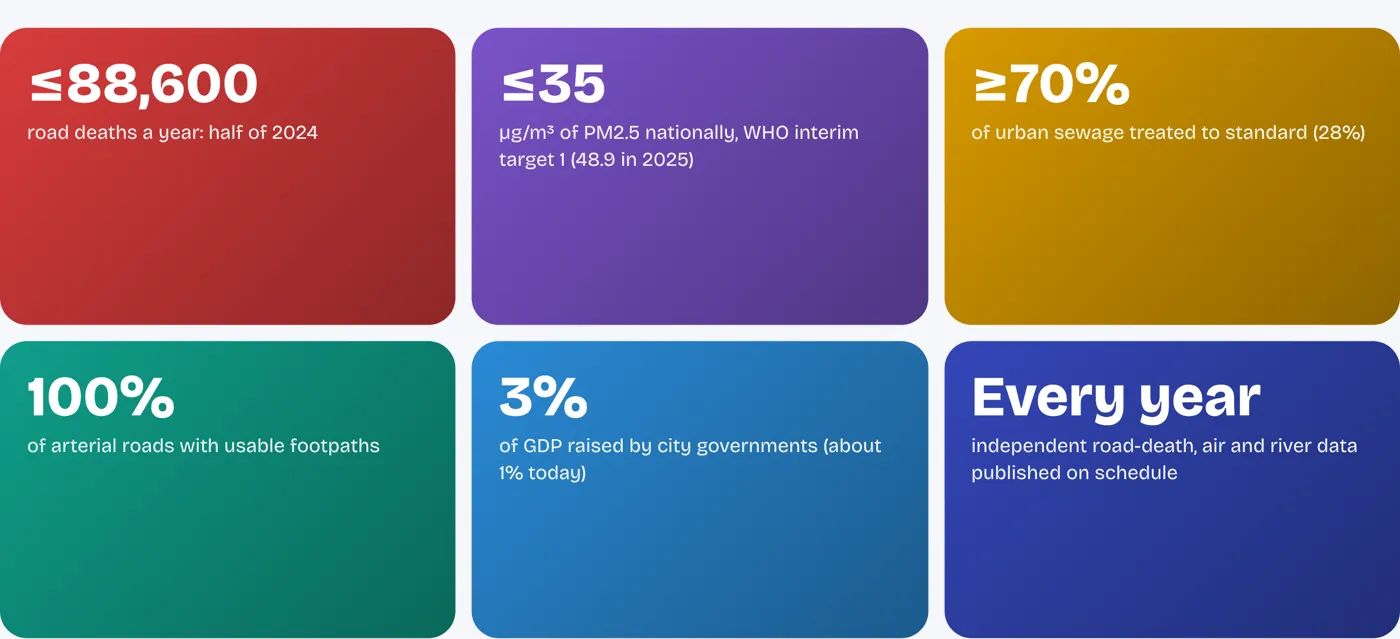
Six numbers for cities
Ch. 42 · Growth into Development
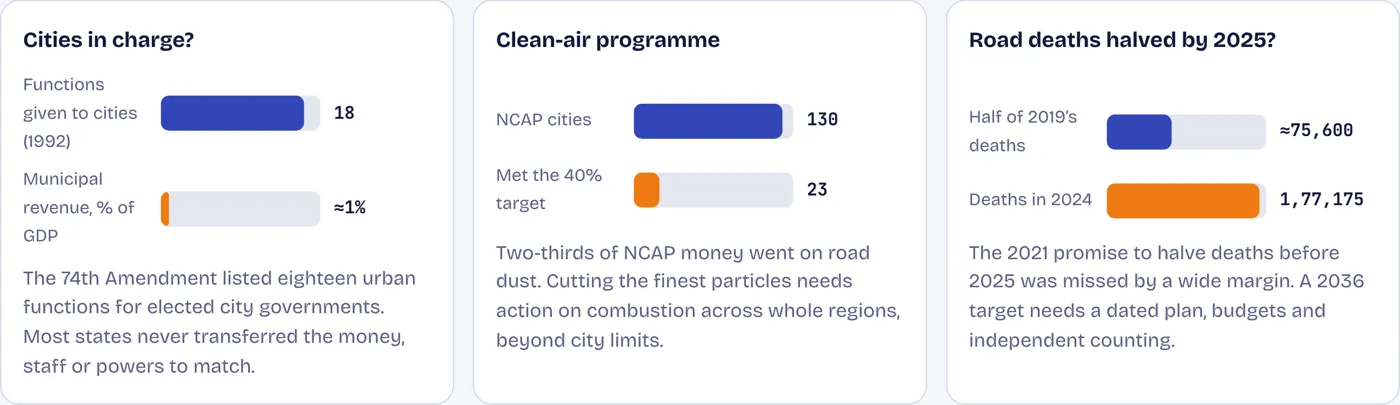
Three numbers that need a second look
Ch. 43 · Growth into Development
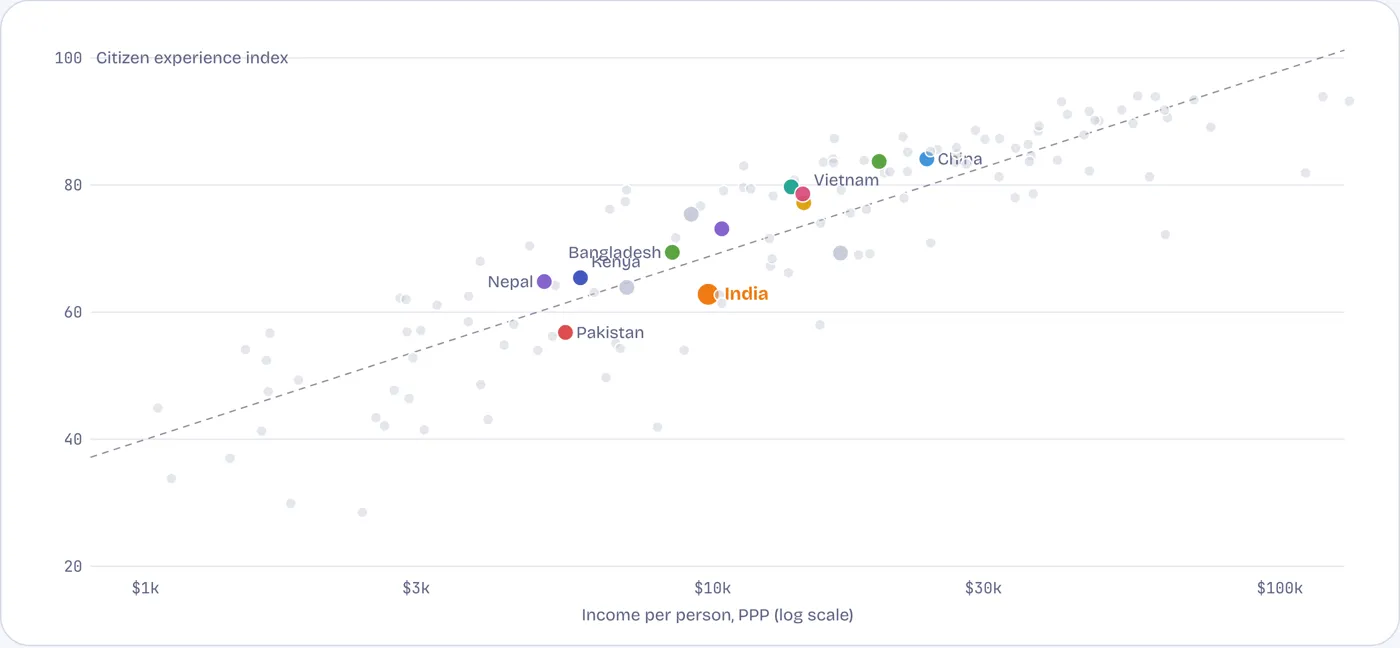
On what citizens actually live with, India ranks 16 places below its income
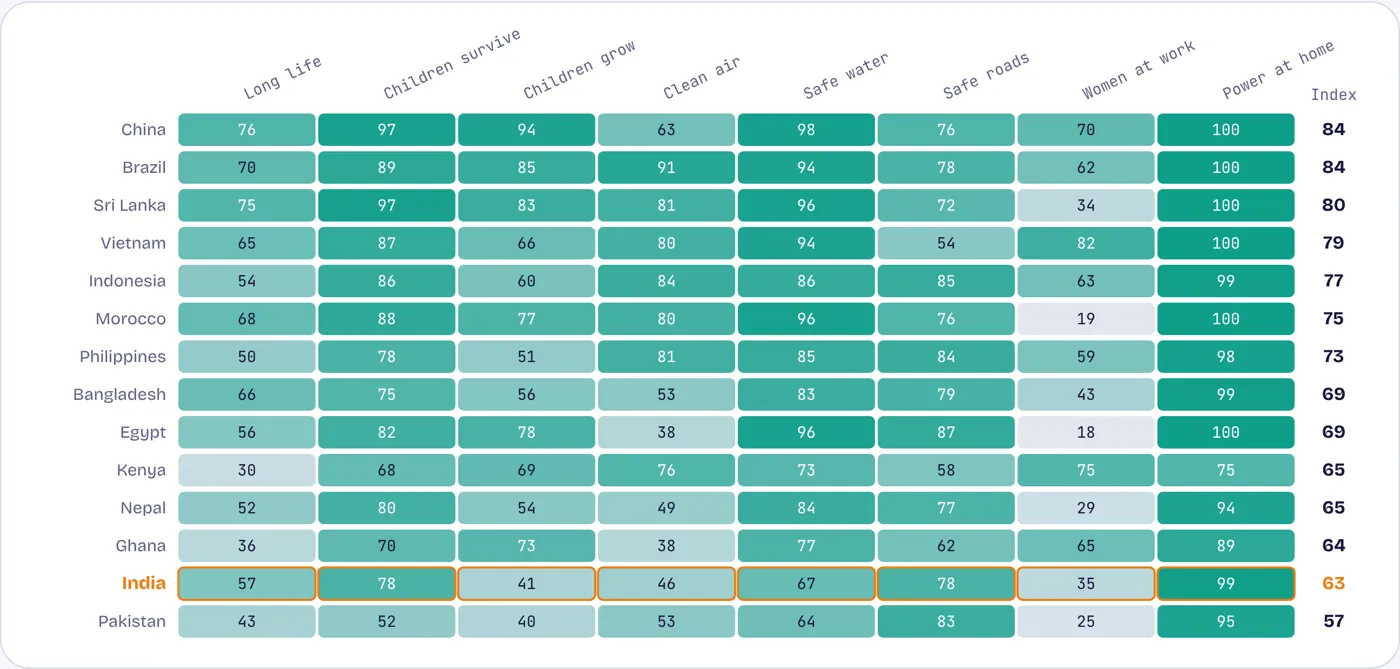
Ch. 43 · Growth into Development
India scores well on power at home and roads per person; poorly on children’s growth, air and women’s work
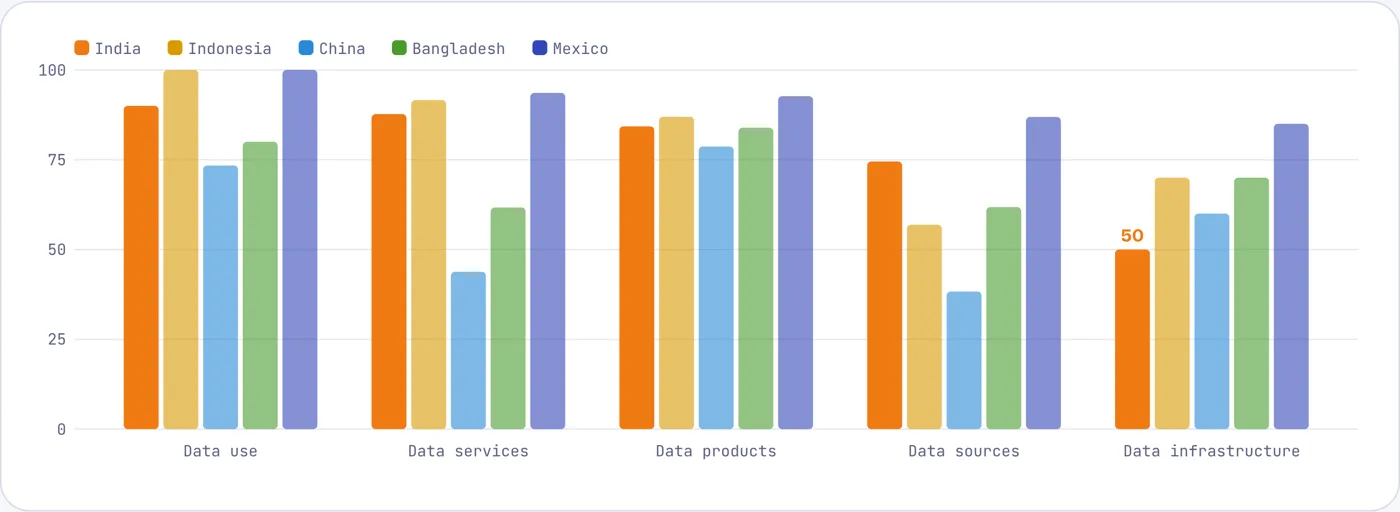
Ch. 43 · Growth into Development
India’s statisticians are capable; the institutions around them are weak
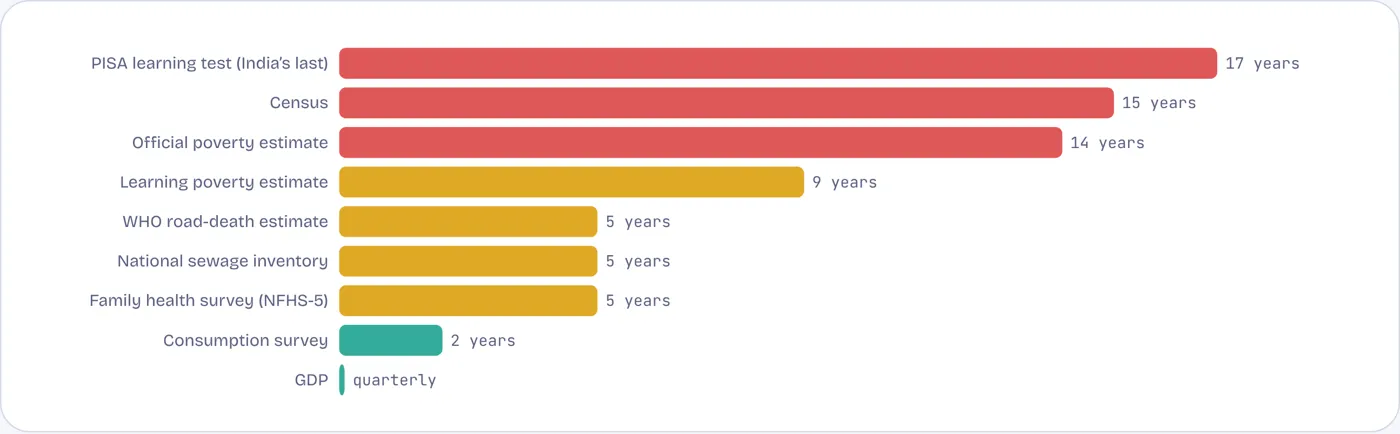
Ch. 43 · Growth into Development
Several of India’s key numbers are five to seventeen years old
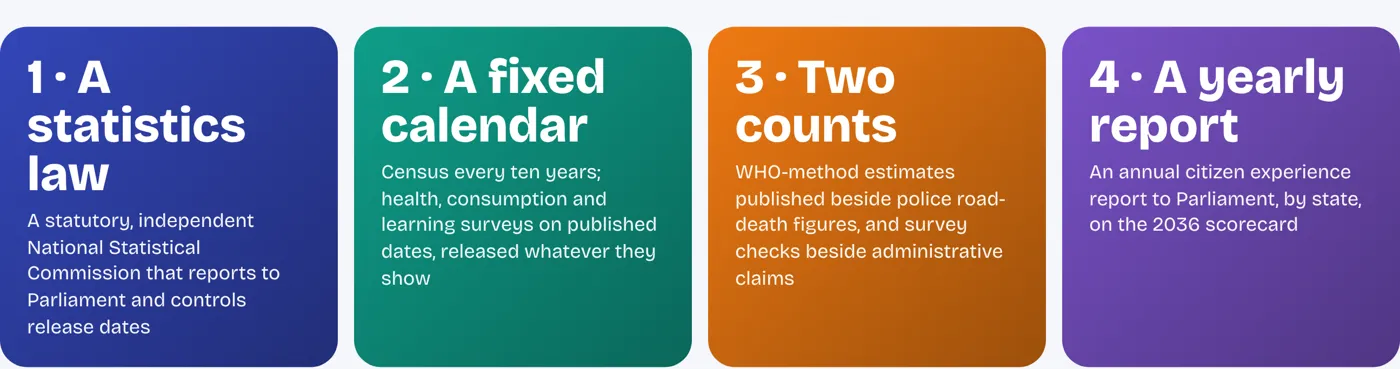
Ch. 43 · Growth into Development
What honest numbers would need
Ch. 43 · Growth into Development
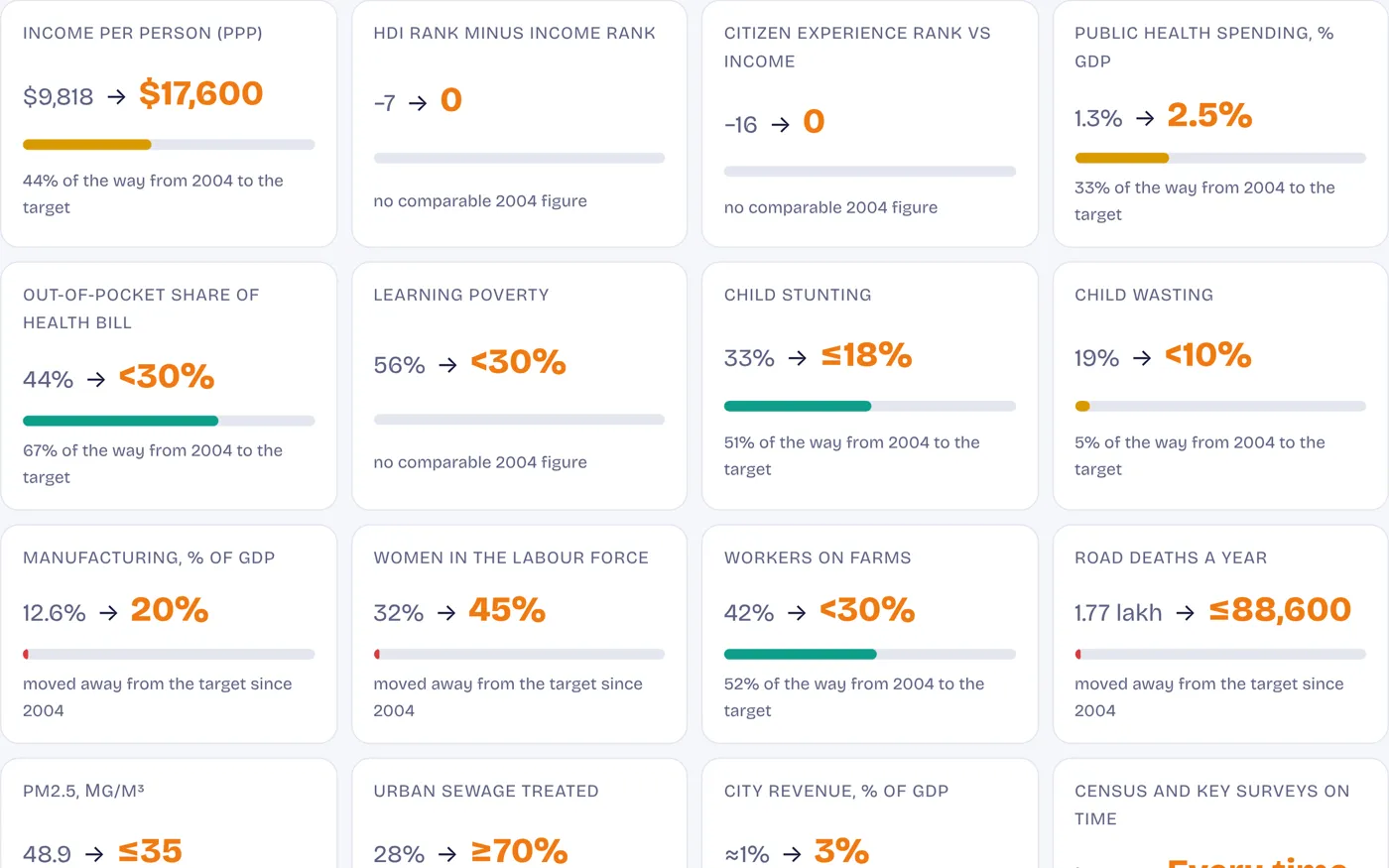
Sixteen numbers voters can check
Ch. 43 · Growth into Development
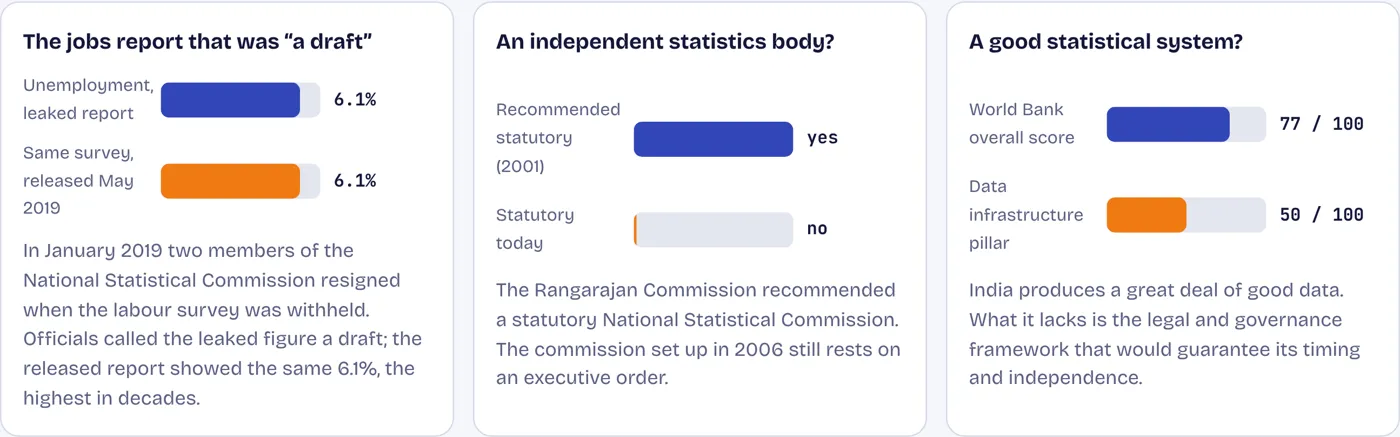
Three numbers that need a second look