In 2004 six in ten Indians relieved themselves in the open. Twenty years and more than ten crore toilets later, fewer than one in fourteen do.
The fall
From most of the population to a small minority
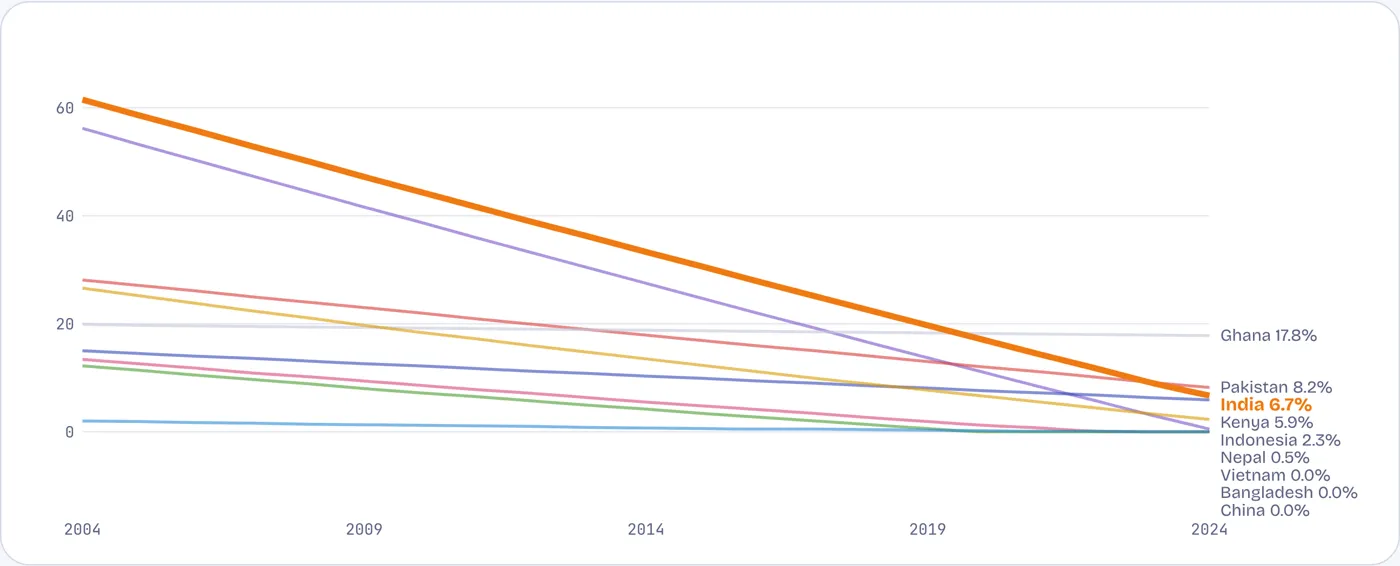
Share of people defecating in the open, India and the peer panel. Tap or hover a line.
India started 2004 with the highest share in the panel, alongside Nepal. Both brought it down steeply. Bangladesh, Nepal, Vietnam, China, Sri Lanka and Morocco are now at or near zero. India, at 6.7%, is level with Myanmar, below Pakistan and Ghana, and behind Indonesia and Kenya.
Source: WHO/UNICEF Joint Monitoring Programme, via World Bank WDI. The JMP draws trend lines between household surveys, so year-to-year changes are smoothed.
People
Six hundred million fewer people in the open
People defecating in the open in India, crore (10 million). One square = 1 crore.
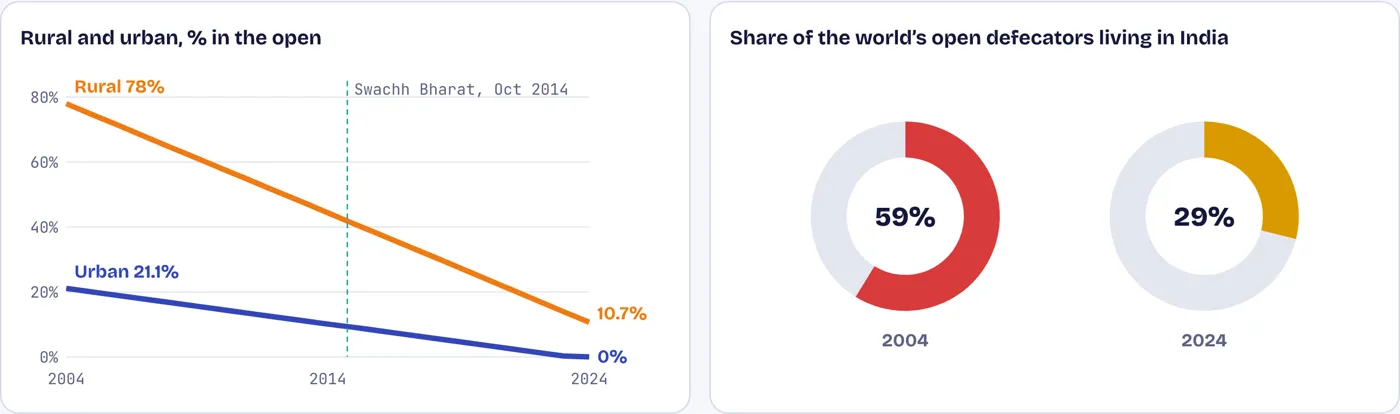
About 70 crore Indians defecated in the open in 2004, 44 crore in 2014 and 10 crore in 2024, even as the population grew by 32 crore. In 2004 India accounted for 59% of all the people in the world who defecated in the open; in 2024, 29%.
Source: calculated from JMP shares and World Bank population estimates.
Villages and towns
The change was in the villages
Share defecating in the open, rural and urban India
Nearly eight in ten rural Indians defecated in the open in 2004; about one in ten do now. Swachh Bharat Mission built more than 10.28 crore household toilets after October 2014, and rural India was declared open-defecation-free in 2019.
Source: JMP via WDI; Ministry of Jal Shakti via SuperKalam (September 2026).
What surveys found
India’s own household surveys show the same fall
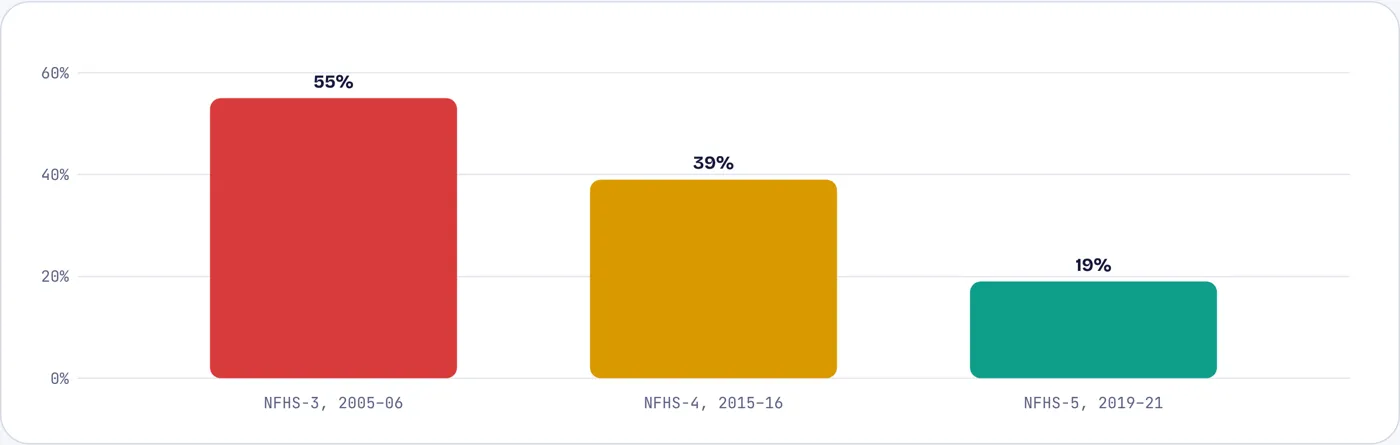
Households using no toilet facility, National Family Health Survey rounds
The share of households using no toilet fell from 55% in 2005–06 to 39% in 2015–16 and 19% in 2019–21. The fastest fall came in the Swachh Bharat years, even if the official “open-defecation-free” declaration ran ahead of the data.
Source: NFHS-3, NFHS-4 and NFHS-5 (Ministry of Health), via Deccan Herald.
Overtaking
India moved past 28 countries
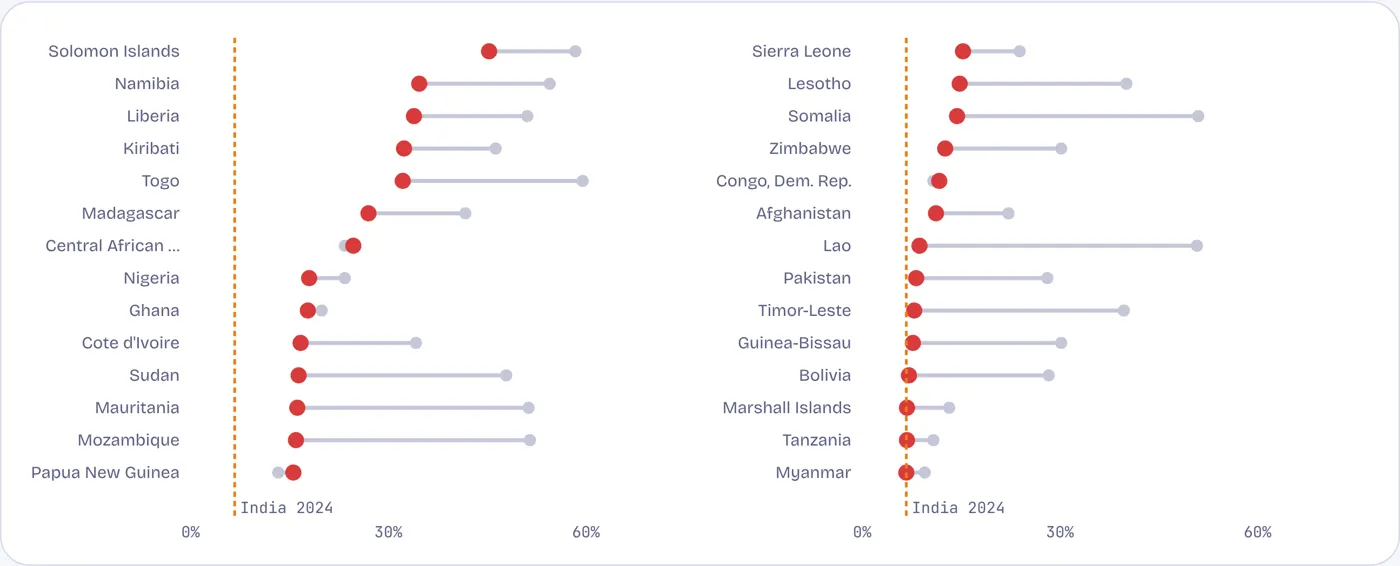
Countries with less open defecation than India in 2004 but more in 2024: share in 2004 → 2024
In 2004 India had more open defecation than 28 countries that now have more than it does, including Pakistan, Nigeria, Ghana, Laos and Afghanistan. India still ranks 36th worst of 182 countries.
Source: JMP via WDI.
Better toilets
Basic sanitation more than tripled
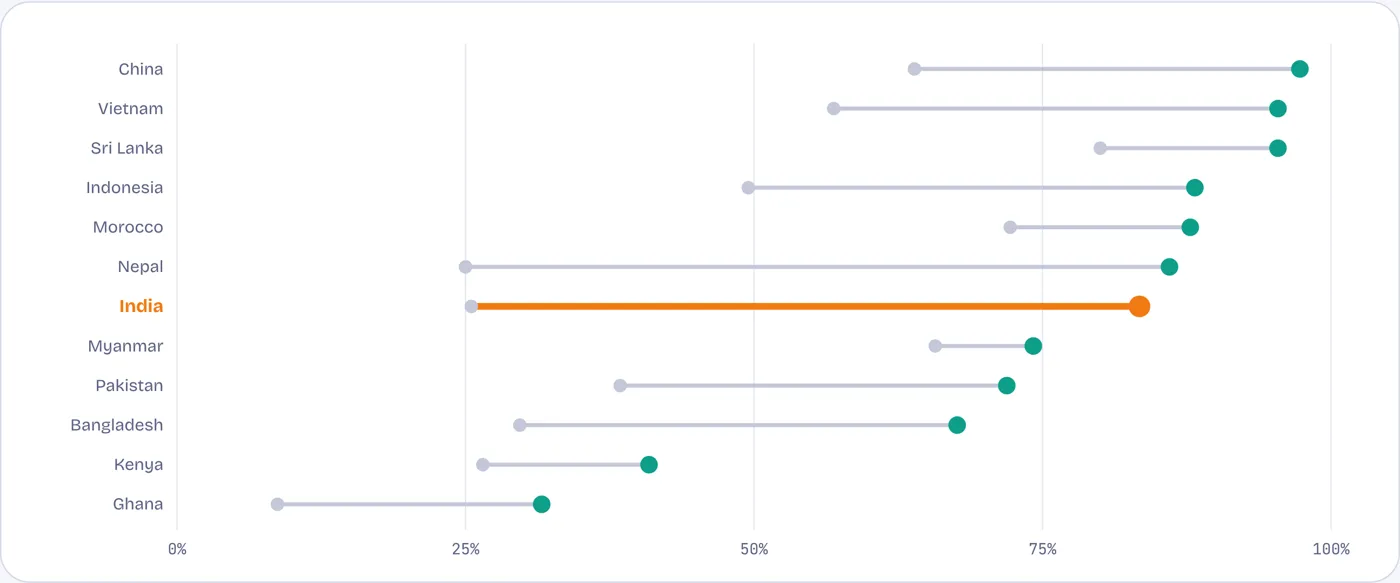
Share of people with at least a basic toilet not shared with other households, 2004 → 2024
India went from near the bottom of the panel, with Nepal, Kenya and Ghana, to 83%, ahead of Bangladesh, Pakistan and Myanmar. 63% of Indians now have safely managed sanitation, where waste is contained or treated, more than Vietnam or Bangladesh.
Source: JMP via WDI.
Water
Piped water reached four in five rural homes
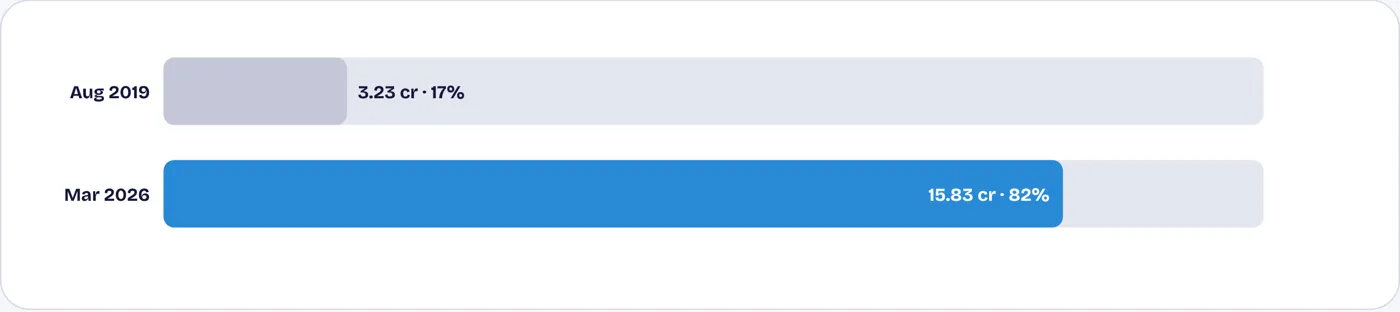
Rural households with a tap connection, Jal Jeevan Mission, crore
When the Jal Jeevan Mission began in 2019, 3.23 crore of about 19 crore rural households had a tap. By March 2026, 15.83 crore did, roughly four in five. A tap connection is not the same as regular, safe water: three-quarters of Indians have safely managed drinking water, by the UN’s measure.
Source: Ministry of Jal Shakti via All India Radio (March 2026); JMP via WDI (76% safely managed drinking water, 2024).
What remains
Dirty water and poor sanitation still kill more Indians than most peers
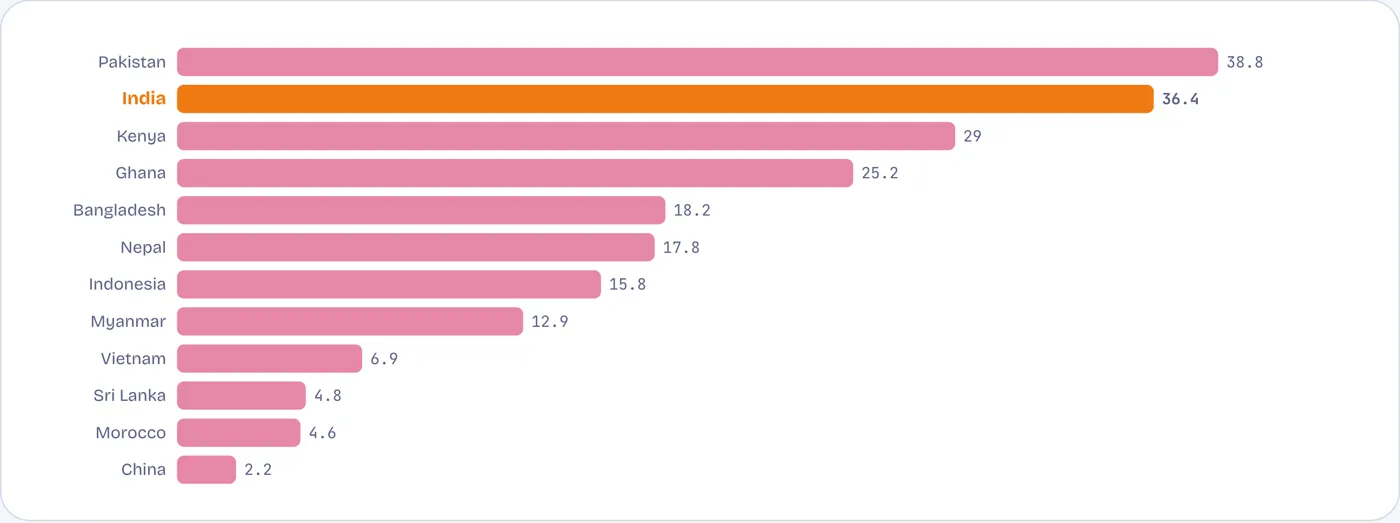
Deaths from unsafe water, sanitation and hygiene, per 100,000 people, 2019
India’s death rate from unsafe water and sanitation, 36 per 100,000, was twice Bangladesh’s and five times Vietnam’s in 2019. Only Pakistan in the panel was higher. Toilets are the first step; clean water, handwashing and treated sewage are the rest.
Source: WHO, via World Bank WDI.
Contested numbers
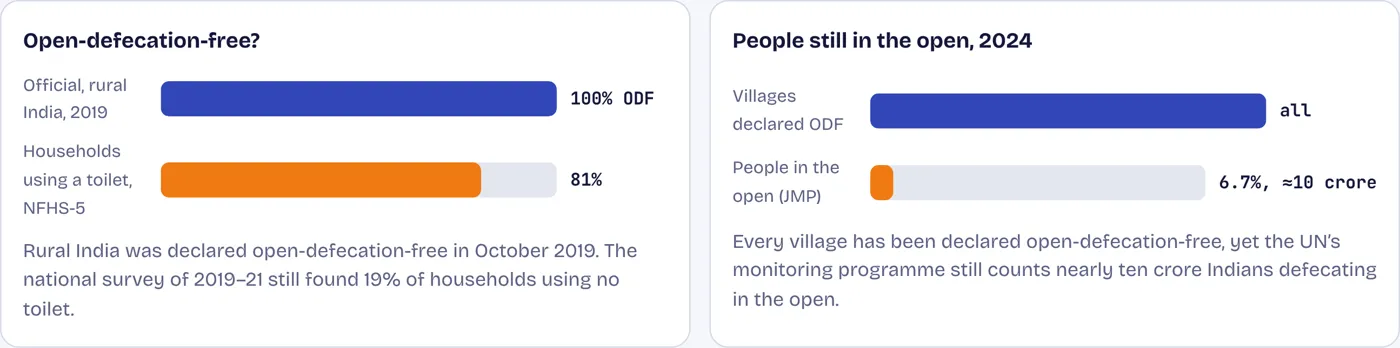
Two numbers that need a second look
Source: Government of India (2019 declaration); NFHS-5; JMP via WDI.