Who is counted
India counts one in forty-five people as disabled; the world average is one in six
Share of population with a disability, %
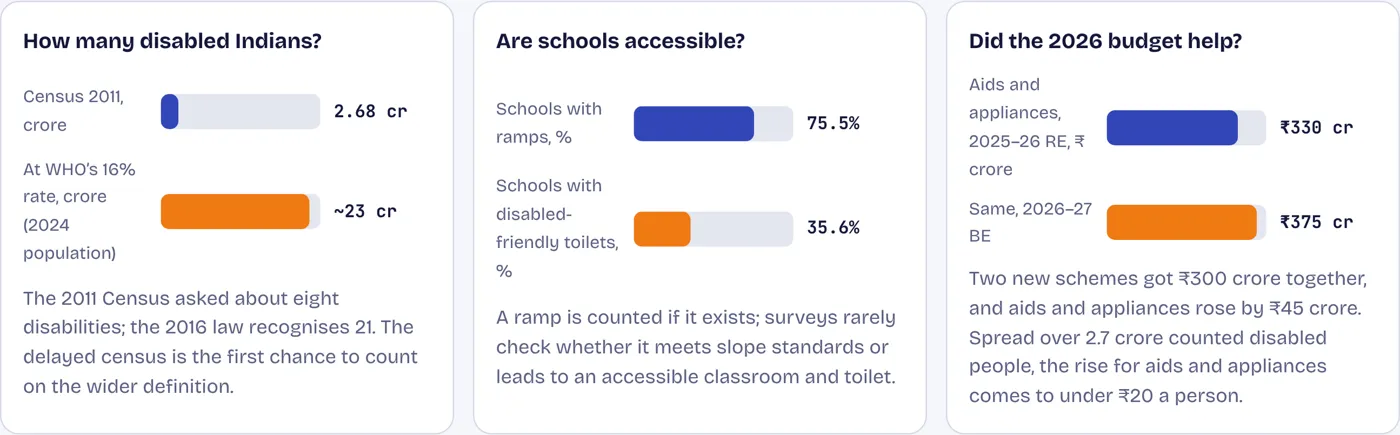
The 2011 Census found 2.68 crore disabled people, 2.21% of the population; the 2018 national survey found 2.2%. WHO estimates 16% worldwide. The gap reflects narrow survey questions and stigma that keeps families from reporting, not a healthier population. If India matched the global rate, over 20 crore Indians would have a disability.
Source: Census 2011; NSS 76th round (2018) via Delhi DES report; WHO Global Report on Health Equity for Persons with Disabilities (2022).
School and work
Half of disabled Indians can read, and one in four is in the labour force
Persons with disabilities vs all persons, %, 2017–19
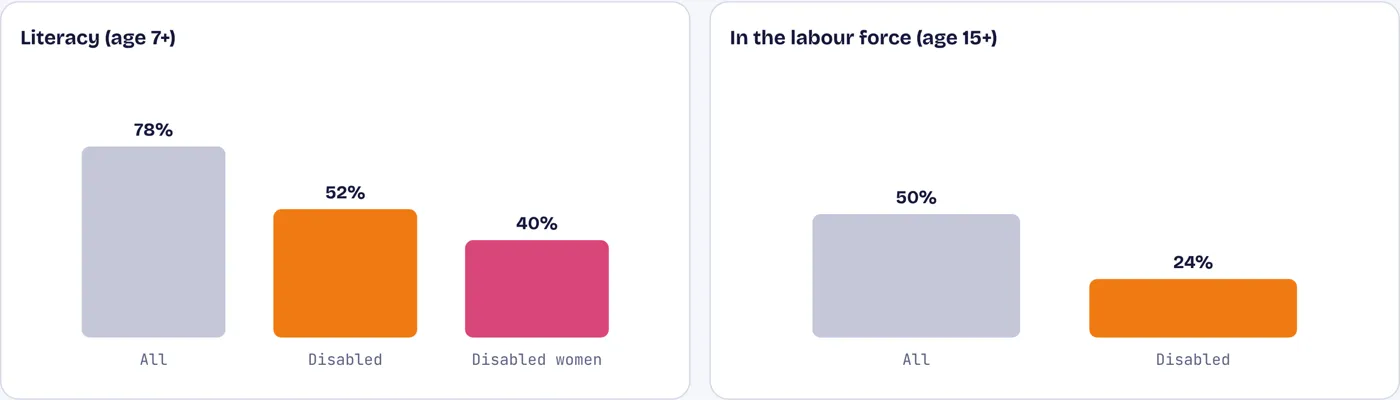
Literacy among disabled people aged seven and above was 52%, against 78% for all Indians; among disabled women it was 40%. Fewer than a quarter of disabled adults were working or looking for work, half the national rate. The 4% quota in government jobs cannot reach people who never finished school.
Source: NSS 76th round (2018) via Delhi DES report; NSS 75th round (2017–18) literacy; PLFS 2018–19 labour force participation (15+, usual status).
The classroom
Children with special needs thin out sharply in the senior classes
Enrolment of children with special needs per grade, lakh, by school stage, 2024–25 (stage total ÷ number of grades)
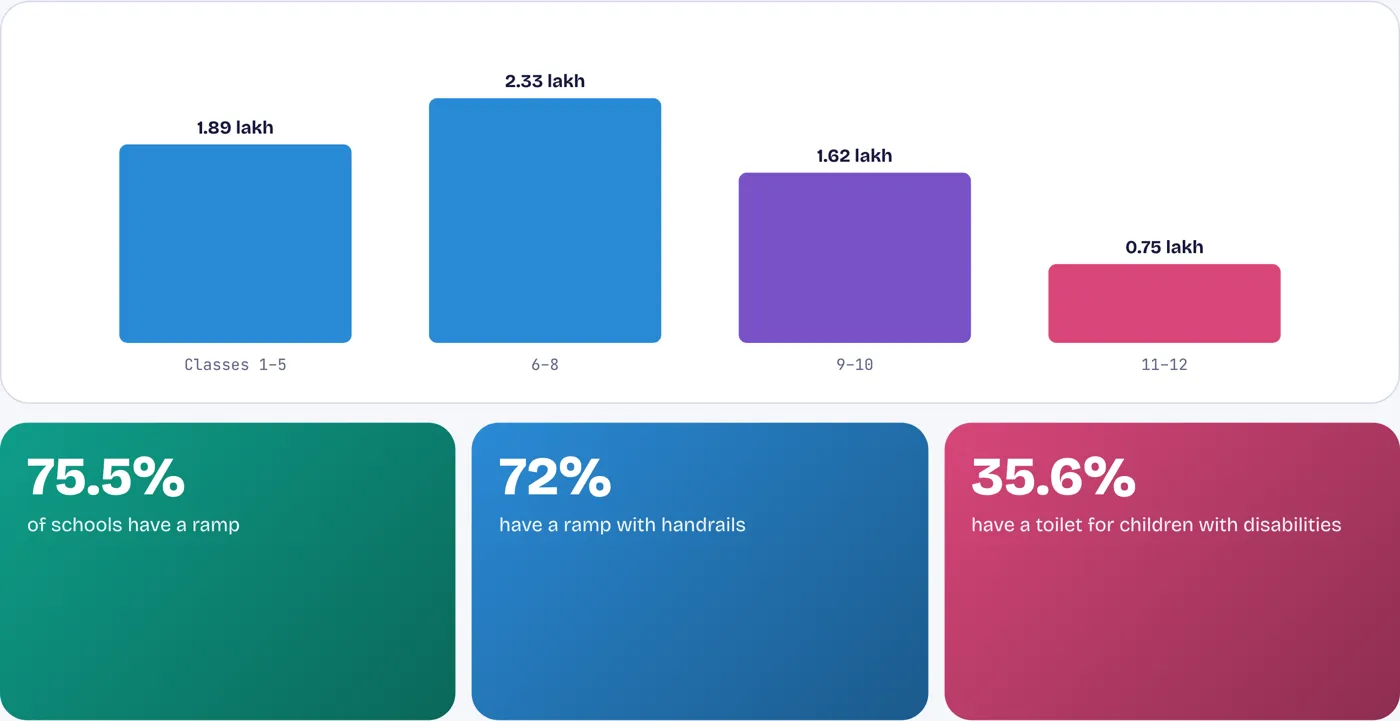
Per grade, about 2.3 lakh children with special needs are enrolled in Classes 6–8 but only 0.75 lakh in Classes 11–12, a fall of two-thirds; for all children, enrolment per grade falls by about a tenth between primary and higher secondary. Three schools in four have a ramp, but only a third have a toilet a disabled child can use.
Source: UDISE+ 2024–25, via Education for All in India.
On paper
Fewer than a third had the certificate that unlocks benefits
Unique Disability ID (UDID) applications by status, lakh, 2016 to August 2025; and NSS 2018 shares
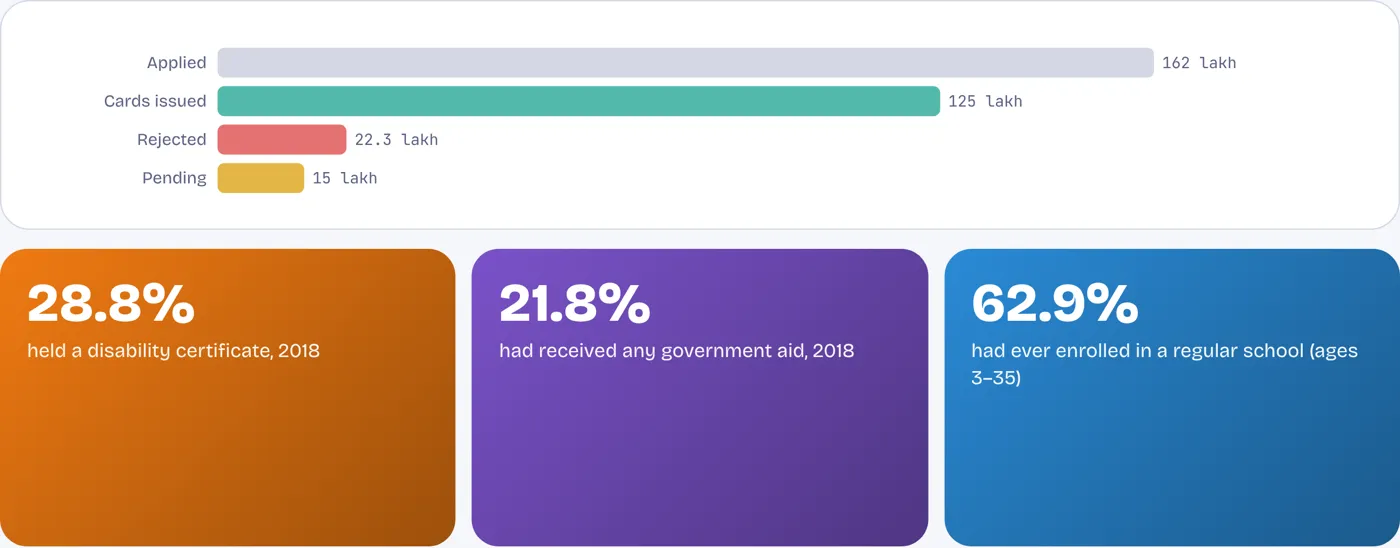
The disability certificate and UDID card are the gateway to quotas, pensions and aids. By 2018 only 29% of disabled people had a certificate and 22% had received any government help. The UDID drive has since issued 1.25 crore cards, but 22 lakh applications were rejected and nearly 15 lakh were awaiting assessment.
Source: Ministry of Social Justice, Lok Sabha reply (August 2025) via The Week/PTI; NSS 76th round.
The pension
The central pension is ₹300 a month and is open to about one disabled person in twenty
Monthly disability pension reaching beneficiaries, ₹, central share plus state top-up, selected states
The Indira Gandhi National Disability Pension pays ₹300 a month, last raised in 2012, and only to people with 80% or greater disability who are on the 2002 poverty list. Those rules exclude about 95% of disabled Indians. What reaches a beneficiary depends on the state: ₹300 in Bihar, ₹3,000 in Andhra Pradesh.
Source: IDR Online, “Where India’s disability pension scheme falls short”.
Contested numbers
Three numbers that need a second look
Source: Census 2011; WHO; UDISE+; Down To Earth (Union Budget 2026–27).