India proved it can build: highways, solar parks, toilets. Road deaths, foul air and untreated sewage show it has not learned to run and maintain what it builds. That is the work of cities and the state machinery behind them, and India’s cities are run on about 1% of GDP.
Three failures of maintenance
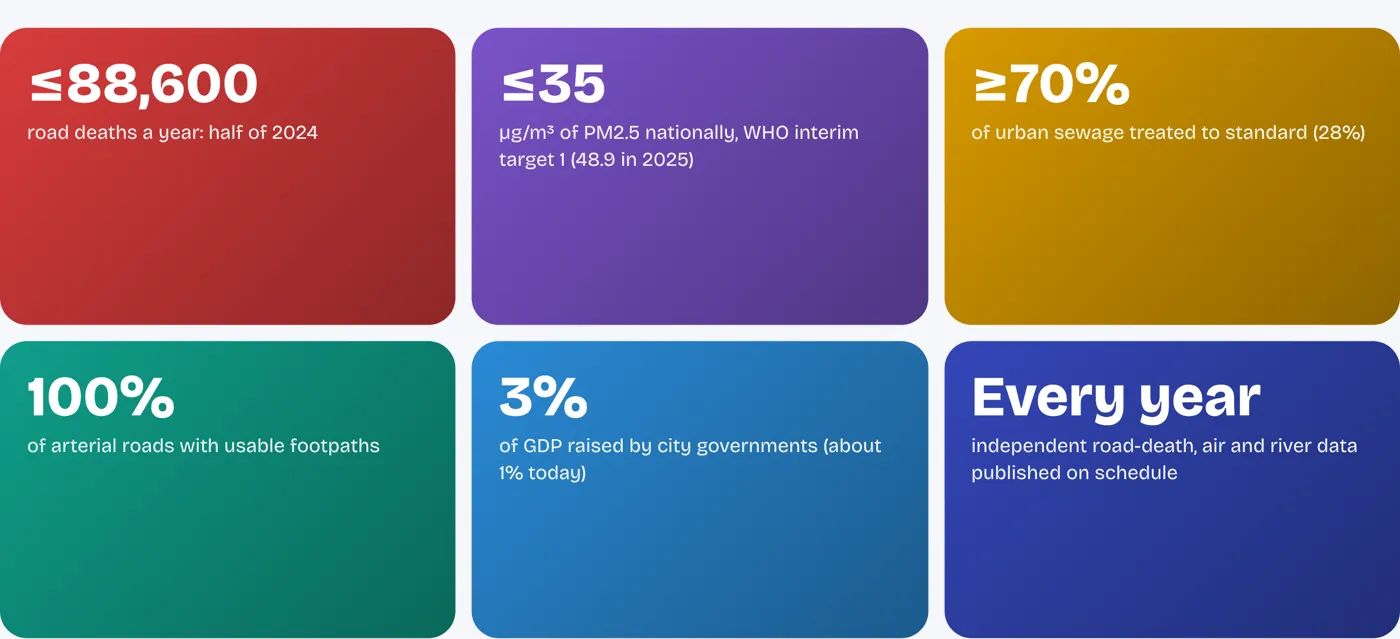
Three targets for a state that maintains what it builds
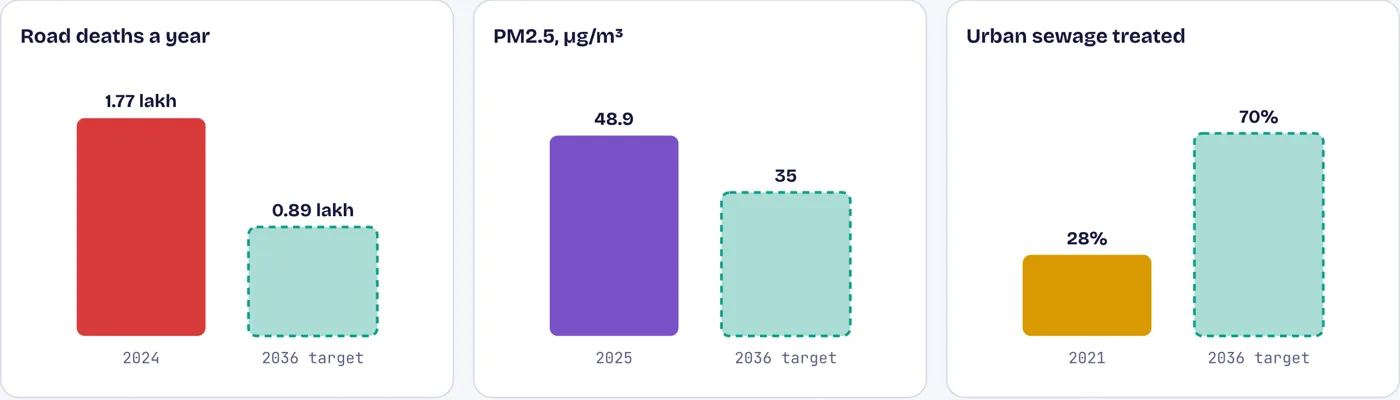
Today, and the proposed 2036 target, for road deaths, air and sewage
All three are failures of running things rather than building them: enforcing speed limits and helmet rules, controlling burning and dust, operating sewage plants and connecting homes to them. The targets are anchored on international benchmarks: the UN goal of halving road deaths, WHO’s first interim air-quality target, and treating most of the sewage cities already produce.
Source: MoRTH (2024); IQAir (2025); CPCB (2021); targets proposed here.
The cities are coming
India’s towns added 19 crore people in twenty years, and will add many more
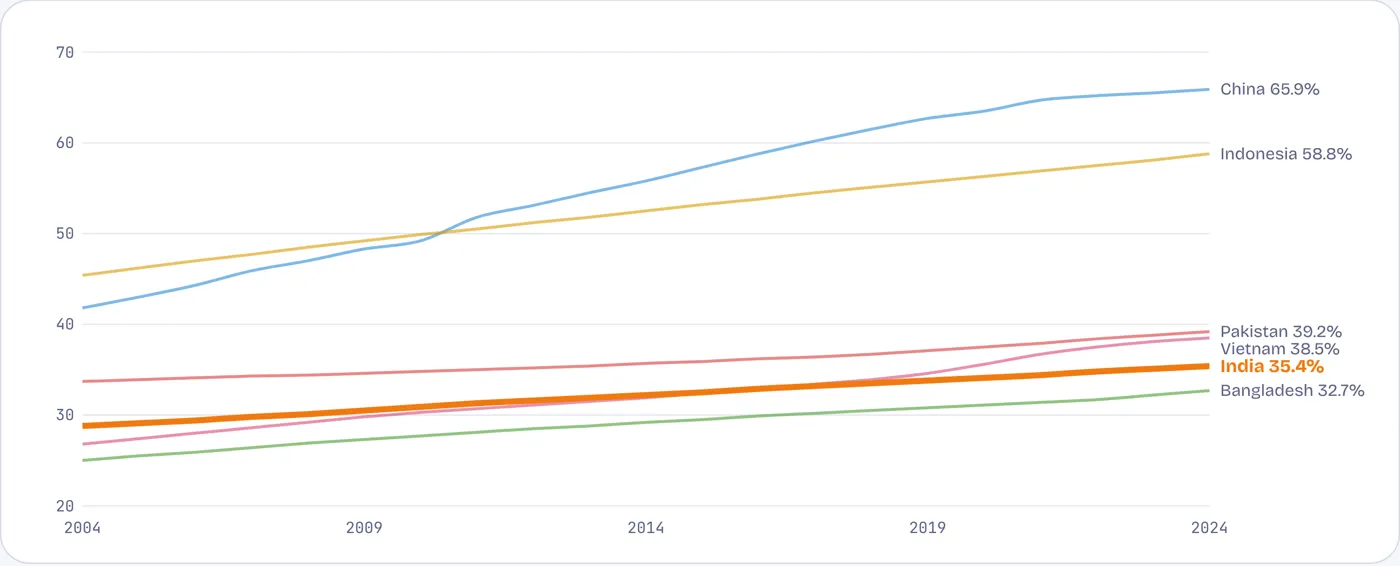
Urban share of the population, %, 2004–2024 (national definitions). Tap or hover a line.
India’s urban population rose from 33 crore to 51 crore between 2004 and 2024, yet by official definitions only 35% of Indians are urban, far fewer than in China or Indonesia. Many places that look and function like towns are still governed as villages. As the share rises, the cost of not running cities well rises with it.
Source: UN World Urbanization Prospects, via World Bank WDI.
Money for cities
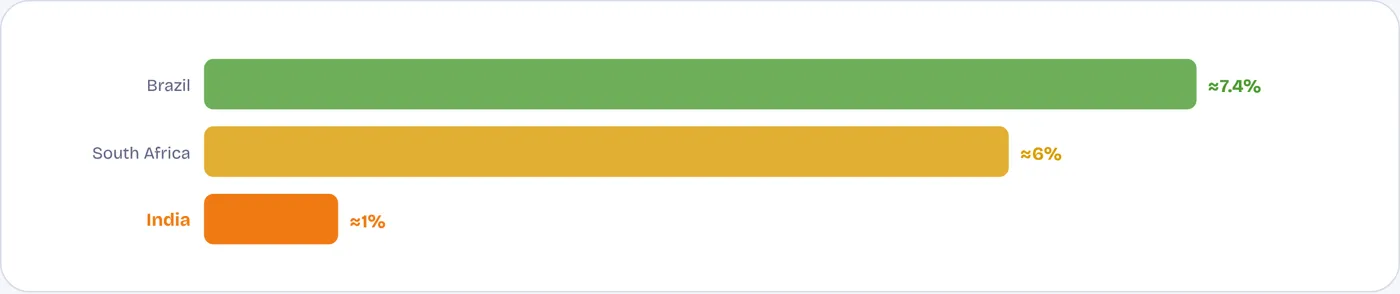
Brazil’s cities raise seven times as much as India’s, relative to the economy
Municipal revenue, % of GDP
Indian municipalities raise and spend about 1% of GDP, a share that has not grown in more than a decade. Brazil’s raise 7.4% and South Africa’s about 6%. The 74th Amendment of 1992 gave cities eighteen functions, from water supply to urban planning; most were never matched with money or staff. Cities that cannot collect property tax cannot pay for sewers, footpaths or traffic police.
Source: Reserve Bank of India, Report on Municipal Finances (2022), via Drishti IAS.
Roads
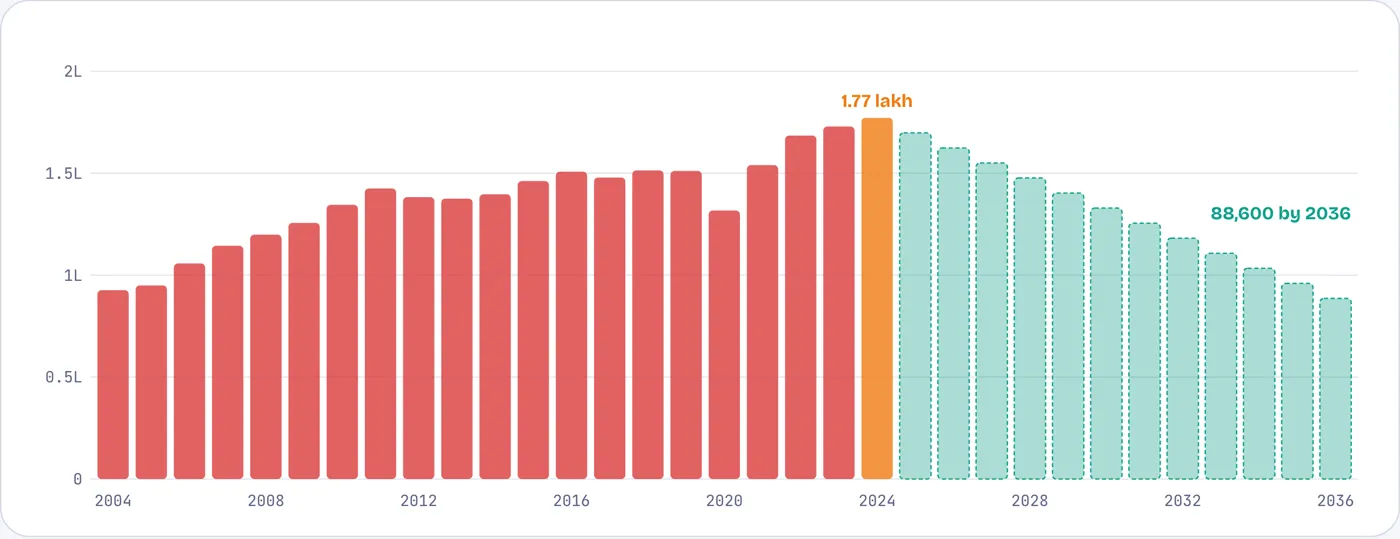
Halving road deaths by 2036 means reversing a twenty-year climb
Road deaths reported by police, 2004–2024, and a path to half the 2024 level by 2036. Tap or hover a bar.
Ten countries, among them Japan, Norway and the UAE, more than halved road deaths between 2010 and 2021. Their tools are known: speed cameras and enforced limits, helmet and seat-belt checks, safe crossings and footpaths, and ambulances that reach the injured within the hour. Two-thirds of India’s road dead are on two wheels or on foot; that is where the first gains lie.
Source: MoRTH; WHO Global Status Report on Road Safety 2023, via Deccan Herald.
Streets for people
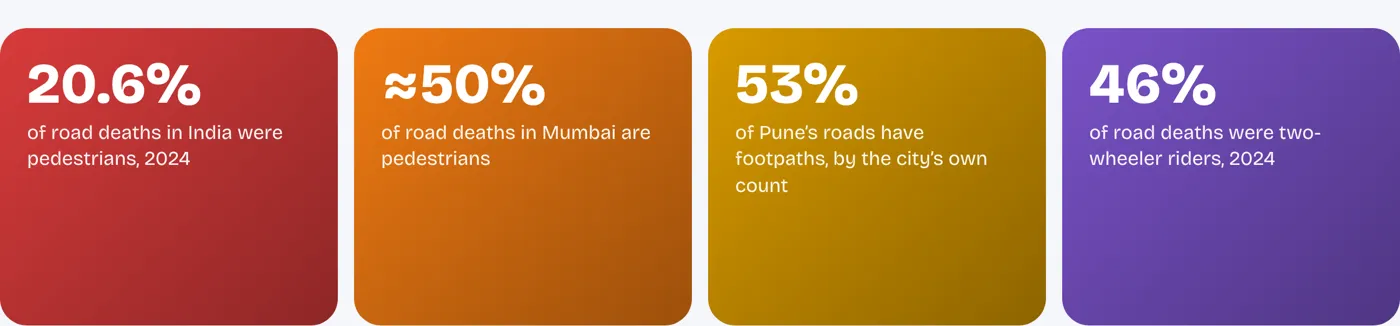
Pedestrians die where streets have no room for them
One in five people killed on Indian roads is a pedestrian; in Mumbai it is nearly half. Even in cities with pedestrian policies, footpaths are missing, broken or occupied. A footpath on every arterial road is a cheap, visible target that a city council can be held to.
Source: MoRTH 2024, via ETV Bharat; Pune Municipal Corporation and city data compiled by Question of Cities.
Sewage
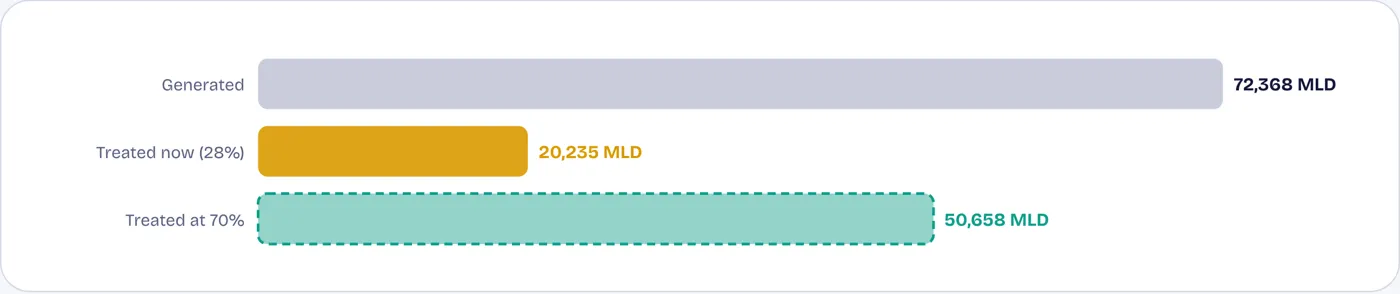
Treating 70% of urban sewage means two and a half times today’s treatment
Urban sewage, million litres a day: generated, treated today, and treated at 70%
India built plants for 44% of its urban sewage but treats 28%. The quickest gains are in running existing plants fully and connecting homes to them; Delhi has plants for nearly all its sewage but treats only 56% of it to standard. New capacity is needed too: about 30,000 million litres a day more treated to reach 70% at today’s sewage volumes.
Source: CPCB (2021), via Down To Earth; Ministry of Jal Shakti (2025), via The Week.
Proposed targets for 2036
Six numbers for cities
Each target can be measured independently: road deaths by hospital and WHO estimates as well as police records, air by public monitors, sewage by river-quality tests, footpaths by a walk down the street.
Source: Targets proposed here; anchors from the UN road-safety goal, WHO air-quality guidelines and RBI.
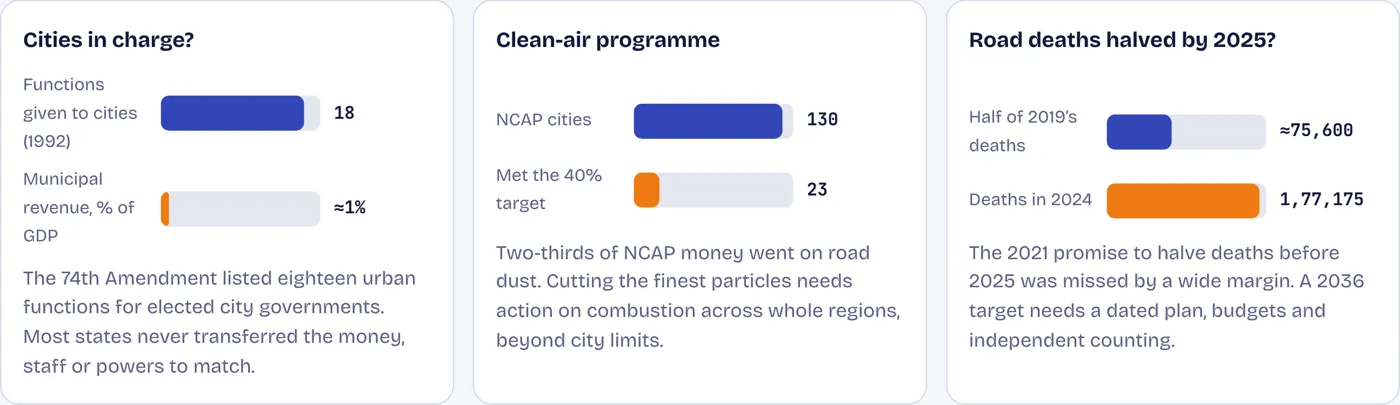
Contested numbers
Three numbers that need a second look
Source: Constitution (74th Amendment) Act, 1992; RBI (2022); CREA (2026); MoRTH.